Herman Miller's Home Office Question Isn't Really About the Chair
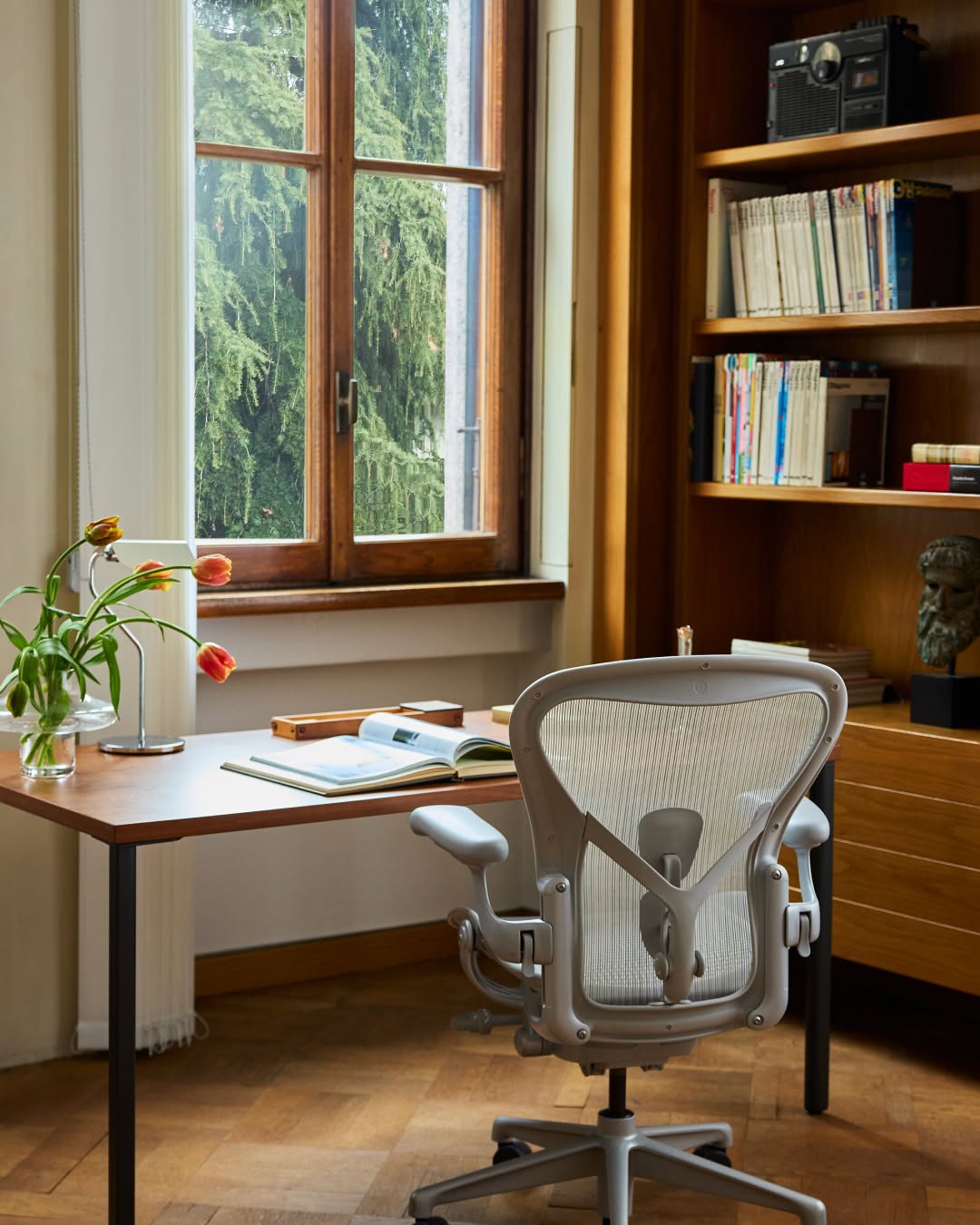
Herman Miller's home office post asks which workspace you'd choose, leading with the brand's core argument: environment is not incidental to output, it is the instrument. Aimed at the growing gap between working from home and building a workspace at home, it positions the Aeron and Cosm as decade-long investments in the conditions of serious work.
Key Points
- The Aeron was designed in 1994 from postural science research — Herman Miller's ergonomic claim is legitimate where competitors' claims are marketing; Cosm (2018) auto-adjusts without manual inputs
- Herman Miller targets the gap between people who work from home and people who have built a workspace at home — a distinction the post-pandemic normalization phase has made financially real
- The Aeron lists at $1,595, the Cosm at $1,645 — Herman Miller's brand work is permanently engaged in building the argument for why task furniture is an investment tool, not a luxury
Herman Miller's home office post asks a simple question: which workspace would you choose? The answer reveals something about how you think about work — and more specifically, whether you think about work as something that deserves serious infrastructure or something that happens wherever you can find a flat surface.
"Great Work Starts With a Place Designed to Support It"
That sentence contains Herman Miller's entire brand argument in 11 words. It is not a modest claim. It is a direct assertion that environment is not incidental to output — that the chair, the desk, the monitor position, the ambient light, the organization of the room are not conveniences but instruments. They are the conditions under which work either happens or is fought against.
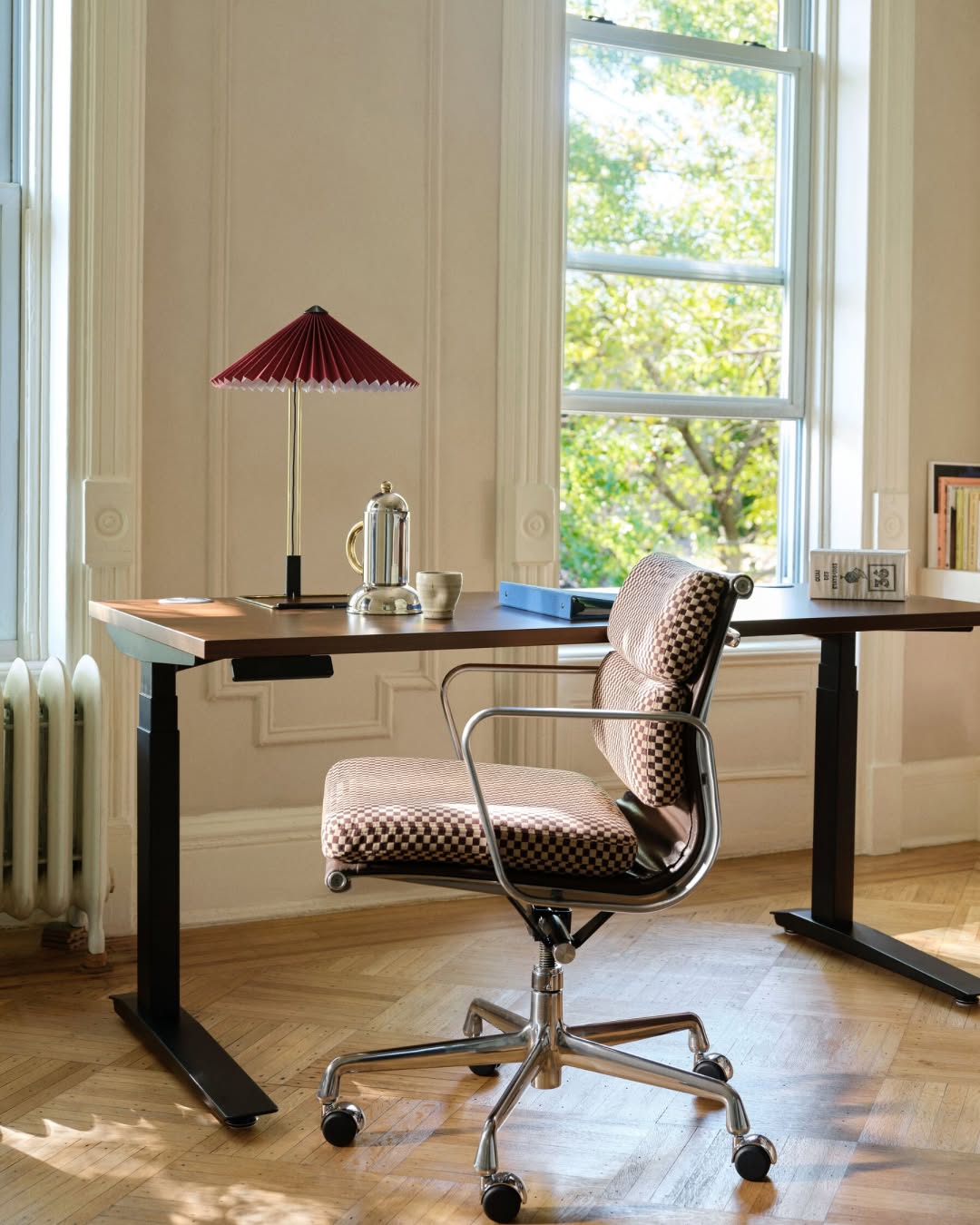
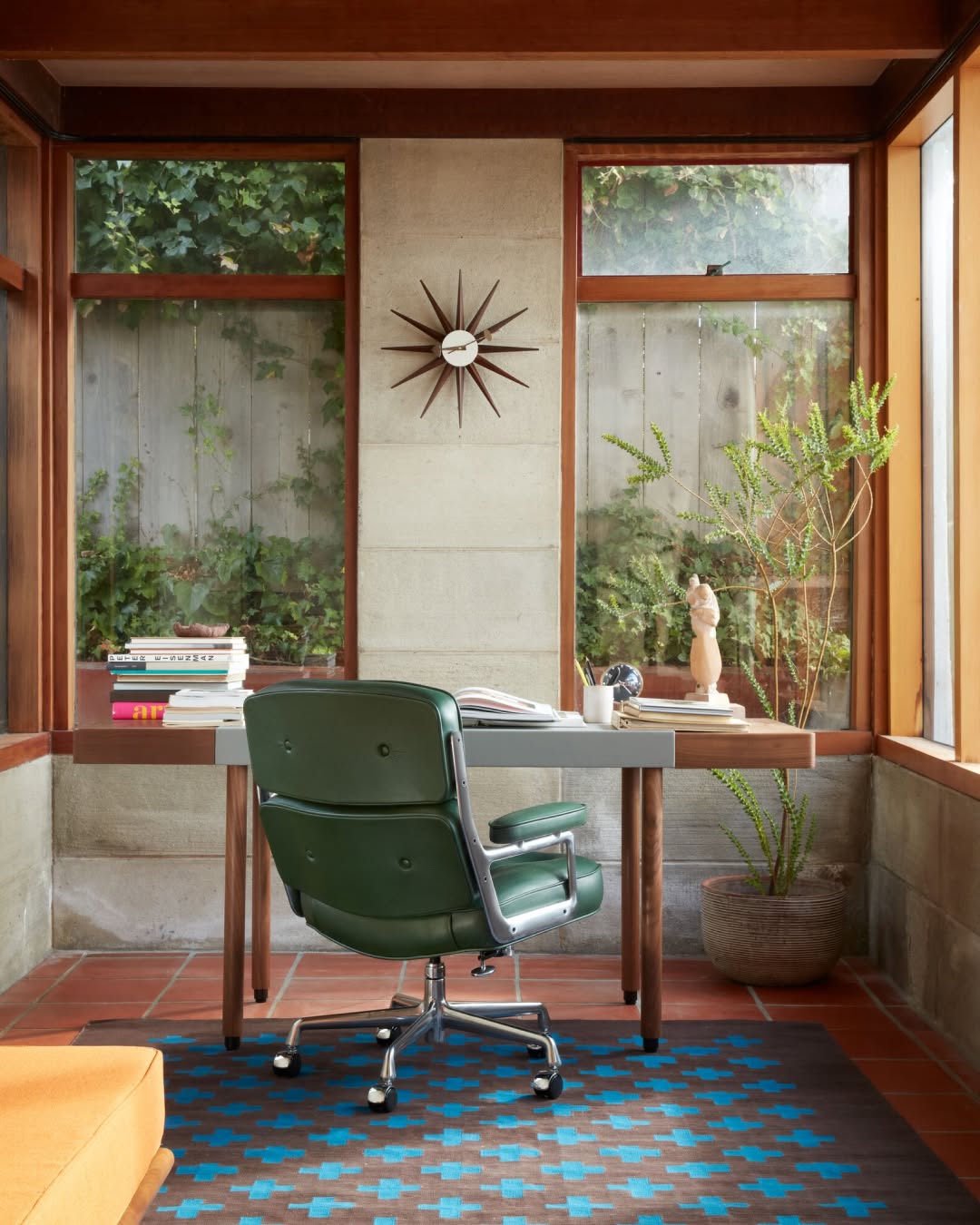
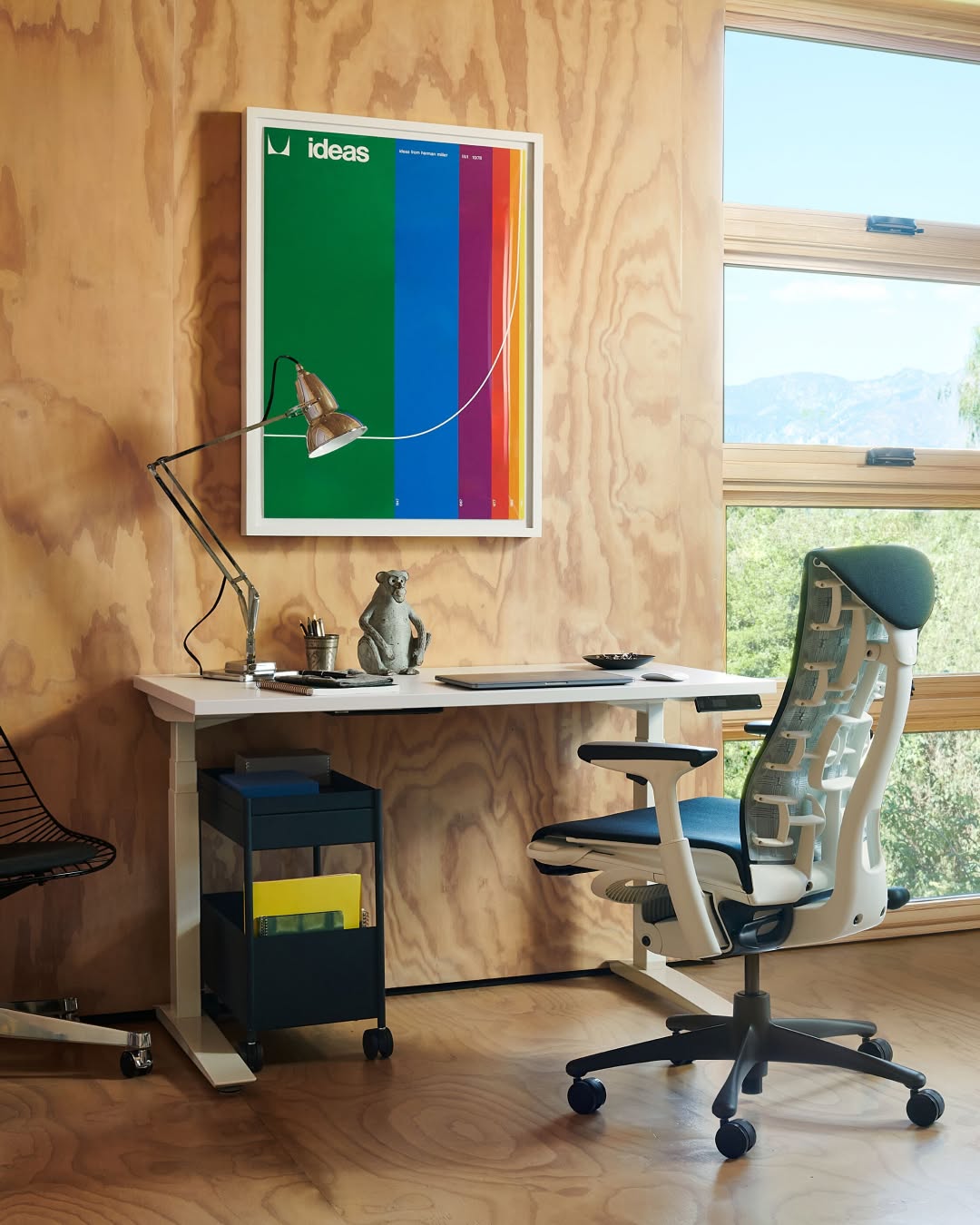
The post presents multiple home office configurations, presenting what Herman Miller calls "ergonomic performers" alongside "details that refine the room." The visual language is aspirational without being unattainable — a deliberate tonal calibration that sits between the fantasy of a high-budget commercial shoot and the chaos of an actual home office. It's the room you could build. Not the room you dream about.
The Aeron's Claim to "Ergonomic"
The word ergonomic has been diluted by 30 years of marketing application to chairs that aren't. Herman Miller's claim to it is legitimate in ways that competitors' claims usually aren't. The Aeron was designed in 1994 by Bill Stumpf and Don Chadwick following research into postural science and occupational health. The design — the pellicle mesh surface instead of upholstered foam, the PostureFit SL lumbar support system, the three-size frame that acknowledges human bodies are not the same — emerged from that research rather than from an aesthetic brief.
The Embody (2008), the Sayl (2010), the Cosm (2018): each subsequent Herman Miller chair was built around a specific theory of how the body moves during seated work. The Cosm in particular — designed by Studio 7.5 to kinetically follow the body's posture shifts without requiring manual adjustment — represents a meaningful engineering advance, not a marketing positioning exercise.
When a brand with that research depth asks "which home office would you choose," the question has answers with different functional implications, not just aesthetic ones.
The Home Office as Infrastructure
The pandemic normalized remote and hybrid work at scale. What followed the normalization phase — roughly from 2022 onward — is the realization that normalized doesn't mean optimized. The first-generation home office was a laptop on a kitchen table. The second generation was a dedicated desk and a consumer monitor. The third generation is what Herman Miller is selling into: a purpose-designed space with task-appropriate seating, lighting, acoustic management, and storage.
Herman Miller's positioning in 2026 is aimed precisely at the gap between people who work from home and people who have built a workspace at home. That gap is still substantial. The home office penetration for genuinely ergonomic, purpose-designed furniture remains low relative to the overall working-from-home population.
The Investment Argument
An Aeron lists at $1,595. A Cosm at $1,645. These are not casual purchases. Herman Miller's brand work has always been partly about constructing the argument for why those numbers are appropriate — not luxury, not aspiration, but investment in a tool you will use for eight hours a day for a decade.
The home office question is the access point to that argument. Which workspace would you choose? The one that feels like work has been taken seriously, or the one that was assembled from whatever was available? Herman Miller bets on the first answer — and on the premise that more people, given the information, will choose it.
Frequently Asked Questions
What makes Herman Miller's ergonomic claim legitimate?
Herman Miller chairs like the Aeron (1994), Embody, Sayl, and Cosm were designed from postural science research, each built around a specific theory of how the body moves during seated work.
What is Herman Miller's brand philosophy?
That great work starts with a place designed to support it — environment is not incidental to output but an instrument of it.
Topics: furniture, ergonomic, aeron, herman-miller, remote work, herman miller, design, home office, workspace