This House in Healdsburg Was Built to Survive the Fire That Destroyed Its Predecessor
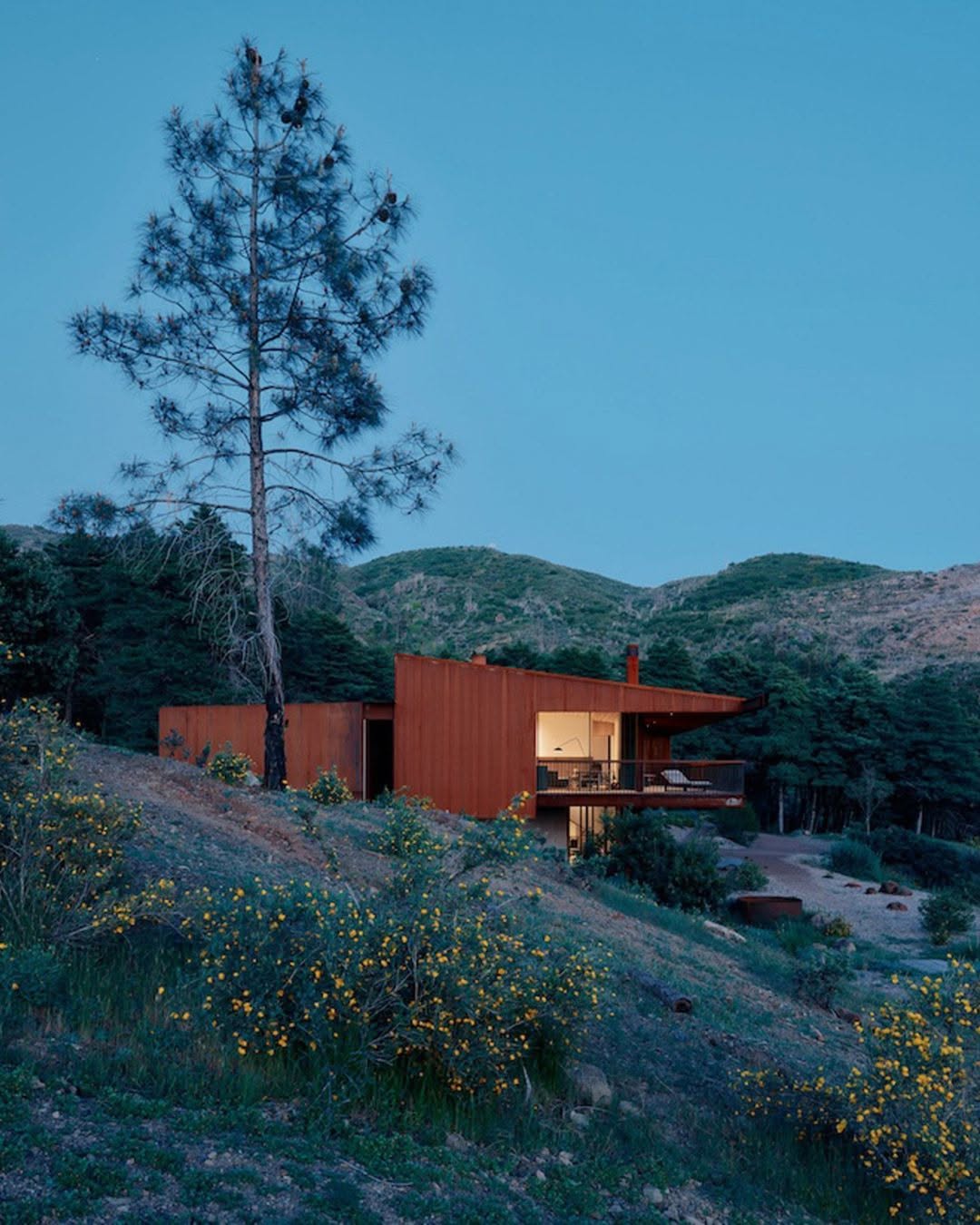
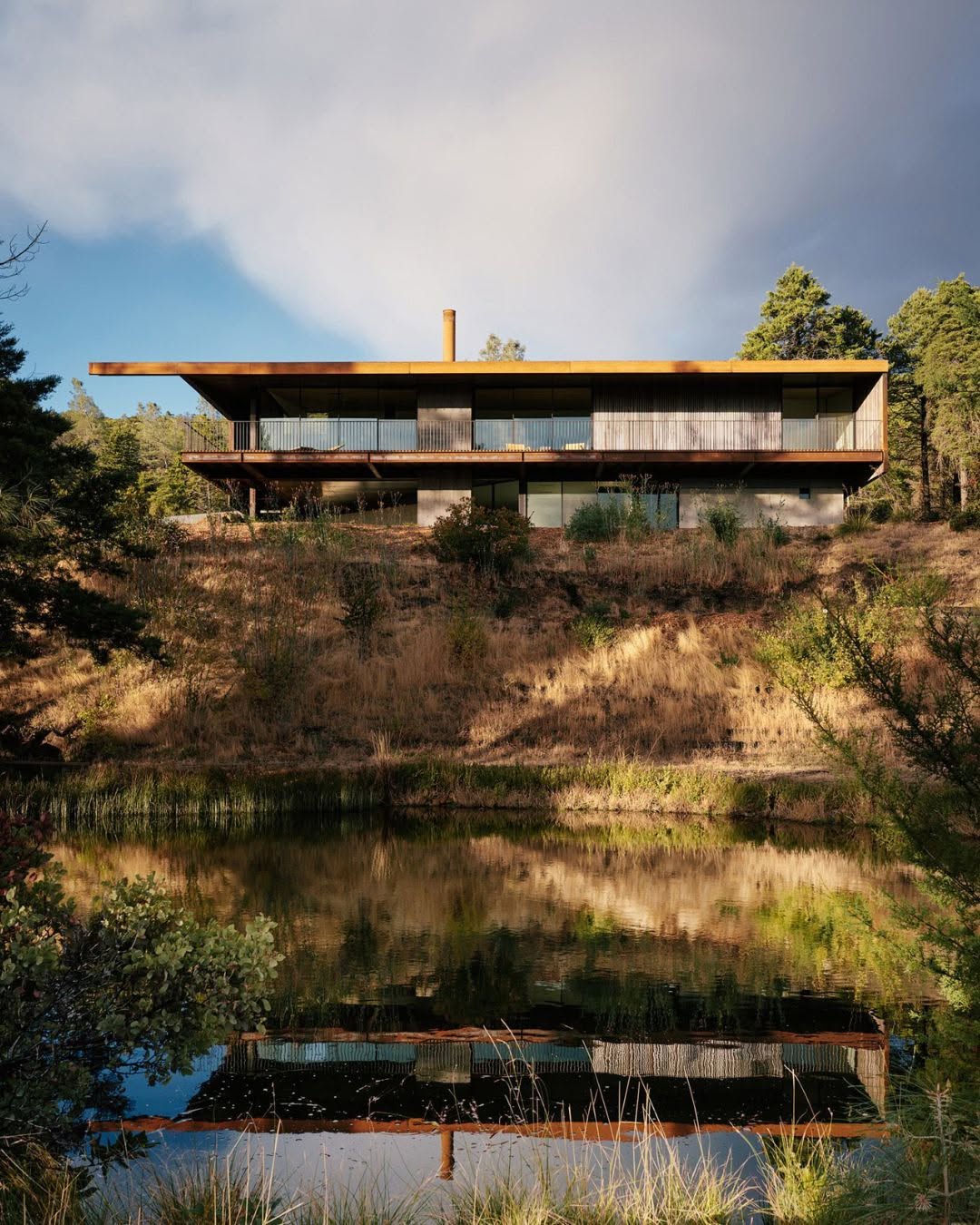
Faulkner Architects rebuilt on the site of a 2019 Kincade Fire loss in Healdsburg using corrugated Corten steel — non-combustible, ember-shedding, self-healing. The Pine Flat Residence embeds in its slope with a low roofline and treats wildfire not as an unlikely event but as the primary design brief.
Key Points
- The Pine Flat Residence was built on a site where the predecessor burned in the 2019 Kincade Fire — the brief was not reconstruction but redesign for the threat
- Corrugated Corten steel is non-combustible and self-healing: the oxidized surface layer prevents deeper corrosion, and the corrugated profile sheds ember accumulation more effectively than flat panels
- The house embeds in the slope and keeps a low profile — topography used as fire shelter, surface exposure minimized, a building that treats wildfire as a design parameter not an edge case
The previous house on this site burned in the 2019 Kincade Fire. The new one was built not to rebuild what was lost, but to build something that accounts for what destroyed it. That distinction — rebuilding versus redesigning for the threat — is the difference between sentiment and architecture.
Healdsburg, 2019
The Kincade Fire burned 77,758 acres in Sonoma County in October and November 2019, destroying hundreds of structures across the region's wine country hills. The site that Faulkner Architects inherited was a steep slope north of Healdsburg with mountain views, forest exposure, and a history: a house had stood here and the fire had taken it.
The brief for the Pine Flat Residence wasn't comfort or aesthetics as primary considerations. The brief was survival. How do you build a house in a place that burns, for a client who has already watched a house burn on this exact land?
The Material Decision
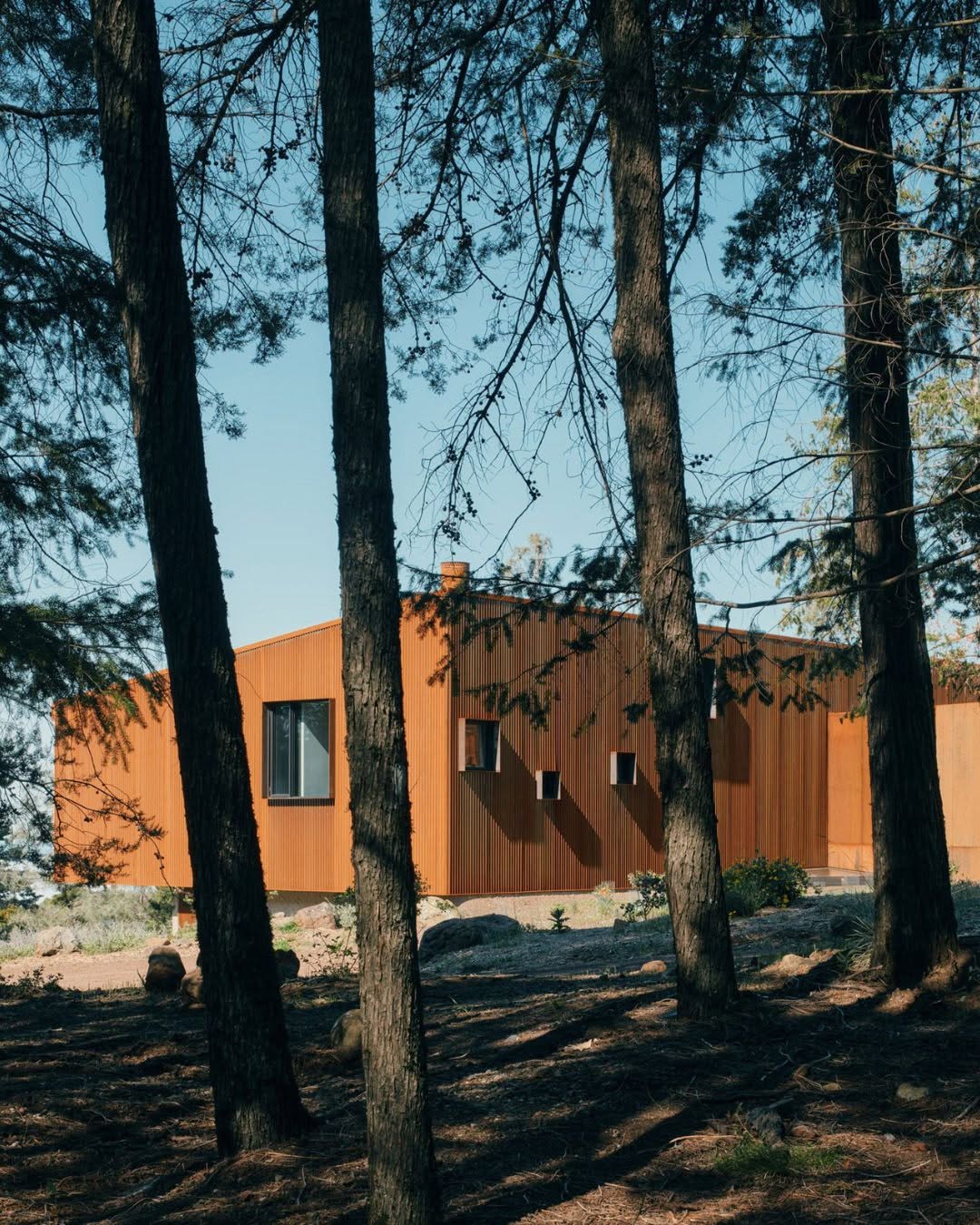
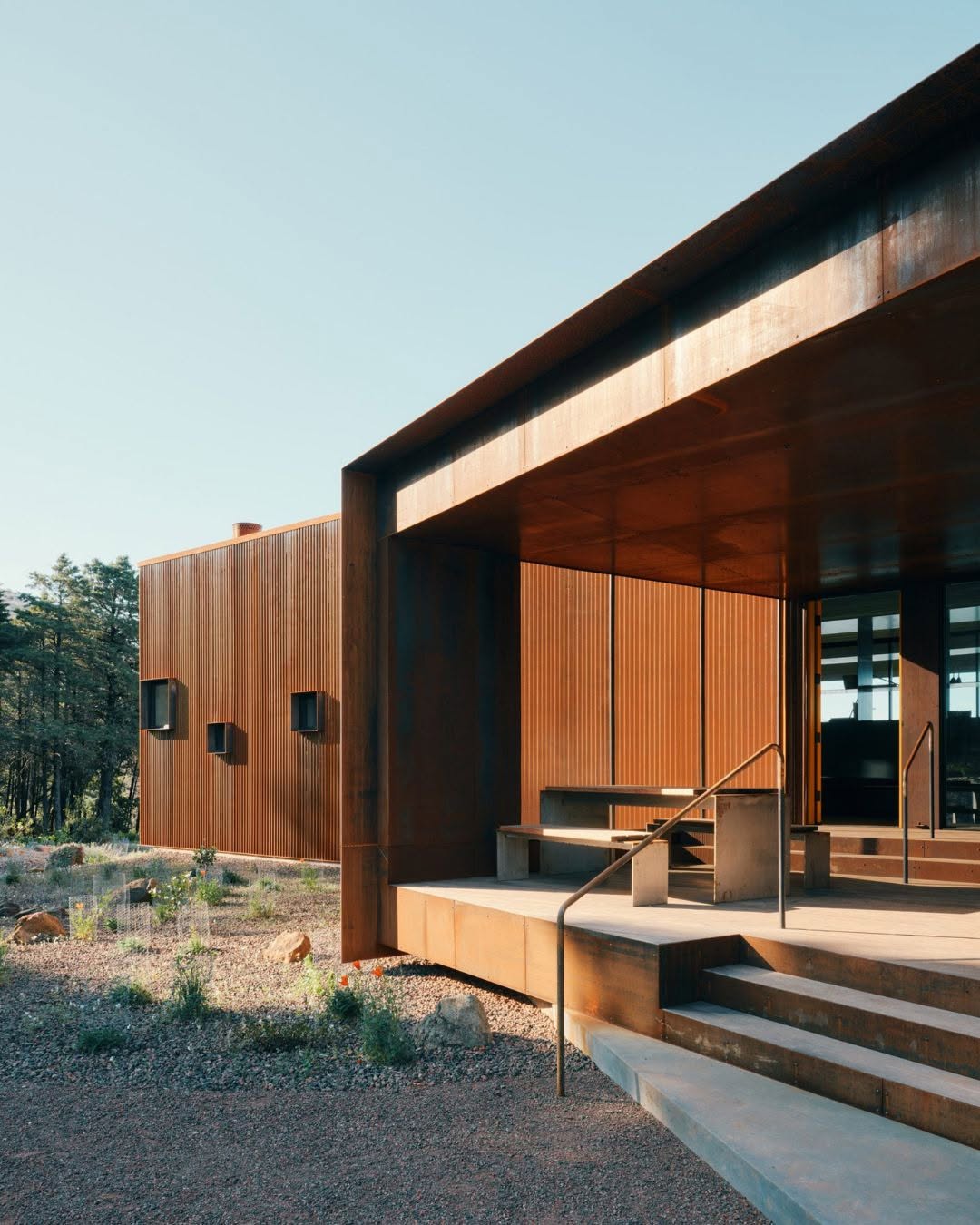
Corrugated Corten steel cladding. The choice is not decorative — it is structural fire-resilience expressed as cladding material. Corten (weathering steel, ASTM A606) forms a stable oxidized surface layer that prevents deeper corrosion, making it maintenance-free in most climates. More relevantly for this site: it is non-combustible. In a wildfire, combustible cladding is the mechanism through which fire penetrates a structure. Non-combustible cladding interrupts that mechanism.
The corrugated profile adds structural rigidity to the panels and has a practical secondary benefit: the ridges and valleys shed ember accumulation more effectively than a flat surface. Embers landing on a corrugated profile roll off. Embers landing on a flat profile collect. In a fire approaching through ember spotting — which the Kincade Fire demonstrated is a primary mechanism in high-wind events — that difference is material.
Embedded in the Slope
The three-bedroom, two-storey house embeds in the slope rather than sitting above it. Low profile. Minimal roofline exposure. The design vocabulary of risk reduction made architectural: a building that presents less surface area to approaching fire, that sits below the ridge rather than on it, that uses topography as shelter rather than view platform.
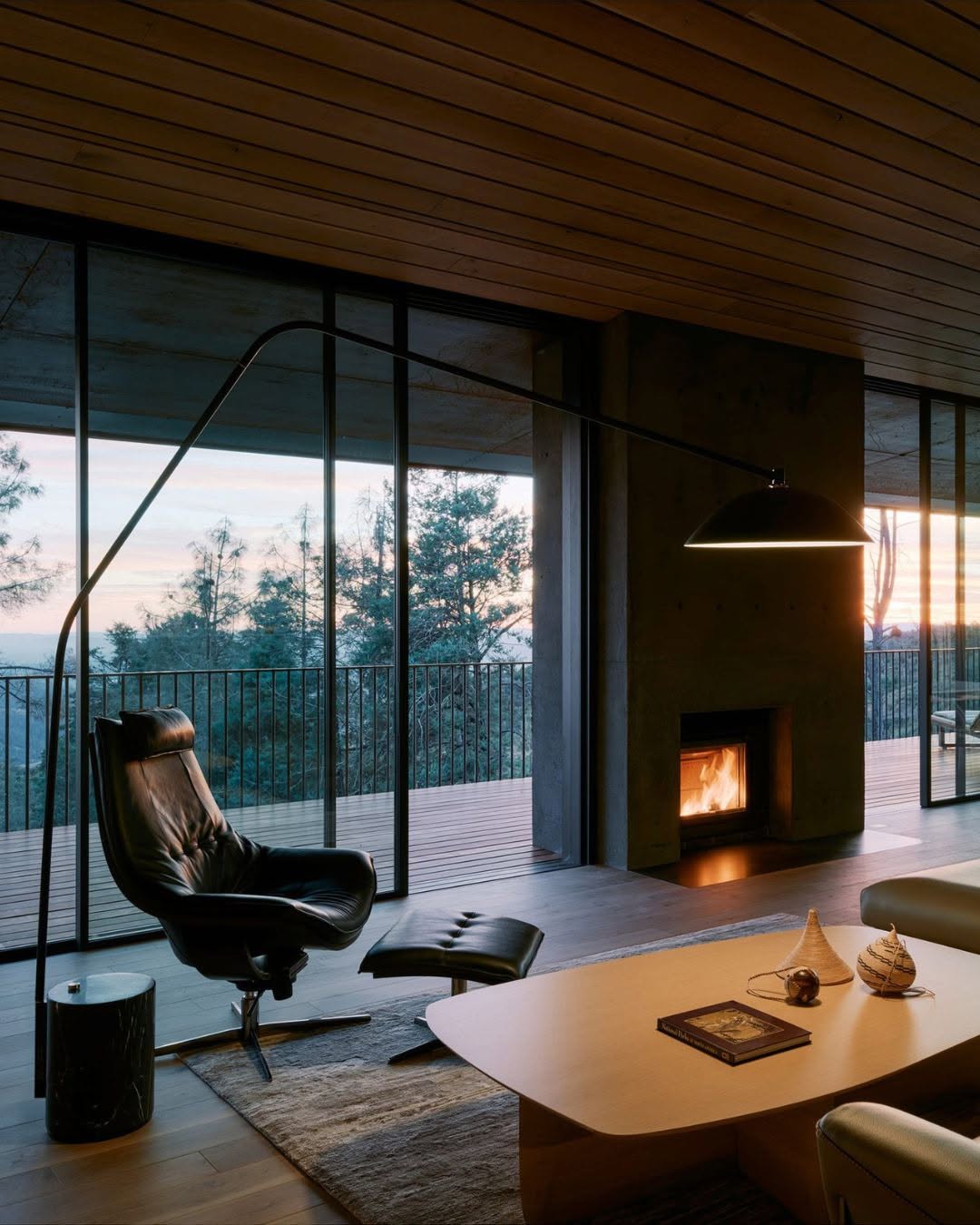
This is not bunker architecture. The building has significant glazing facing the views it was built for. But the orientation of exposed surfaces — which faces have glazing, which faces have Corten, how the roof plane relates to the prevailing fire spread direction — was determined by the threat assessment, not the view preference.
California Architecture After the Fire Season
The Pine Flat Residence represents a maturation in California residential architecture that has been building since the 2017 Tubbs and Atlas fires and accelerated through the 2018 Camp Fire and the 2019 Kincade event. The industry is moving from passive climate comfort design toward active climate resilience design.
The old question was: how does this house perform in normal conditions? The question architects are now being asked — on sites like this one, throughout the North Bay, the hills above Los Angeles, the Sierra Nevada foothills — is: how does this house survive abnormal ones?
Faulkner Architects answered it with Corten steel, embedded massing, and a material logic that treats fire not as an unlikely event but as a design parameter. Dezeen's documentation of the project places it in an international architectural conversation at the moment when that conversation is becoming unavoidable.
Related: Faulkner Architects Rebuilt a Burned House in Healdsburg With Corten Steel.
Frequently Asked Questions
What is the Pine Flat Residence?
A three-bedroom house in Healdsburg, Northern California, designed by Faulkner Architects and clad in corrugated Corten steel for wildfire resilience. The site was destroyed in the 2019 Kincade Fire.
Why was Corten steel used for the Pine Flat Residence?
Corten steel is non-combustible and develops a stable protective oxide layer — both practical requirements for wildfire-prone terrain and an aesthetic outcome of the material's weathering process.
Topics: corten steel, healdsburg, california, wildfire, faulkner architects, pine flat residence, residential architecture, dezeen