Casa Millán Is a 1974 Concrete House That Still Knows How to Argue
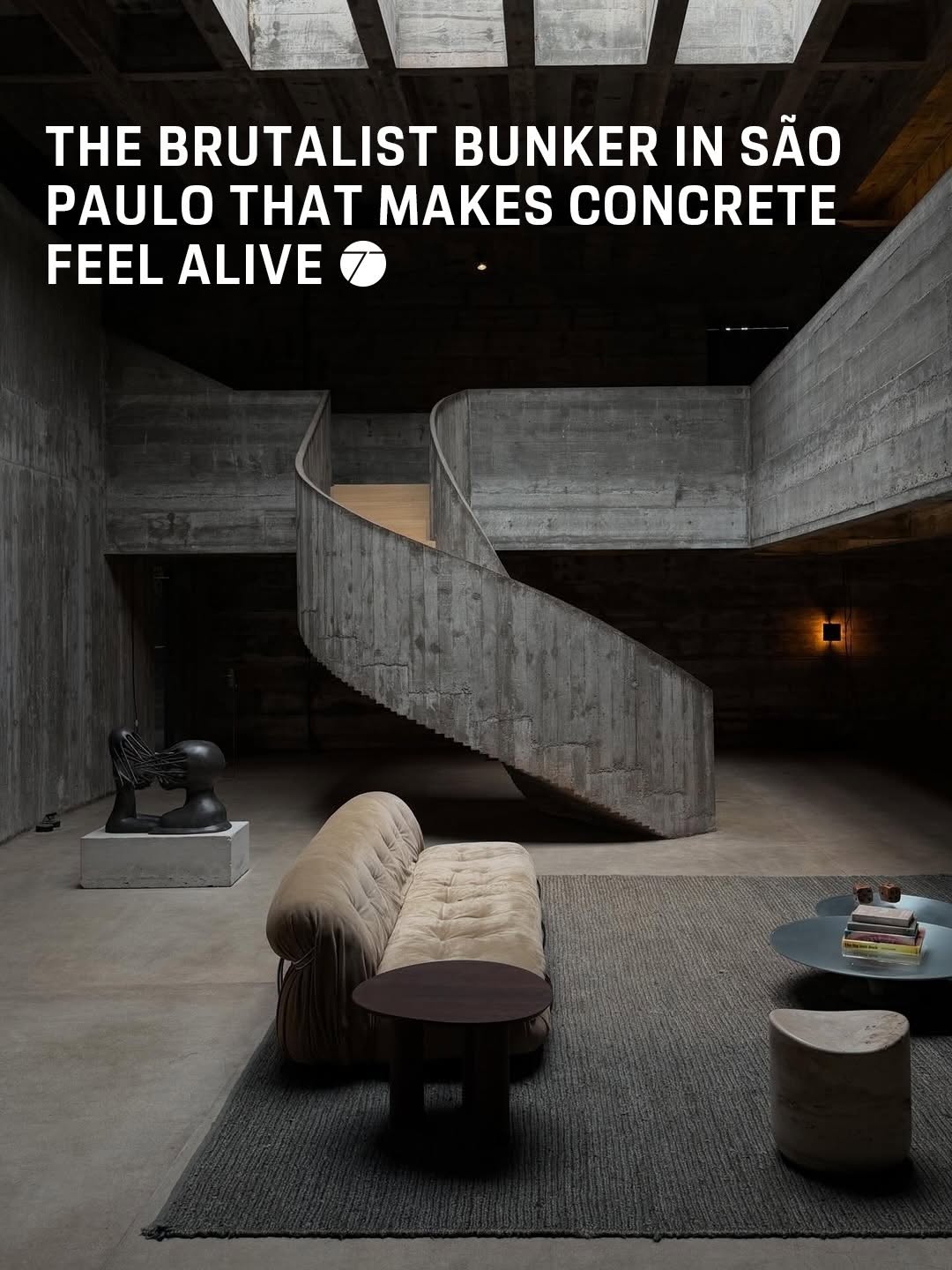
Paulo Mendes da Rocha's 1974 Casa Millán in São Paulo's Cidade Jardim presents a defensive concrete exterior and an interior organized around a precision-cast spiral staircase. Built for art collector Leme Millán with passive climate systems and courtyard airflow, it remains one of Brazilian Brutalism's most coherent arguments for how a house should interrogate its occupant.
Key Points
- Paulo Mendes da Rocha completed Casa Millán in 1974 for art collector Leme Millán; the central concrete spiral staircase is the vertical axis around which the entire spatial argument organizes
- The building uses courtyard section and skylights for passive airflow through the São Paulo climate — architecture as climate response 50 years before the term was current
- Mendes da Rocha won the Pritzker in 2006; Casa Millán is his most intimate expression of the principle that architecture creates relations not enclosures
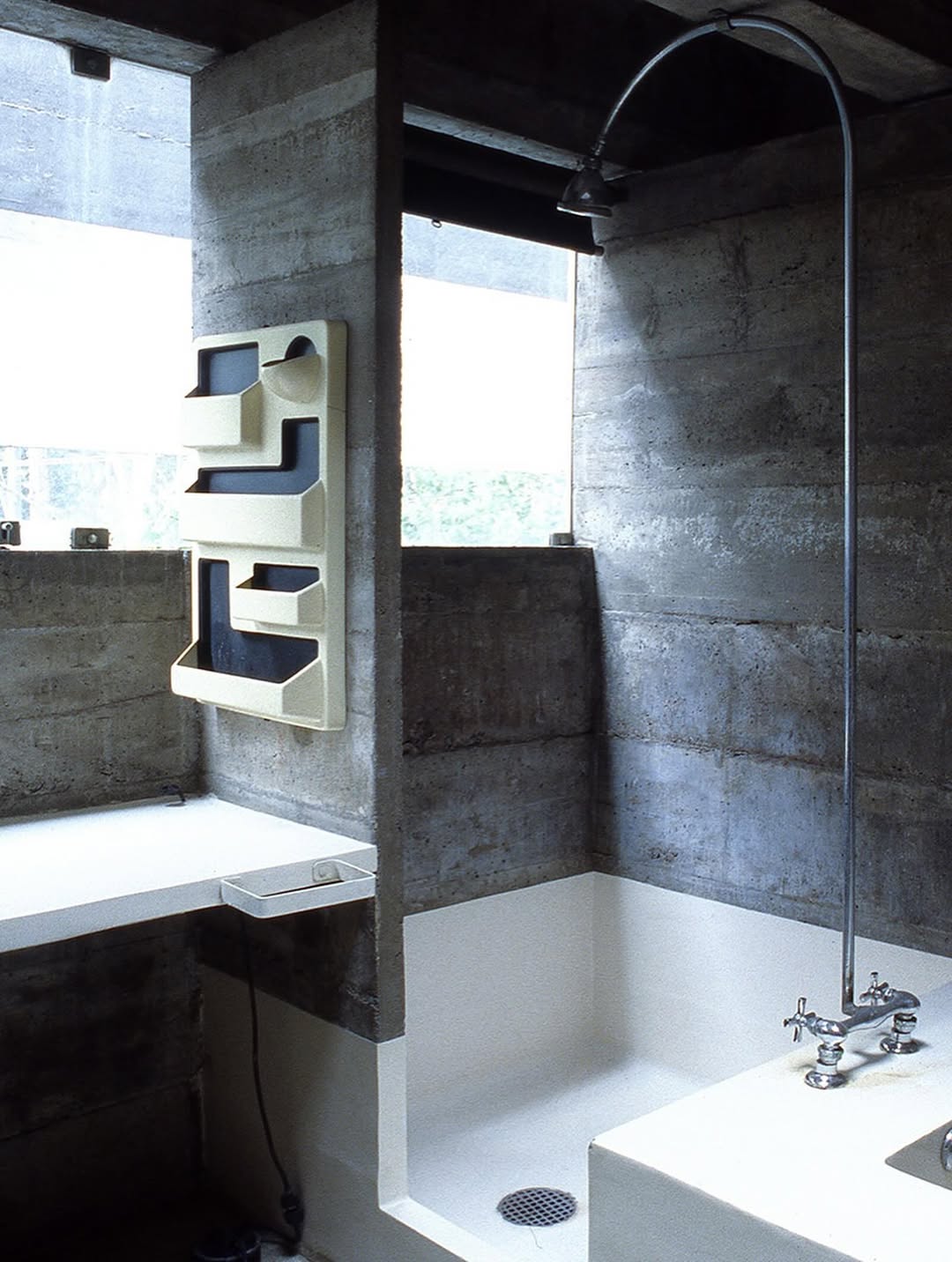
The exterior of Casa Millán reads as defensive. That's intentional. Paulo Mendes da Rocha designed it to withhold — to present a face to the street that gives nothing away, and then, once you're inside, reverse that logic completely. The interior is light, air, and an argument about how space should feel that was made in 1974 and hasn't been resolved.
1974, Cidade Jardim
Completed for art collector and patron Leme Millán in São Paulo's Cidade Jardim neighborhood, Casa Millán was designed at the height of Paulo Mendes da Rocha's engagement with Brazilian Brutalism — a term that misrepresents the sensibility. Where European Brutalism often produced weight and severity, the Brazilian modernists Mendes da Rocha among them gave concrete movement. Curvature. Breath. They understood the material differently.
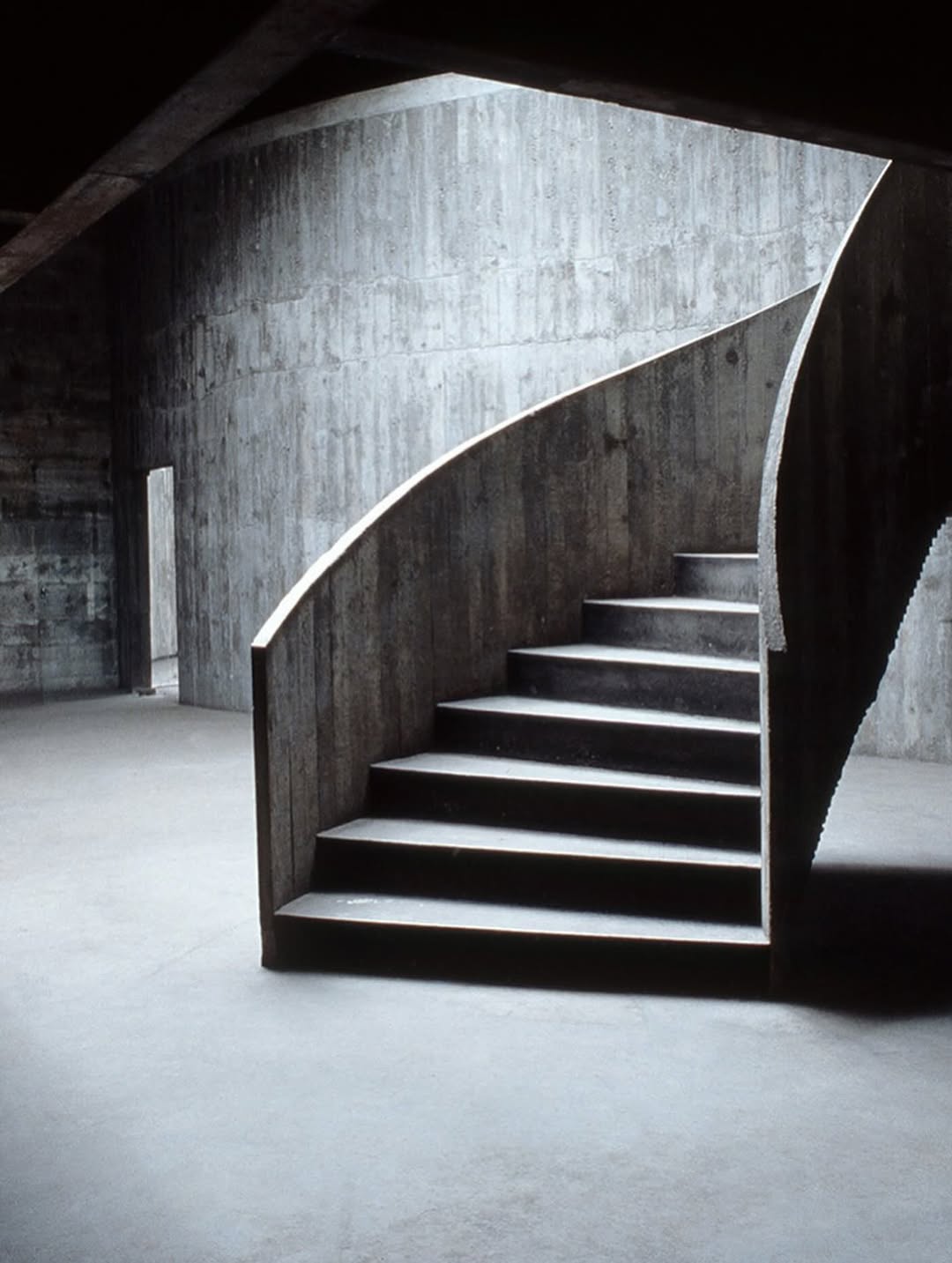
At the center of Casa Millán: a spiral staircase cast in concrete with a precision that elevates it from structural element to spatial argument. The stair doesn't just connect floors. It is the vertical axis around which the entire plan organizes — each room positioned in relation to it, the light managed to fall on it at different hours, the proportions calibrated so that the stair reads as the heart of the building rather than a functional necessity.
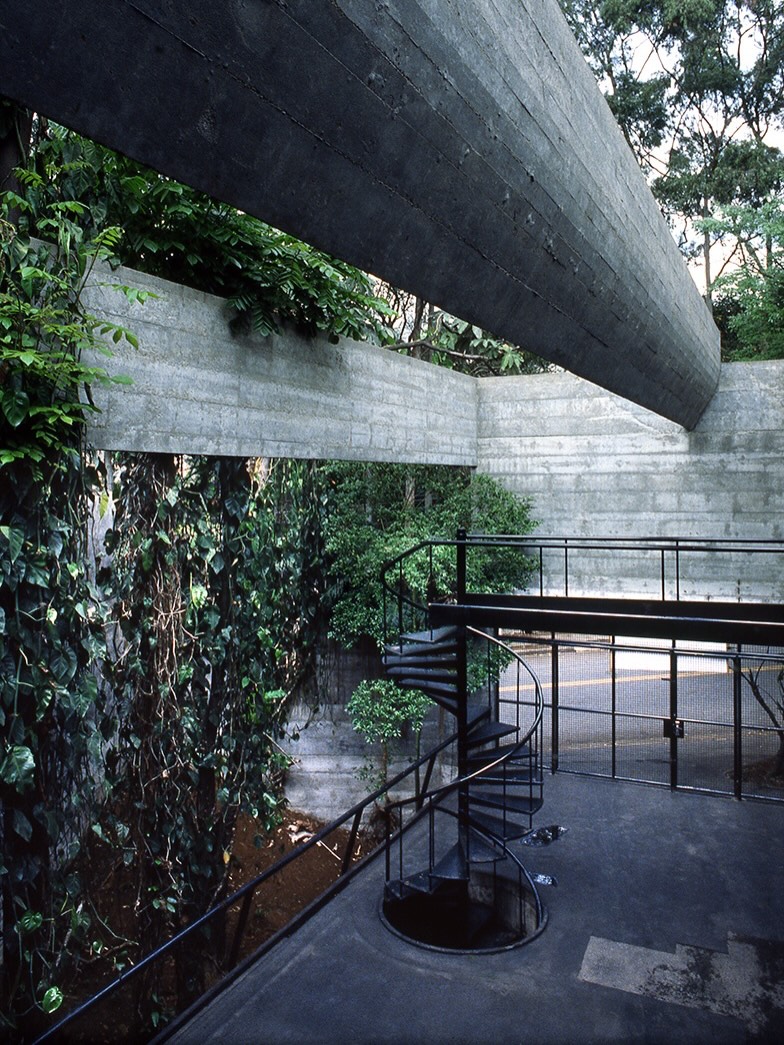
Around the stair: courtyards and skylights that pull exterior air into the most obscured corners of the plan. Mendes da Rocha solved the São Paulo climate not with mechanical systems but with section — the vertical relationship between floors, voids, and openings that drives airflow through the building passively.
The Collector as Commission
Leme Millán was not a passive client. His collection — Hélio Oiticica, Lygia Clark, and their contemporaries — demanded spatial intelligence. He understood the house as an extension of his practice as a collector: an object that challenged the viewer the way a good work of art should, that created conditions rather than comforts.
That commission gave Mendes da Rocha permission to build a house that asks questions rather than provides answers. The defensive exterior isn't hostility — it's curatorial. The experience of the building is withheld until you've committed to entering it. Then it opens.
Mendes da Rocha's Position in Brazilian Architecture
Pritzker Prize, 2006. Mies Crown Hall Americas Prize. The São Paulo Museum of Art's relationship to the street. The Brazilian Pavilion. Mendes da Rocha's buildings operate consistently on one principle: that architecture is not about enclosure but about relation — between interior and exterior, between the building and the city, between the person and the space.
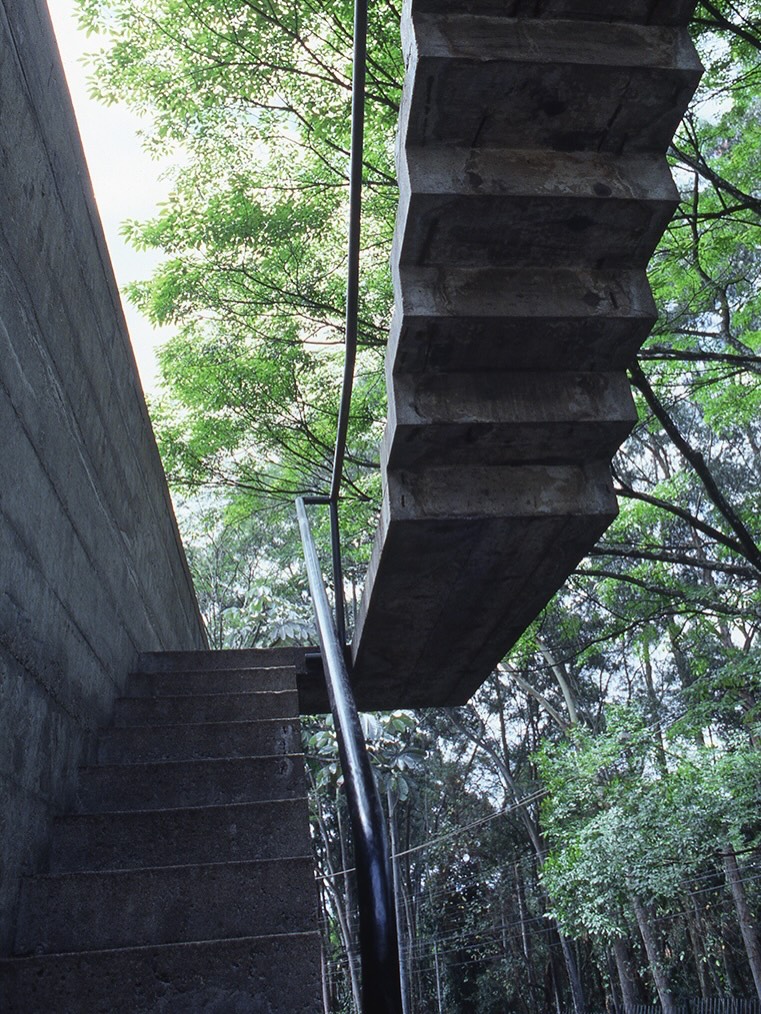
Casa Millán is the most intimate version of that argument. Residential scale, private commission, a single family's relationship with a house over decades. The board-formed concrete exterior has absorbed vines. The skylights have learned the angle of the São Paulo sun. The stair still argues for verticality as spatial generosity.
Type 7's Documentation
Type 7's decision to document and circulate Casa Millán in 2026 is well-timed. The conversation about what residential architecture can sustain — about whether houses can be serious objects with serious arguments — is louder than it has been in decades, driven by construction costs, climate pressures, and the question of what permanence means in the built environment.
Mendes da Rocha built for permanence in 1974. Five decades later, the vines and the concrete are still arguing.
Related: Knoll Chermayeff Storage Collection.
Frequently Asked Questions
Who designed Casa Millán?
Paulo Mendes da Rocha, one of Brazil's foremost concrete architects and a Pritzker Prize laureate, completed Casa Millán in 1974 in São Paulo's Cidade Jardim neighborhood.
What makes Casa Millán significant?
Its defensive exterior conceals a complex interior organized around courtyards, skylights, and a precisely cast concrete spiral staircase — a smaller-scale example of Brazilian modernism's distinctive approach to concrete and movement.
Topics: type7, knoll, residential, modernism, casa millan, paulo mendes da rocha, brazil, concrete architecture, sao paulo