Kyukyodo's New Home in Kyoto Was Designed Like a Sequence of Atmospheres
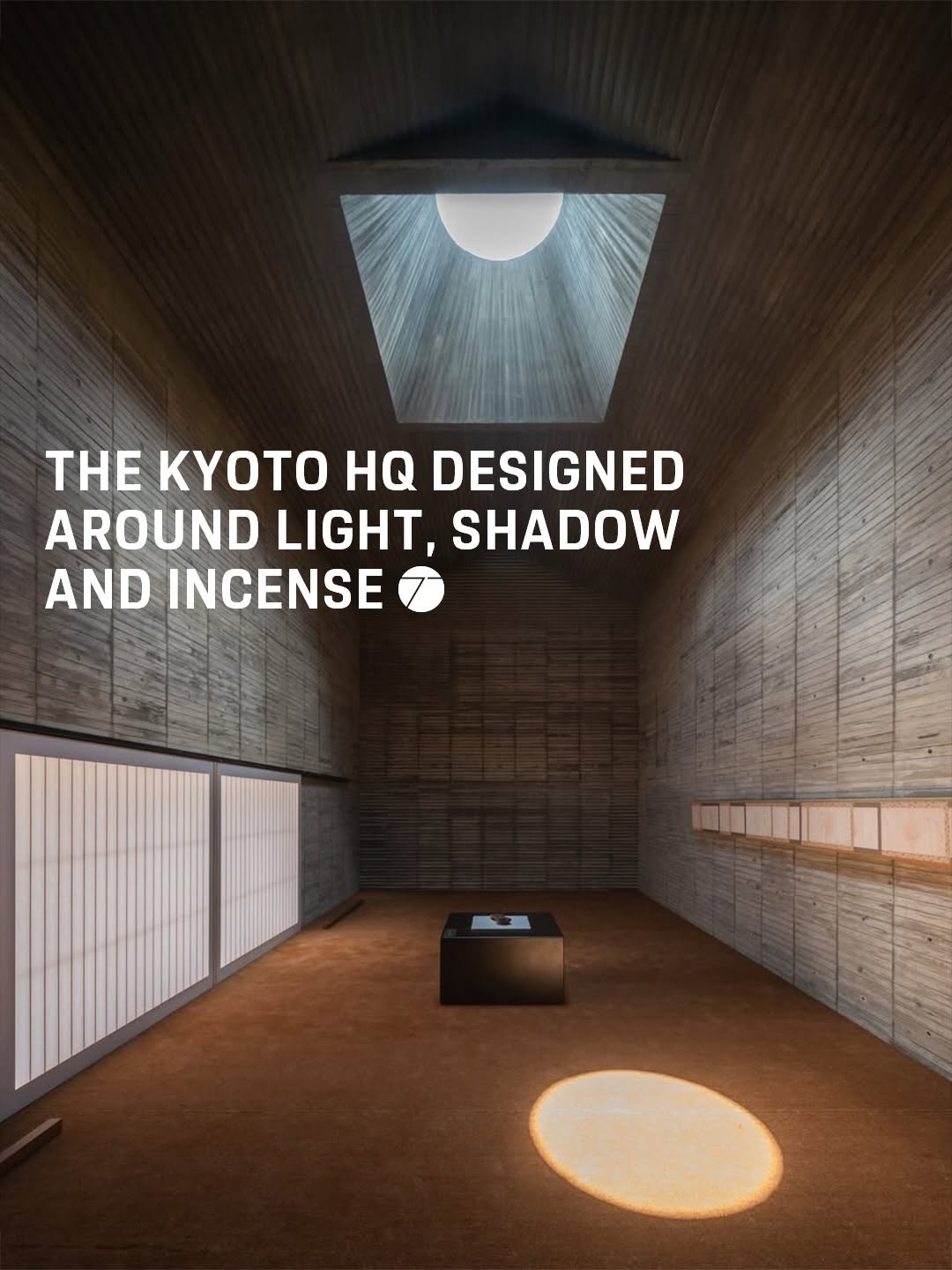
Hiroshi Naito's new building for Kyukyodo on Kyoto's Teramachi Street houses a 1663 institution through a sequence of atmospheres — charred timber screens, board-formed concrete, and a central oculus chamber where light behaves like the washi paper Kyukyodo has sold for centuries. Architecture as structural continuity with craft practice.
Key Points
- Kyukyodo was founded in Kyoto in 1663 as incense, washi, and calligraphy stationer to the Imperial Household — Naito's brief was continuity with 360 years of craft practice, not contemporary retail design
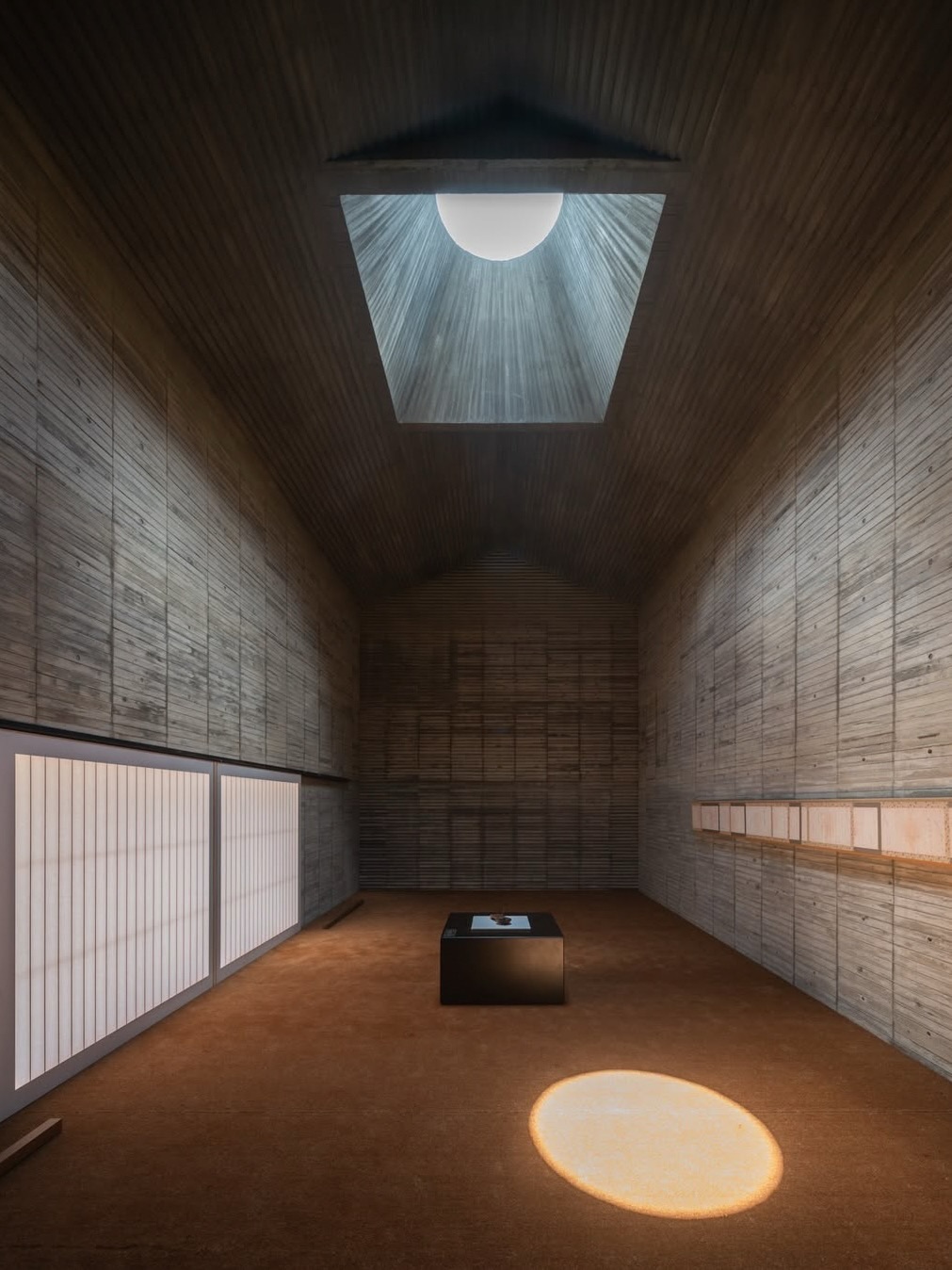
- The circular oculus in the central chamber behaves as a light instrument: at different hours it projects a geometric disc or fills the room with diffuse light, behaving like washi paper held to a window
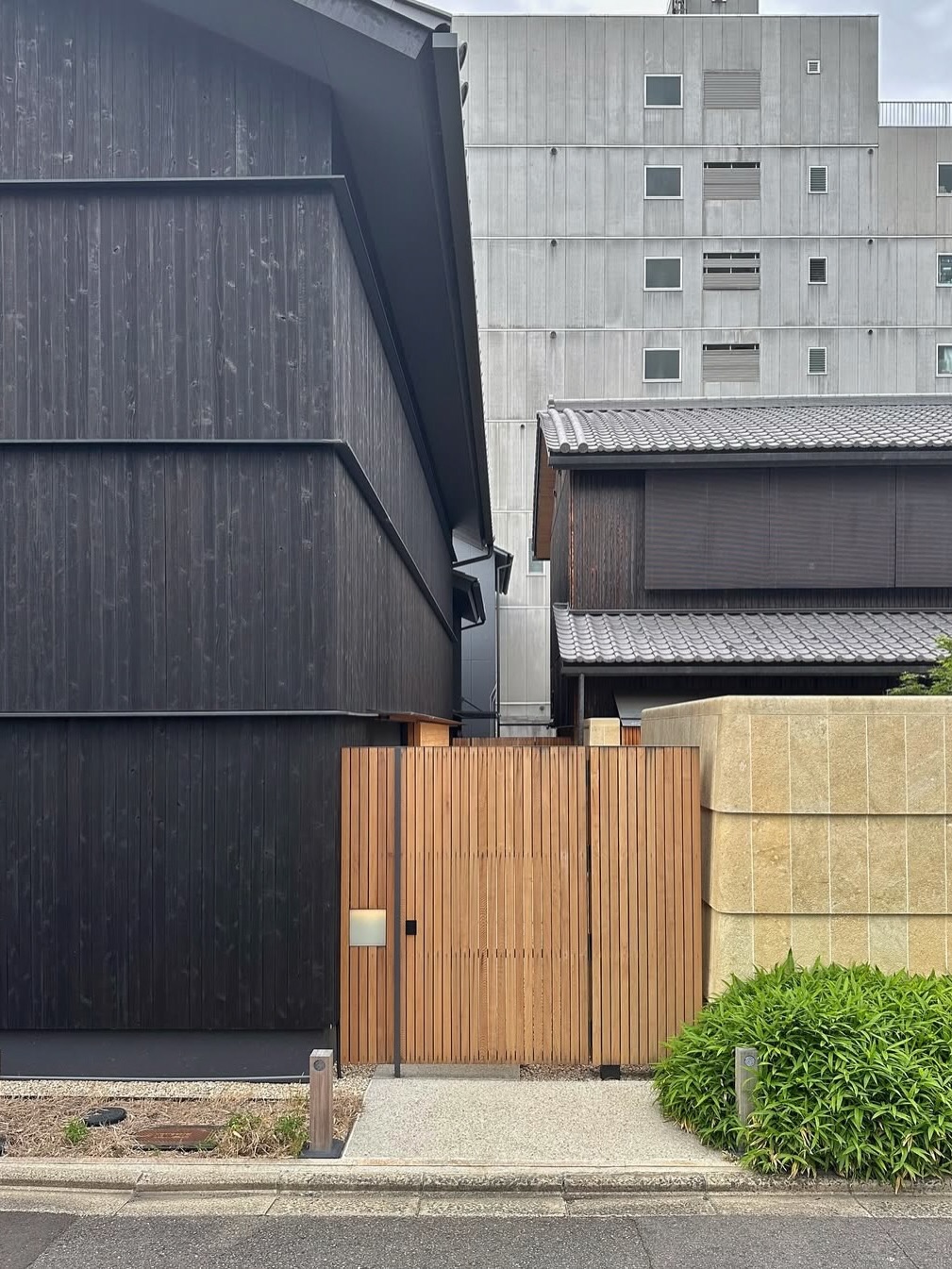
- Naito avoided sterile minimalism by making every surface do specific structural work — charred timber for fire protection and stability, board-formed concrete holding the memory of its formwork
When an institution has been refining the same things for 360 years, its architecture should be worthy of that weight. Not reverential — weight doesn't require reverence. But worthy. Hiroshi Naito's new building for Kyukyodo on Kyoto's Teramachi Street earns the description.
1663
Kyukyodo was founded in Kyoto in 1663 as a maker and seller of incense, washi paper, calligraphy tools, and stationery of particular quality. It served for generations as official stationer to the Imperial Household. That history — of slow craft, of exactitude applied to the quietest pleasures — is embedded in every decision Naito made for the new building.
The brief was not to create a contemporary retail environment for a heritage brand. The brief was to build a place that is continuous with 360 years of practice. That's a different task. It requires the architect to understand what the institution actually is before deciding what it should look like.
A Sequence of Atmospheres
The building sits on historic Teramachi Street — one of Kyoto's most significant commercial corridors, running north from Shijo with centuries of paper goods, craft, and stationery vendors — and operates less like a headquarters and more like a choreographed sequence of experiences. The word "atmosphere" is precise. Each space has different light, different scale, different acoustic quality. You move through the building the way you move through a day: arrival, transition, pause, depth.
The centerpiece is a soaring chamber crowned by a circular oculus. Depending on the time of day, direct sunlight arrives as a perfect geometric disc on the floor below, tracing slowly across the concrete surface as the earth moves. In overcast conditions, the chamber fills with a diffuse, directionless light — the quality of light that washi paper produces when held up to a window. Naito designed the room to behave like the materials Kyukyodo has been selling since 1663.
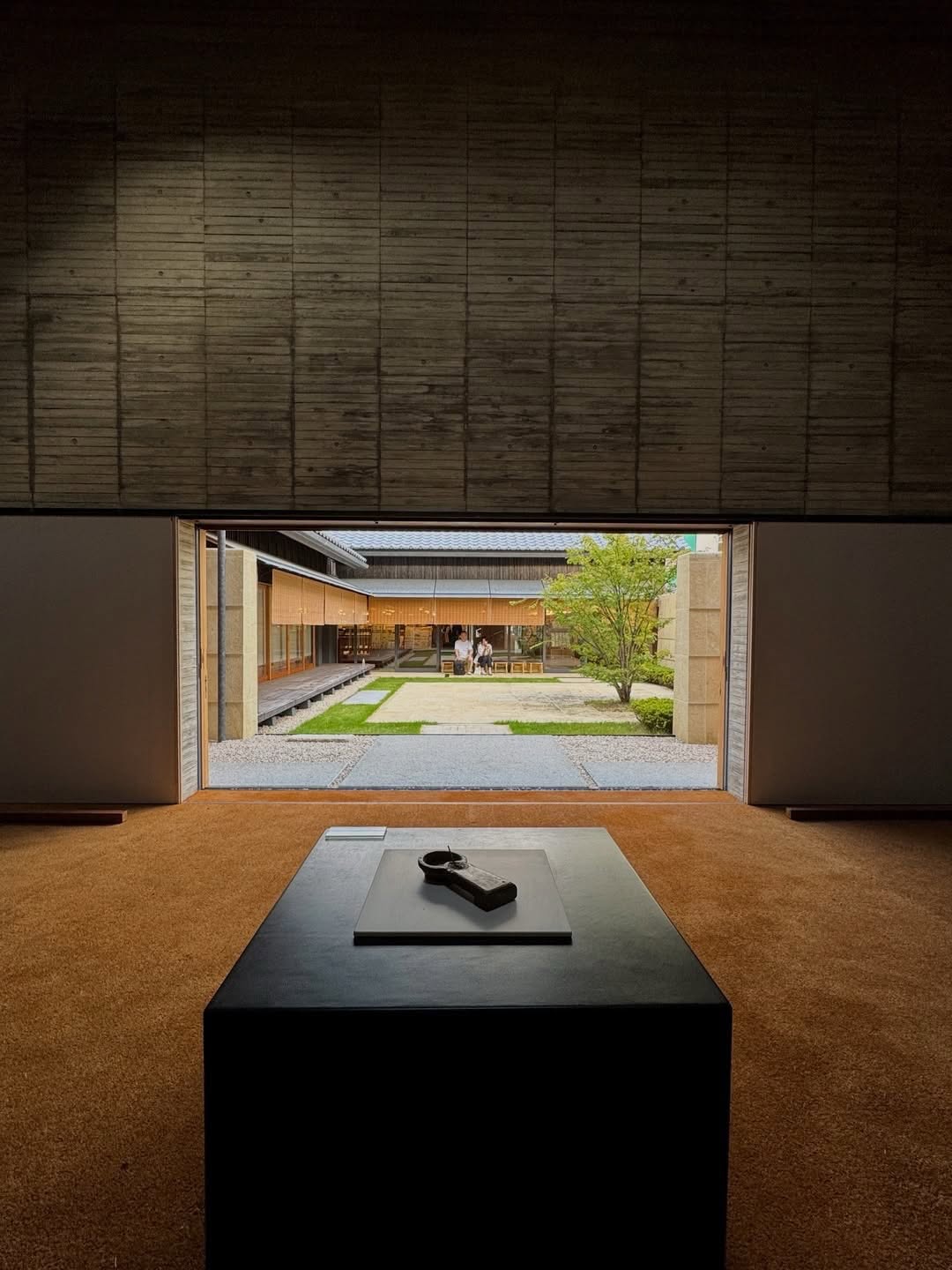
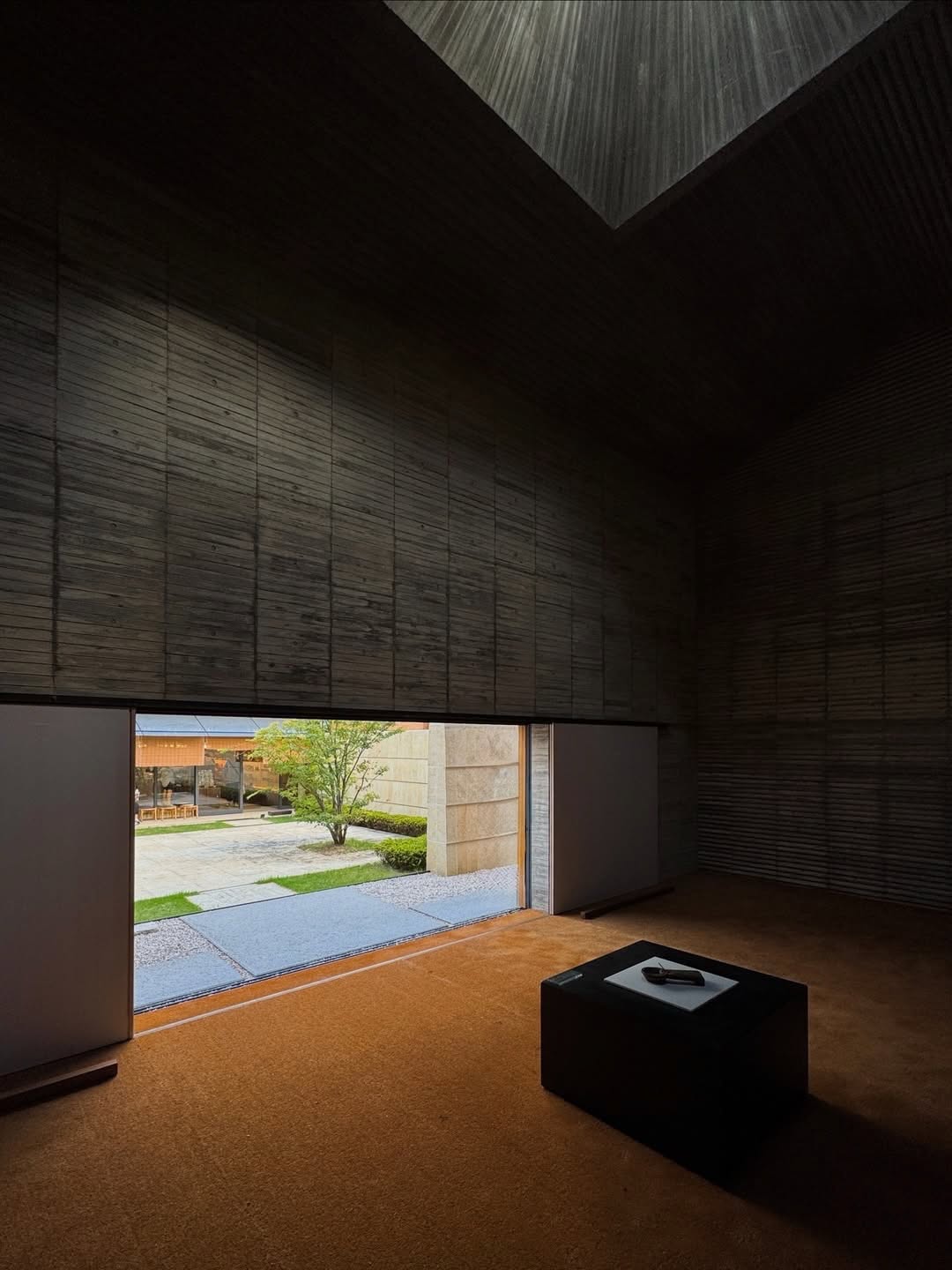
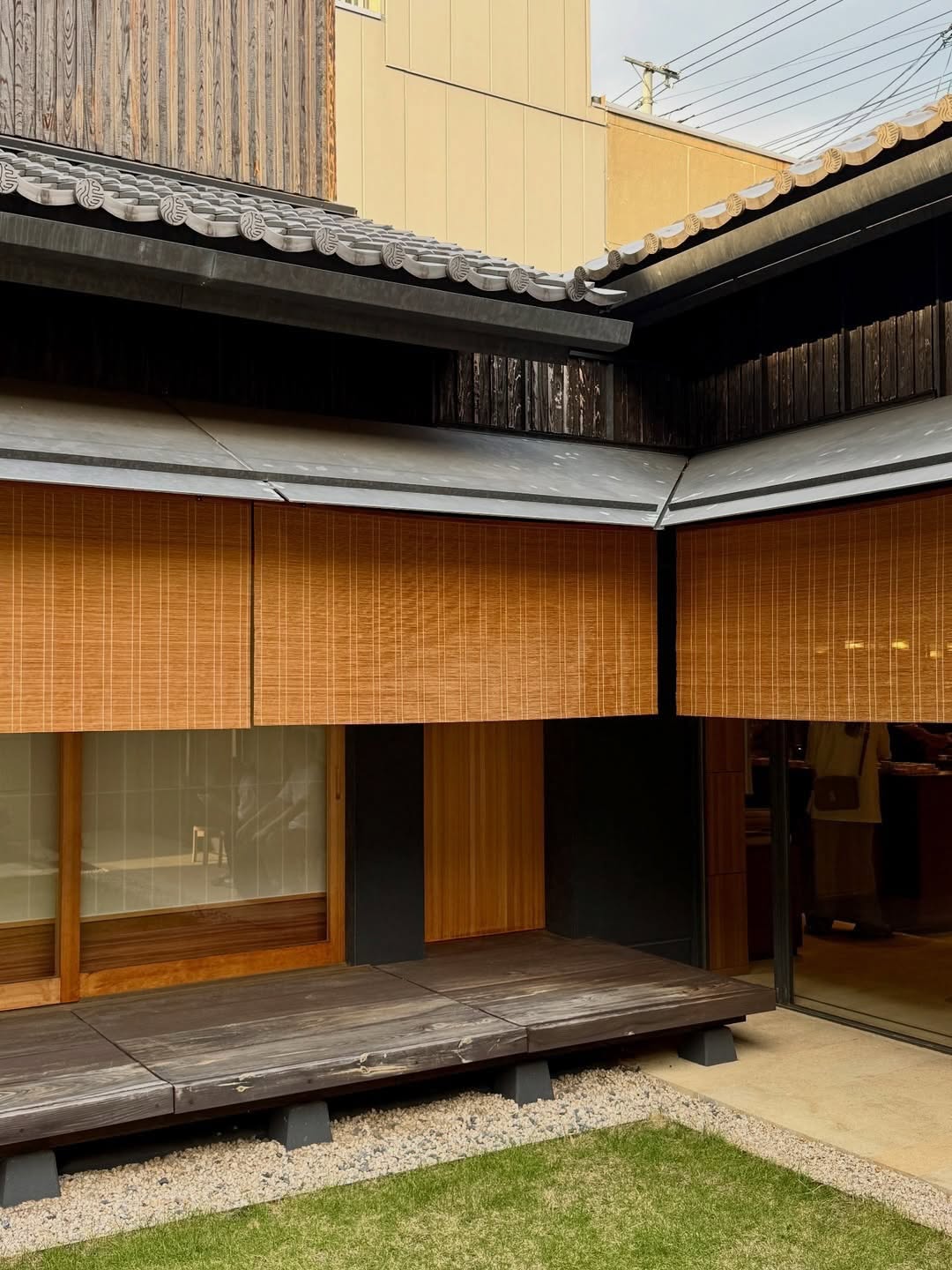
Timber screens open onto intimate courtyards. Light is almost always indirect — arriving from above, filtered through screens, bounced off concrete before reaching the viewer. Even the concrete carries unexpected softness. The board-formed surfaces hold the memory of the wood that formed them.
What Naito Avoided
The trap for contemporary Japanese institutional architecture is sterile minimalism — the kind of reductive aesthetic that reads as restraint but is actually an absence of decision. Naito's building is not minimal. It is disciplined. Every surface is doing specific work. The charred timber does not simply evoke tradition; it has a material logic around fire protection and long-term stability. The oculus is not a gesture toward spirituality; it is a precise light instrument calibrated to the room's proportions.
Naito channels traditional Japanese spatial ideas — shadow, threshold, the choreography of arrival — through contemporary materials and construction methods. The result is a building that knows where it is in Kyoto without performing it. The reference to tradition is structural, not decorative.
The Archive of Craft
Kyukyodo sells incense that has been produced to the same formulations for centuries. Washi paper made from kozo fiber. Calligraphy tools designed without compromise for the practice they serve. In Naito's building, these objects are housed in spaces that were built with equivalent care — where the decision about the angle of a screen, the diameter of an oculus, the profile of a timber joint was made with the same intention that goes into a paper formula or an ink preparation.
The building makes that argument quietly. It doesn't announce it. It just holds.
Frequently Asked Questions
What is Kyukyodo?
Kyukyodo is a Kyoto institution founded in 1663, specializing in incense, washi paper, calligraphy tools, and stationery. It served as an official stationer to the Imperial Household.
Who designed the new Kyukyodo building?
Architect Hiroshi Naito designed the new Kyukyodo building on Teramachi Street in Kyoto, featuring a soaring chamber with circular oculus, charred timber screens, and board-formed concrete.
Topics: kyukyodo, hiroshi naito, kyoto, architecture, japanese design, teramachi, type7, incense, washi