GUS THE T. REX HEADS TO SOTHEBY'S FOR $30 MILLION
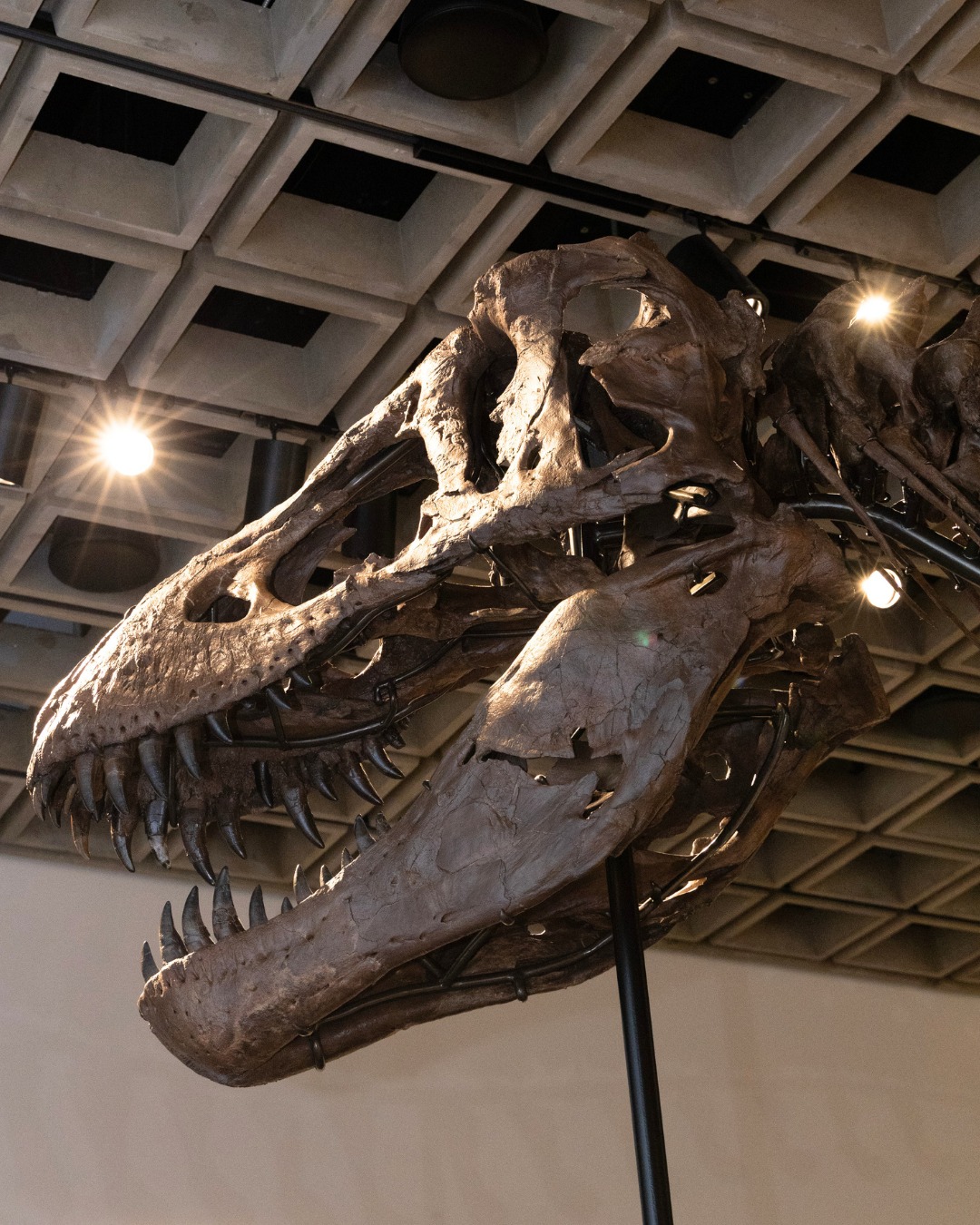
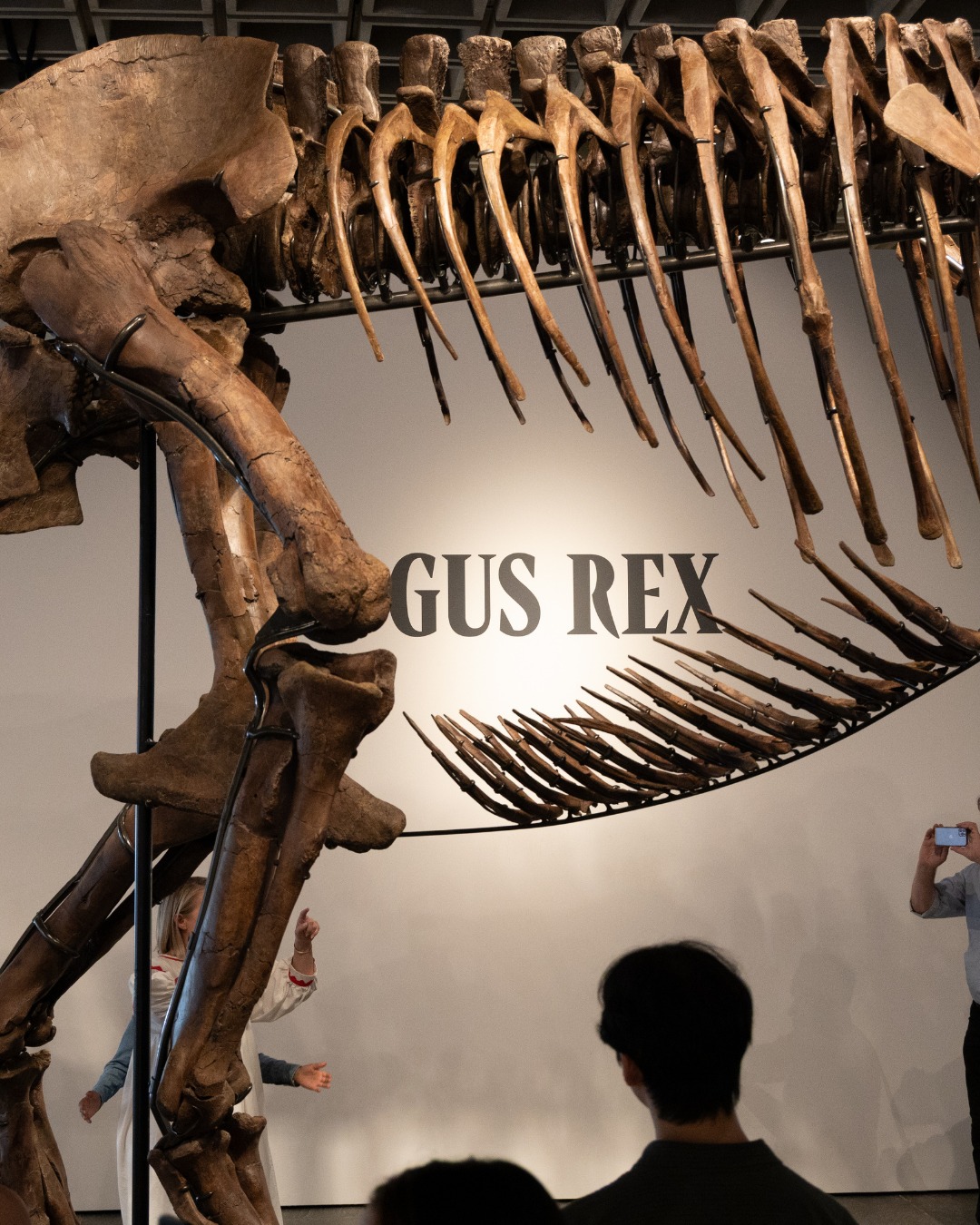
Gus is a 67 million year old Tyrannosaurus rex skeleton discovered on a Harding County, South Dakota ranch and reconstructed from 183 bones, making it roughly 63 percent complete. Sotheby's New York is offering Gus in its Natural History live auction with an estimate of $20 million to $30 million, the highest presale estimate ever set for a dinosaur fossil. The skeleton is on public view at Sotheby's galleries on 945 Madison Avenue before the sale.
Key Points
- Gus the T. Rex is 67 million years old, 63 percent complete, and estimated at $20 to $30 million at Sotheby's.
- Gary Licking found the skeleton on his Harding County, South Dakota ranch in 2021; excavation ran through 2023.
- Gus's estimate tops Stan's $31.8 million 2020 sale and sits below Apex the Stegosaurus's $44.6 million record.
Gus the T. Rex carries a nineteen million dollar opening bid this week at Sotheby's New York, and Sotheby's says the number will likely climb past thirty million before the hammer falls. The estimate, twenty to thirty million dollars, is the highest a dinosaur has ever carried into a saleroom before bidding even opens. Gus is sixty seven million years old, reconstructed from one hundred eighty three bones pulled from a cattle ranch in Harding County, South Dakota, and Sotheby's is calling him one of the largest and most complete T. Rex specimens ever discovered.
Gary Licking Found a Skull in His Own Pasture
Gary Licking, whose family has ranched Harding County since the early 1900s, spotted bone fragments breaking through the dirt on his own land in 2021. The Tyrannosaurus is named Gus in his honor, and the dig took three full summers, running from 2021 into 2023, before a single vertebra reached a lab bench.
Theropoda Expeditions, a commercial paleontology outfit, handled the excavation, working the Hell Creek Formation site season by season instead of rushing one dig. Sotheby's has spent 2026 turning its saleroom into a culture desk of its own, the same summer it ran four Virgil Abloh screen prints toward a University of Wisconsin scholarship, and a dinosaur skeleton is a stranger fit for that pattern than a Basquiat or a Rolex, which is exactly why it works as a headline lot.
Sixty Three Percent of the Skeleton Is Original Bone
Gus is roughly sixty three percent complete by bone count, reconstructed from those one hundred eighty three fossilized elements rather than a mostly sculpted cast. That completeness ratio separates a museum grade mount from the resin skeletons that fill hotel lobbies and mall atriums.
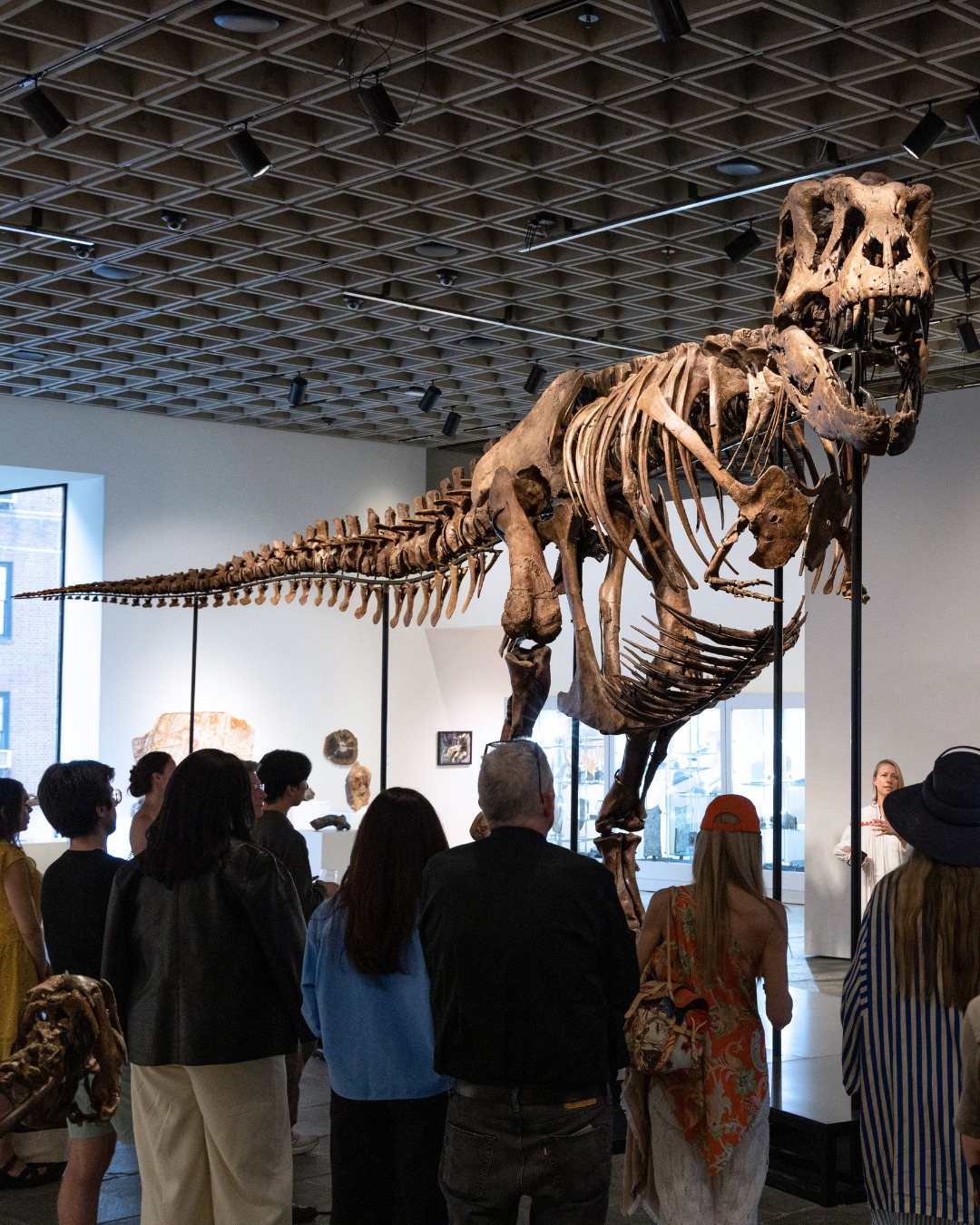
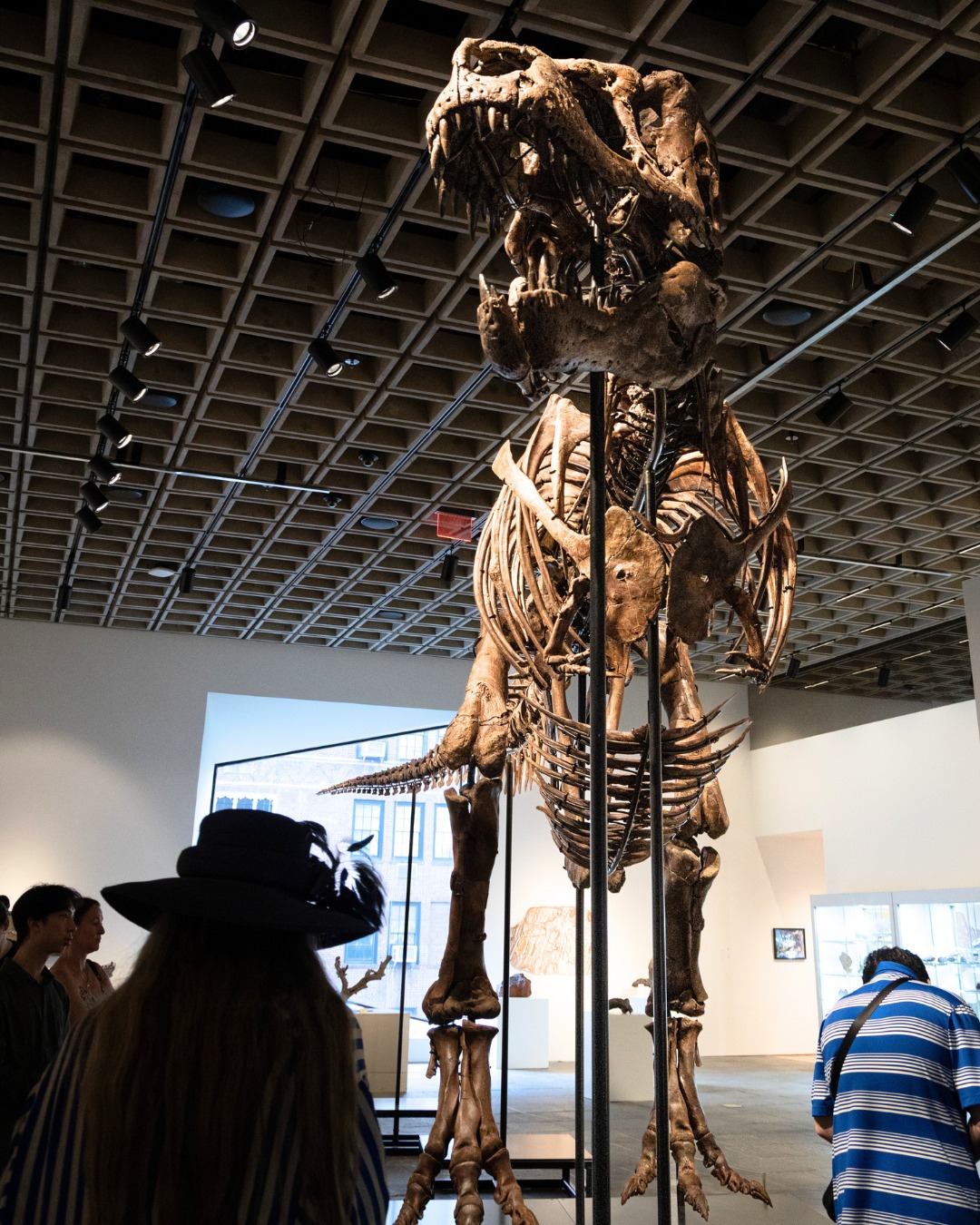
The mount runs thirty eight feet from skull to tail and stands twelve and a half feet at its tallest point, currently on view inside Sotheby's galleries at 945 Madison Avenue, the former Whitney building the house now calls the Breuer. Stand at the base and the skull alone is taller than a doorway. The bone has the dull, mineralized brown of something that spent sixty seven million years underground, not the bright resin sheen of a cast, and that difference is the entire argument for the price. The public can walk the galleries free through this weekend, before the specimen moves into the Natural History live sale.
Twenty to Thirty Million Is a New Kind of Estimate
Gus carries the highest presale estimate ever assigned to a dinosaur, twenty to thirty million dollars, topping the range Sotheby's has set for any earlier fossil lot. The number matters more as a ceiling the house is willing to print than as a guarantee of where bidding actually lands.
History argues both directions. Stan the T. Rex, found by Stan Sacrison in the Hell Creek Formation near Buffalo, South Dakota, sold for thirty one point eight million dollars at Christie's in 2020, a skeleton forty feet long with one hundred eighty eight bones. Apex the Stegosaurus carried a modest four to six million dollar estimate at Sotheby's in 2024 and still closed at forty four point six million, bought by hedge fund billionaire Kenneth Griffin. The same appetite that pushed a Zhang Enli painting to three million dollars at Hauser and Wirth is chasing one of one physical objects across categories, whether the surface is oil paint or fossilized bone.
Paleontologists Do Not Want Gus in a Living Room
Working paleontologists have objected to fossil auctions since Stan sold in 2020, arguing that a specimen this complete belongs in a museum collection where researchers can study growth patterns, not behind a private collector's glass. Gus faces the same risk. A skeleton complete enough to sharpen what scientists know about T. Rex growth could disappear into private storage the moment the gavel falls.
Sotheby's is not pretending otherwise. The house built the Natural History department specifically to court collectors who already buy blue chip paintings and rare watches, and a dinosaur reads as the next entry in that same portfolio, a tangible asset with a story attached. Whether Gus stays on public view in a lobby somewhere or vanishes into a private compound, the twenty to thirty million dollar estimate already reset what a fossil auction looks like before a single paddle goes up. Sixty three percent complete, one hundred eighty three bones, and a Harding County ranch that will never look the same on a paleontology map again.
Frequently Asked Questions
What is Gus the T. Rex?
Gus is a Tyrannosaurus rex skeleton discovered on a Harding County, South Dakota cattle ranch, reconstructed from 183 fossilized bones and roughly 63 percent complete.
How much is Gus the T. Rex expected to sell for?
Sotheby's has set an estimate of $20 million to $30 million for Gus, with bidding opening at $19 million, the highest presale estimate ever assigned to a dinosaur skeleton.
Who found Gus the T. Rex?
Rancher Gary Licking spotted bone fragments on his own Harding County land in 2021, and the skeleton is named in his honor.
When is the Gus the T. Rex auction at Sotheby's?
Gus headlines Sotheby's Natural History live auction in New York, with public viewing at the Breuer building on 945 Madison Avenue running before the sale.
Is Gus the T. Rex one of the most complete specimens ever found?
Yes, Sotheby's describes Gus as one of the largest and most complete T. Rex specimens ever discovered, with roughly 63 percent of the skeleton made up of original fossilized bone.
How does Gus compare to Stan the T. Rex and Apex the Stegosaurus?
Gus's $20 million to $30 million estimate tops the presale range ever set for a dinosaur, above Stan's $31.8 million 2020 sale at Christie's, though it remains below Apex the Stegosaurus's $44.6 million record sale at Sotheby's in 2024.
Does buying a dinosaur fossil at auction raise scientific concerns?
Yes, paleontologists have objected to fossil auctions since Stan sold in 2020, warning that specimens this complete belong in museum collections for research rather than in private hands.
Where can the public see Gus the T. Rex before the auction?
Gus is on free public view inside Sotheby's galleries at 945 Madison Avenue in New York before moving into the Natural History live sale.
Topics: fossil-auction, tyrannosaurus-rex, dinosaur-fossil, virgil abloh, south-dakota, hell-creek-formation, auction-market, natural-history-auction, t-rex, virgil-abloh, focus-51-81, sothebys