DANIEL ARSHAM’S PORSCHE LEAVES NO ROOM FOR A DRIVER
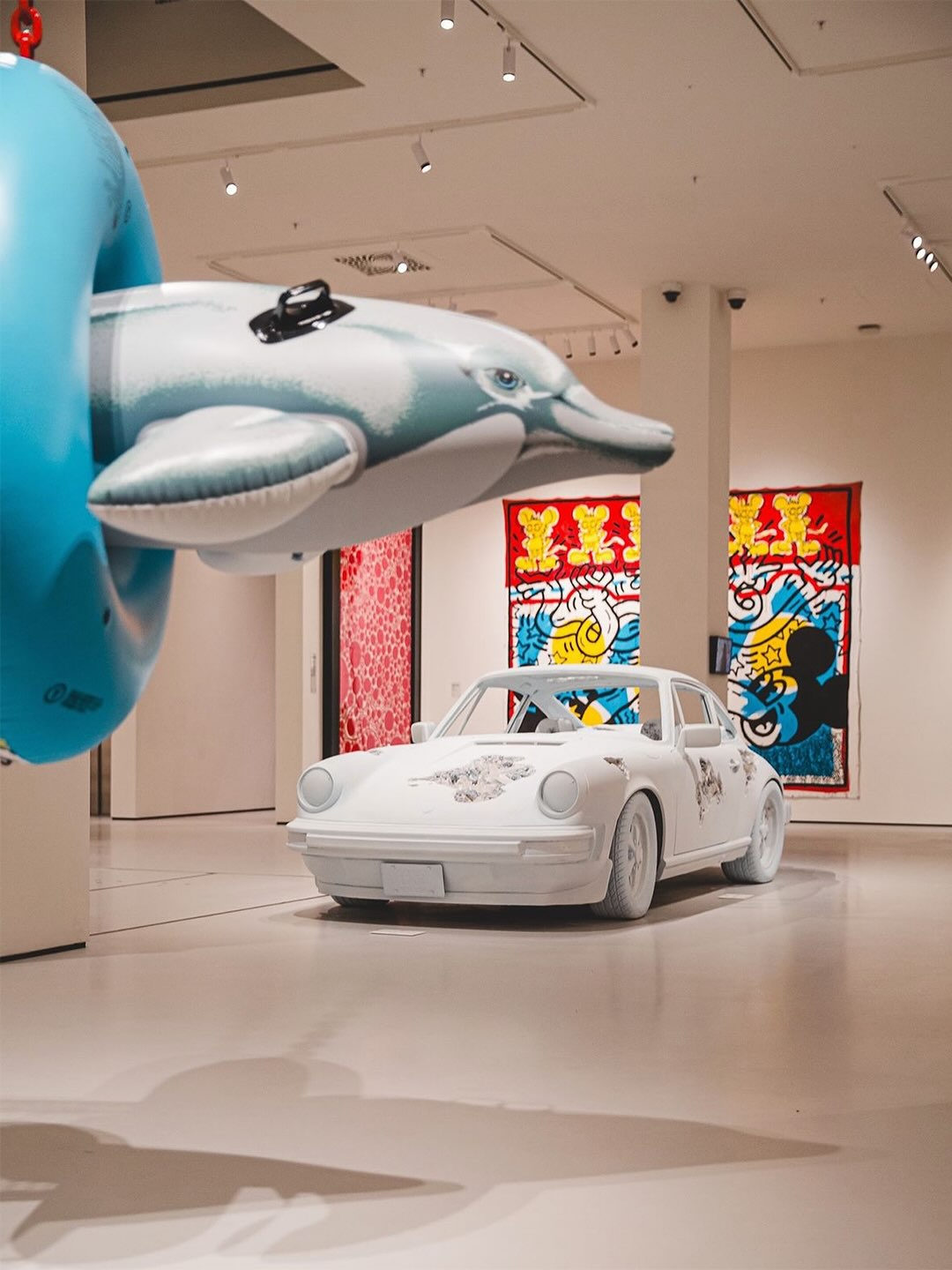
Daniel Arsham’s Blue Calcite Eroded Porsche 911 is on view at Moco London. The artist identifies the full scale sculpture as a 2022 work, with new interior views showing the mineral treatment across the driver’s space.
Key Points
- Arsham identifies the sculpture as a 2022 work.
- The full scale Porsche is on view at Moco London.
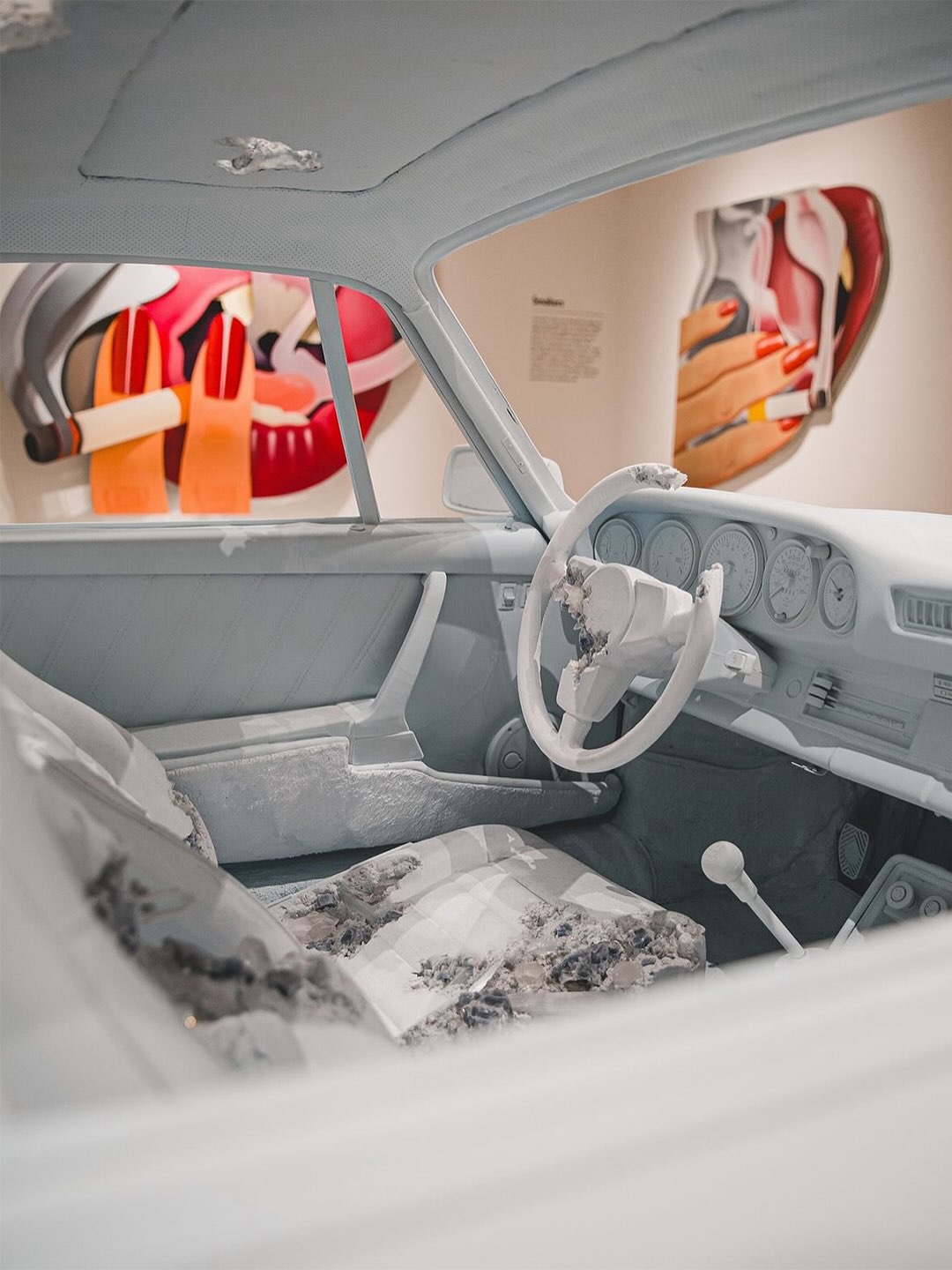
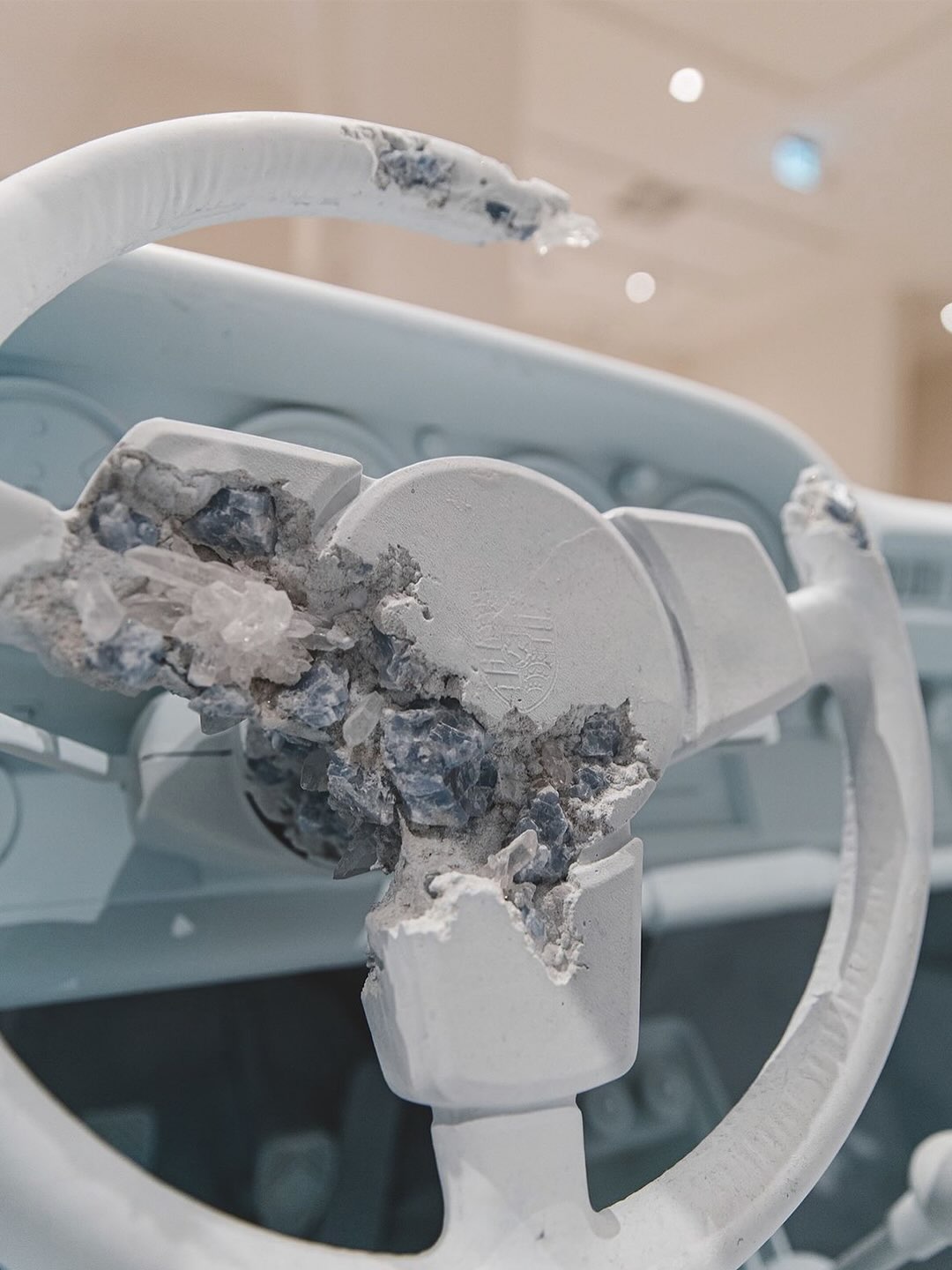
- The interior extends the erosion treatment to the wheel and seating area.
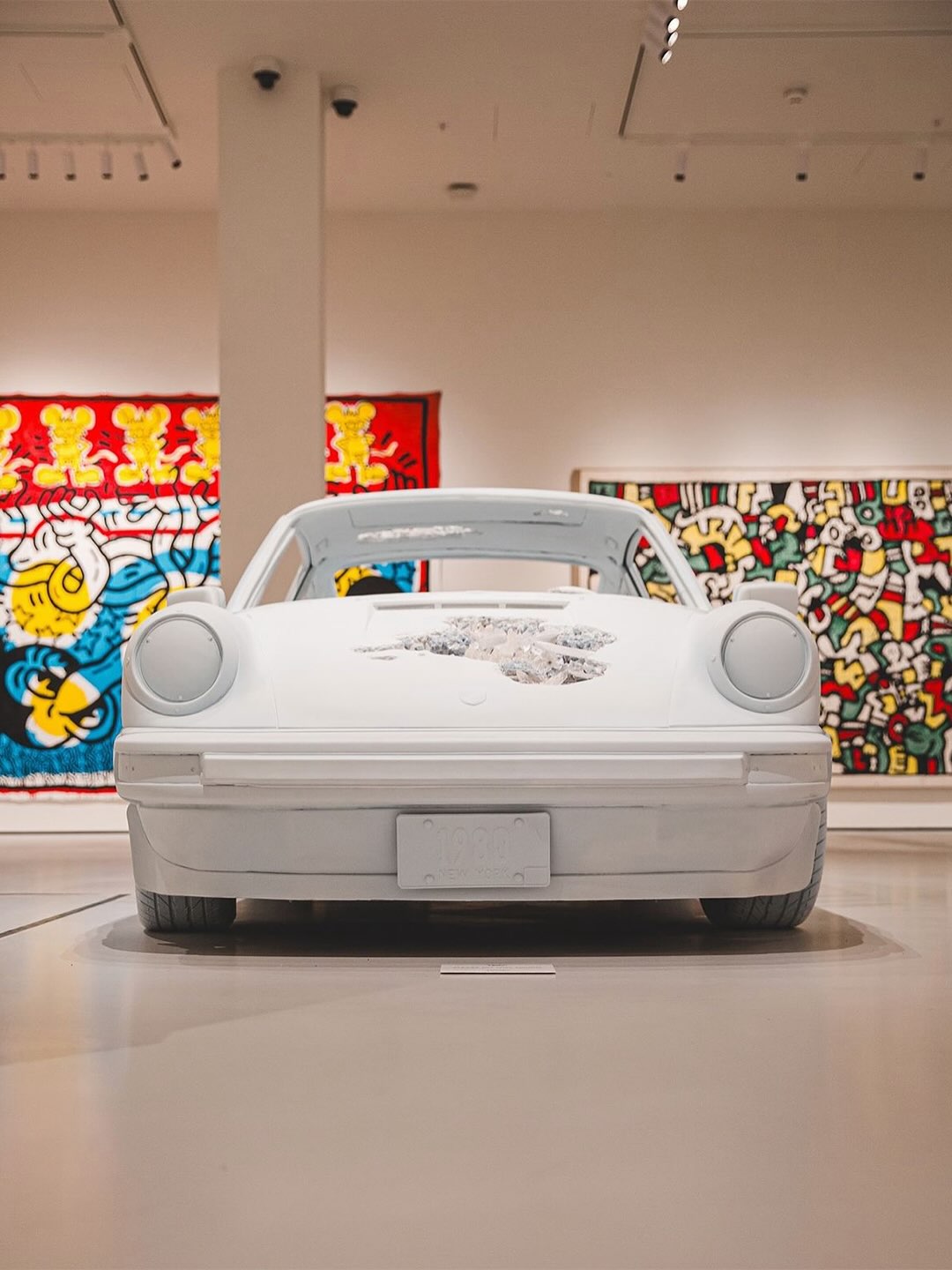
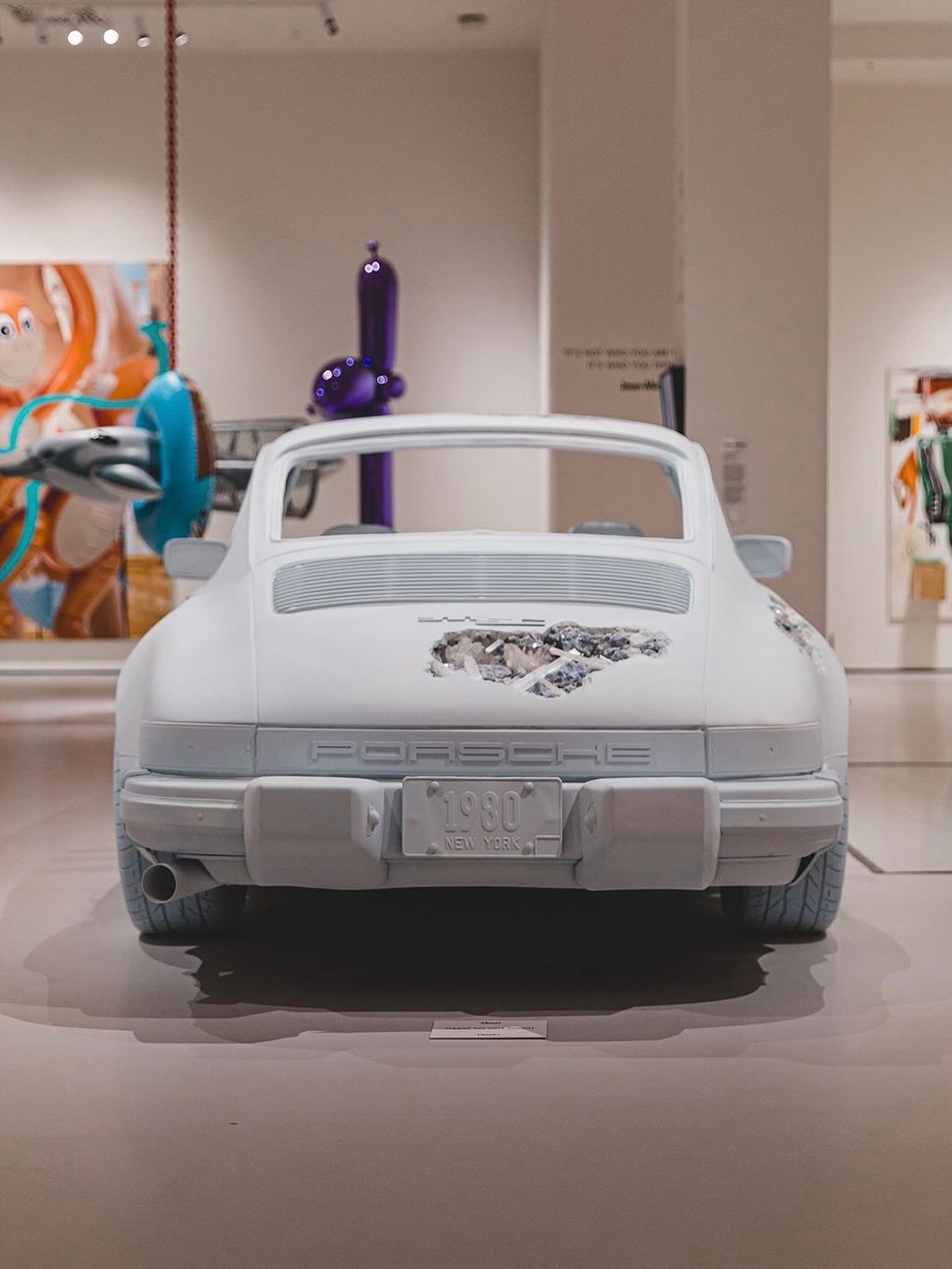
Daniel Arsham Porsche 911 photographs at Moco London begin outside the car, then move into a cabin that could never take a driver. The artist identifies Blue Calcite Eroded Porsche 911 as a 2022 sculpture, built at full scale from fiberglass, steel, Hydrostone, quartz, selenite and blue calcite. Its interior gives the familiar erosion treatment a sharper consequence: even the parts designed around a human body have become mineral surfaces.
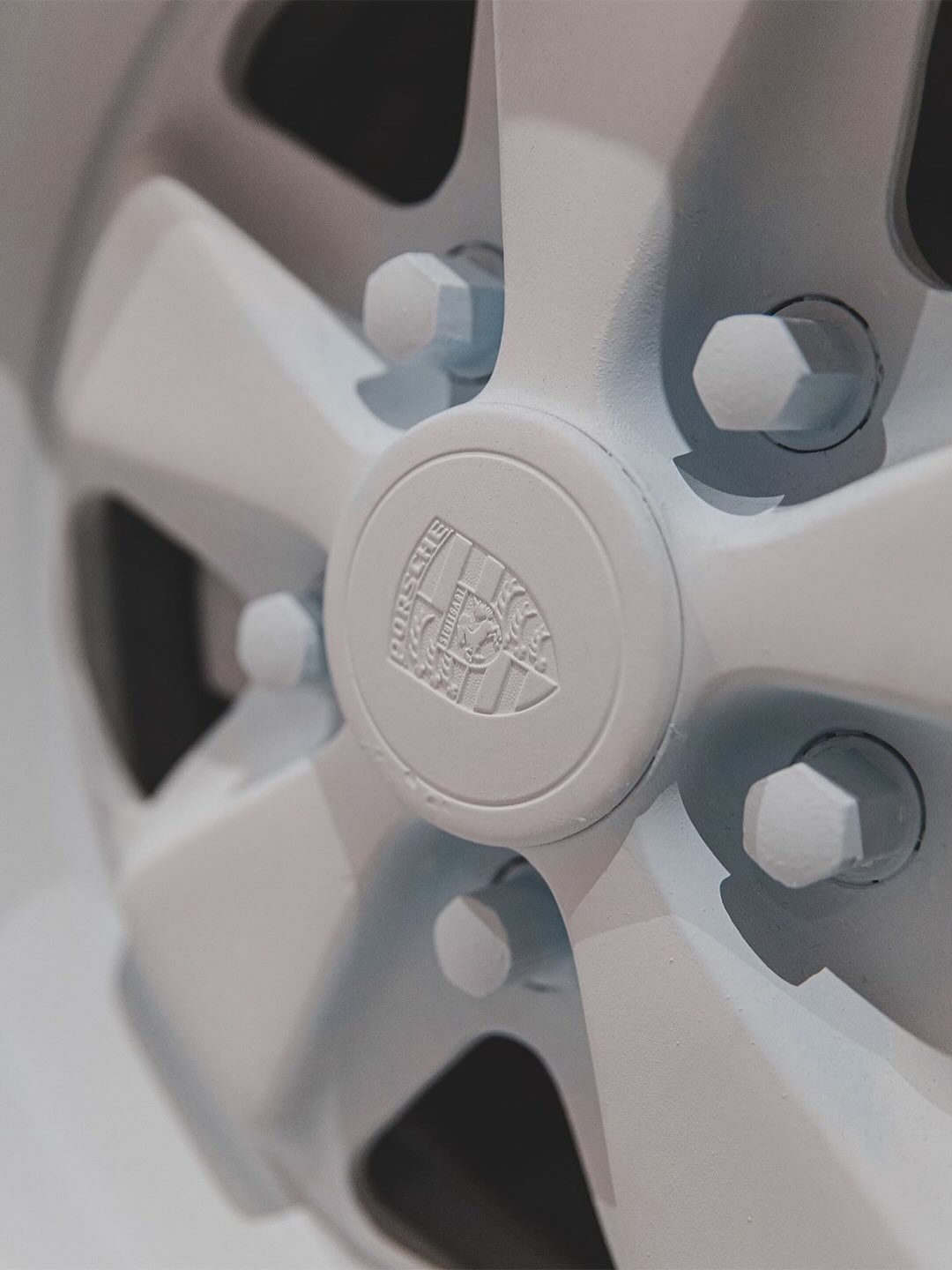
The pale car sits beside a curving staircase in the opening image. From that distance, the outline still reads quickly as a Porsche. The following views slow that recognition down, directing attention toward the wheel, seats and rough formations inside the passenger compartment.
Those are more revealing than another isolated shot of a damaged fender. A fender can lose material while the idea of a car remains intact. A driver's seat or steering wheel carries a stronger expectation of touch, and Arsham's replacement of that expectation with crystals makes the sculpture feel less available to use.
A Driver's Space Becomes Solid Evidence
Arsham's current image sequence includes close views of the sculpted Porsche's interior as well as its exterior. The steering wheel and seating area carry the work's pale mineral treatment, extending the sculpture beyond a recognisable body shell.
The cabin is where the full scale becomes consequential. At miniature size, an inaccessible interior could pass as a modelling shortcut. Here the wheel has the familiar relationship to the dashboard and seat, so a viewer can imagine reaching toward it before noticing the broken and crystalline surfaces.
Arsham had already isolated a driver's contact point in his four W124 steering wheels. The Porsche gathers such details back into a whole vehicle. The smaller work encouraged comparison between repeated forms; this one lets the eye move from one unusable component to the next.
Six Named Materials Support One Car Shape
The artist's September 25 description lists fiberglass, steel, Hydrostone, quartz, selenite and blue calcite for Blue Calcite Eroded Porsche 911. Those materials combine a supporting structure and cast surfaces with minerals that give the erosion its visual identity.
The list should not be mistaken for a description of a road car that has naturally weathered. Arsham made a sculpture in the shape of the vehicle, with the damaged areas arranged as part of the work. The photographs show where smooth planes give way to rougher formations, but they do not supply a conservation assessment or a mechanical specification.
The blue is restrained enough that some views read almost white. That tonal closeness keeps the crystals within the car's overall mass instead of turning every opening into a separate bright accent. A viewer can register a continuous body first and then examine the points where it appears to have broken open.
Moco's Staircase Provides a Different Scale
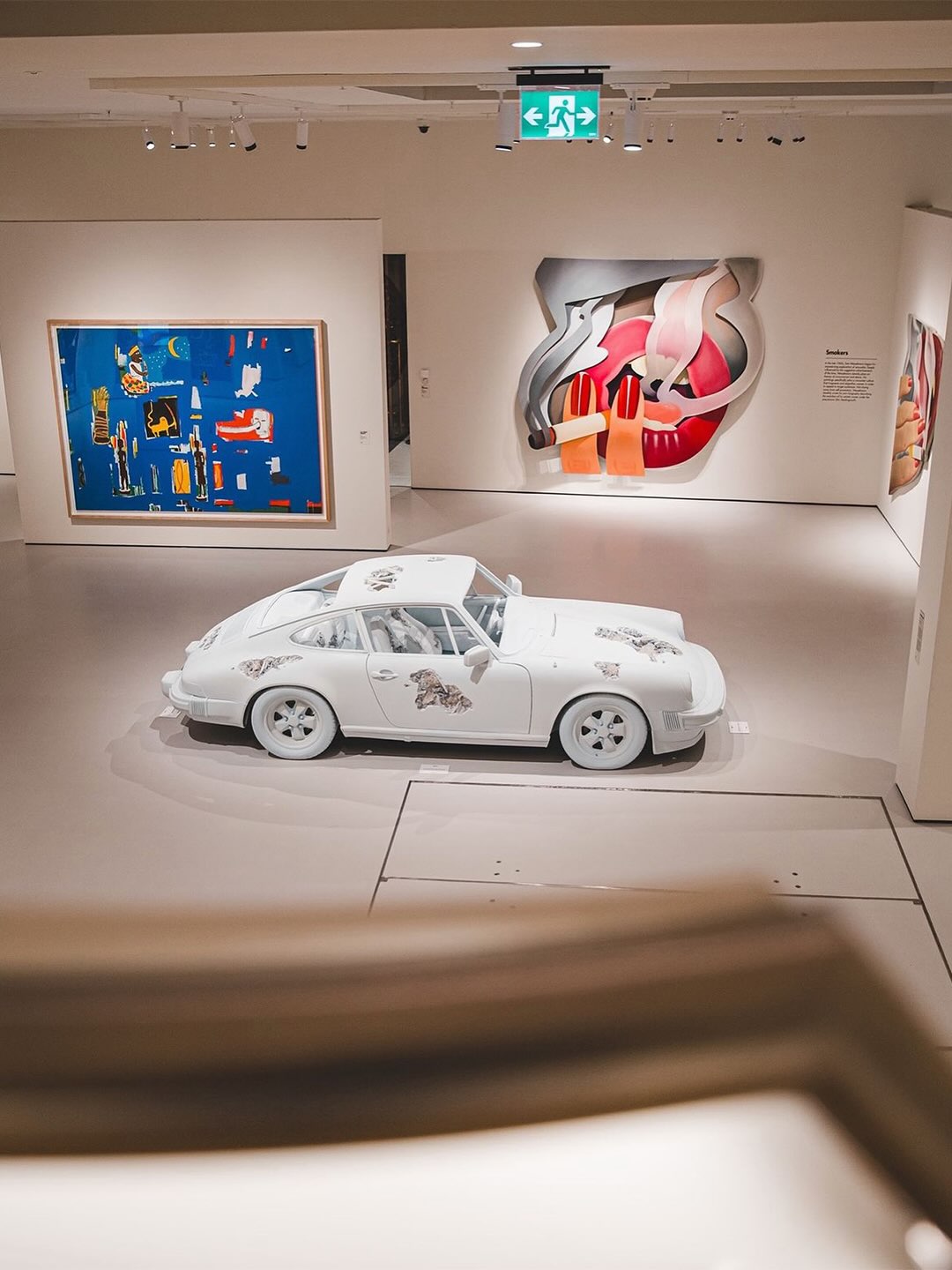
Arsham identifies the sculpture as currently on view at Moco Museum in London. The installation photographs place the full sized car within the museum's interior, close to a curved staircase and other visible artworks.
The staircase makes the Porsche's horizontal proportions especially clear. A visitor can move through a building around the object while the object itself remains fixed. That relationship separates the sculpture from an automotive display organised around the possibility of driving the exhibited vehicle away.
Porsche's own Sonderwunsch custom commissions can also spend extraordinary labour on a car's finish. Arsham directs comparable attention toward imagined deterioration. One approach refines a surface for an owner; the other makes a familiar surface appear to outlast its original use.
Keys Once Promised Access to These Shapes
Arsham's earlier automotive works include six enlarged car keys, presented in 2023 using geological materials. The London Porsche gives that earlier play with access a physical destination, a complete car whose cabin cannot perform its ordinary role.
The connection is more useful than treating every eroded automobile as a separate spectacle. A key, a steering wheel and a seat each mediates between a person and a machine. Arsham preserves enough of each shape for its former job to remain obvious, then gives its surface a condition that frustrates the job.
The strongest photographs in this eight image set are the cabin views. Full scale supplies the bodily reference, and the crystalline steering area interrupts it. At Moco London, the Porsche's interior is where recognition turns into a reason to keep looking.
Frequently Asked Questions
What is Blue Calcite Eroded Porsche 911?
It is Daniel Arsham's full scale Porsche shaped sculpture.
When was the work made?
Arsham's current official description dates it to 2022.
Can visitors see it in London?
Arsham identifies it as on view at Moco London.
What materials are listed for the sculpture?
Fiberglass, steel, Hydrostone, quartz, selenite and blue calcite.
Is it a usable road car?
It is presented as a sculpture, with a mineral treated interior rather than a functional passenger cabin.
How does the cabin relate to Arsham's earlier work?
It extends his treatment of automotive contact points, including earlier steering wheel and key sculptures.
Topics: focus-31-60, sculpture, porsche-911, automotive-art, daniel-arsham, daniel arsham, blue-calcite, moco-london, porsche