Daniel Arsham Cast the W124 Steering Wheel Four Times in 2015
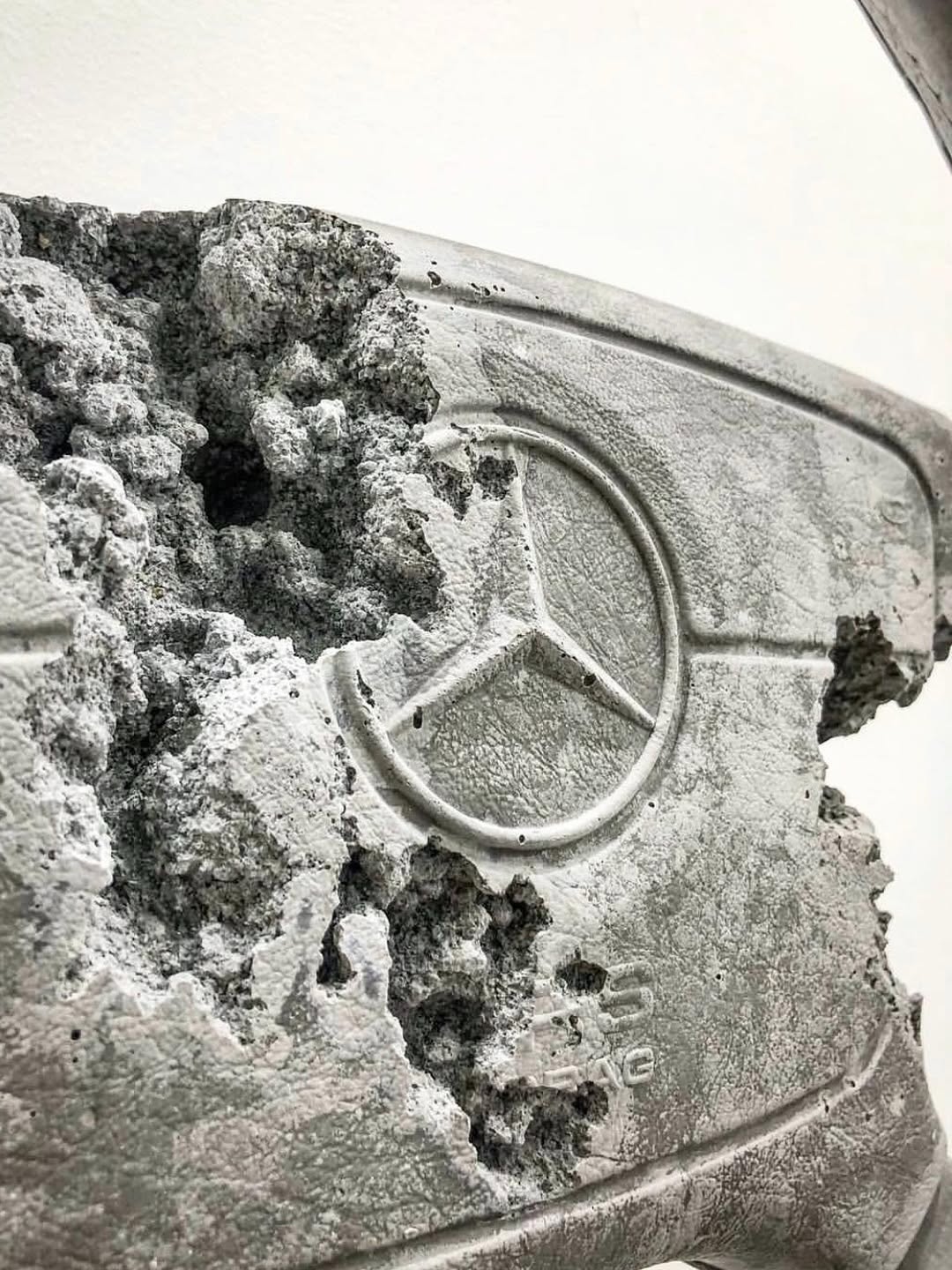
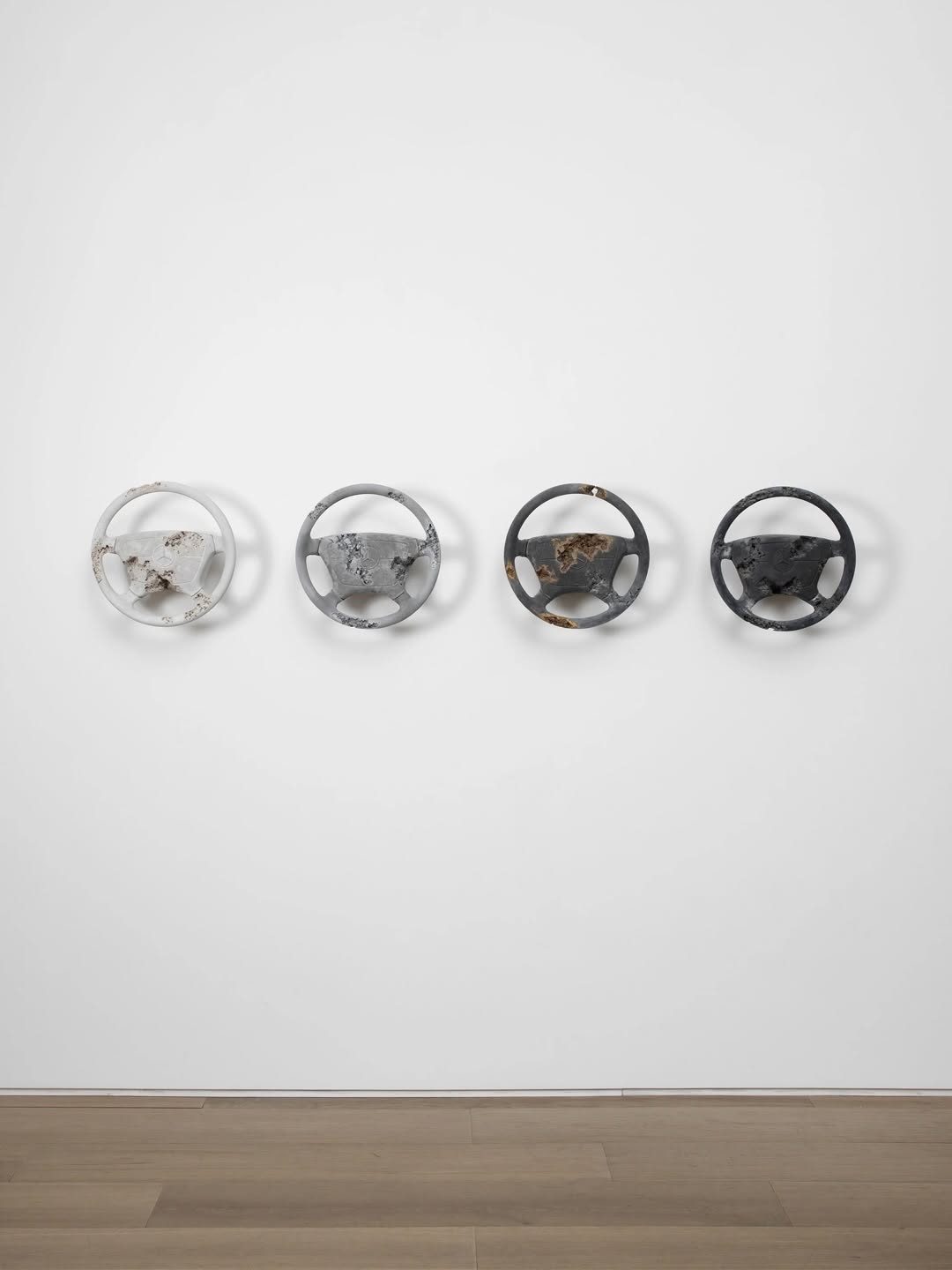
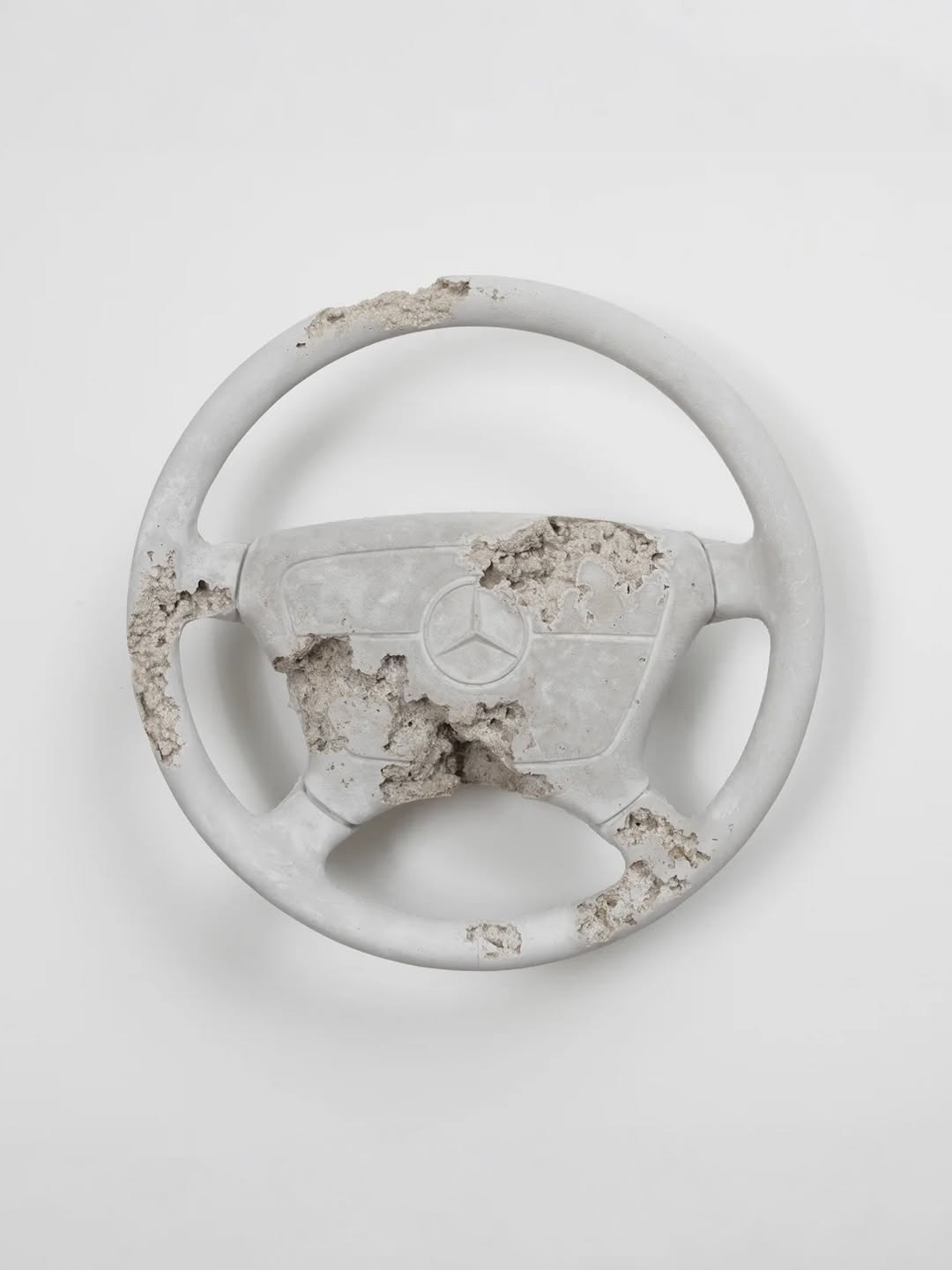
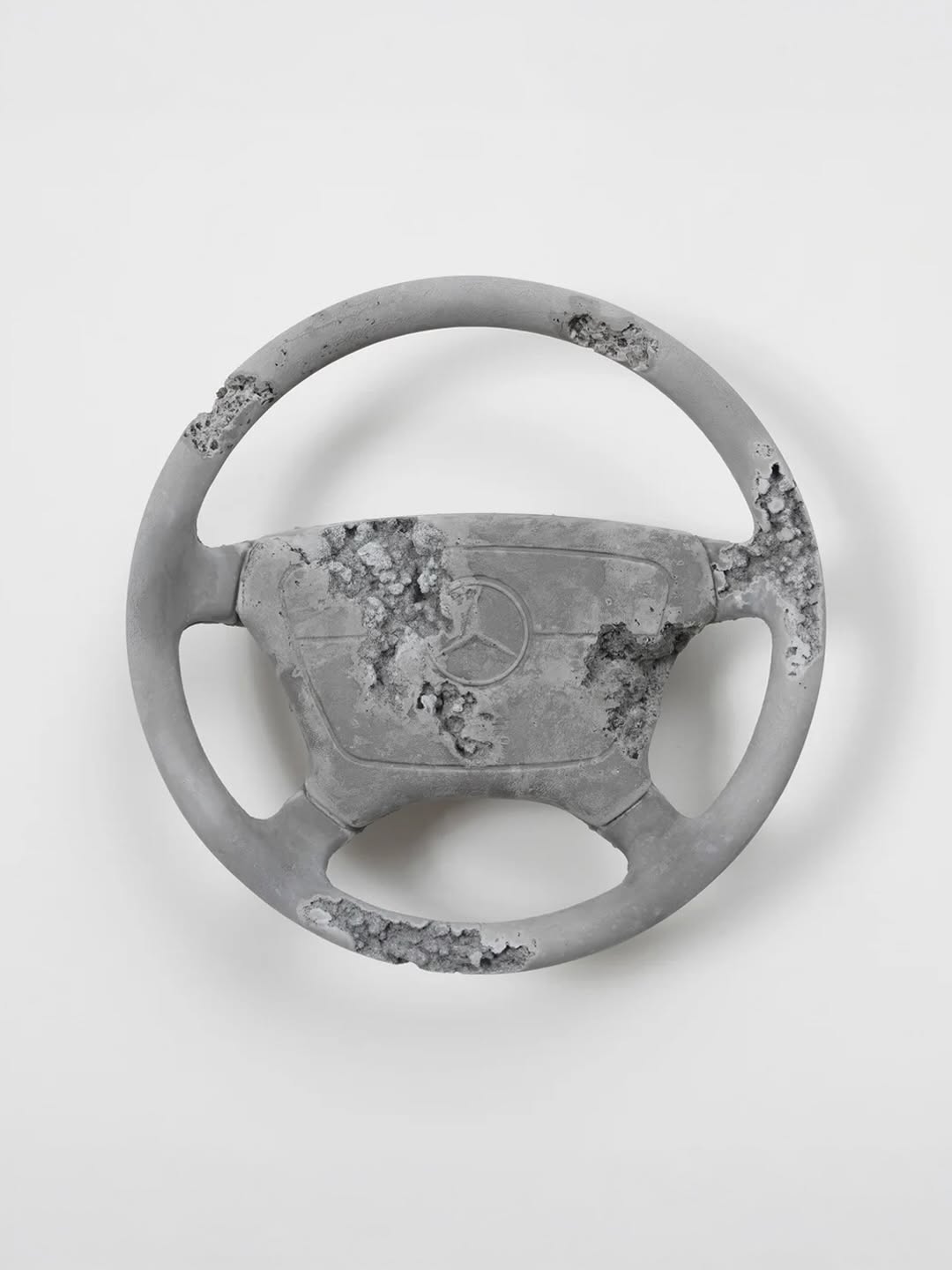
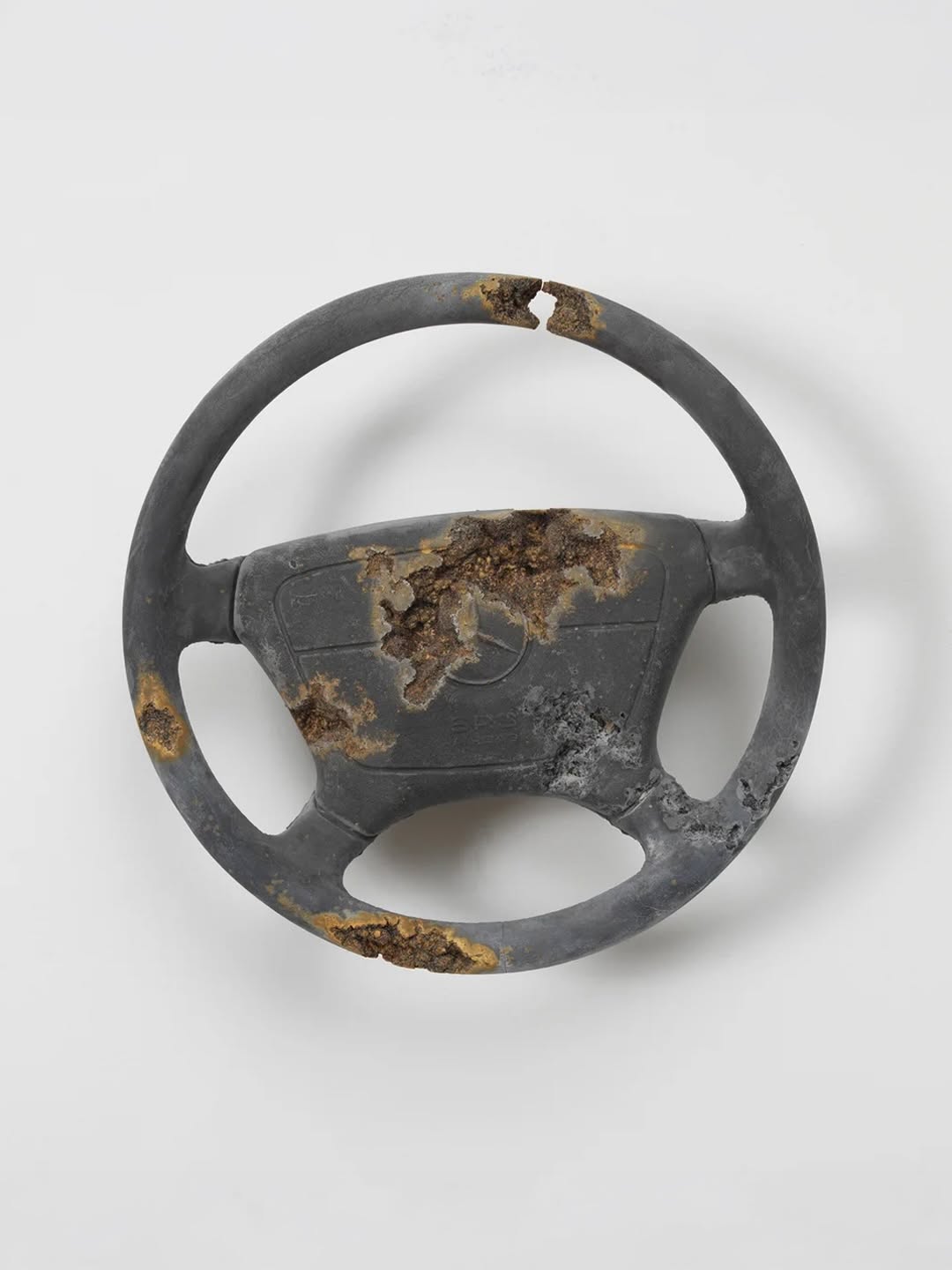
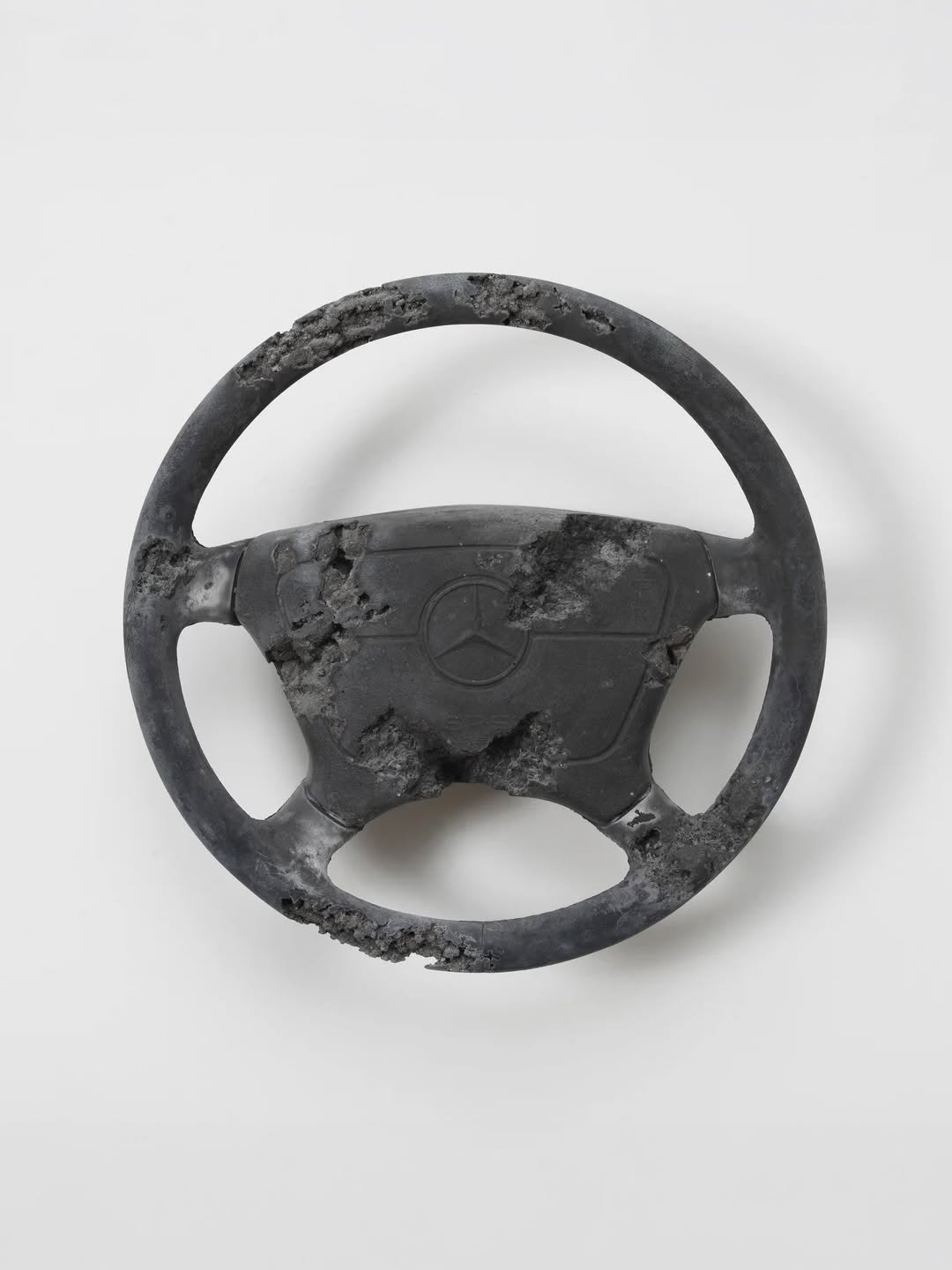
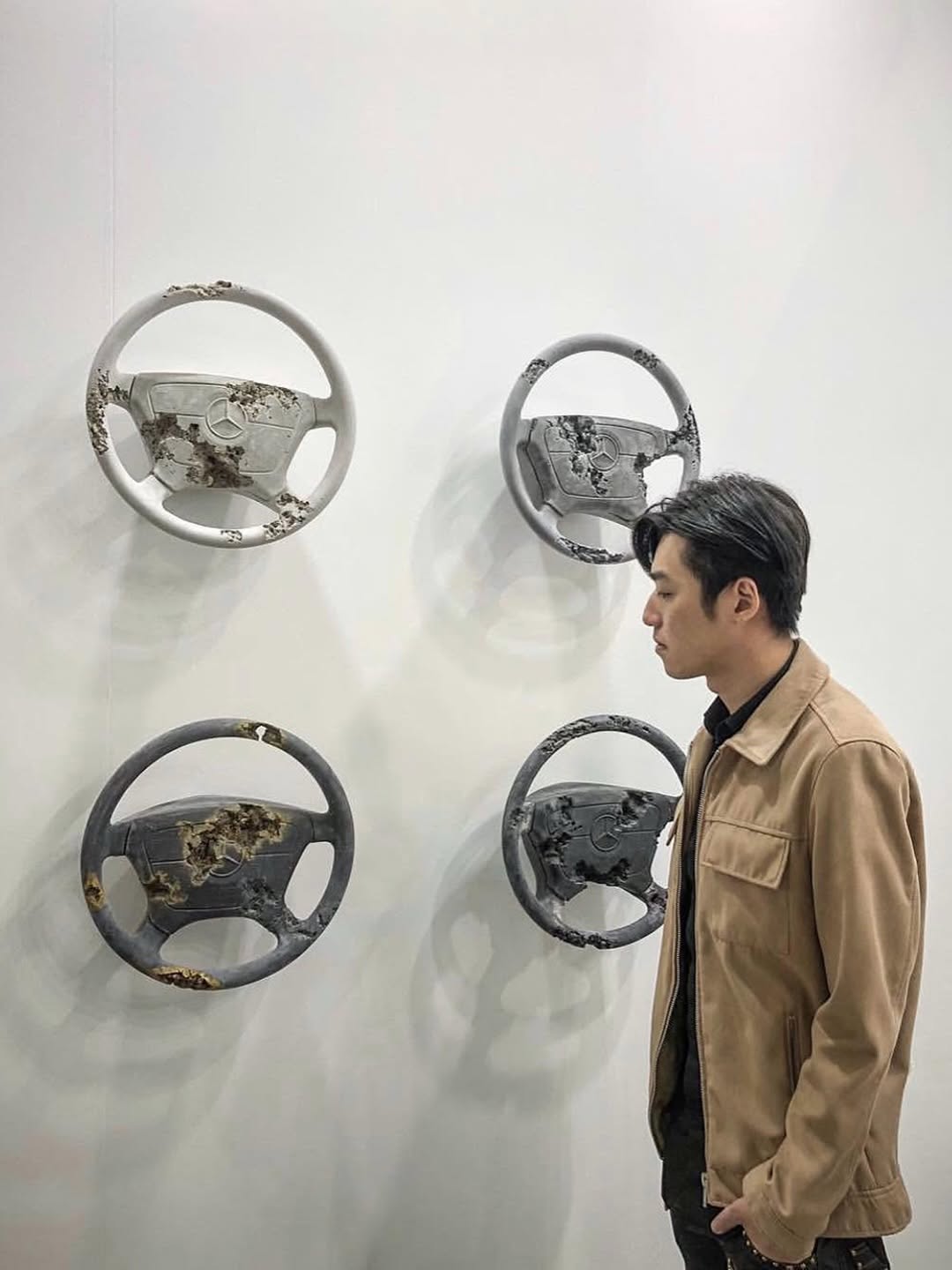
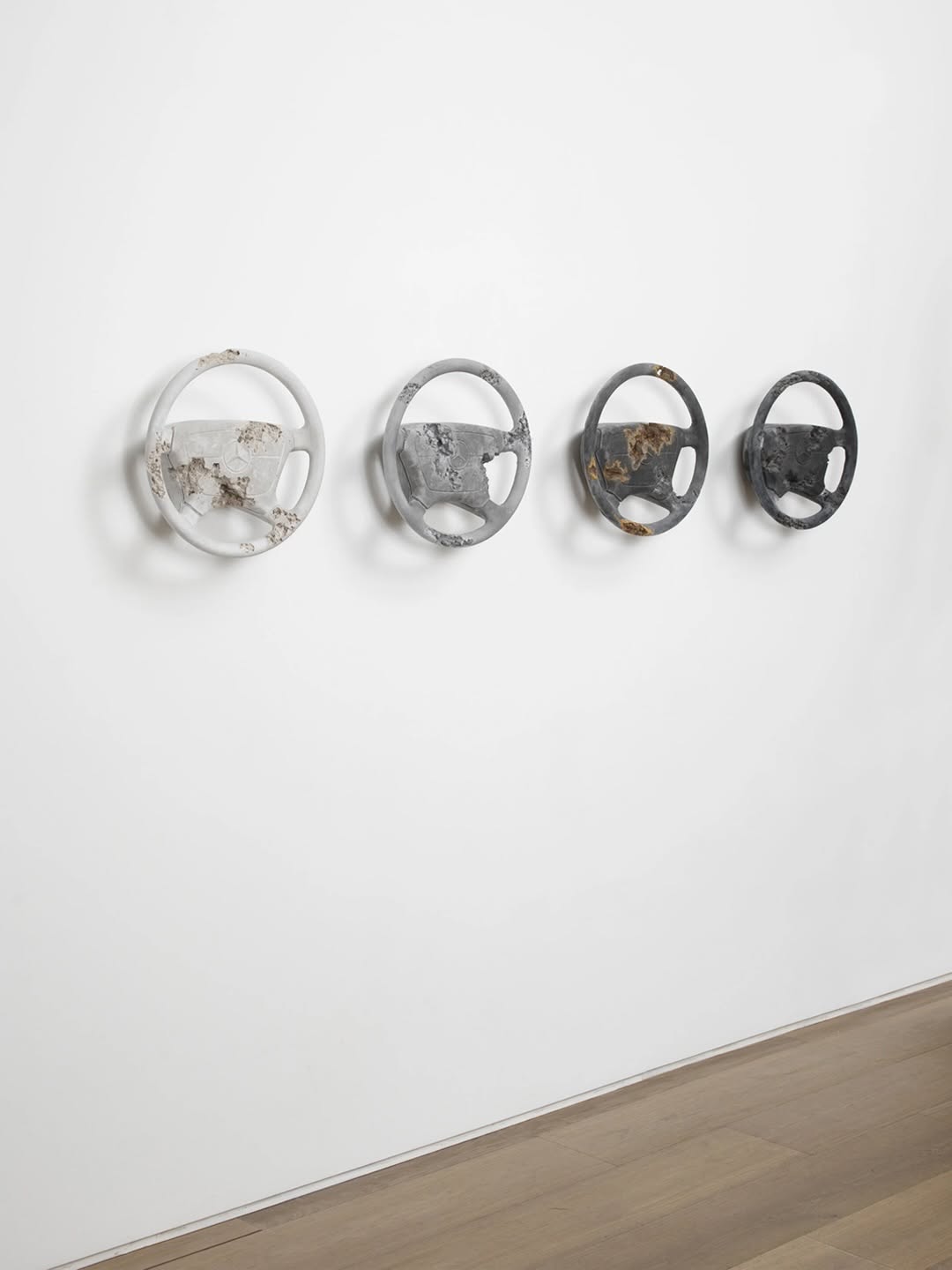
In 2015, Daniel Arsham cast the W124 Mercedes-Benz steering wheel at 1:1 scale four times using hydrostone, crushed glass, volcanic ash, and metallic elements in varying concentrations. The series simulates centuries of oxidation compressed into four simultaneous objects. Arsham Studio Archive posts formally document the works, building the provenance trail that drives secondary market outcomes for his eroded sculpture series.
Key Points
- Hydrostone has 3x the compressive strength of standard plaster; Arsham's material choice is a quality spec, not aesthetic preference
- The W124 generation Mercedes (1984-1996) carries specific hip-hop cultural biography referenced by Jay-Z and visible in 1990s music videos
- Arsham's secondary market: a 2017 eroded NY Giants helmet sold at Phillips for $43,750 in 2019, nearly 4x estimate
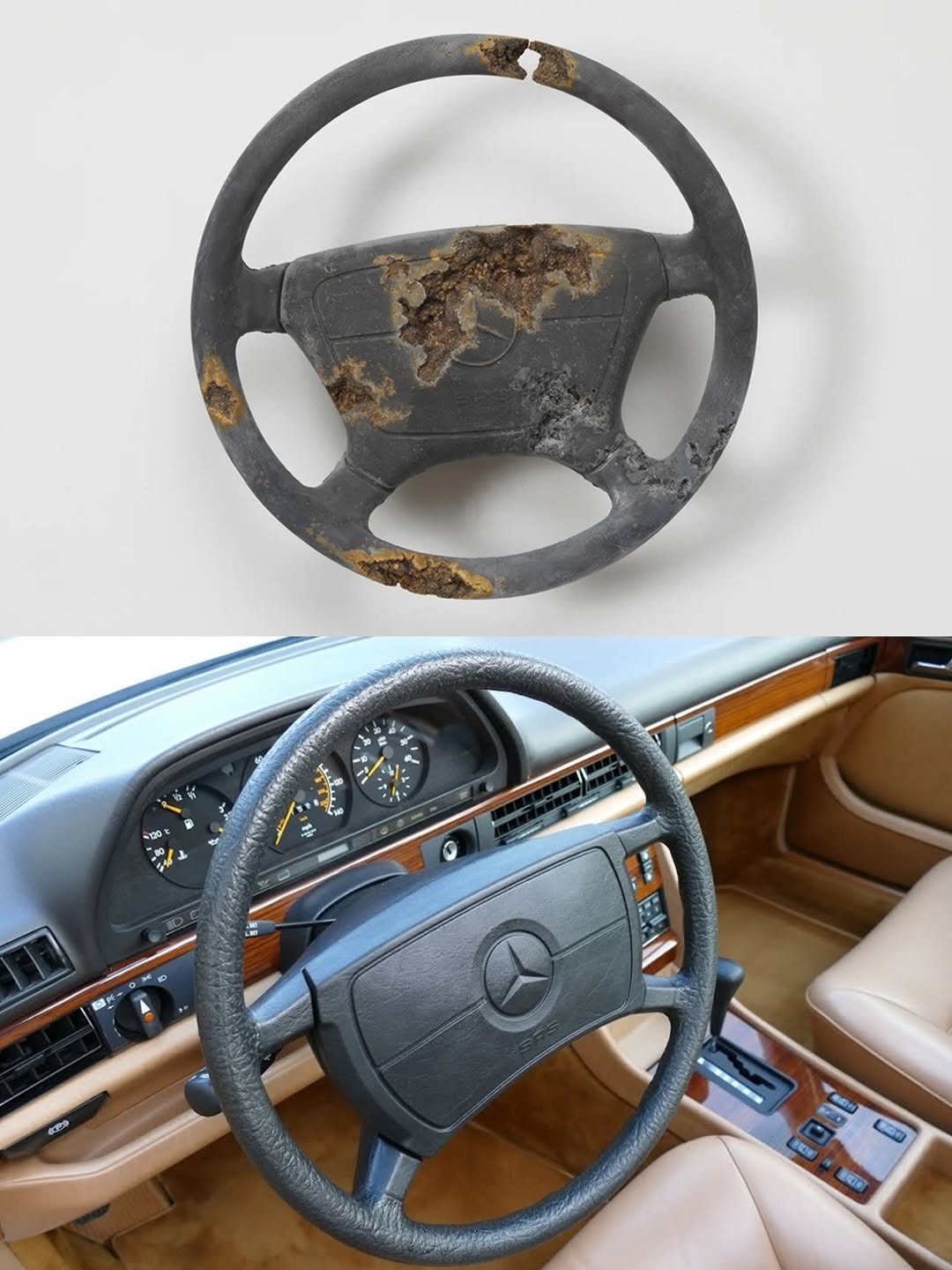
The steering wheel is already a relic before Arsham touches it. The W124 generation Mercedes-Benz, built from 1984 to 1996, is old enough that its interior components have left active automotive memory and entered design history. Arsham understood this in 2015. He cast the steering wheel at 1:1 scale, four times, and turned the series into a study in incremental degradation.
This is not nostalgia work. Arsham's archive practice, which he has formalized under the Arsham Studio Archive designation, is a systematic exercise in what he calls future relics: objects from the recent past that have been displaced from use and reframed as artifacts. The W124 steering wheel series predates his most commercially prominent automotive collaborations by several years. It is foundational, not decorative.
Hydrostone, Crushed Glass, and Four Degrees of Darkness
The material stack for the Mercedes Steering Wheel series runs: hydrostone as the primary cast material, crushed glass and mineral aggregates for textural variation, crystal erosions for surface detail, volcanic ash and metallic elements in varying concentrations to shift the tone from light to dark across the four casts.
Hydrostone is a high-strength gypsum cement with a compressive strength approximately three times that of standard plaster. Arsham's choice of hydrostone over standard plaster is not accidental. It produces a harder, more resolved surface that reads as stone rather than craft material. The finish photographs differently under gallery lighting. It holds edge definition longer. The material choice is a quality specification, not a texture preference.
The gradient across the four casts creates what Arsham describes as a progressive weathering. Cast one is pale, close to original material color. Cast four incorporates sufficient volcanic ash and metallic pigment to read as nearly black. The progression simulates centuries of oxidation compressed into four simultaneous objects. The viewer stands in front of all four and experiences the object's entire fictional future in one room.
The W124 as a Specific Cultural Object, Not a Generic Car
Arsham did not choose the steering wheel from a contemporary vehicle. He chose the W124, which matters. The W124 C-class and E-class generation is specifically the Mercedes associated with a particular moment in American and European urban culture: the late 1980s and early 1990s, when the C-class was the aspirational vehicle of the professional class and, simultaneously, the car that appeared in hip-hop visual culture as a status object for a different kind of success.
Jay-Z referenced the E-class in multiple early tracks. The W124 appears in Miami Vice and in countless music videos from the period. It is a car with a precise cultural biography. Arsham's decision to cast its steering wheel in 2015 rather than the steering wheel from, say, a 911 or an older Ferrari, is a signal about which cultural era he is archiving and for whom.
The object of control, as Arsham describes it in the archive post: the steering wheel is the point of contact between driver and machine, the place where the human body exerted authority over the vehicle. By casting it in hydrostone and displaying it in isolation from any car, he removes that authority and leaves only the gesture. The hand that gripped this wheel is absent. The wheel remains.
Arsham Studio Archive and the Long Game
Four weeks ago, Finally Offline covered the Arsham installation in Macau, two hollow heads scaled to architectural dimensions for the City of Dreams complex on the Cotai Strip. That work operates at a completely different scale and audience reach: millions of people will walk past it annually without knowing who made it.
The Mercedes steering wheel series is the inverse. Ten casts in the archive photography released this week, eight images documenting four physical objects, shown to a curated audience of art collectors and gallery-adjacent followers on Instagram. The signal score of 3,346 is low relative to a Supreme collab. The audience density is not.
Arsham's secondary market tells the full story. A 2017 eroded New York Giants helmet sold at Phillips for $43,750 in 2019, nearly four times its estimate. A 2020 Poké Ball cast with crystal erosion cleared $75,600 at Heritage Auctions. The Mercedes steering wheel series, documented and archived formally through the Arsham Studio Archive posts, is building the provenance trail that drives those secondary market outcomes. The Instagram post is not content. It is a catalog entry.
Related Reading
- Daniel Arsham Made Six Car Keys From Geological Materials in 2023
- Daniel Arsham Wall Excavation Carved 300 Feet of Walls Into a Human Form
- Artschwager's Approximate Objects Extended Through May 23
Related: MERCEDES BUILDS 35 MIRAGE G WAGONS FOR THE GULF.
Related: Verdy Mercedes Benz CLA Collaboration.
Frequently Asked Questions
What is the Daniel Arsham Mercedes steering wheel made of?
The four-piece series uses hydrostone as the primary cast material, with crushed glass, mineral aggregates, crystal erosions, volcanic ash, and metallic elements varying across each cast to create a progressive darkening effect.
Why did Arsham use the W124 Mercedes?
The W124 generation (1984-1996) carries specific cultural biography: it was an aspirational professional-class vehicle that also appeared prominently in 1990s hip-hop culture, making it a precise archival choice rather than a generic automotive reference.
What is the Arsham Studio Archive?
A formal designation Arsham uses to document and contextualize his older works, building provenance trails that support secondary market valuation and institutional acquisition.
Topics: cultural-artifact, hydrostone, w124, arsham-studio, sculpture, archive, supreme-suprsupreme, mercedes-benz, daniel arsham, art, supreme, ferrari, daniel-arsham, eroded-art