CASA TOBI SITS ON OAXACAN CLIFF FOR ONE SPECIFIC PURPOSE
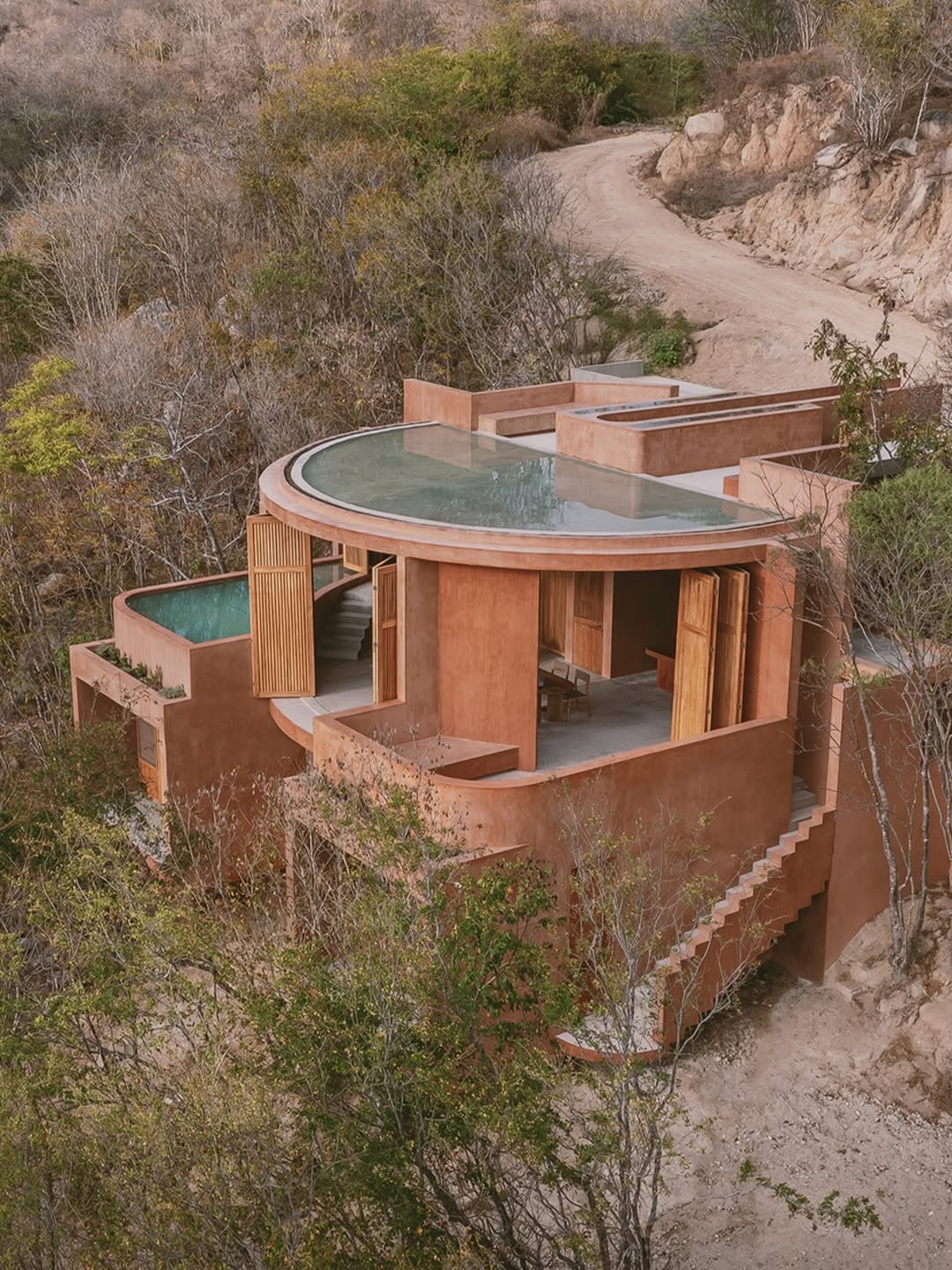
Casa Tobi is a 255 square meter private residence in Puerto Escondido, Oaxaca, designed by Espacio 18 Arquitectura architects Carla Osorio and Mario Avila, completed in 2025. The house organizes its program as a descending sequence of terraces and pauses on a steep Pacific-facing hillside, with every social space oriented west toward the sunset. A rooftop reflecting pool serves simultaneously as aesthetic element, passive cooling system, and rainwater harvesting infrastructure.
Key Points
- Casa Tobi: 255 sqm on a sloped site in Puerto Escondido, Oaxaca. By Espacio 18 Arquitectura, completed 2025.
- Upper reflecting pool mirrors the sky, cools spaces below via passive thermal mass, and harvests rainwater.
- Puerto Escondido has shifted from surf destination to architecture destination since 2022.
The brief was one sentence long. Find the sunset and don't get in its way. Casa Tobi, designed by Espacio 18 Arquitectura on a steeply sloped site in Puerto Escondido, Oaxaca, is the built proof that architectural restraint can be its own argument.
The site drops west toward the Pacific. Architects Carla Osorio and Mario Avila completed the house in 2025 on a 255 square meter footprint. Espacio 18's work has appeared consistently in Type7's feed, which tracks Mexican residential architecture with the same precision the outlet applies to cars. For Puerto Escondido specifically, Casa Tobi joins a cluster of projects that have treated the town as serious architectural territory, including Alberto Kalach's Casona Sforza boutique hotel in the same coastal zone, which brought institutional architecture to the area two years earlier.
255 Square Meters. One Direction. West.
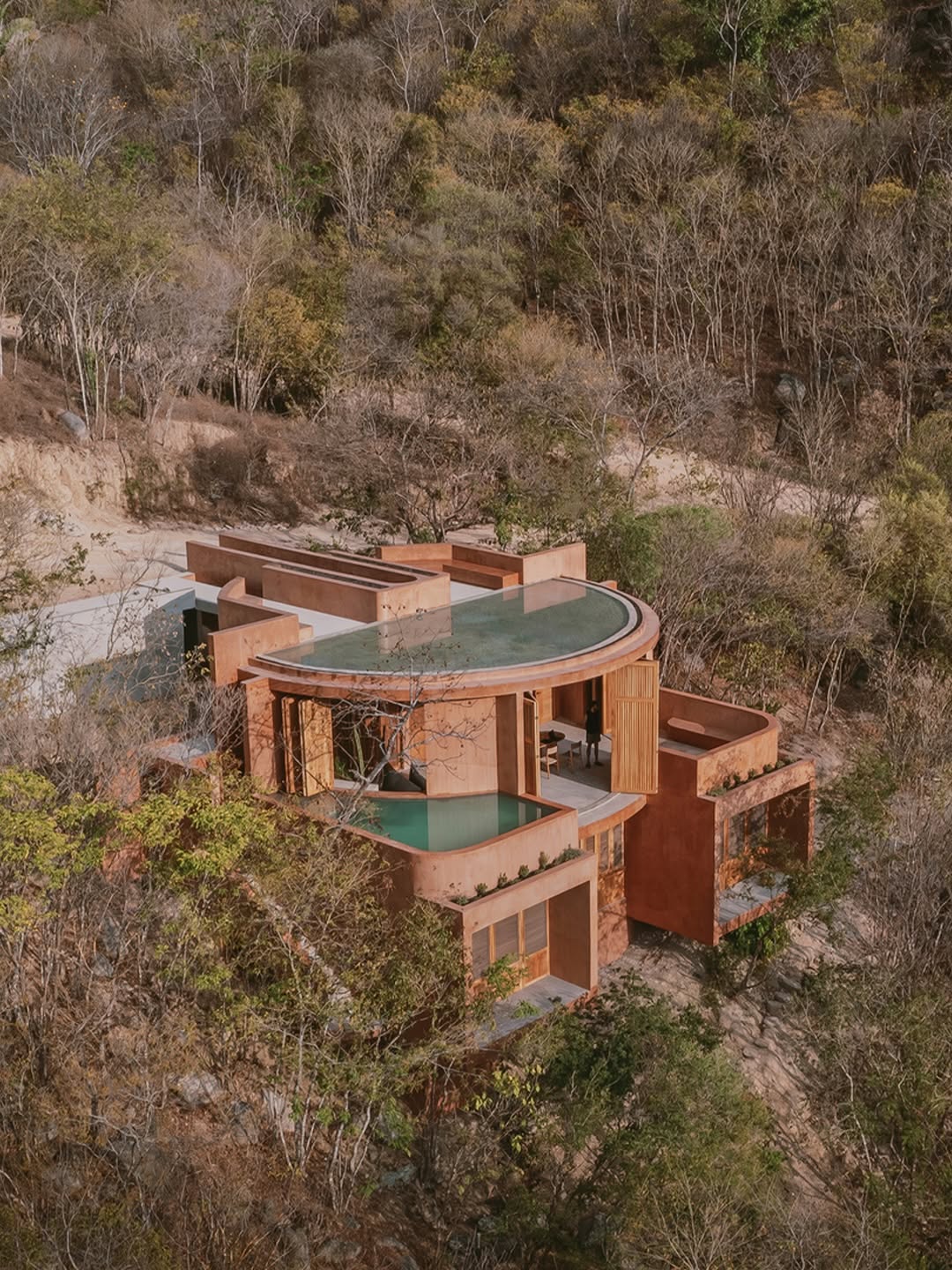
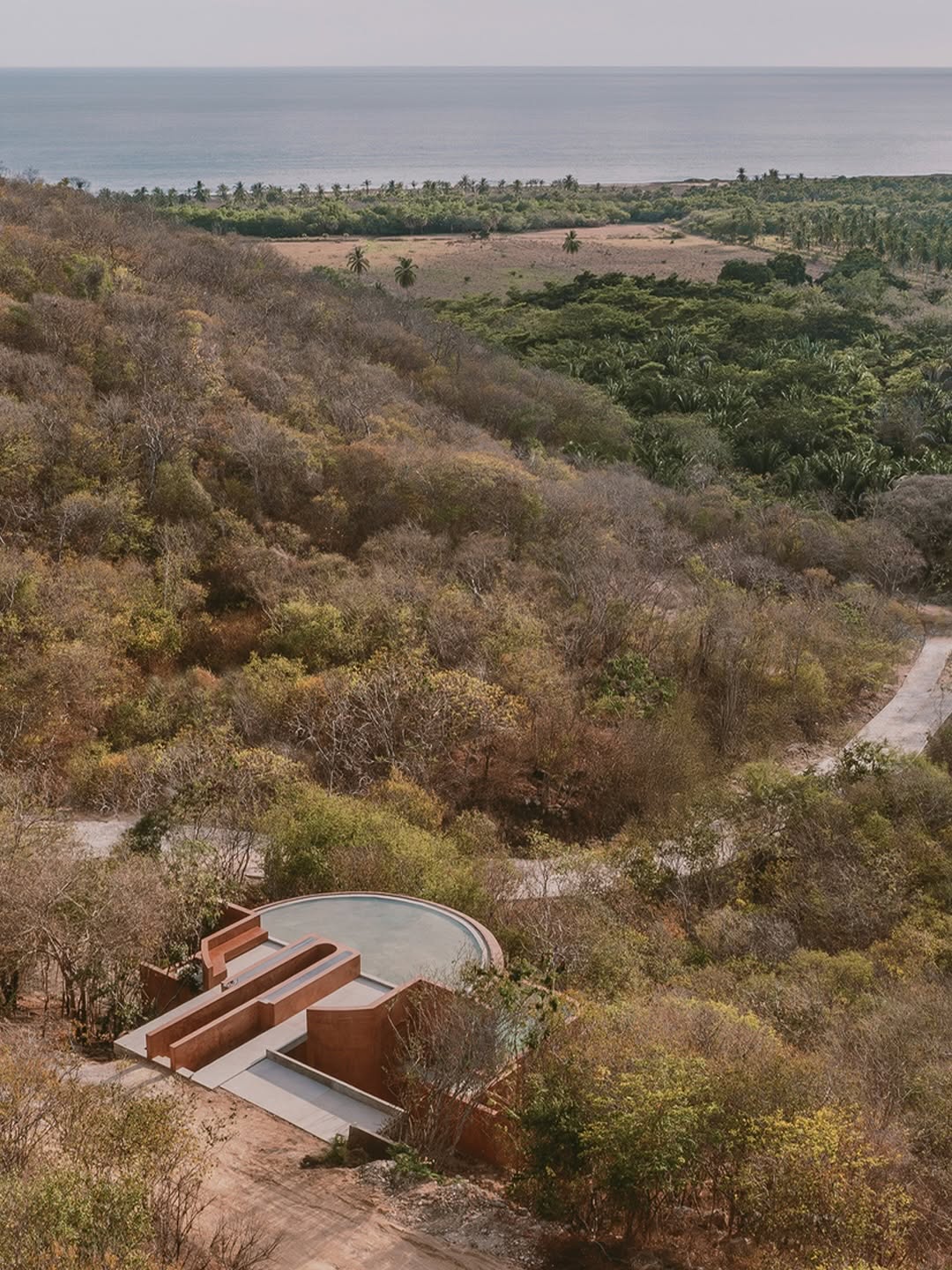
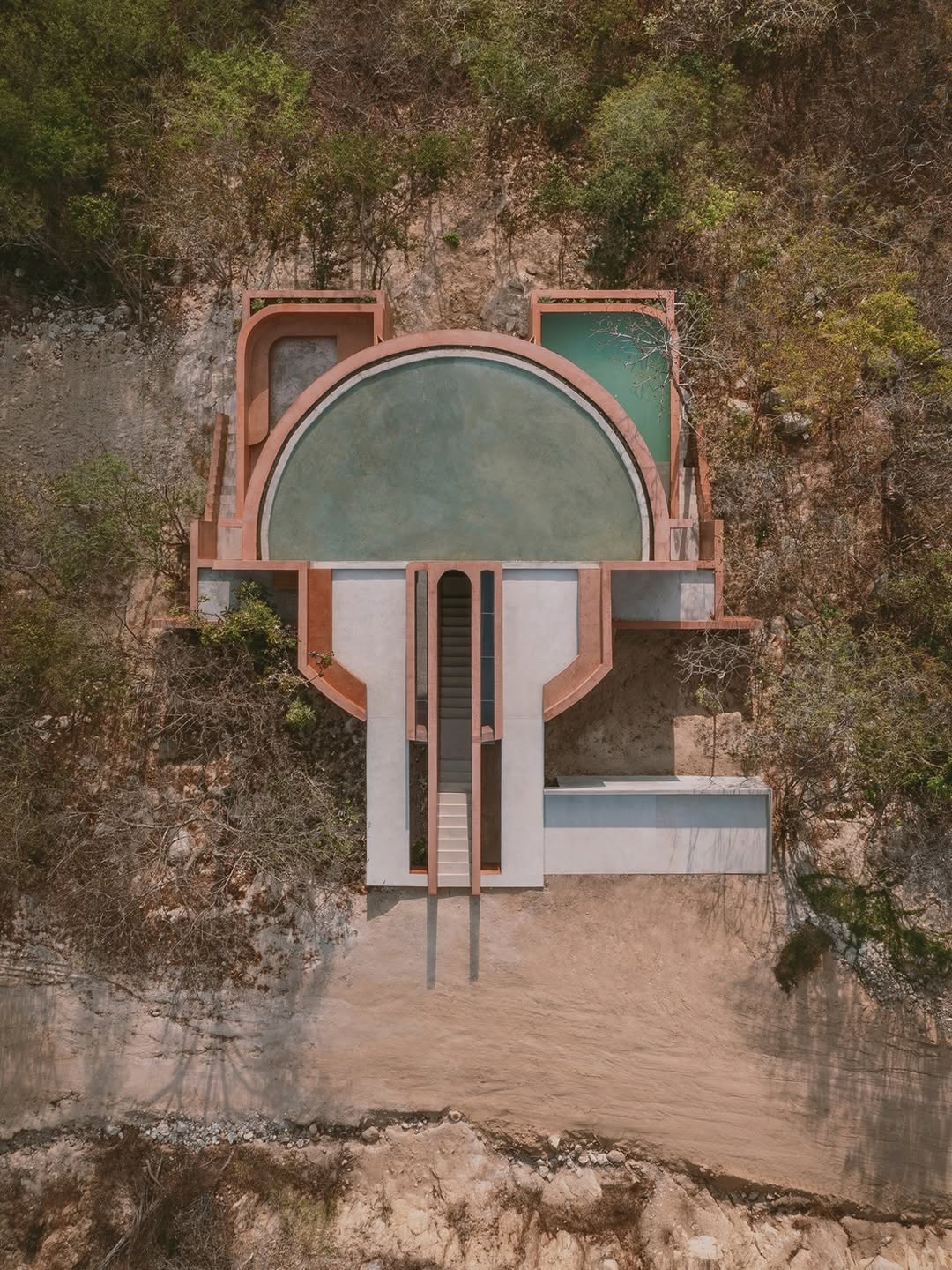
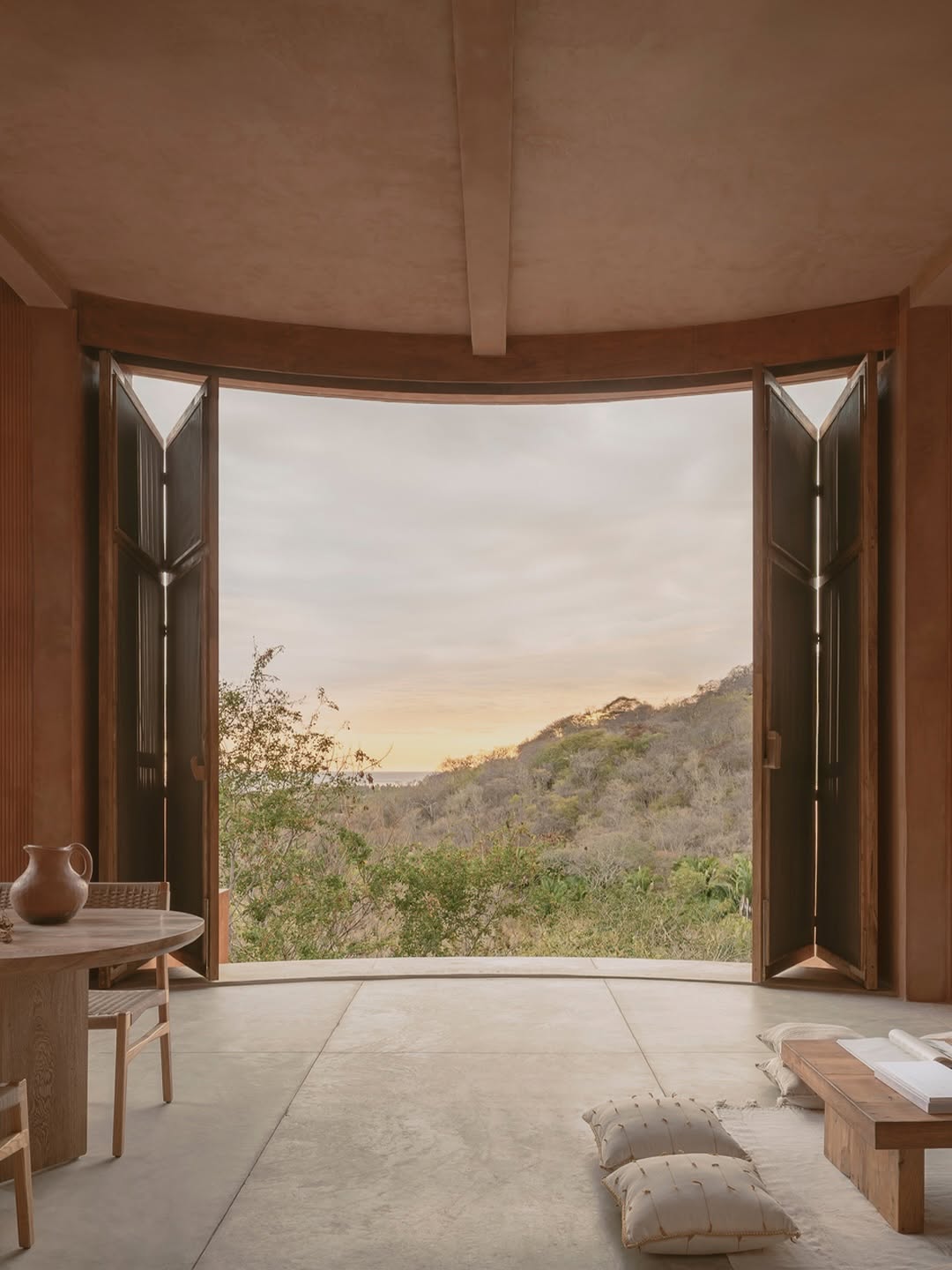
The house sits on a steeply sloped lot descending toward the Pacific. Espacio 18 handled the slope not by leveling it but by working with it: terraces, stairs, and roof edges become a sequence of pauses where the resident arrives, descends, turns, and looks out. The sequence is choreographed. Each pause reveals a different angle of the same view. From above, Casa Tobi reads as almost graphic: a small geometry caught in a slope, with the roof planes stepping down the hill in a sequence that follows the site's natural contours. By the time you reach the main living level, the house has taught you how to look at the landscape rather than just placing you in front of it. The social spaces face west without qualification. In the late afternoon, they hold the specific warm light that Oaxaca's cliffs carry before the sun drops into the Pacific.
Espacio 18 Designed the House Around a Specific Hour
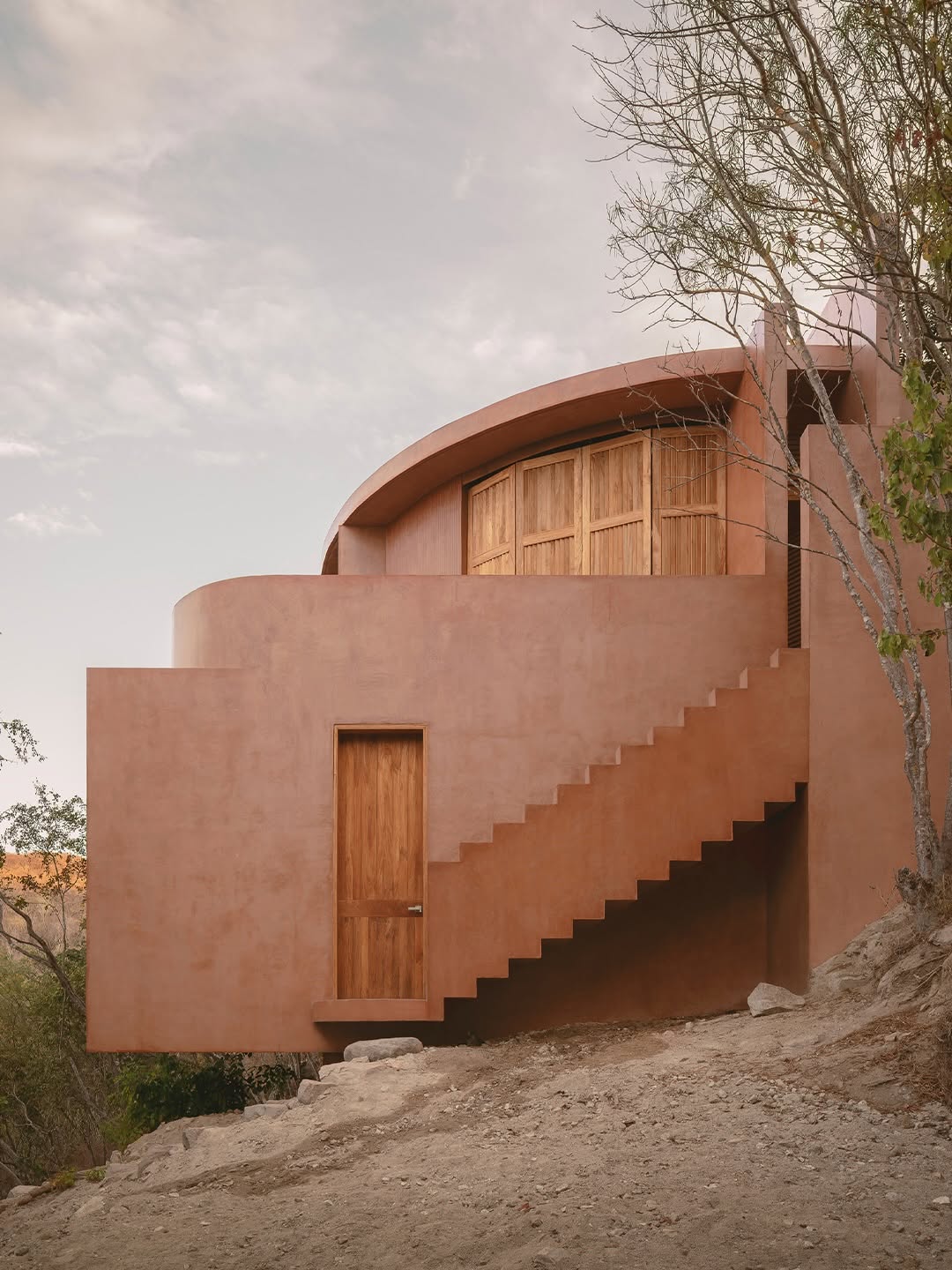
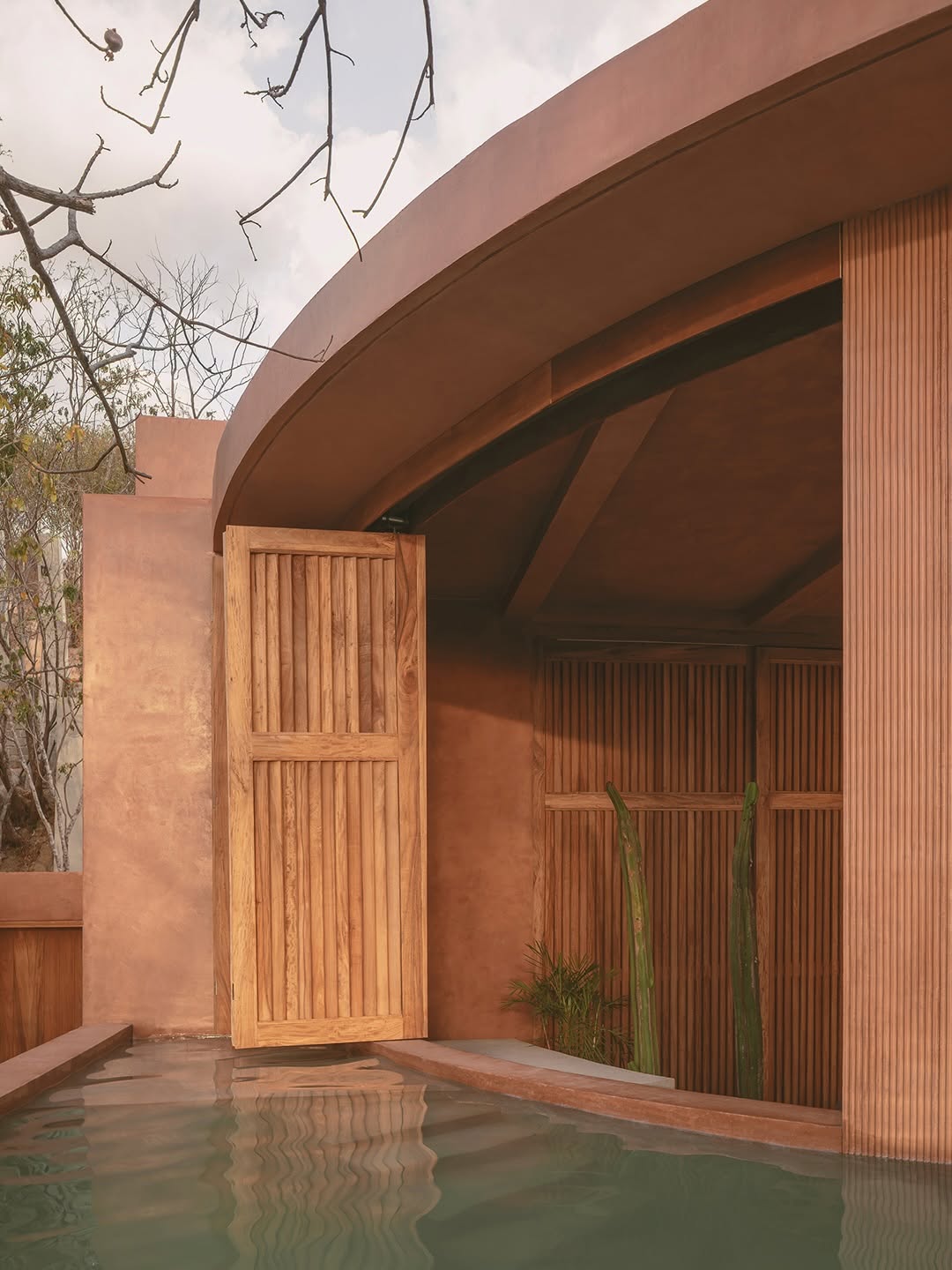
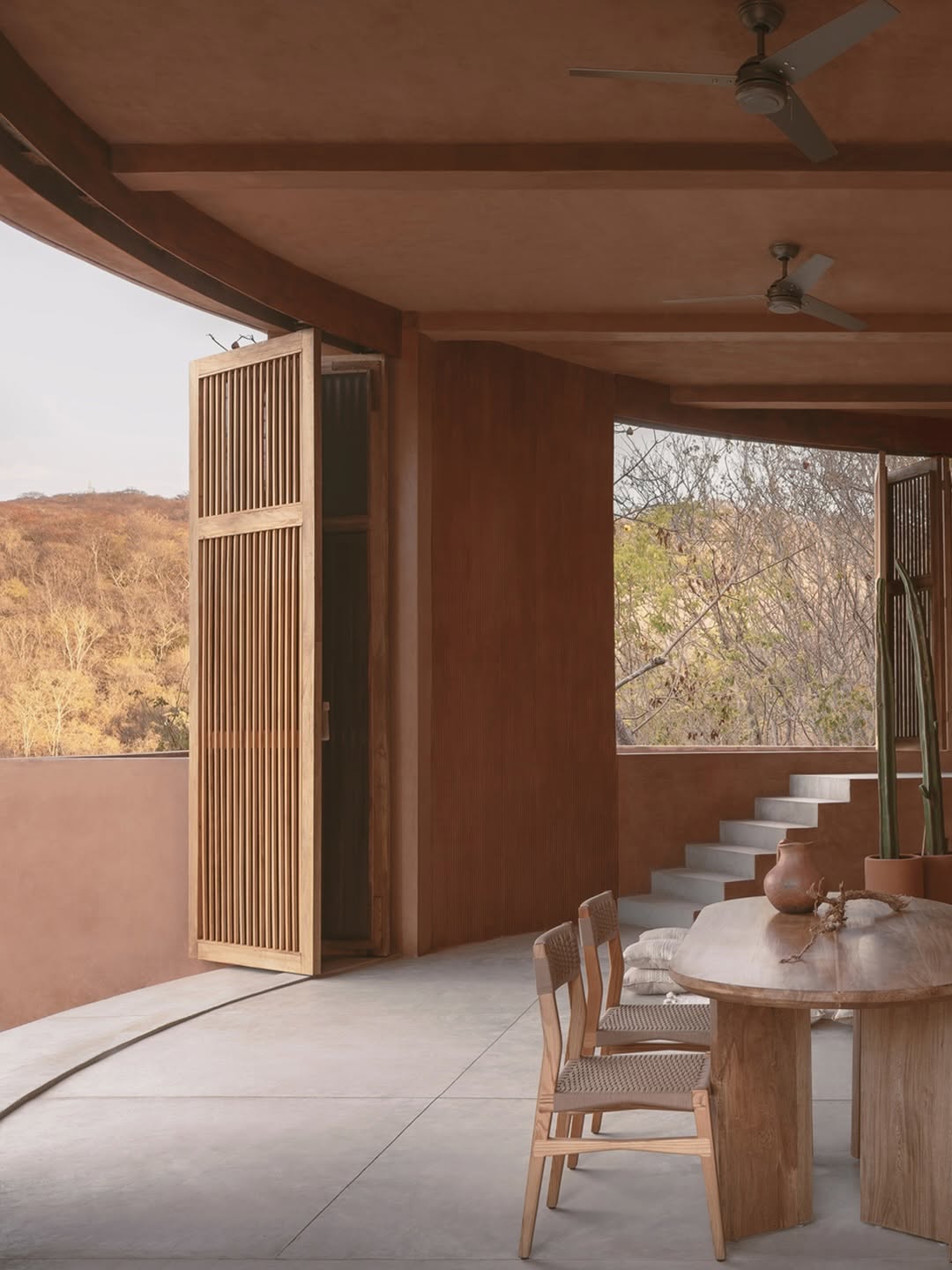
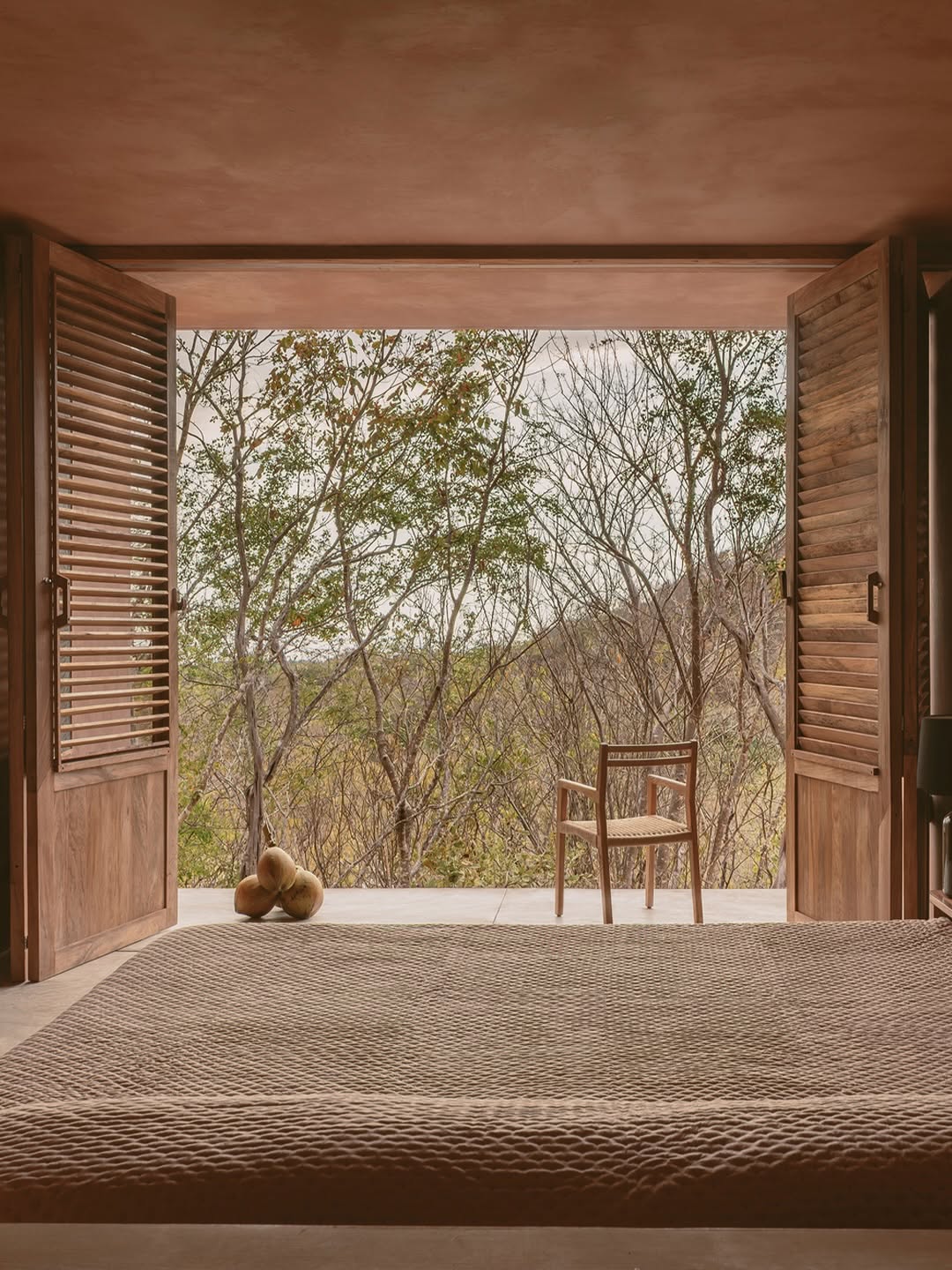
The outside walls carry the warm dusty color of the surrounding earth, the same palette that makes the house nearly invisible in aerial photographs. Inside, timber, concrete, and deep shade take over. The openings frame the dry landscape like cinema screens, precise and without ornament. Curved walls, shuttered openings, and soft interior edges do most of the spatial work without heavy intervention. The design avoids the impulse to perform. It performs anyway, by knowing what not to do. Photographer César Béjar documented the project; the images read as architecture photography and landscape photography simultaneously, which is the correct response to a house that refuses to separate the two.
The Reflecting Pool Is Three Things Simultaneously
At the uppermost level, a reflecting pool mirrors the jungle canopy and the changing sky. It also cools the social spaces below, acting as a passive thermal mass that absorbs the late day heat before it reaches the living areas. And it harvests rainwater. Three functions. One element. This is the kind of problem solving that rarely appears in architecture press releases because it is invisible when it is working correctly. The brief was thermal and hydraulic. The result is that the most photographed element of the house is also its most efficient one.
Puerto Escondido in 2026 Is Not the Town in Your Surf Magazine
Puerto Escondido in 2026 appears in Dezeen, ArchDaily, and the design aware feeds that track Type7, alongside its existing identity as one of the most demanding surf breaks on the planet. The shift happened in roughly three years, driven by a cluster of ambitious residential and hospitality projects built in rapid succession by architects treating the town as serious territory. The architects arriving in Puerto Escondido now are not chasing surf culture. They are chasing a site quality: slopes facing the Pacific with good soil and dramatic light for roughly 12 hours a day. Casa Tobi is the clearest argument for why those conditions produce architecture rather than just real estate.
Kalach Built a Hotel Here. Osorio and Avila Built a Pause.
The distinction matters. Casona Sforza is designed for strangers: 11 suites, a restaurant, a program scaled for hospitality. Casa Tobi was designed for a family of photographers, and the spatial sequence reads as a photographer's brief: arrive slowly, pause deliberately, wait until the moment you are ready to see the view rather than having it displayed at the entrance. Type7 has been tracking this residential logic across Latin America and Europe, from São Paulo narrow lot houses to Norm Architects building their own Copenhagen studio around material slowness rather than maximum floor area. Casa Tobi belongs in that series. The Pacific is the subject. The architecture is the camera.
Related: This House in Ahmedabad Was Built From Four Different Soils—and It Shows.
Frequently Asked Questions
Who designed Casa Tobi Oaxaca?
Casa Tobi was designed by Espacio 18 Arquitectura, lead architects Carla Osorio and Mario Avila, completed in 2025 in Puerto Escondido, Oaxaca.
Where is Casa Tobi located?
Puerto Escondido, Oaxaca, Mexico, on a steep hillside site descending west toward the Pacific Ocean.
How big is Casa Tobi?
255 square meters across a steeply sloped site, with terraces and roof edges organized around a sequence of pauses facing the Pacific sunset.
What is Type7?
Type7 is a design and lifestyle platform that documents architecture, automotive, and object design with a focus on craft and specificity.
What is Espacio 18 Arquitectura?
Espacio 18 Arquitectura is a Mexican studio led by Carla Osorio and Mario Avila, known for residential work that responds precisely to site conditions and natural light.
Topics: type7, puerto-escondido, cesar-bejar, oaxaca, pacific, dezeen, mexico, residential, archdaily, architecture, espacio-18-arquitectura, casa-tobi