AGI BAR BEIJING PUTS DEEPSEEK BESIDE THE DRINKS
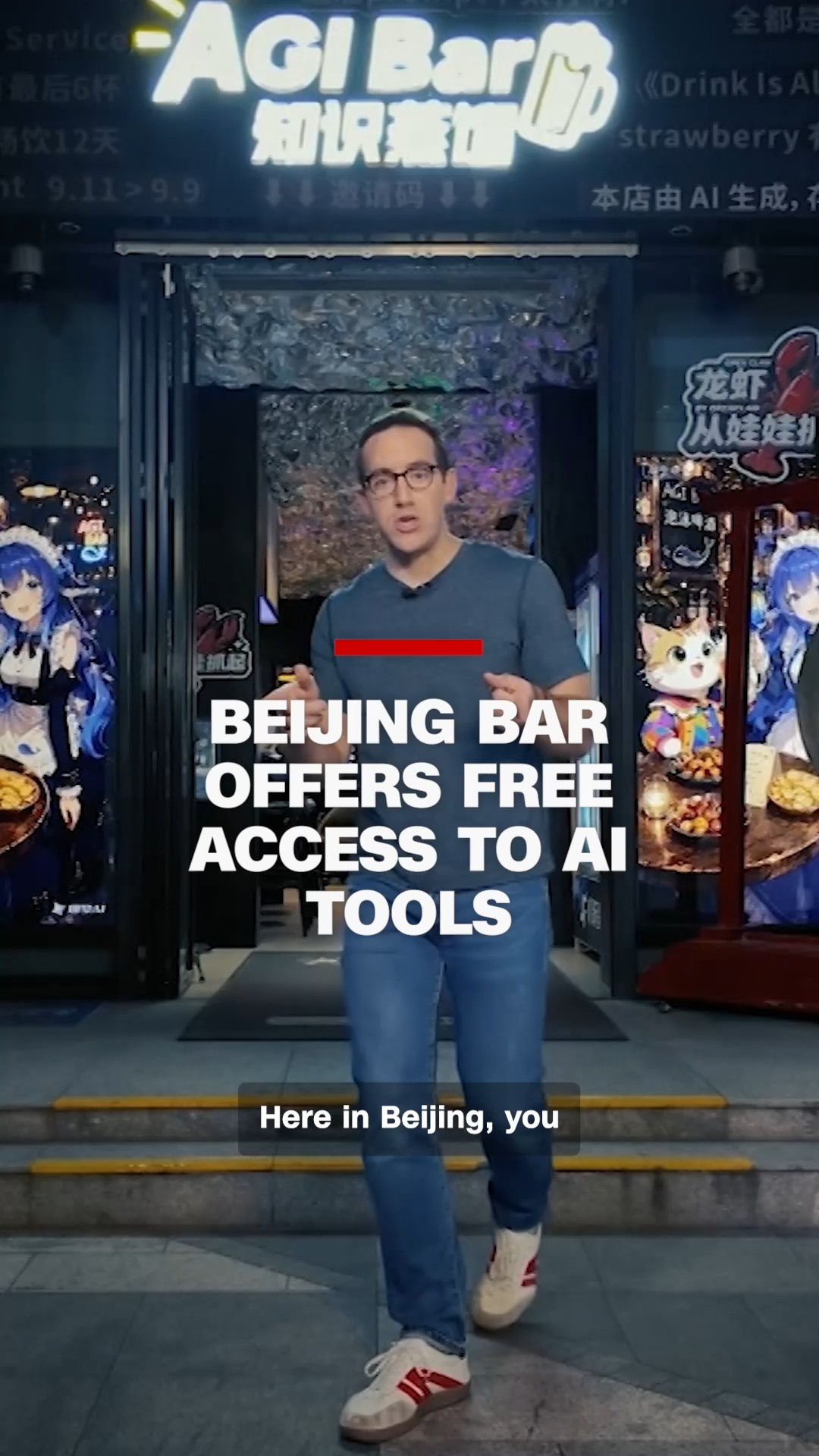
CNN filmed customer Zou Sheng building a website with DeepSeek at AGI Bar in Beijing. The operator combines AI access with drinks and technology events on Zhongguancun Startup Street.
Key Points
- CNN filmed customer Zou Sheng using DeepSeek to build a website at AGI Bar in Beijing.
- The operator lists a Zhongguancun Startup Street location and daily hours of 3 PM to 11 PM.
- The report shows a customer demonstration, without publishing hardware specifications or performance benchmarks.
At AGI Bar Beijing, customer Zou Sheng builds a website with DeepSeek while CNN's Mike Valerio watches. The bar gives Chinese AI models a physical meeting place, with a customer's task as the test. Zou's demonstration offers a more useful starting point than another promise about what a model might eventually do.
In Mike Valerio's September 17 report, customer Zou Sheng works with equipment CNN describes as two Nvidia supercomputers. He uses DeepSeek for the website and demonstrates generating a song from a spoken request. “This technology has blown my mind,” Zou tells CNN through a translator.
Those are modest demonstrations with recognizable outputs. A website can be opened; a song can be played. Neither requires a visitor to have a settled opinion about artificial general intelligence before walking through the door.
DeepSeek gets a seat at the bar
CNN reports that ordering a drink gives customers unlimited free access to some Chinese AI models. The offer makes the purchase of hospitality the entry point to trying software, although the report does not provide a technical specification for the computing setup.
That distinction matters when evaluating the demonstration. CNN's description supports the presence of Nvidia equipment and a customer using DeepSeek. It does not establish a particular chip model, benchmark result or locally deployed version of the system. The footage shows a use case, not a performance comparison.
Finally Offline's March report on Chinese engineers installing OpenClaw at street stalls recorded a similar move into public space: people encountered an AI tool through somebody who could help them get started. AGI Bar gives that encounter an address and a reason to stay.
For a visitor, the practical question changes from which model deserves attention to whether it can complete a task in front of them. Zou's website is a useful example because a generated page is only the beginning. Editing it, checking its behavior and taking it elsewhere would reveal considerably more about the service.
3 PM on Zhongguancun Startup Street
The operator places AGI Bar on Zhongguancun Startup Street in Beijing's Haidian district and lists hours of 3 PM to 11 PM. Its own description includes product launches, industry gatherings and opportunities to get feedback from investors and other participants.
The room therefore has two potential audiences: people trying a tool and people hoping somebody will notice what they are building. A developer can benefit from meeting a prospective user without either person signing up for a formal conference. The bar's value would come from those useful encounters, not from the number of model names available on a screen.
That remains an interpretation of the format, not a measured outcome. The operator's event menu establishes its intended role; it does not tell us how many projects have emerged from conversations there. CNN supplies one customer's demonstration, not evidence that every visitor leaves with a working product.
There is also a straightforward limit to the convenience. A physical room in Haidian can simplify access for someone nearby while doing little for someone elsewhere. The listed opening hours give this version of AI access a beginning and an end each day.
Coffee arrives without a barista
Across the city, JD's 7Fresh robotic coffee shop at Galaxy SOHO opened on August 16. JD reported that its machine served 202 coffees in an hour during a Guinness World Records attempt.
That shop puts automation into preparing the drink. AGI Bar puts computing within reach of the person drinking it. The comparison is useful because the two venues have different jobs: one can be assessed by service and throughput, while the other needs to help a visitor do something they could not conveniently do before.
A finished drink supplies an obvious stopping point. A generated website leaves questions about revision, ownership and continued access. The CNN report does not settle those questions, so a first demonstration should not be mistaken for an account of the entire working process.
AGI Bar earns attention for the task at the table: Zou making a website with DeepSeek while CNN documents the encounter. DeepSeek's stronger test comes after that first page and first song, when Zou needs to revise the result. Beijing already has a machine counted by coffees per hour; AGI Bar needs to be counted by work people can use.
Frequently Asked Questions
What is AGI Bar Beijing?
AGI Bar is a Beijing venue combining drinks with access to AI tools and events for people working in technology.
How can I find AGI Bar in Beijing?
The operator lists Zhongguancun Startup Street in Beijing's Haidian district.
How does AI access work at AGI Bar?
CNN reports that customers who order a drink receive unlimited free access to some Chinese AI models. The report does not publish detailed service terms.
What did CNN show a customer making?
Customer Zou Sheng used DeepSeek to build a website and demonstrated generating a song from a spoken request.
When is AGI Bar open?
Its website lists opening hours of 3 PM to 11 PM.
Does AGI Bar publish its computer specifications?
The CNN report describes two Nvidia supercomputers but does not identify chip models or publish benchmark results.
Topics: deepseek, zhongguancun, beijing, artificial-intelligence, agi-bar, technology, nvidia