A 1970S MILAN HOUSE WHERE TWO DECADES COEXIST IN CONCRETE
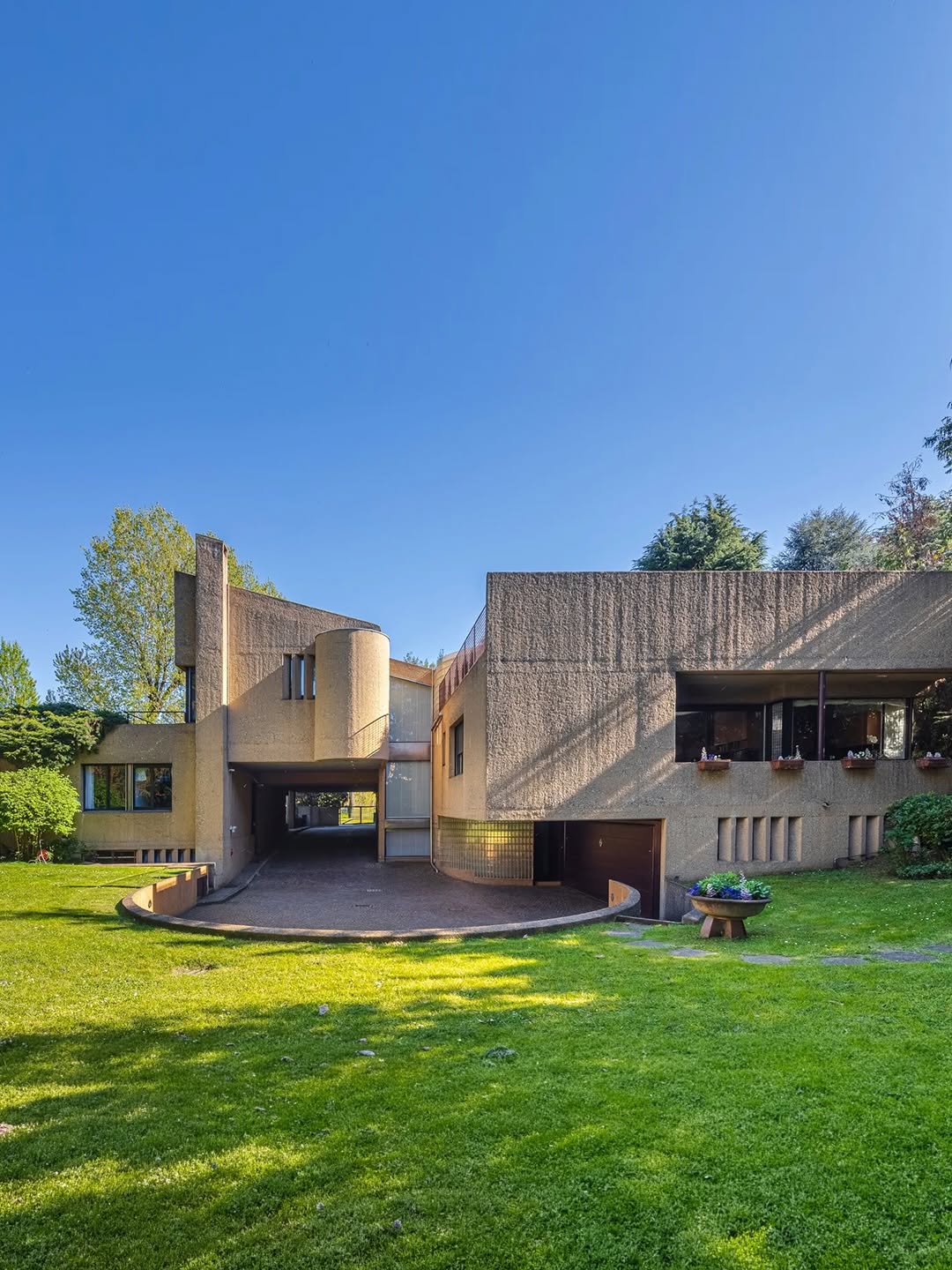
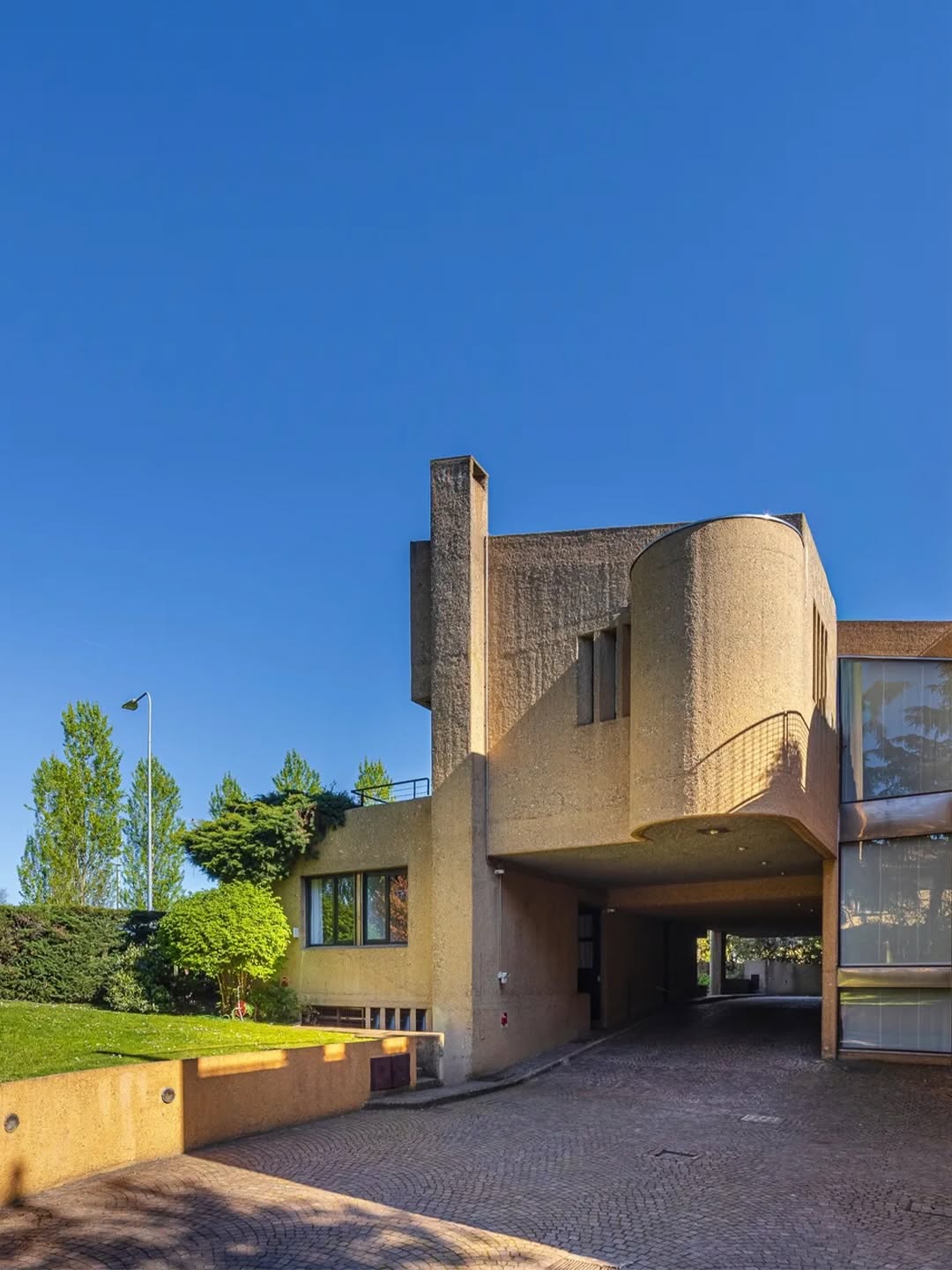
Francesco Castiglioni, a Como-based architect, designed a 1970s brutalist home in a Milanese suburb with a double height sitting room, two tier mezzanine, and 3,800 square meter garden. The house balances the colourful looseness of the 1960s with the austere concrete rigor of the 1980s in a single structure that has remained unaltered for five decades. Sotheby's International Realty Italy now lists the property.
Key Points
- Castiglioni designed this Milan home in the 1970s with a two tier mezzanine, sloping ceiling, and 3,800 sqm garden in Como architectural tradition.
- The house resolves the 1970s tension between 1960s spatial generosity and 1980s concrete rigor, with both impulses present and neither dominant.
- Listed by Sotheby's Italy, the property has remained intact through five decades without renovation.
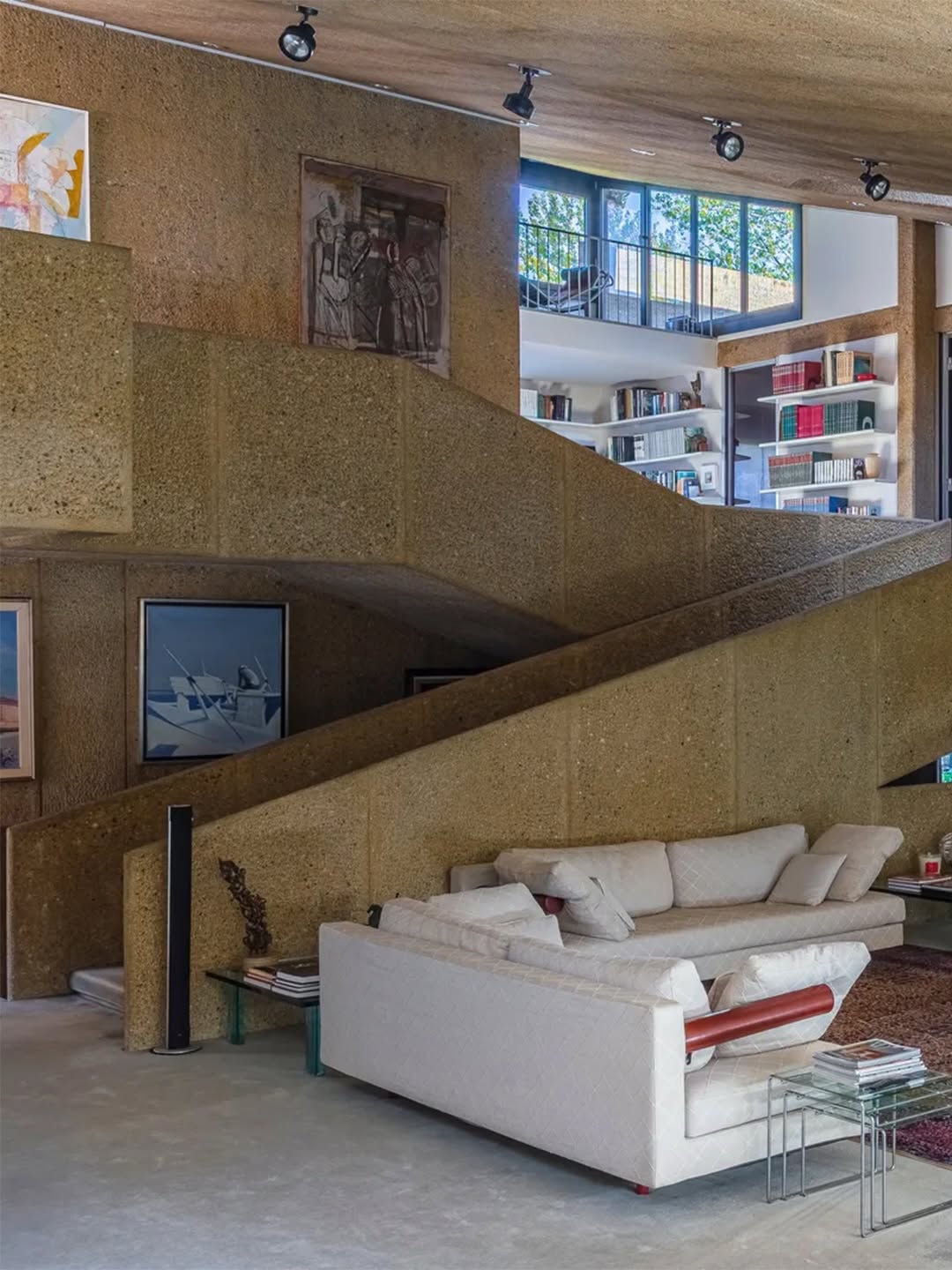
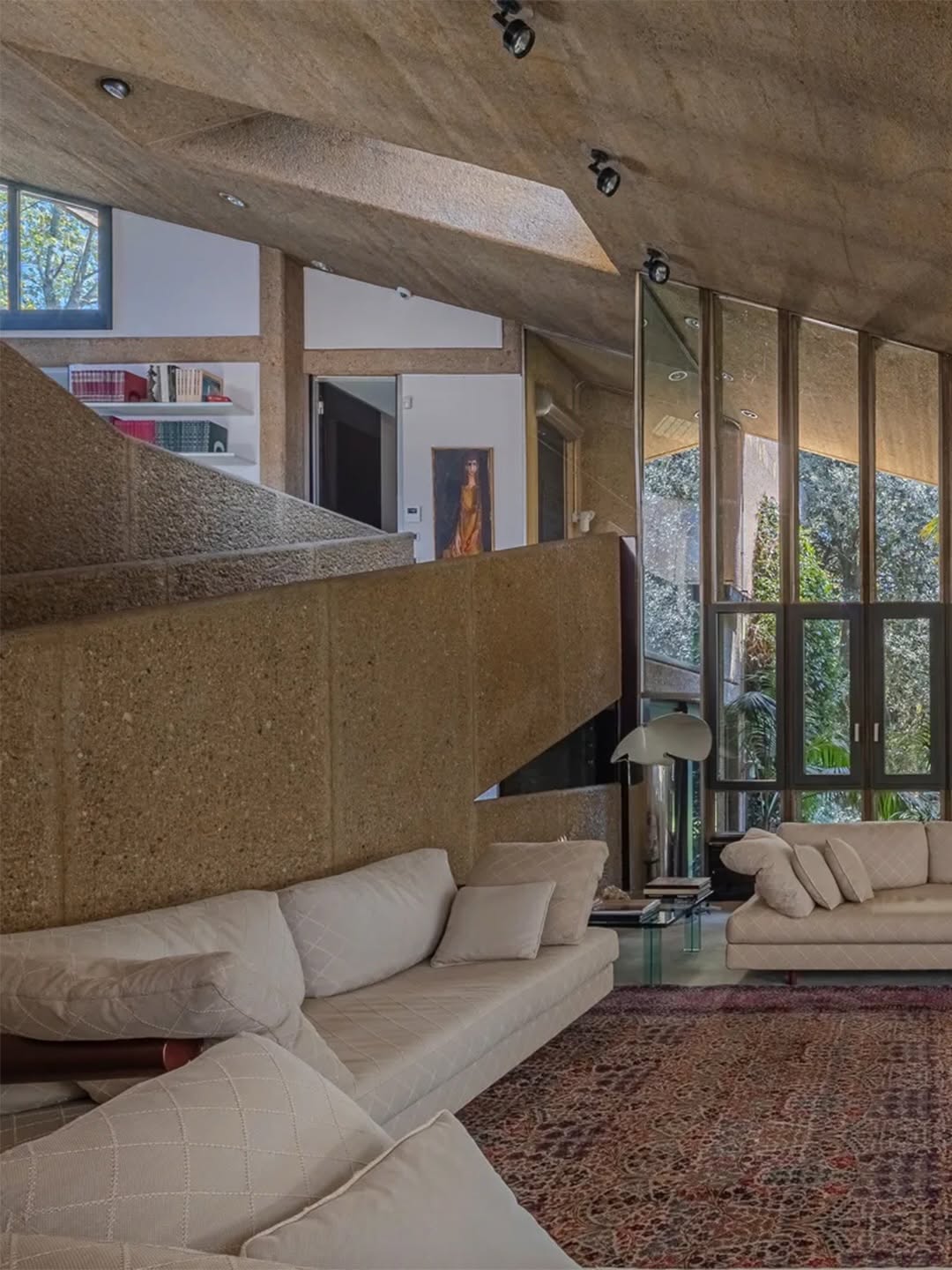
A two tier mezzanine hangs over the sitting room like a theater balcony. The sloping ceiling drops toward it at an angle that has no practical justification and every spatial one. Francesco Castiglioni designed this house in the 1970s in a quiet Milanese suburb surrounded by conventional Art Nouveau estates, and everything about the structure announces that it is not interested in its neighbors.
Sotheby's International Realty Italy recently listed the property. Type7 writer Alfie Munkenbeck took one look at the photographs and identified what makes it worth documenting: not the listing, but what the building preserved.
A Double Height Room That Should Have Been an Opera House
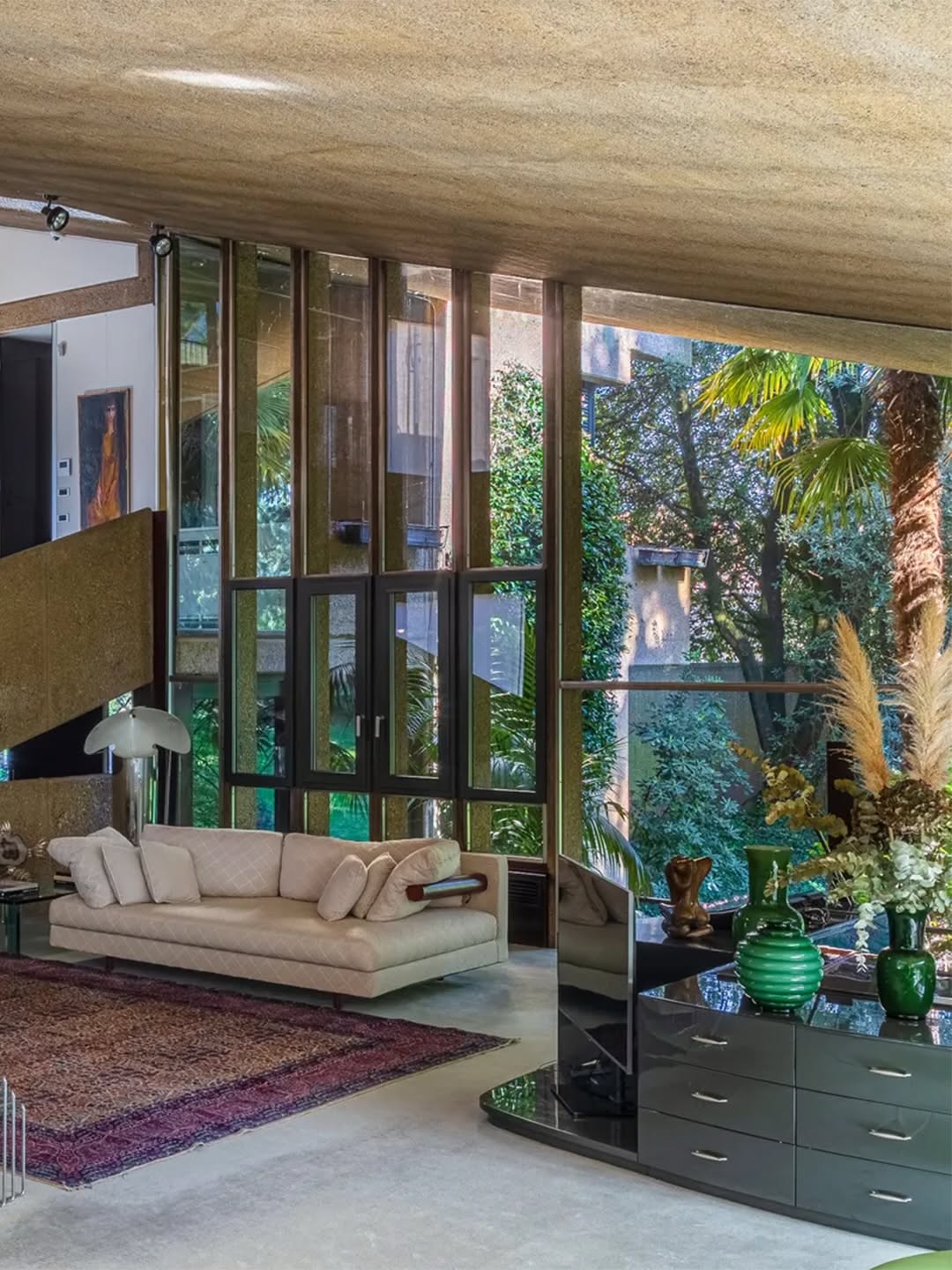
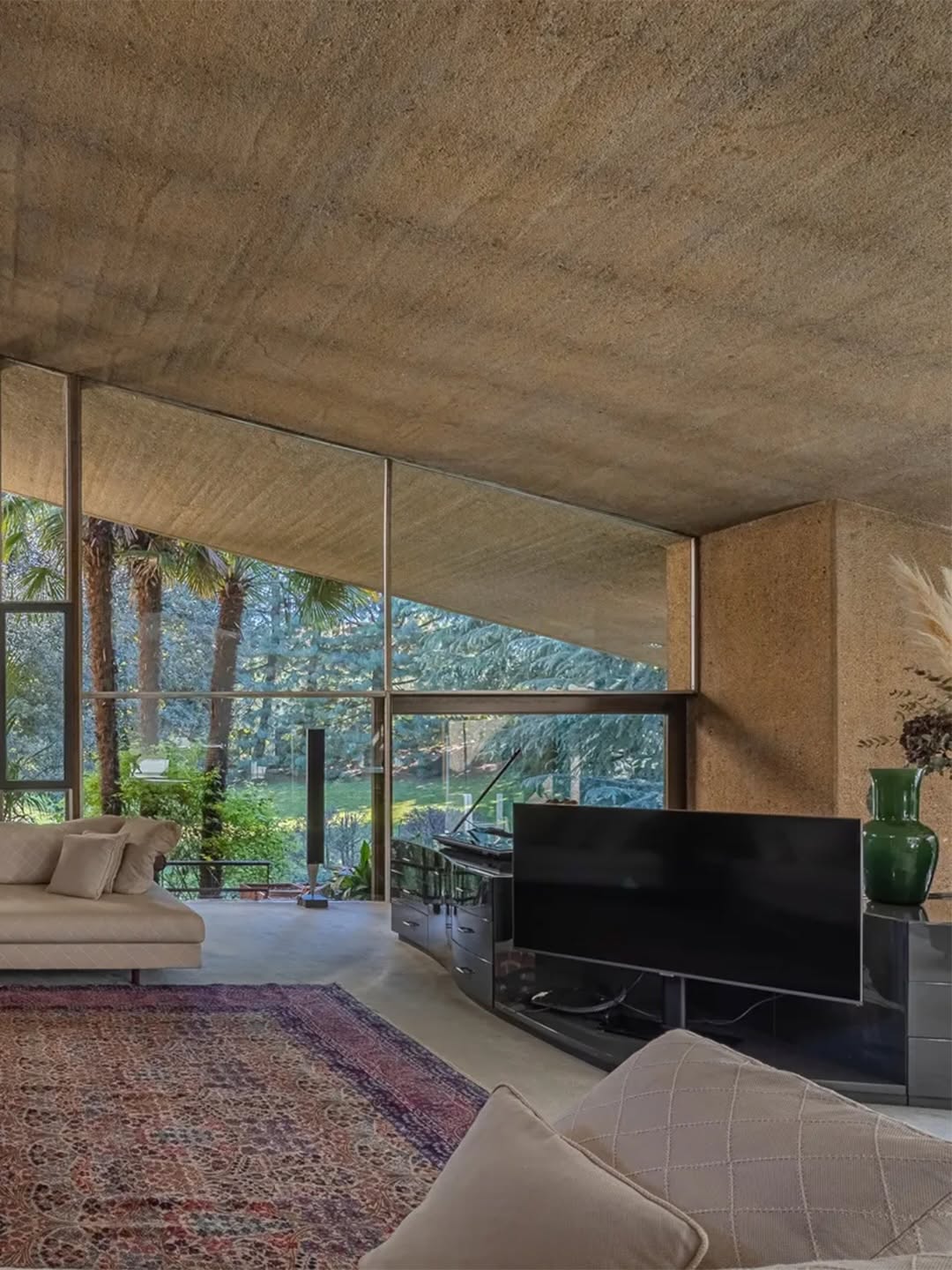
The sitting room is the argument the building makes for itself. It sits beneath a dramatic sloping ceiling with a two tier mezzanine above the sofa, a configuration that turns the act of sitting down into a spatial experience. Most residential living rooms of this era were designed to fit furniture. This one was designed to make the furniture feel appropriate to its surroundings.
Castiglioni is a Como-based architect, which matters because Como sits at the intersection of the Swiss precision tradition and the Lombard industrial one. The structural drama in this house, the towering concrete chimneys, the rough textured facades, the glazed walls that dissolve the boundary between interior and a 3,800 square meter garden, reads as architecture that understands weight and lightness simultaneously. The concrete does not apologize. The glass does not explain. Paulo Mendes da Rocha's 1974 Casa Millán in São Paulo achieved a similar tension with concrete mass and spatial precision, but in a tropical climate and with a very different cultural brief. Castiglioni's brief was a Milanese suburb, and the building argues against its context from the first wall.
Two Eras Resolved Without a Renovation
As Munkenbeck noted in the Type7 feature, the 1970s were a transitional decade: trapped between the colourful looseness of the 1960s and the austere rigidity of the 1980s. Most buildings from this period show the tension without resolving it. They are too colorful for what came after and too rigid for what came before.
This house resolves it. The concrete is 1980s in its conviction but the proportions, the glazing, the relationship between inside and outside carry the spatial generosity of the 1960s. Both impulses are present and neither is fighting for dominance. That is rare in any decade of architecture. Finding it intact in 2026, untouched by ill-judged renovations or unnecessary cladding, is rarer still.
Type7 has documented a similar commitment to design honesty in a São Paulo house built for filmmakers by 23 SUL Arquitetura, where on site precast concrete boards on a 5 meter wide urban plot generated thermal gaps and acoustic buffers. The logic is different, the impulse the same: find the constraint, build the argument, do not apologize later.Multiple Terraces and a Garden That Earns the Concrete
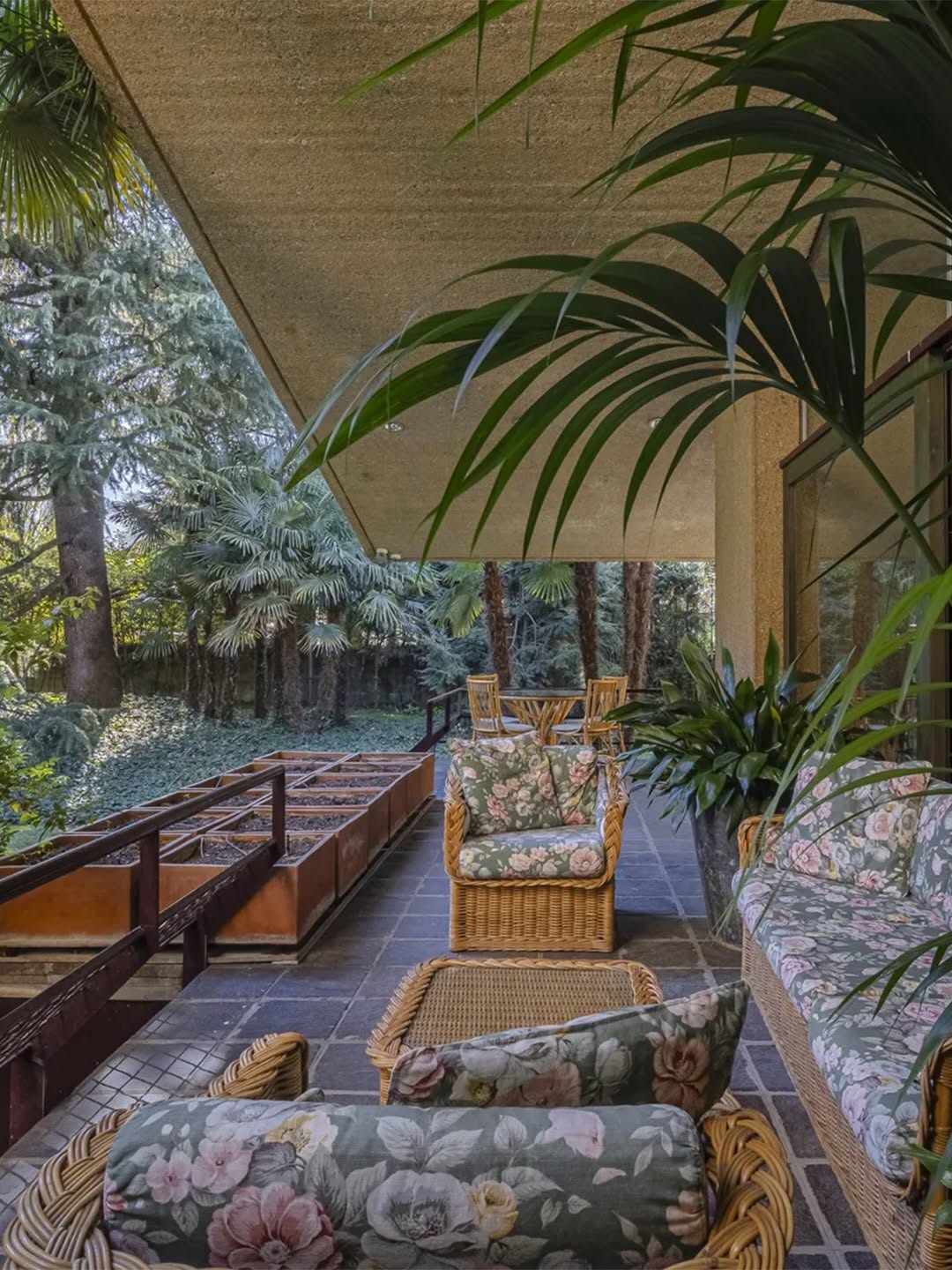
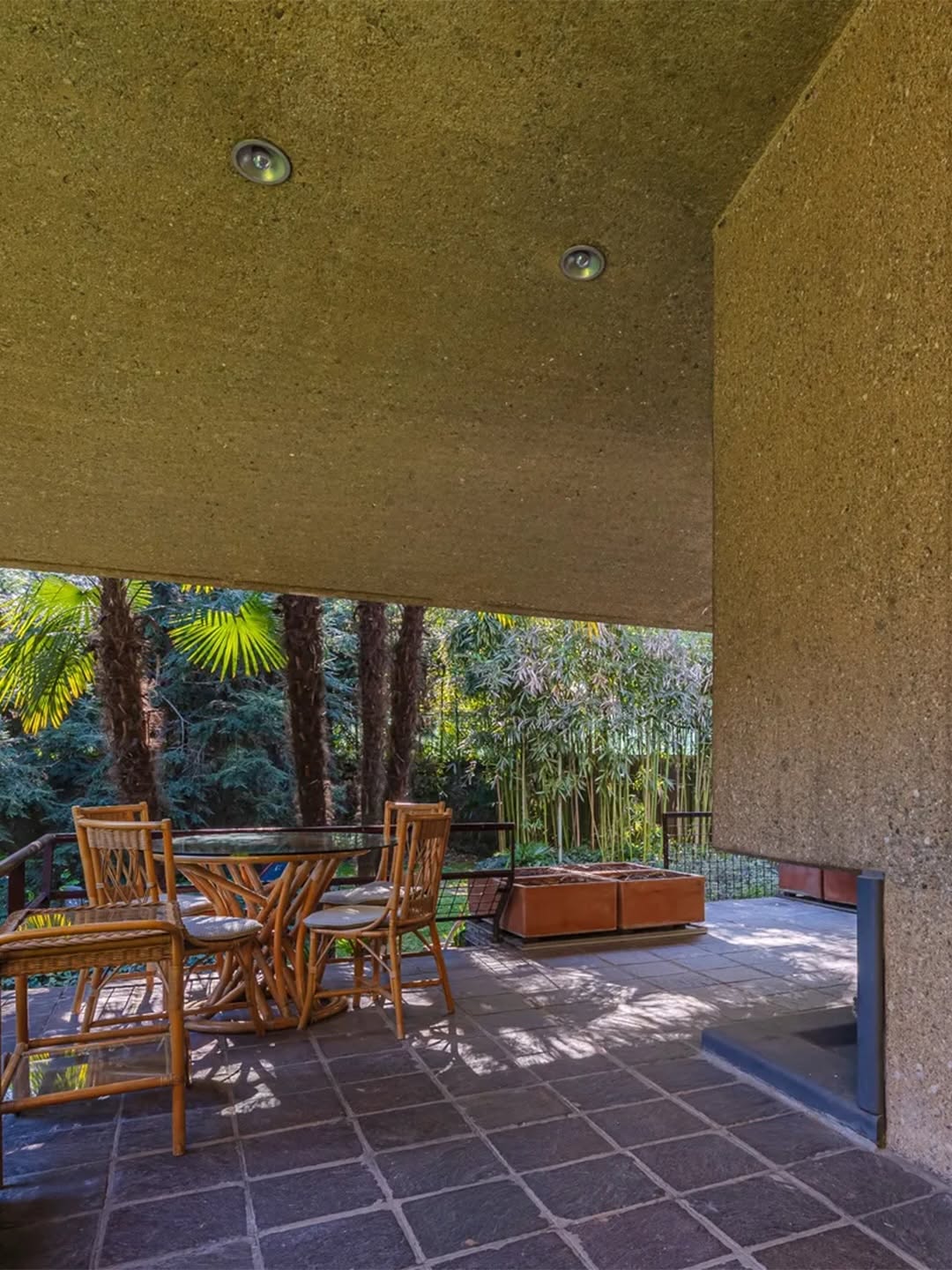
The 3,800 square meter garden is not decorative. In a house built around the dissolution of the interior and exterior boundary, the garden is structural. The glazed walls only work because of what they frame. Multiple outdoor terraces allow movement between inside and outside at several points rather than a single threshold, which means the concrete volumes read differently depending on where you are standing.
This is a design decision, not a lifestyle amenity. The house is constructed around the idea that the landscape and the building are in continuous conversation. When the interior is this compressed and dramatic, a generous exterior is not a luxury. It is the answer to the question the sitting room asks.
Sotheby's Has It. Somebody Will Either Understand That or Not.
The property is now listed through Sotheby's International Realty Italy. The asking price has not been published. What is certain is that a 1970s Italian brutalist house with a double height sitting room, a two tier mezzanine, 3,800 square meters of garden, and zero visible renovation is the kind of property that attracts two kinds of buyers: those who understand what they have, and those who do not.
Castiglioni's original intent is legible in every wall and ceiling angle because someone, over the past five decades, chose not to sand it down. That act of preservation is as important as the original design. Brutalist architecture in Italy from this period survives largely in institutional buildings. A residential example in this condition, with this spatial ambition, is uncommon. If the next owner understands that, the building wins. If they do not, the concrete will outlast them anyway.
Related: CHRIS VON WANGENHEIM 1976 DIOR CAMPAIGN RESURFACEd.
Related: Italy EQT Track Top Restores the FIGC Archive Crest.
Frequently Asked Questions
Who designed the Milan brutalist house featured by Type7?
Francesco Castiglioni, a Como-based architect, designed the 1970s home in a Milanese suburb with Art Nouveau estates.
What makes the sitting room unusual?
The sitting room has a double height sloping ceiling with a two tier mezzanine above the sofa, giving it the quality of a private opera house.
How big is the garden?
The garden measures 3,800 square meters, with multiple outdoor terraces that extend the interior and exterior boundary established by the glazed walls.
Has the house been renovated?
The house has remained untouched by renovations since the 1970s, preserving the original concrete chimneys, rough textured facades, and spatial configuration.
Where is the Milan brutalist house for sale?
The property is listed through Sotheby's International Realty Italy.
Topics: 1970s, italy, alfie-munkenbeck, focus-57-63, milan, castiglioni, type7, brutalism, concrete, design, architecture