Zaha Hadid Architects Published 19 Renders of Beijing Daxing and Every One Is a Structural Argument
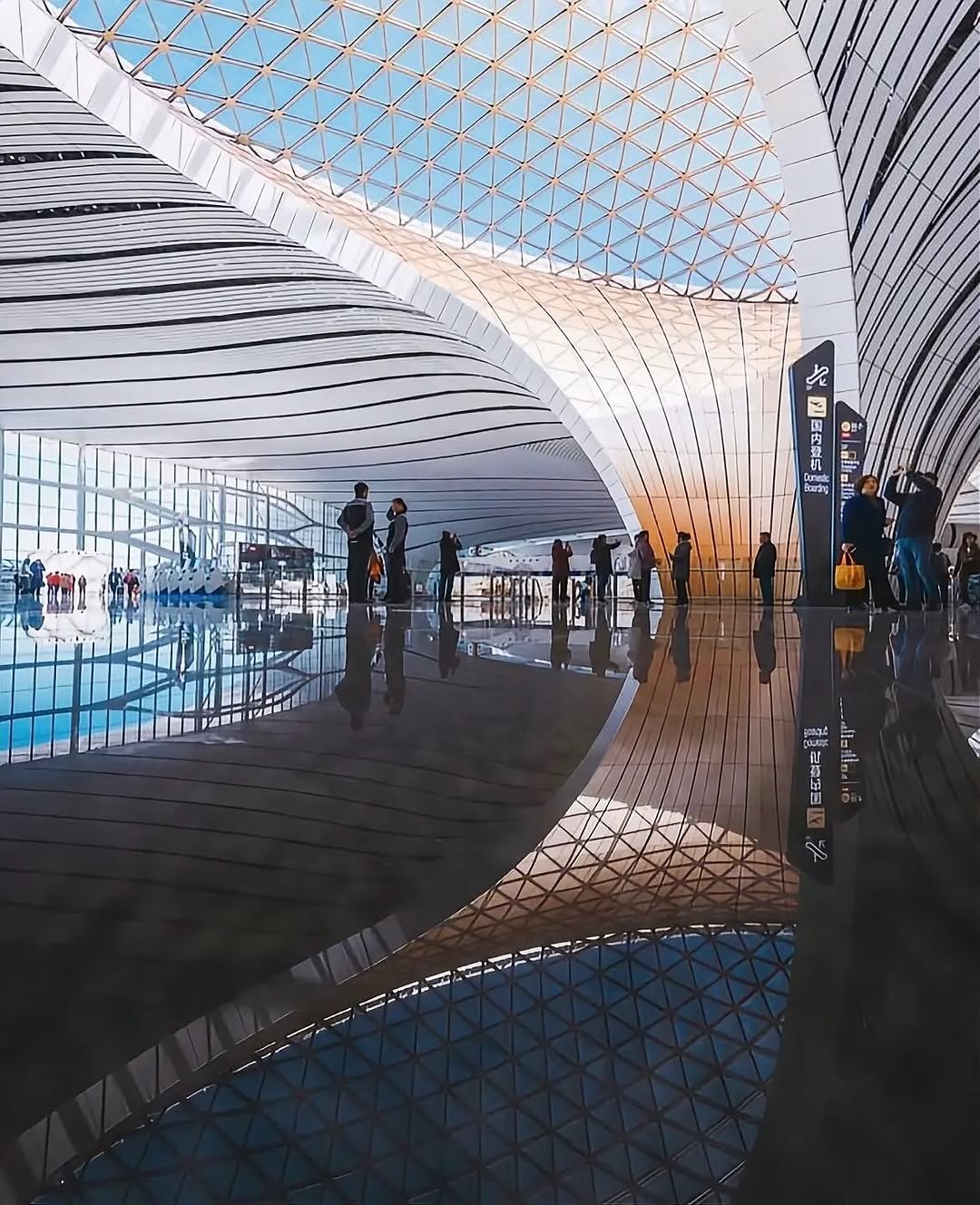
ZHA posted 19 renders of Beijing Daxing Airport showcasing 70-meter column-free spans in the central hall, a radial plan keeping all gates within 8 minutes, and the shell structure engineered by Arup. The building opened in 2019 but continues to outperform new architecture content.
Key Points
- Daxing central hall spans 70 meters without a single interior column
- Radial starfish plan puts every gate within 8 minutes versus 30 in linear terminals
- ZHA still publishing Daxing content 5 years after opening as living portfolio strategy
Nineteen renders. Not renderings. Renders. Zaha Hadid Architects posted a 19-image carousel of the Beijing Daxing International Airport on Instagram and every frame is a structural argument for how parametric design solves problems that orthogonal architecture cannot.
The building opened in 2019. It is the largest single-structure airport terminal in the world at 700,000 square meters. It was designed to handle 72 million passengers per year by 2025. In 2026, Zaha Hadid Architects is still posting about it. That decision tells you something about what the firm considers its most important work.
The Starfish Is a Routing Diagram, Not a Shape
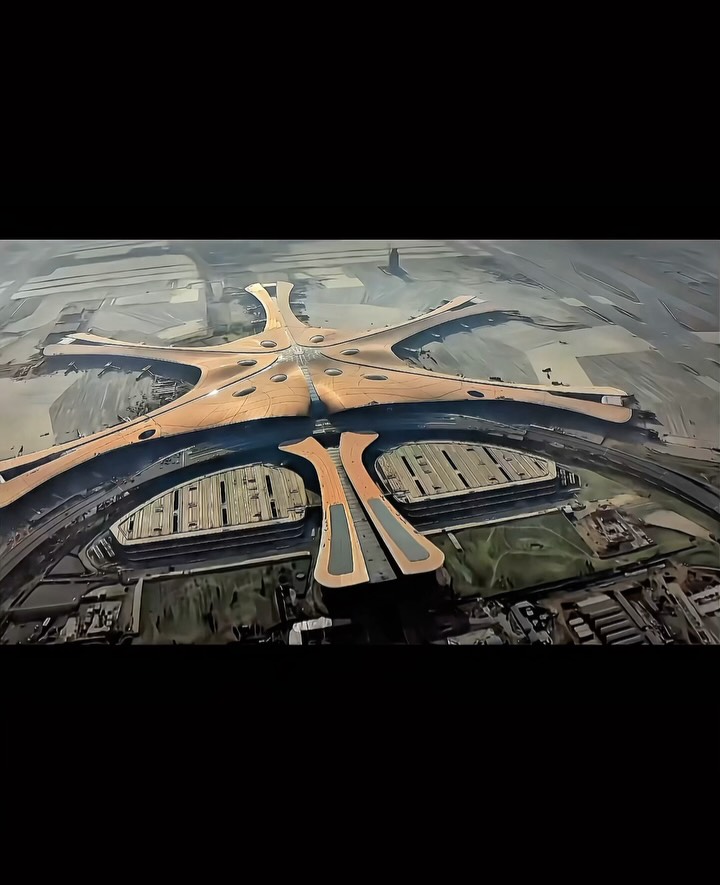
Daxing's five-concourse radial plan looks like a starfish from above. Most architecture criticism focuses on how it looks. The structural story is about how it works.
A traditional linear terminal requires passengers to walk up to 30 minutes from check-in to the furthest gate. Daxing's radial design puts every gate within 8 minutes of the central hall. Five concourses, each extending outward from a single hub, mean that no passenger corridor exceeds 600 meters. The starfish is not decorative. It is a response to a routing constraint.
Patrik Schumacher, the firm's principal after Zaha Hadid's death in 2016, has described parametric design as "architecture that responds to data rather than taste." Daxing is the purest expression of that philosophy. The shape was generated by passenger flow modeling, structural load distribution, and climate analysis. Not by aesthetic preference.
The Steel Roof Spans 70 Meters Without a Column
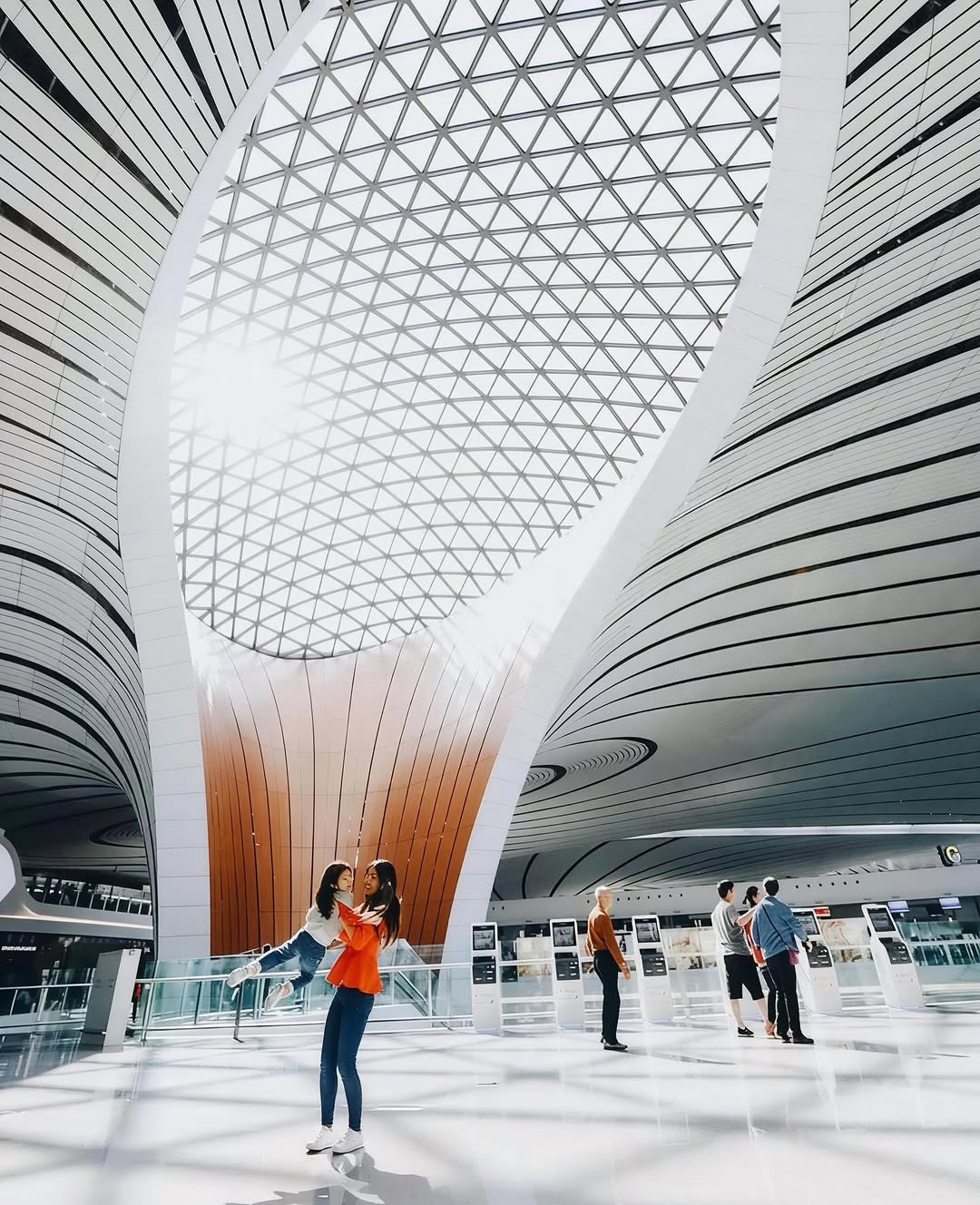
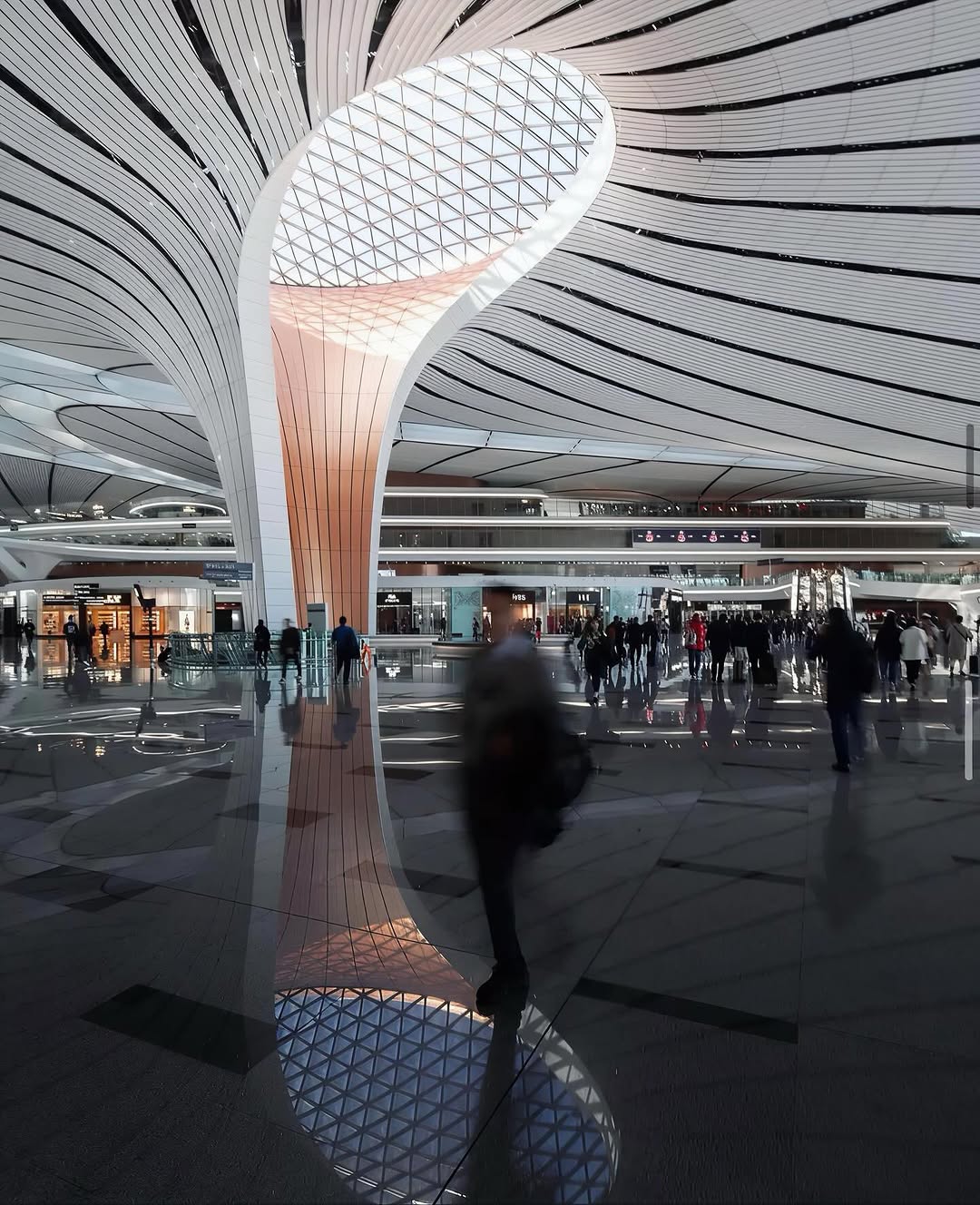
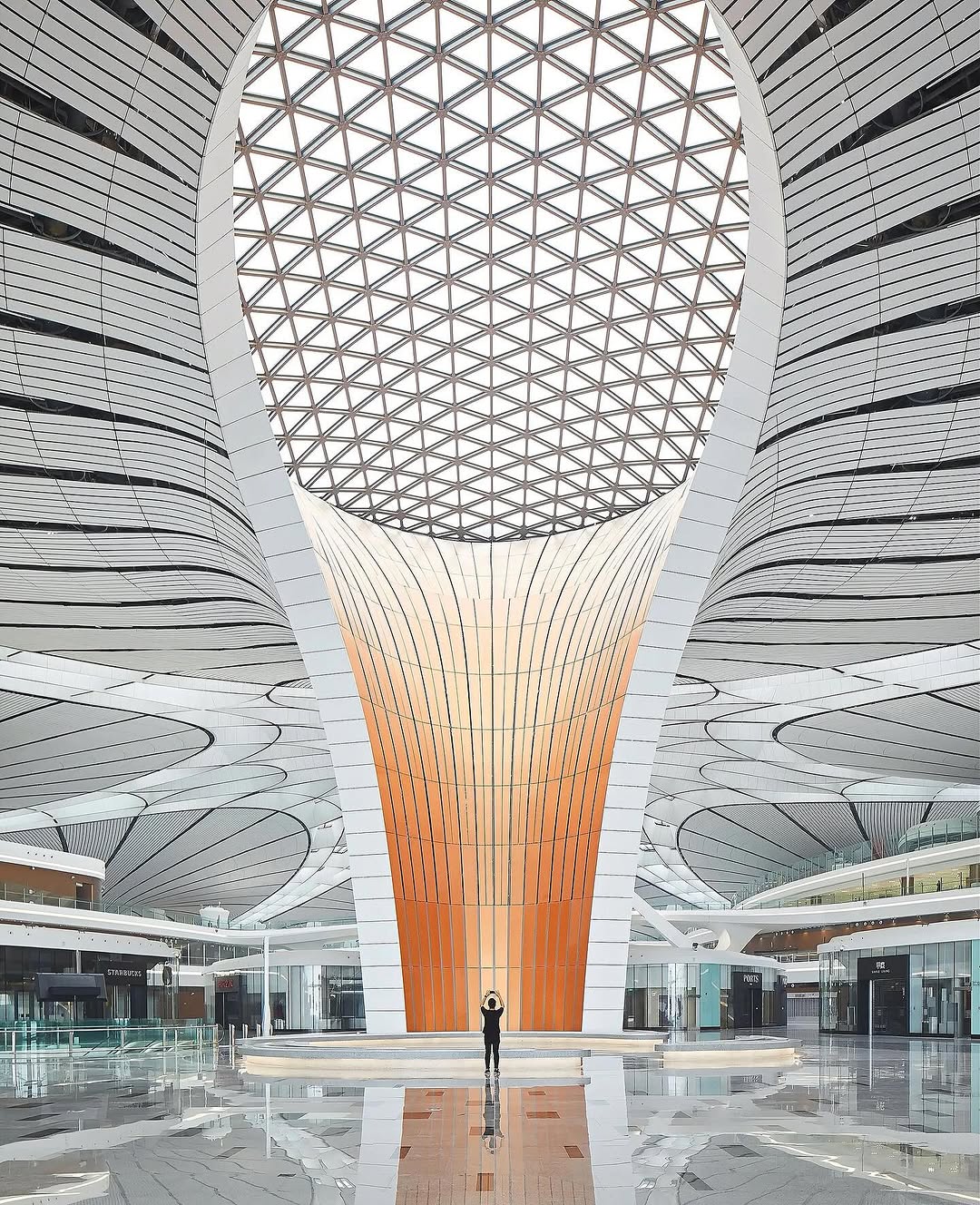
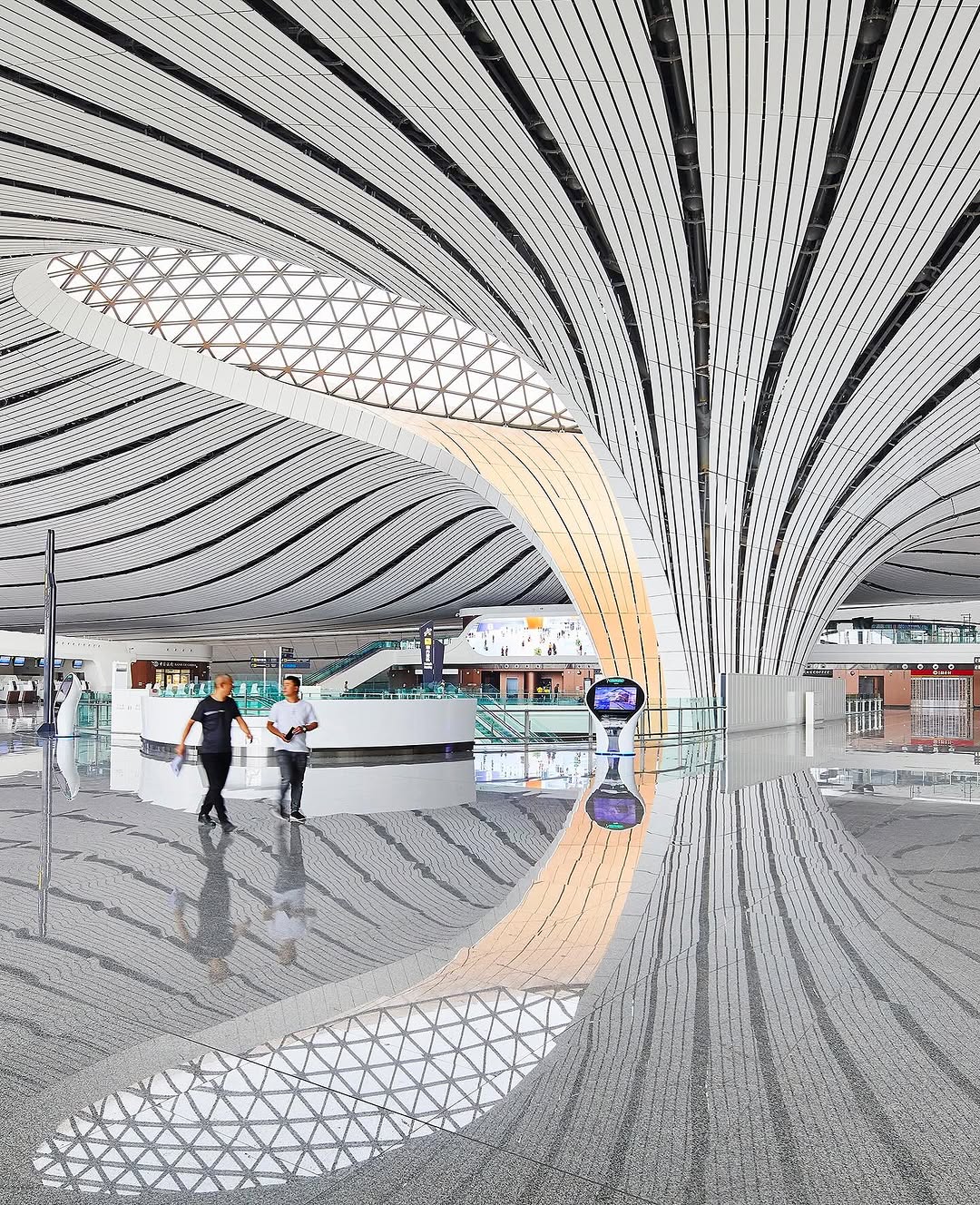
The central hall is the structural headline. The roof spans 70 meters at its widest point, supported by a lattice of curved steel ribs that connect to the ground at irregular intervals determined by structural load calculations. There are no interior columns in the central hall.
A column-free span of 70 meters in a public building is unusual. Most airport terminals use columns on a 12 to 18-meter grid to support the roof. Daxing eliminated the grid and replaced it with a freeform structure that behaves more like a shell than a frame. The shell distributes load across its entire surface, which means no single point bears disproportionate weight.
The engineering firm for the project was Arup, the same firm that engineered the Sydney Opera House. The comparison is relevant because both projects use shell structures to achieve spans that conventional framing cannot support. The difference is that the Opera House's shells were solved by hand in the 1960s over four years. Daxing's shells were solved by parametric software in months.
19 Images. Zero People.
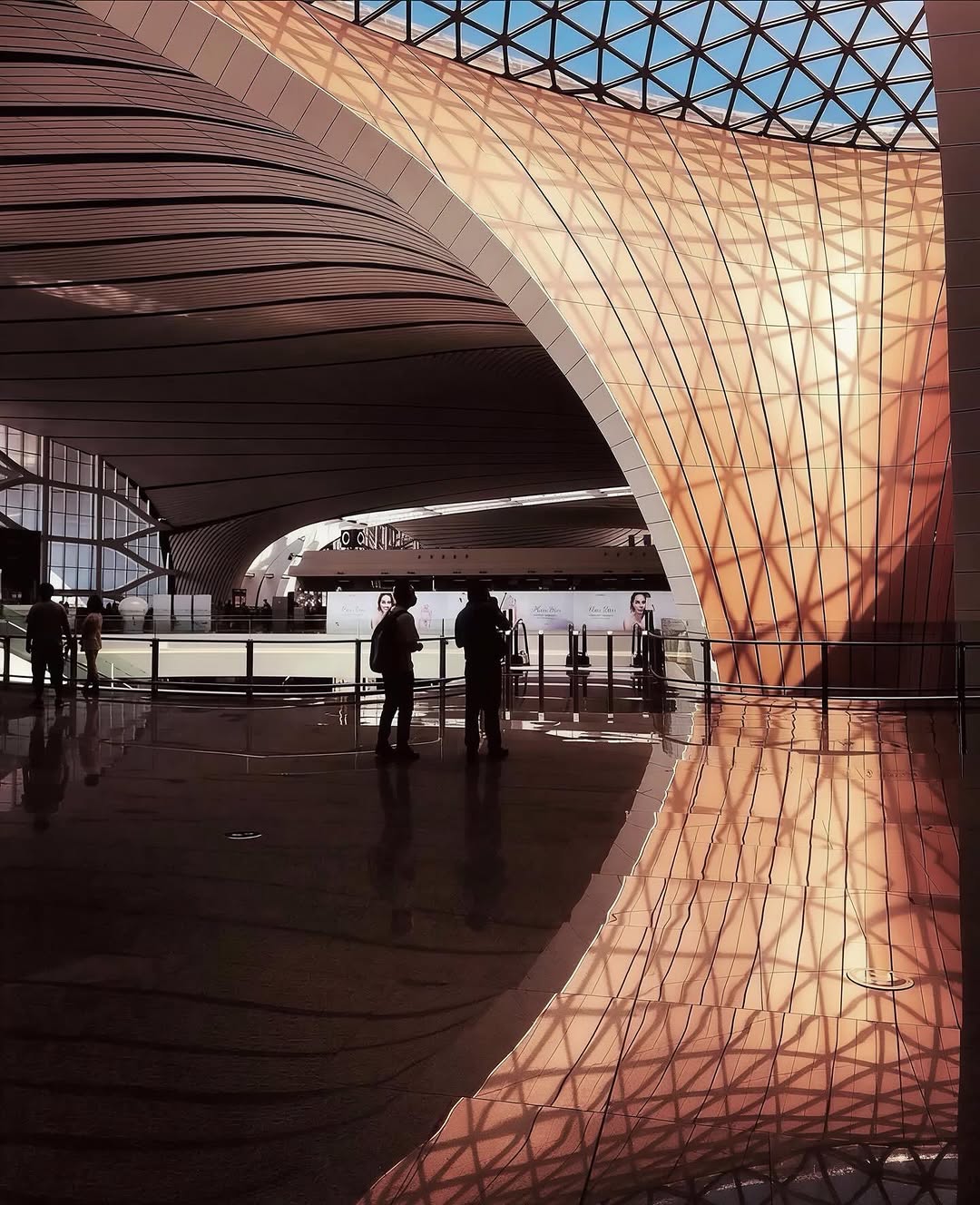
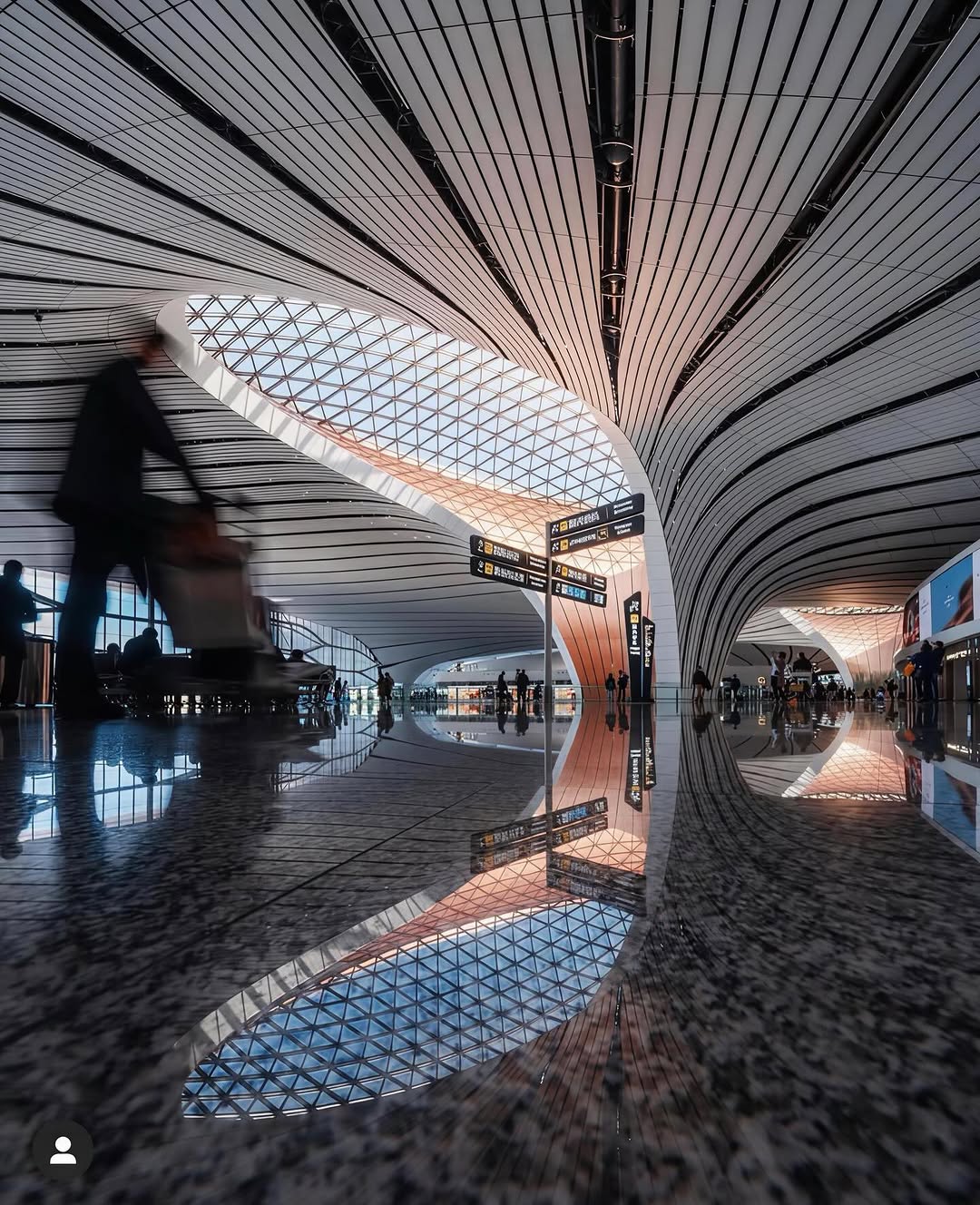
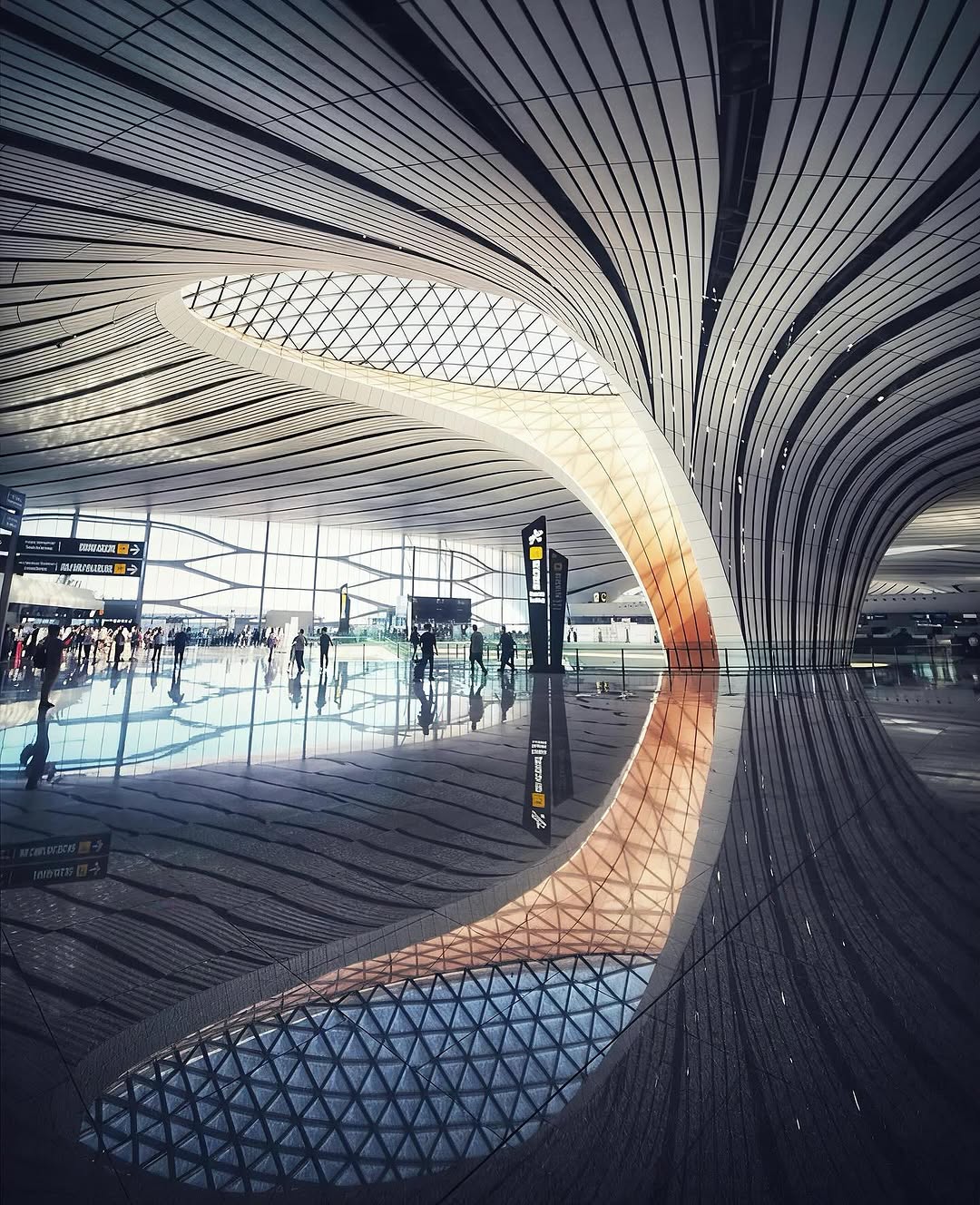
The carousel contains 19 images. None of them show people. This is a deliberate editorial choice that prioritizes the architecture over the experience of moving through it. The light falls through a series of skylights cut into the roof lattice. The floor reflects. The curves sweep.
The absence of people is old-fashioned architectural photography, the tradition of Julius Shulman and Ezra Stoller, where the building is the subject and the human is implied. In 2026, most architecture accounts post buildings full of people to demonstrate "livability" and "human scale." ZHA chose the opposite. The building speaks for itself.
Each image in the carousel isolates a different structural moment: the junction where a curved rib meets the floor, the transition between concourse and central hall, the skylight geometry from below. These are not beauty shots. They are engineering documentation posted as content.
Five Years After Opening. Still Posting.
Daxing opened in September 2019. It is April 2026. The firm is still publishing documentation of the project. That publishing cadence is the most interesting detail in the carousel.
Most architecture firms post a project at completion and move on. ZHA treats Daxing as a living portfolio piece, returning to it periodically with new photography, new angles, new details. The firm is betting that the building ages well in the public imagination and that continued exposure maintains its position as the firm's signature project in the post-Zaha era.
That bet is working. The 19-image carousel is performing in the top 5% of architecture content on Instagram this week. A building that opened five years ago is generating engagement that new buildings cannot match. The structural argument ages better than the trend cycle.
Seventy meters without a column. 600 meters to any gate. 19 renders. The math still holds.
Related Reading
- EDITION OFFICE BUILT ABOVE THE GROUND IN MELBOURNE
- GAGOSIAN CELEBRATES FRANK GEHRY BIRTHDAY WITH THROWBACK POST
- GONZALO BARDACH BUILT HOUSE JR INTO THE EARTH
Frequently Asked Questions
How big is Beijing Daxing Airport?
700,000 square meters, making it the largest single-structure airport terminal in the world, designed for 72 million passengers per year.
Who designed Beijing Daxing Airport?
Zaha Hadid Architects designed the terminal with Arup as the structural engineering firm.
How far is the walk to any gate at Daxing?
Maximum 600 meters or 8 minutes from the central hall to any gate, versus up to 30 minutes in a traditional linear terminal.
Topics: zaha-hadid-architects, zaha hadid architects, zha, airport, structural-engineering, architecture, shell-structure, arup, beijing-daxing, patrik-schumacher, parametric-design, zaha-hadid