YOUTUBE SAYS YOUR UPLOAD ALREADY TRAINED ITS AI
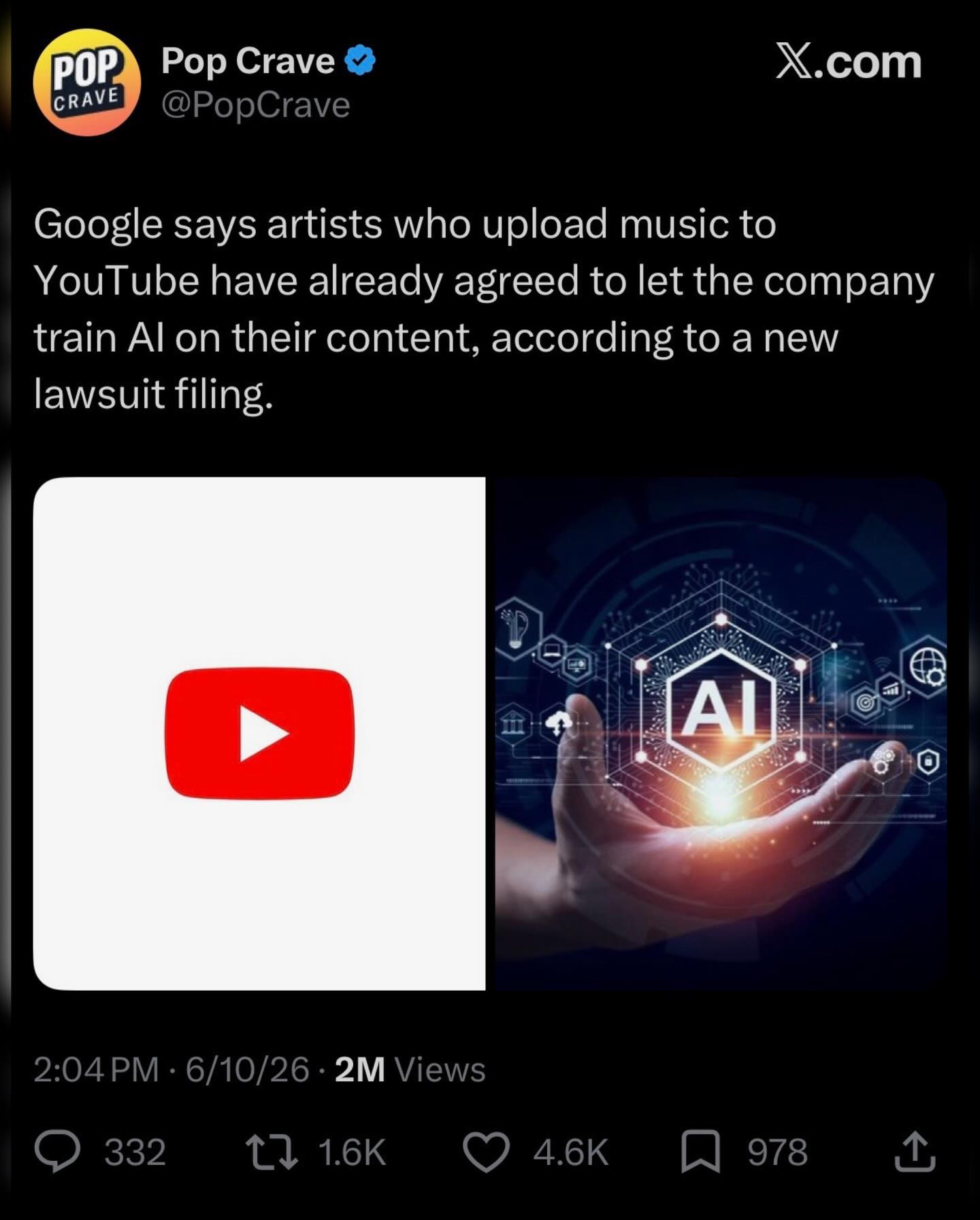
Google's lawyers argued in a June 2026 motion to dismiss that YouTube's terms of service already license uploaded content, including music, to train AI models like Lyria 3. Six independent musicians filed suit in March 2026 disputing that reading, while YouTube's separate Likeness Detection program requires explicit opt in consent for synthetic voice and face use.

Key Points
- Google's lawyers say YouTube's terms already license uploads to train Lyria 3, no opt in required.
- Six indie musicians sued Google in March 2026, a month after Lyria 3 launched inside Gemini.
- YouTube's opt in Likeness Detection tool contradicts the blanket AI training license argument.
A federal judge in California is about to decide whether a sentence buried in a terms of service page already gave Google permission to train an AI model on your voice. Google's lawyers filed a brief this month arguing yes, the license was there all along. Six independent musicians are telling the same court no, and the gap between those two answers is the whole story.
The thesis is simple. YouTube tells the public that artists deserve control over how AI uses their voice, image and likeness. Google's own litigators are meanwhile arguing that uploading a video already handed over that control, no separate checkbox required. Both statements cannot be fully true at once, and a judge is now the one who has to pick.
March 2026. Six Artists Filed First.
The lawsuit was filed in March 2026, about a month after Google released Lyria 3, its AI music generator, inside the Gemini app. The plaintiffs are indie musicians and small acts: singer Sam Kogon, producer Magnus Fiennes, songwriter Michael Mell, the group Attack the Sound, the duo Stan Burjek and James Burjek, and the Chicago band Directrix.
Their claim is direct. They say Google trained Lyria on music uploaded to YouTube without asking, and that no reasonable person signing up to post a song thought they were licensing that song to build a competing AI music generator. This is not a hypothetical fight about the future of AI. It is a specific complaint, in a specific court, about a specific product that already shipped and already generates songs.
The License Was Already in the Upload Button
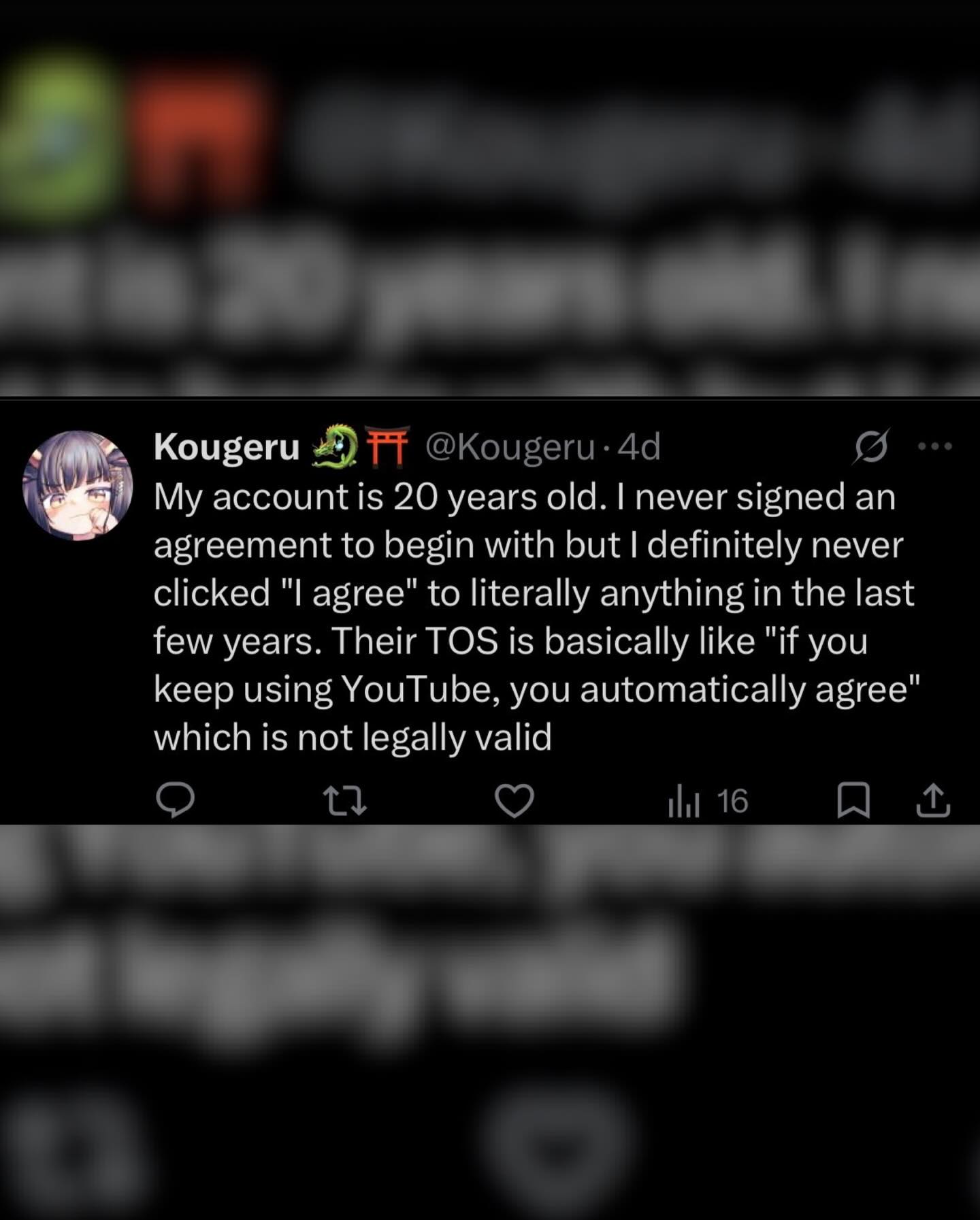
Google's answer, filed as a motion to dismiss, does not lean on fair use. It leans on the fine print. According to the brief, YouTube's terms of service already grant the platform and its corporate affiliates a worldwide, royalty free, transferable license to reproduce, distribute and prepare derivative works from anything uploaded to the site.
Prepare derivative works is the load bearing phrase. Google's position is that training an AI model counts as a derivative work under a license every uploader already agreed to at publish. There is no separate AI clause, no checkbox saying your song may train Lyria. The original, generic license already covers it, Google argues, which is exactly what WHO GETS PAID WHEN AI USES YOUR WORK? AXM IS BUILDING THE PLUMBING was built to fix, an infrastructure layer for consent most platforms still lack.
"Not Informed Consent," Say Music Advocates
Indie music advocates reviewing the case have a specific objection, and it is not about whether a license exists. It is about whether anyone actually understood what they were agreeing to. Billboard Canada reported that advocates called the terms too generic to put musicians on notice, since the words artificial intelligence and training do not appear anywhere in the clause Google is citing.
That is the incentive question a habit analyst has to ask before believing a company's public messaging. If the license already covers AI training, there was never a business reason to build a separate consent flow, and building one would have meant admitting the old terms were not enough.
Likeness Detection Asks. The Upload Terms Already Answered.
YouTube's Likeness Detection tool, expanded through 2026 to musicians and creators beyond its original pilot group of officials and journalists, is opt in by design. Signing up requires a government ID and a biometric reference video, and Google states plainly that face and voice data collected there is not used to train its generative AI models without separate consent.
That is a real opt in system, built with real friction, for one specific category of harm: someone else's face or voice showing up in synthetic content without permission. It says nothing about whether the song or video you uploaded yourself can already train the next Lyria model. Two consent systems exist inside the same company, one that asks and one that Google's lawyers say already answered itself years ago.
Read Your Own Terms Before You Post Again
The lock in here is not a subscription, it is distribution. Musicians cannot simply pull their catalog off YouTube in protest, because YouTube is where the audience and the algorithm already are. That leverage is exactly why Google can afford to argue the broad reading of its own terms in court instead of settling quietly, even while Microsoft and Google are separately paying other creators up to $600,000 for AI promotion deals. Consent has a price when a lawyer is not the one asking. The case is currently at the motion to dismiss stage, not a final ruling, which means the terms of service language every uploader already agreed to is about to get a real legal test.
Watch this one instead of reacting to it. If the court sides with Google, expect every major platform's terms of service to get reread by lawyers everywhere, since the same royalty free, derivative works language shows up far beyond YouTube. If the six plaintiffs win, expect an opt in checkbox for AI training within the year, the same pattern YouTube already built for likeness detection. Either outcome changes what uploading anything actually means.
Frequently Asked Questions
What is the YouTube AI training lawsuit about?
Six independent musicians sued Google in March 2026, alleging it trained the Lyria 3 AI music generator on songs uploaded to YouTube without separate consent.
Does uploading a video to YouTube give Google permission to train AI on it?
Google's lawyers argue yes, citing a clause in YouTube's terms of service granting a worldwide, royalty free license to reproduce and prepare derivative works from uploads.
Who are the plaintiffs suing Google over AI training?
The plaintiffs are singer Sam Kogon, producer Magnus Fiennes, songwriter Michael Mell, the group Attack the Sound, the duo Stan Burjek and James Burjek, and the band Directrix.
When did Google file its motion to dismiss?
Google filed its motion to dismiss in June 2026, arguing YouTube's existing terms of service already cover AI training.
Is YouTube's Likeness Detection tool the same thing as AI training consent?
No. Likeness Detection is a separate, opt in program launched in 2026 that protects against unauthorized synthetic use of a person's face or voice, not against a song training an AI model.
How does Google justify training Lyria 3 on YouTube uploads?
Google says the platform's terms of service already grant a license to prepare derivative works from anything uploaded, without needing a separate AI specific clause.
What is Lyria 3?
Lyria 3 is Google's AI music generator, released inside the Gemini app about a month before the lawsuit was filed.
Can musicians opt out of having their YouTube uploads used for AI training?
Currently there is no dedicated opt out for AI training the way there is for Likeness Detection; the case now before the court could force one.
Topics: youtube, billboard, microsoft, ai-training, google, lyria-3, ai-copyright, likeness-detection, lawsuit, music-industry, consent, artificial-intelligence