SUPREME'S BOX LOGO WAS BORROWED, AND SHE KNEW
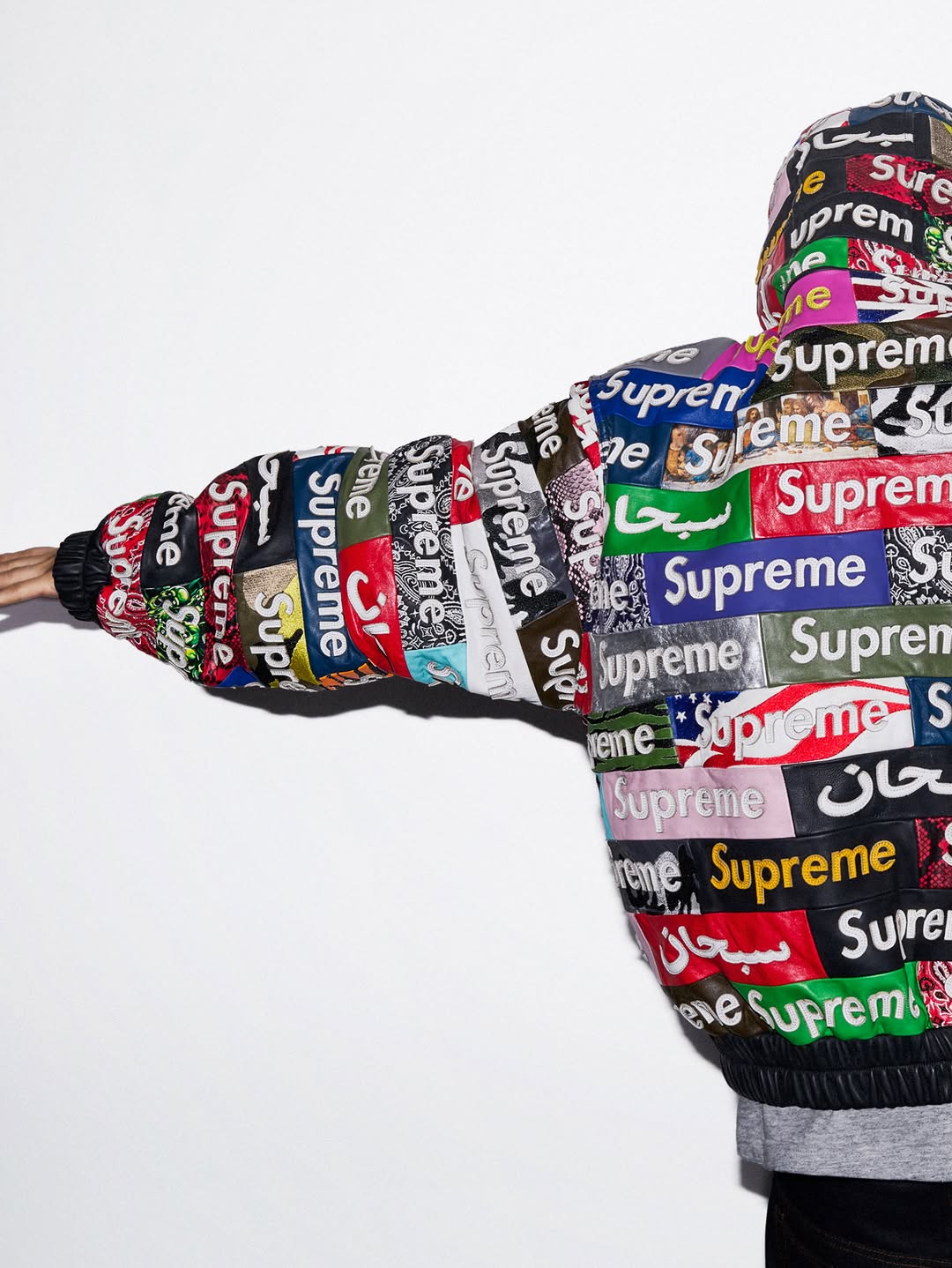
Supreme's box logo derives directly from artist Barbara Kruger, who has used white Futura Heavy Oblique text on red since 1981. Founder James Jebbia acknowledged the logo was based on her work. Kruger never sued, and in 2013 called Supreme's own copyright lawsuit against Married to the Mob a farce. Supreme is now owned by EssilorLuxottica, which bought it from VF Corporation for 1.5 billion dollars in October 2024.
Key Points
- Supreme's box logo was based directly on Barbara Kruger's work, which founder James Jebbia acknowledged.
- Kruger has used white Futura on red since 1981 and has never sued Supreme over the logo.
- EssilorLuxottica bought Supreme from VF Corporation for 1.5 billion dollars, closing 2 October 2024.
Supreme's box logo is white Futura Heavy Oblique set inside a red rectangle, and it came directly from the artist Barbara Kruger. James Jebbia has acknowledged as much. Kruger has known for thirty years, has never sued, and once described the whole situation in a Word document she named fools.doc.
Lafayette Street, April 1994
Jebbia opened Supreme on Lafayette Street in April 1994 as a skate shop for downtown Manhattan. The store needed an identity fast, and the one it got was a rectangle of red with a single word inside it in slanted white capitals.
Futura Heavy Oblique is not a subtle typeface. It reads as modern, direct, institutional. Volkswagen used it. NASA used it. Putting it in a red box and pointing it at skaters was the entire idea.
The Book Jebbia Handed His Designer
The design did not arrive from nowhere. Jebbia was looking at Barbara Kruger, and he lent a book of her work to the graphic designer building the logo.
In connection with a later lawsuit, Jebbia acknowledged that the logo was based directly on Kruger's work. That is not a fan theory or a message board rumor. It is the founder's own account.
Kruger Got There in 1981
Kruger had been making the format since 1981: white Futura text, red field, declarative statement. Her best known piece in that language, "I Shop Therefore I Am," arrived in 1990, four years before Supreme opened.
The work was already about consumption. She was using the vocabulary of advertising against advertising, which is why the format felt so charged in the first place. A skate brand adopting it was, depending on where you stand, either the joke completing itself or the joke being sold back.
The Lawsuit That Made It Awkward
In 2013 Supreme sued Leah McSweeney of Married to the Mob over a product called Supreme Bitch, which used white letters on a red box. A brand whose logo came from someone else's art was in court arguing that its logo was its own.
Complex asked Kruger what she made of it. She answered with a blank email carrying an attachment named fools.doc. Inside was one paragraph:
"What a ridiculous clusterfuck of totally uncool jokers. I make my work about this kind of sadly foolish farce. I'm waiting for all of them to sue me for copyright infringement."
That is the entire statement. She did not give an interview, did not hire a lawyer, and did not follow up.
She Never Sued
Thirty years on, Kruger has never taken legal action against Supreme. She explained her position to The New Yorker in 2017 in a sentence that closes the case: "I don't own that typeface, you know? I don't own a logo."
She is correct, legally. Typefaces are not protected the way images are, and a red rectangle is not an artwork. Whatever Supreme took, it was not the kind of thing a court hands back. Which is also, precisely, the point her work was making.
What the Logo Actually Did
The box logo turned out to be one of the most efficient pieces of branding in modern retail because it is a container. It holds anything. Put it on a hoodie and it is streetwear, on a brick and it is a joke, on a Louis Vuitton trunk and it is a merger.
You can watch the same mechanic running in the archive. Supreme's FW26 collection lands August 27 and the brand moved the lookbook up a full week to control the story around it. The season includes a mailbox built by a 35 year old maker, which is a real object with a real supplier and also a punchline. Last week it revived Nike's 2001 Air Ecstasy at Dover Street Market LA. None of those things have anything in common except the rectangle.
Who Owns It Now
The logo has changed hands twice. VF Corporation bought Supreme in 2020 for 2.1 billion dollars. Four years later VF sold it to EssilorLuxottica, the company behind Ray-Ban, for 1.5 billion dollars, a deal that closed on 2 October 2024. Jebbia stayed on to run the brand.
So a mark derived from an artist's critique of consumer culture is now an asset on the balance sheet of one of the largest eyewear manufacturers in the world, having lost about 600 million dollars of book value in four years.
Kruger called it a farce in 2013. Nothing since has argued with her.
For another origin story hiding in plain sight, read how Daft Punk kept their faces out of the frame.
Frequently Asked Questions
Where did Supreme''s box logo come from?
It came from the artist Barbara Kruger. James Jebbia lent a book of her work to the graphic designer building the logo in 1994, and Jebbia later acknowledged that the design was based directly on Kruger''s work.
What font is the Supreme box logo?
Futura Heavy Oblique, set in white capitals on a red rectangle. It is the same typographic format Barbara Kruger had been using in her art since 1981.
Did Barbara Kruger sue Supreme?
No. Kruger has never taken legal action against Supreme in more than thirty years. She told The New Yorker in 2017, I don''t own that typeface, you know? I don''t own a logo.
What did Barbara Kruger say about Supreme?
In 2013, after Supreme sued Married to the Mob for copying its logo, Kruger responded to Complex with a Word document named fools.doc that read: What a ridiculous clusterfuck of totally uncool jokers. I make my work about this kind of sadly foolish farce. I''m waiting for all of them to sue me for copyright infringement.
Who owns Supreme now?
EssilorLuxottica, the owner of Ray-Ban, which acquired Supreme from VF Corporation for 1.5 billion dollars in a deal that closed on 2 October 2024. James Jebbia stayed on to run the brand.
How much did Supreme sell for?
VF Corporation bought Supreme in 2020 for 2.1 billion dollars, then sold it to EssilorLuxottica four years later for 1.5 billion dollars, a loss of roughly 600 million dollars in book value.
When did Supreme open?
April 1994, on Lafayette Street in downtown Manhattan, as a skate shop founded by James Jebbia.
Topics: ray-ban, branding, streetwear, barbara-kruger, james-jebbia, fashion, louis vuitton, the-new-yorker, complex, logo-history, the new yorker, futura, louis-vuitton, nyc, supreme, box-logo, nike