THRILLER SOLD 70 MILLION COPIES BECAUSE MICHAEL JACKSON TREATED MUSIC VIDEOS LIKE MOVIES
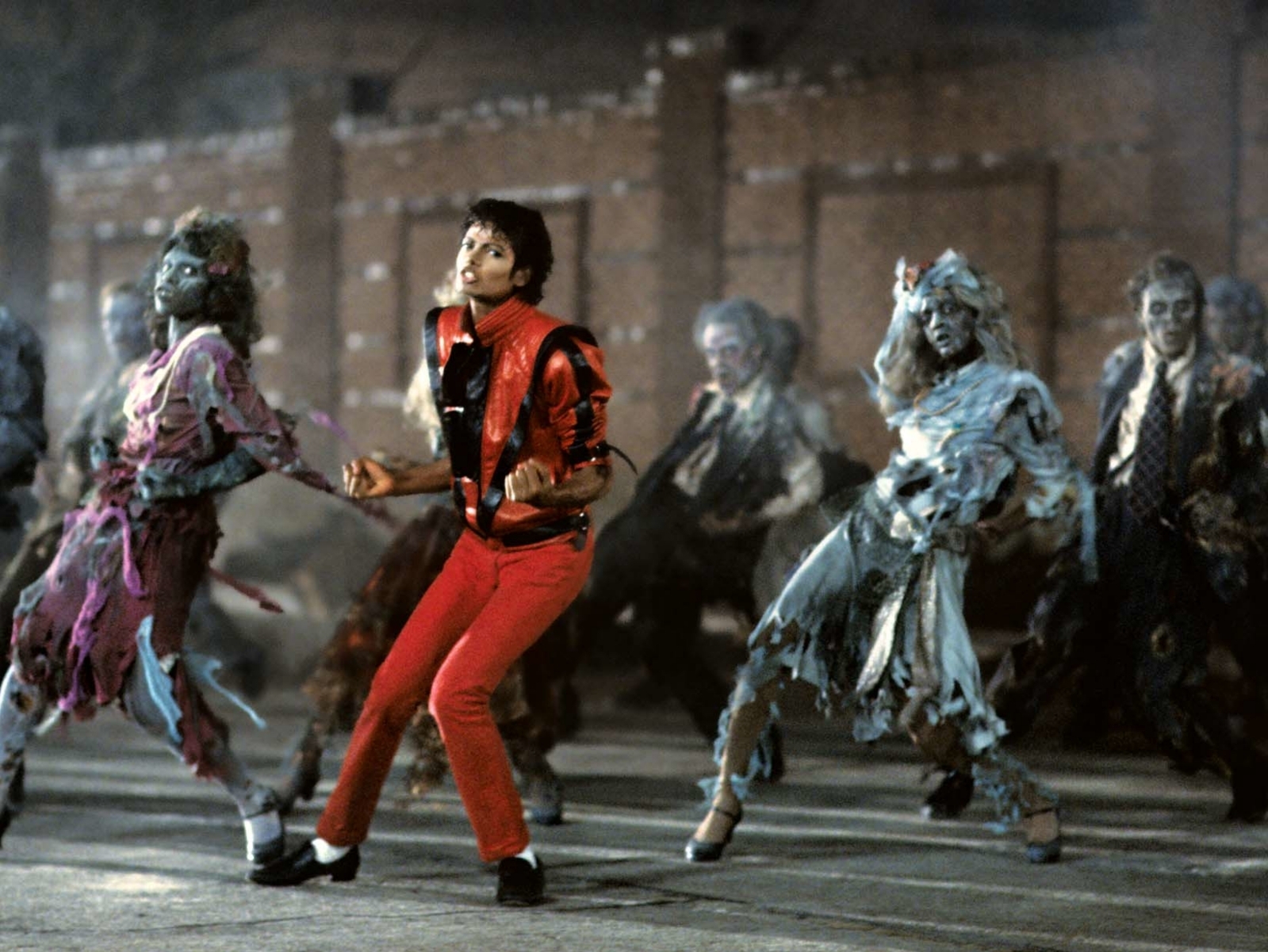
Thriller released November 30 1982 is the bestselling album in history with 70 million copies sold. Produced by Quincy Jones it spent 37 weeks at number one and generated 7 charting singles.

Key Points
- Thriller sold 1 million copies per week through 1983 and spent 37 weeks at number one
- The Thriller music video cost $500,000 and ran 14 minutes directed by John Landis
- Quincy Jones created 91 mixes of Billie Jean before selecting the final version
November 30, 1982. Quincy Jones Presses Play.
Quincy Jones and Michael Jackson had already made Off the Wall together in 1979. It sold 20 million copies, a massive number for its era and still one of the best selling R&B albums ever recorded. When they started Thriller at Westlake Recording Studios in Los Angeles, Jones wanted to make ten number one singles on a single record. He got seven out of nine tracks as singles, and all of them charted. The album cost $750,000 to produce, an extravagant figure for 1982 that Jones justified by treating each track as an independent production with its own identity, its own session musicians, and its own sonic palette.
Thriller sold 1 million copies per week for much of 1983. By the end of that year, one in every thirty Americans owned a copy. The album spent 37 weeks at number one on the Billboard 200, a run that has never been matched in the chart's history. Global sales reached 70 million units, making it the best selling album in history by roughly 25 million copies over its nearest competitor, the Eagles' Their Greatest Hits. In the United States alone, the RIAA certified Thriller at 34 times platinum, 34 million copies in one country.
The 14 Minute Short Film
John Landis directed the Thriller music video in 1983. It cost $500,000 to produce, more than many feature films of that decade. The video ran 14 minutes with a narrative arc, a werewolf transformation sequence using Rick Baker's prosthetic effects, and choreography by Michael Peters that required a full dance rehearsal schedule matching a Broadway production. Jackson insisted on treating the video as a short film rather than a promotional clip, a decision that fundamentally altered how the music industry understood visual content.
MTV had been predominantly white until Thriller. The channel launched in 1981 and programmed almost exclusively rock and new wave artists for its first two years. CBS Records president Walter Yetnikoff allegedly pressured MTV to play Billie Jean by threatening to pull all CBS content from the channel. Jackson became the first Black artist to receive heavy MTV rotation, and the channel's demographics shifted permanently. By the end of 1983, MTV's audience had diversified in ways that reshaped both the music and advertising industries.
What Quincy Jones Built
Jones's production on Thriller is a study in commercial architecture executed at the highest craft level. Billie Jean runs on a synth bass line that Jones shaped across 91 mixes before selecting the final version. The kick drum pattern on that track, dry, punchy, and centered in the mix, became the most imitated drum sound of the 1980s. Beat It features Eddie Van Halen's guitar solo, recorded in a single take as a favor with no payment and no credit until the album liner notes were printed. Van Halen reportedly drank a six pack of beer, played the solo once, and left the studio.
The album crosses funk, rock, pop, disco, post disco, and R&B without sounding like a compilation or a genre exercise. That cohesion is entirely Jones's engineering. He treated each song as a world unto itself but maintained a sonic thread, warm analog synths, tight rhythm sections, Jackson's multi tracked vocals, that makes the album feel unified even across its extremes. The gap between Wanna Be Startin' Somethin' and The Lady in My Life is enormous in genre terms but seamless in listening experience.
Eight Grammys and the System It Created
The 1984 Grammy ceremony awarded Thriller eight trophies, a record that stood for 16 years until Santana's Supernatural matched it in 2000. The wins spanned categories: Album of the Year, Record of the Year for Beat It, Best Male Pop and R&B Vocal Performance, Best Rock Performance. The sweep demonstrated that Thriller operated outside genre boundaries in a way the recording industry had never rewarded before.
The commercial aftershock reshaped the music business. Jackson's next contract with Sony, signed in 1991, was worth $890 million, the largest recording contract in history at the time. Every major label began allocating massive video budgets for their artists. The concept of the album as a multimedia event, not just an audio product, became industry standard.
Thriller proved that pop music could be treated with the ambition and budget of cinema. Every music video became a premiere event. Every single became a cultural conversation. Beyonce's Lemonade, Kanye's My Beautiful Dark Twisted Fantasy, Kendrick's DAMN, and Frank Ocean's Blonde all operate on the assumption that an album is more than audio. Michael Jackson created that assumption at Westlake Recording Studios in 1982 with a producer who mixed a bass line 91 times and called it a Tuesday.
Related Reading
- LAURYN HILL WON 5 GRAMMYS WITH MISEDUCATION AND NEVER MADE ANOTHER ALBUM
- ASAP ROCKY ENDS THE WAIT WITH DON'T BE DUMB, AND DRAKE BETTER BE LISTENING
- BOILER ROOM POINTED A CAMERA AT THE BACK WALL AND BUILT THE MOST IMPORTANT MUSIC PLATFORM OF THE DECADE
Related: MICHAEL JACKSON TURNS 68 AS A SECOND FILM WAITS.
Related: NAS RECORDED ILLMATIC IN 40 MINUTES AND REWROTE RAP FOREVER.
Frequently Asked Questions
How many copies has Thriller sold?
Approximately 70 million copies worldwide making it the bestselling album in history. 34 million certified in the US alone.
How much did the Thriller video cost?
$500,000 in 1983 directed by John Landis as a 14-minute short film.
How many Grammys did Thriller win?
Eight Grammy Awards at the 1984 ceremony.
Topics: thriller, billboard, quincy-jones, mtv, music, pop, album-history, sony, music-legacy, billie-jean, michael-jackson