THE WA TURNS A VACANT STUTTGART HOUSE INTO A KID'S DRAWING
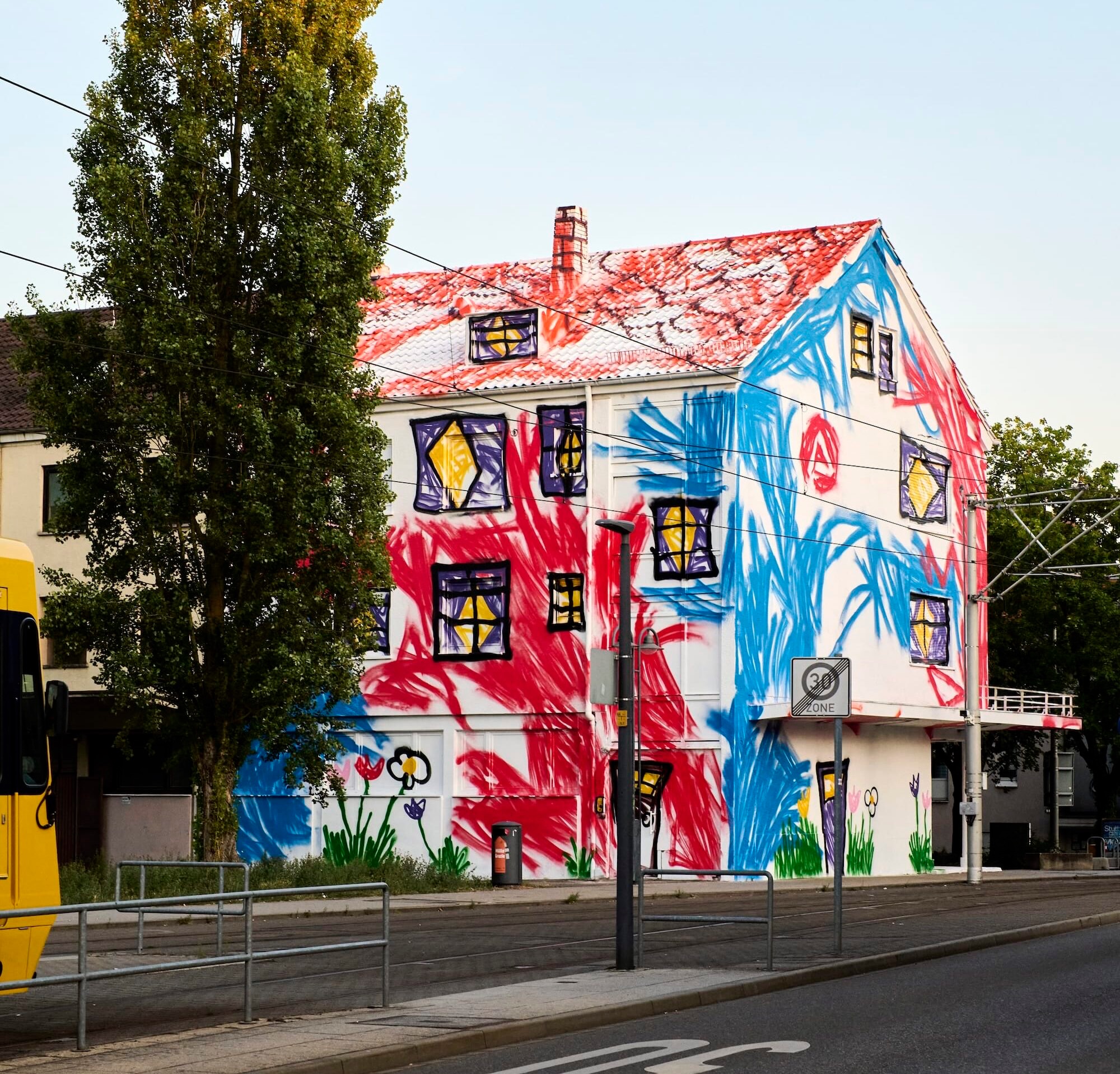
The Wa, a French born, Berlin based street artist, painted a vacant house at Aspergerstrasse 3 in Stuttgart Stammheim for PFFFestival 2026, part of his A Kid Could Do It series. The series began on WWII Atlantic Wall bunkers, coastal defense structures Nazi Germany built between 1942 and 1944, before extending to residential architecture.
Key Points
- The Wa painted a vacant house at Aspergerstrasse 3 in Stuttgart Stammheim for PFFFestival 2026.
- The A Kid Could Do It series began on WWII Atlantic Wall bunkers built by Germany from 1942 to 1944.
- The Wa is a French born, Berlin based painter known for childlike murals on abandoned structures.
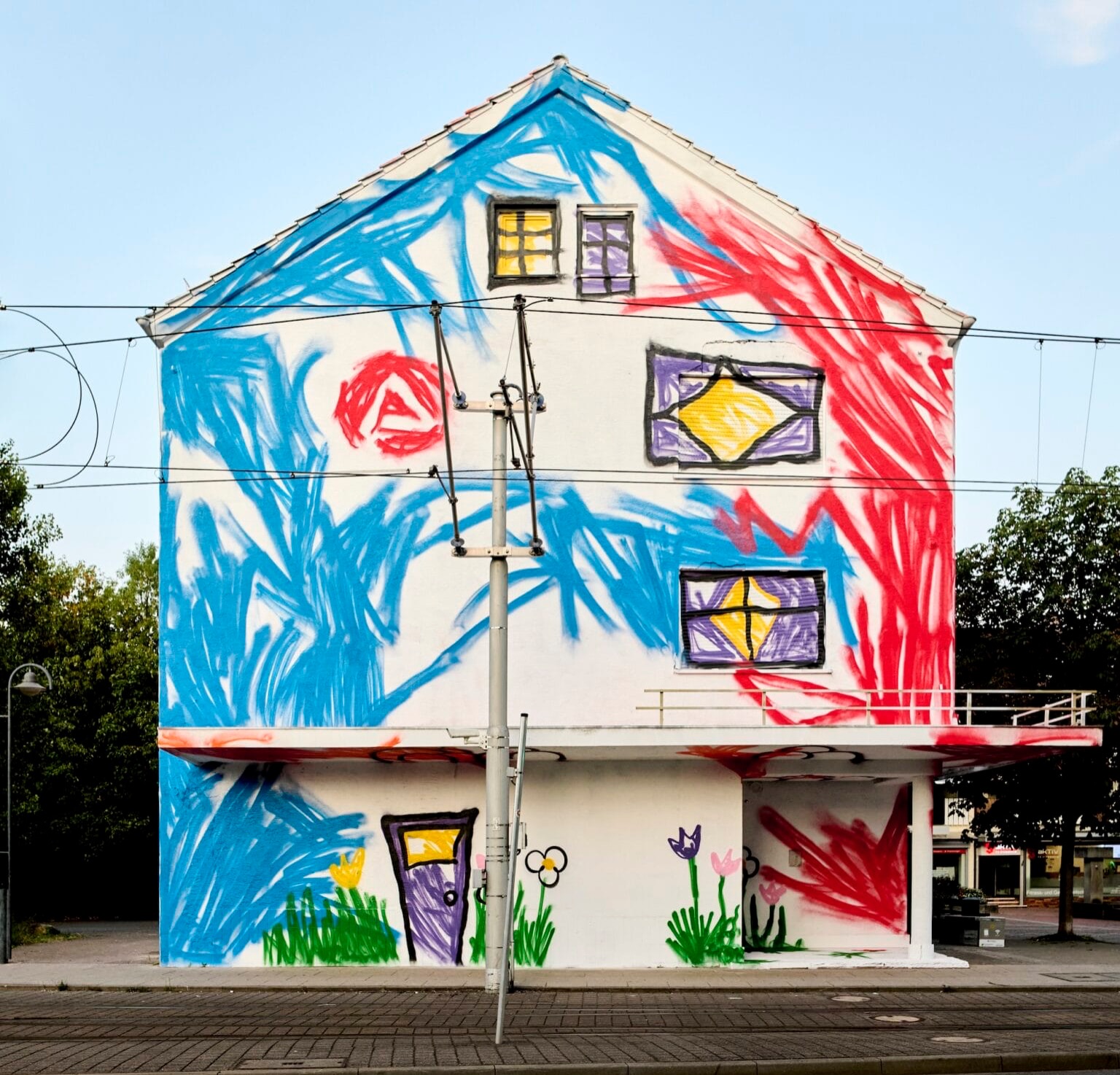
A vacant house on Aspergerstraße in Stuttgart Stammheim now has a door that does not line up with its own frame, windows that were never there before, and purple curtains painted directly onto brick. The artist who did it built his entire practice on structures nobody expected to look playful again.
The Wa, a French born, Berlin based painter, calls the series A Kid Could Do It, and the title carries the argument itself. It is not self deprecation. It is the thesis.
The Wa Started on Concrete Built to Survive a War
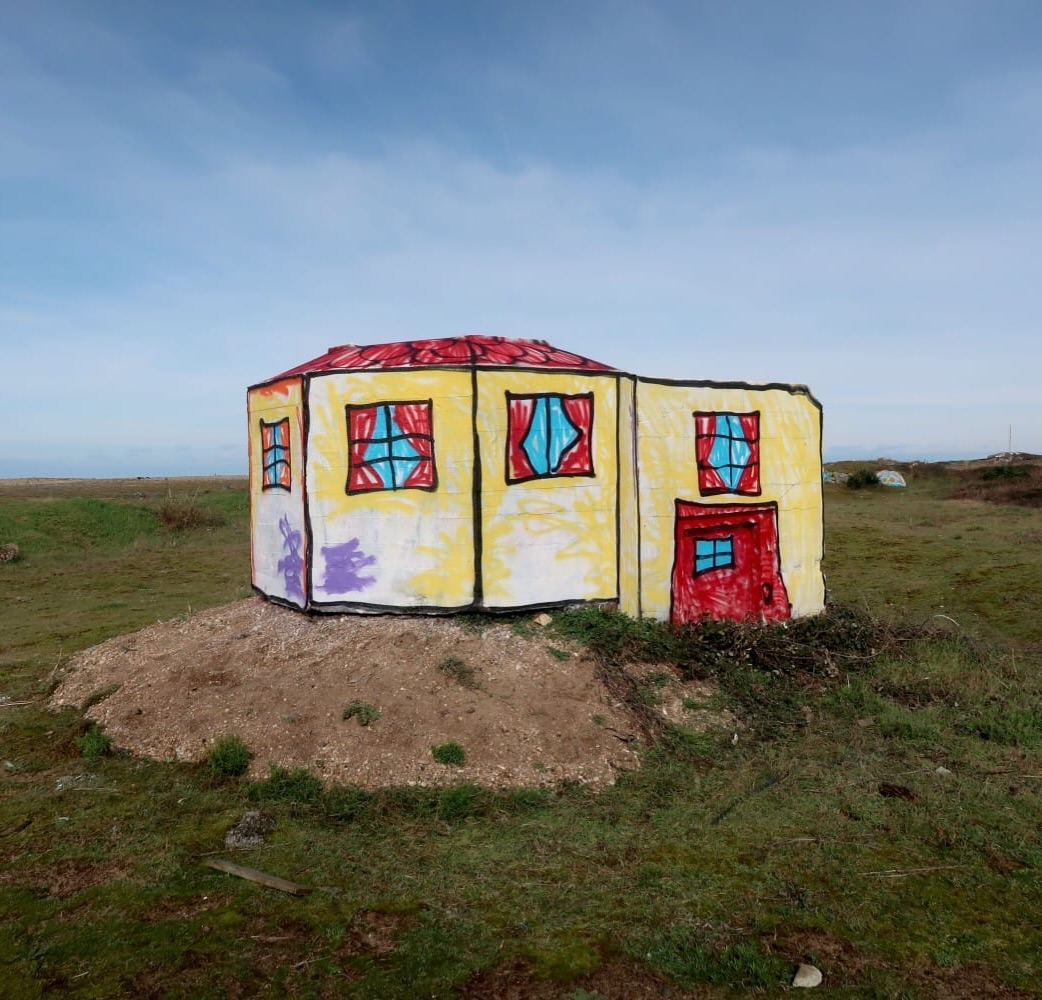
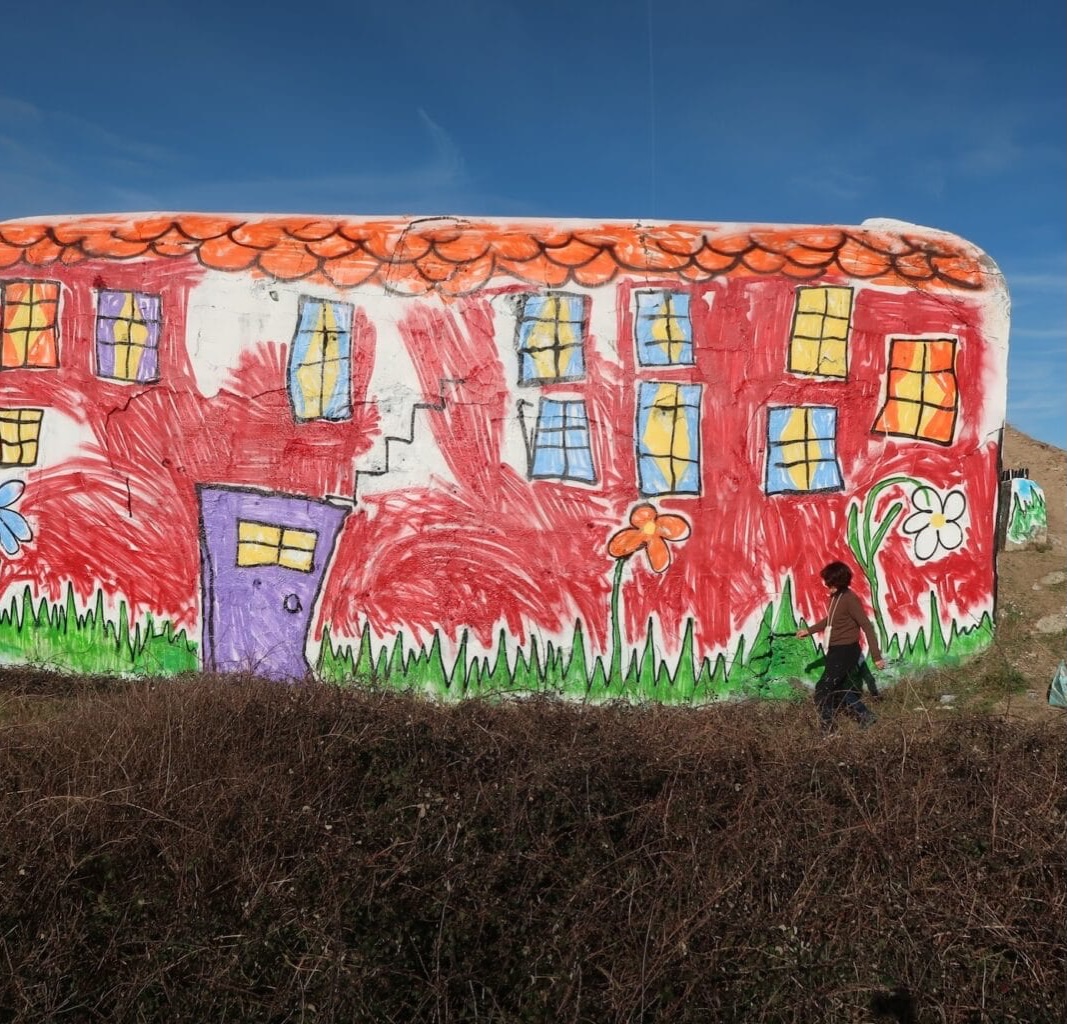
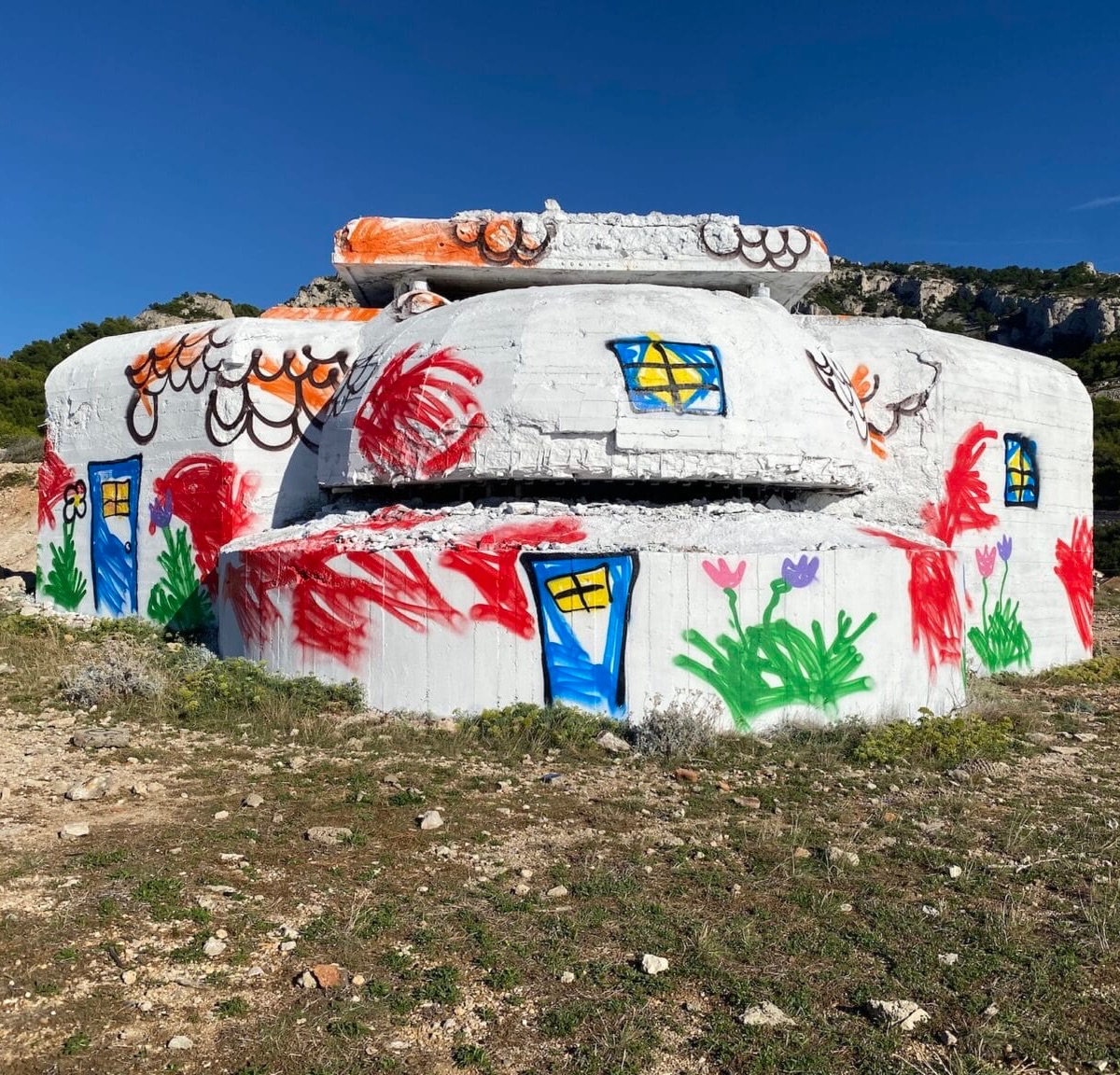
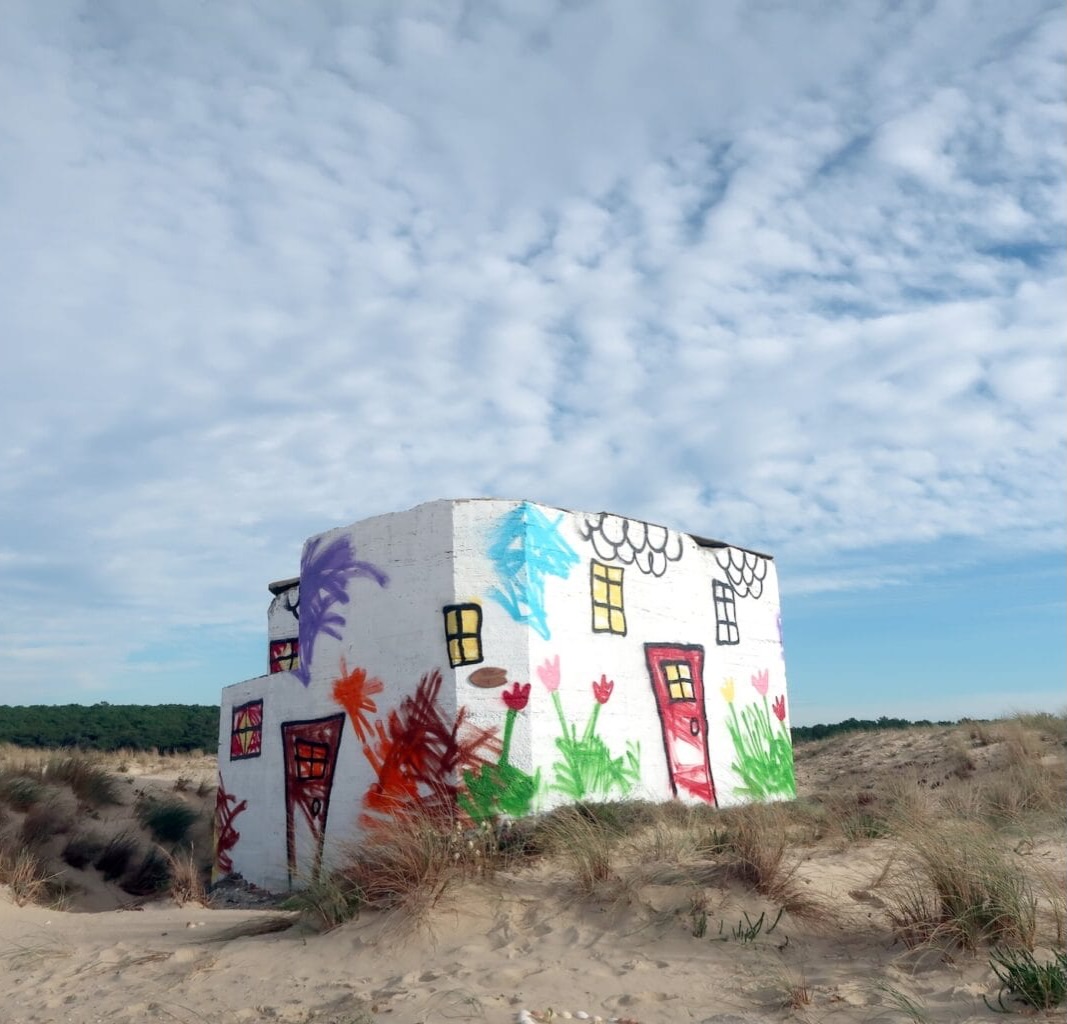
Before Stuttgart, The Wa's canvas was the Atlantic Wall, several thousand bunkers the Nazi regime built between 1942 and 1944 to repel an Allied invasion that eventually landed anyway. Decades of disuse turned the coastal network into what a war machine leaves behind, dense concrete with no second use anyone had found for it.
Painting scribbled flowers and lopsided windows onto a structure engineered to withstand artillery is not decoration. It is a rewrite. The bunkers were built by people solving for survival under fire. The Wa is solving for a different question entirely, what a child would do to the same wall with a box of markers and none of the history in their head.
The Atlantic Wall runs from Norway to the Spanish border, several thousand structures that mostly sit unrestored because reuse is expensive and demolition is worse for the coastline than leaving concrete in place. Most owners of that inventory chose neither option, which is how The Wa found a supply of blank walls nobody was fighting him for.
Aspergerstraße 3 Has Purple Curtains That Are Not Curtains
The Stuttgart Stammheim house, painted for PFFFestival 2026, swaps a military target for a residential one, and the shift changes what the work argues. Saturated blue and red marks cover the facade alongside oversized flowers, invented windows that lead nowhere, and purple curtains rendered flat across brick where fabric would otherwise hang. The door sits at a size and angle no builder would approve, ignoring the perspective rules a renovation permit would have to respect.
A vacant house reads differently than a bunker. Nobody drove past a Stammheim residence associating it with an invasion force. The building's only sin was standing empty, and The Wa treated it like abandoned military architecture, a surface waiting for a version of itself that never got approved.
PFFFestival built its 2026 program around this kind of intervention, temporary public art placed inside a city instead of a gallery, the civic instinct LACMA leaned on when it let mrbbaby route 200 murals through a museum block party instead of a gallery wall. Handing an empty residential address to a painter known for war relics tells you the festival wanted the tension between two settings, not a repeat of the coastline.
Futura Talks About Kids. The Wa Paints Like One.
Futura marked his own 70th year by posting that the kids are the future, a graffiti pioneer talking about succession from a canvas market that has pushed his own work past a million dollars. The Wa is not writing that sentence. He is making the work Futura's sentence describes, structures painted with the confidence of someone too young to know a wall is supposed to stay one color.Street art has spent decades arguing that anyone could tag a wall, and most of that argument is bravado. The Wa's version tests it literally, letting a viewer stand in front of an oversized flower with a stem that does not connect to its own petals and wonder whether the skill is in the execution or in choosing the wall in the first place.
A Vacant House Is Not a Bunker, and That Is the Point
Moving the series from wartime concrete to a residential facade is the strongest evidence the concept can survive past its original setting. A bunker painted like a kid's drawing reads as historical irony. A house painted like that reads as a proposal, what a neighborhood could look like if someone let it.
The Wa's next wall will decide whether A Kid Could Do It is a body of work built around one specific irony, a war relic made harmless through color, or a transferable idea that works on any structure bored enough to need one. Stuttgart just answered that question. The series does not need a bunker to work. It needs a wall nobody has looked at twice.
Frequently Asked Questions
What is The Wa's A Kid Could Do It series?
A Kid Could Do It is a mural series by the artist The Wa that transforms buildings into childlike drawings with saturated colors, invented windows and warped perspective.
Where did The Wa paint his newest A Kid Could Do It mural?
The Wa painted a vacant house at Aspergerstrasse 3 in Stuttgart Stammheim, Germany, for PFFFestival 2026.
Did The Wa's series start on bunkers?
Yes, The Wa began A Kid Could Do It on Atlantic Wall bunkers, several thousand coastal defense structures built by the Nazi regime between 1942 and 1944.
Who is The Wa?
The Wa is a French born, Berlin based street artist known for painting abandoned and disused structures with saturated, childlike imagery.
What is PFFFestival?
PFFFestival is a public art festival in Stuttgart, Germany, that commissioned The Wa's 2026 mural on a vacant residential house.
What is the Atlantic Wall?
The Atlantic Wall is an extensive coastal defense network of several thousand bunkers built by Nazi Germany between 1942 and 1944 in anticipation of an Allied invasion.
Topics: the-atlantic, the-wa, berlin, lacma, pfffestival, stuttgart, mural-art, a-kid-could-do-it, futura, atlantic-wall, contemporary-art, public-art, the atlantic, street-art