THE MARGIELA TABI BOOT IS THE MOST POLARIZING SHOE IN FASHION
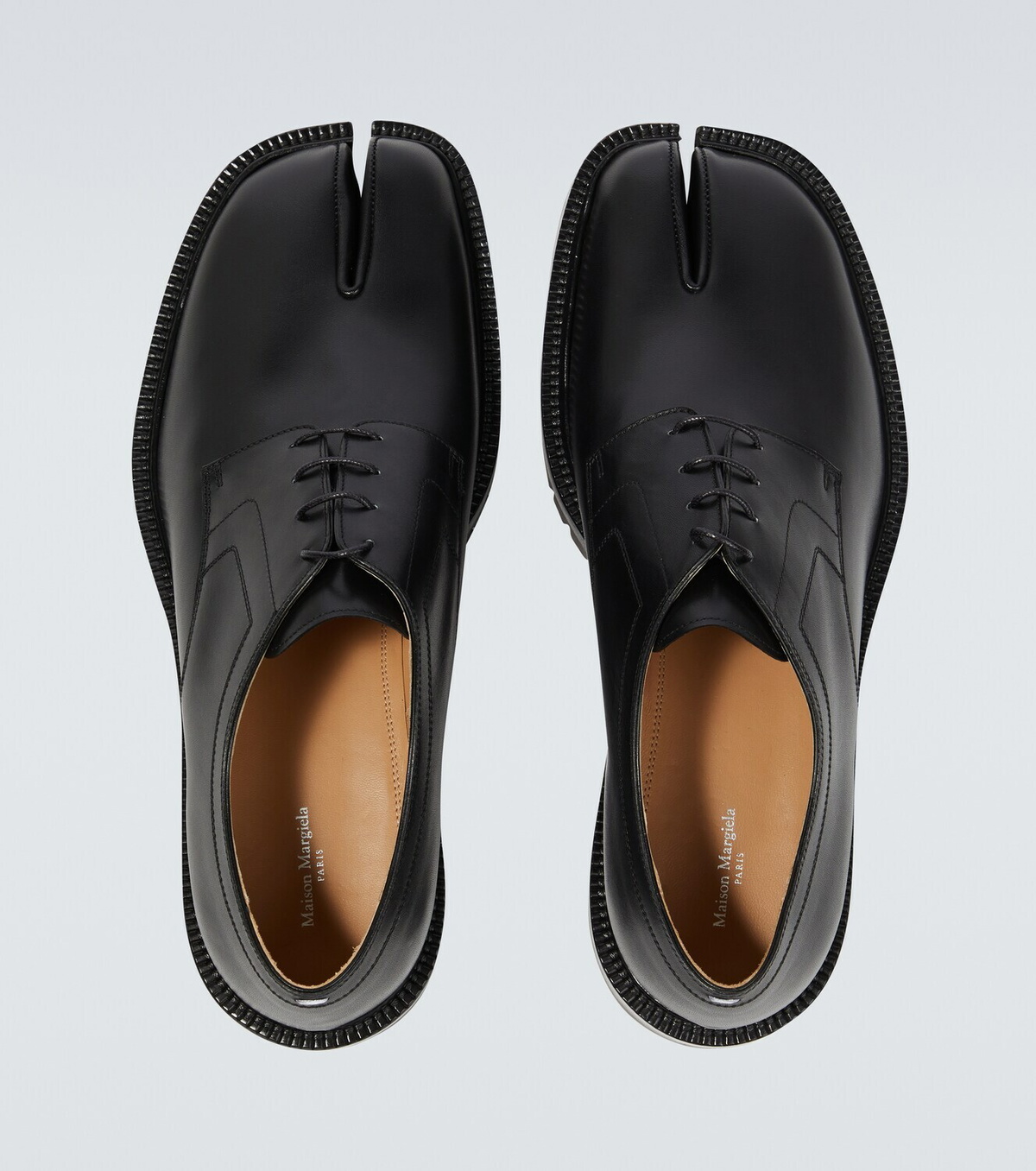
The Margiela Tabi boot, created by Martin Margiela in 1988, features a split toe mimicking Japanese tabi socks. In continuous production for 36 years, it generates an estimated $200M annually. Retail prices range from $1,290 to $1,890 in Italian calfskin.
Key Points
- Tabi boot in continuous production since 1989, generating estimated $200M annual revenue
- Current retail ranges from $1,290 ankle to $1,890 knee-high in Italian calfskin
- Used Tabi boots retain 60-75% of retail value vs luxury footwear average of 40-50%
The Split
Martin Margiela showed the Tabi boot in his debut Spring Summer 1989 collection in Paris. The boot splits the toe into two sections, mimicking Japanese tabi socks worn with traditional wooden sandals. Models walked the runway in white paint that transferred their footprints onto the catwalk surface, making the split toe visible with every step. Fashion critics divided immediately. Some called it deconstructionist genius. Others called it a costume. Thirty six years later, the boot is still in production, still dividing opinion, and generating an estimated $200 million in annual revenue for the house.The Construction
The current Tabi boot is produced in Italy. Stitch count on the split toe section requires additional pattern complexity: the two sections must move independently while maintaining structural integrity, which adds roughly 20% to production time versus a conventional chelsea boot. The boot comes in ankle height ($1,290), mid calf ($1,490), and knee high ($1,890) variants. Flat and heeled versions exist across women and men lines. The leather is vegetable tanned Italian calfskin. The sole is leather with a rubber inset at the toe and heel. The split extends approximately 3 centimeters from the toe tip.The Cultural Function
The Tabi boot functions as a membership badge. Wearing one signals membership in a specific cultural tribe: people who read Artforum, attend gallery openings, consider Comme des Garcons a baseline rather than an aspiration. The split toe is visible from across a room. It cannot be mistaken for any other shoe. That instant recognition, combined with the polarizing aesthetic, creates the social dynamic luxury brands dream about: the wearer becomes a conversation object.The Market
Tabi boots at retail sell consistently at full price, one of the few luxury footwear items that rarely appears on sale. Secondary market data from Vestiaire Collective and The RealReal shows that used Tabi boots in good condition retain 60 to 75% of retail value, significantly above the luxury footwear average of 40 to 50%. Limited edition Tabi variants (painted, distressed, collaboration editions) command premiums of 1.5x to 3x retail. The upcoming Supreme collaboration Tabi, if produced, will likely trade at 4x to 6x retail on first day resale.The Position
The Tabi is proof that a single design detail can sustain a fashion house for four decades. Margiela has produced hundreds of garments across Artisanal, ready to wear, and accessories lines. The Tabi is the only piece the average person on the street could identify as Margiela. That recognition, built on a three centimeter split in a boot toe, is more valuable than any logo. The Supreme collaboration will put the Tabi on feet that have never worn it. Some will keep them. Some will resell them. All will photograph them.The Split-Toe Controversy
The Margiela Tabi boot split the toe in 1988 and has not changed the design since because Martin Margiela understood that the most polarizing design in fashion is also the most memorable one. The split toe references Japanese tabi socks worn by construction workers, and the conversion from workwear to high fashion is the thesis of Margiela's entire career: everything is a reference, everything is a deconstruction, and beauty lives in the ambiguity between the two.
The Tabi boot is the most polarizing shoe in fashion because it demands a reaction. You either love the split toe or you find it physically uncomfortable to look at, and Margiela designed that binary response intentionally. The boot costs $1,200, sells out every season, and functions as a visual IQ test for fashion literacy. If you know the Tabi, you know Margiela. If you know Margiela, you understand that fashion's purpose is not beauty; it is provocation, and the Tabi has been provoking for 37 years with zero design modifications.
Related Reading
- MAISON MARGIELA AND SUPREME JUST ANNOUNCED A COLLAB AND NOBODY SAW IT COMING
- SUPREME COLLAB PLAYBOOK FROM BOX LOGOS TO MARGIELA
- How Rei Kawakubo Changed Everything
Frequently Asked Questions
What are Margiela Tabi boots?
Tabi boots are split-toe boots created by Martin Margiela in 1988, mimicking Japanese tabi socks. They split the toe into two sections and range from $1,290 to $1,890 at retail.
Why are Margiela Tabi boots split?
The split toe references Japanese tabi socks traditionally worn with wooden sandals. Martin Margiela introduced the design in his debut 1989 collection as a deconstructionist statement.
How much are Tabi boots?
Margiela Tabi boots retail from $1,290 for ankle height to $1,890 for knee-high versions, made from vegetable-tanned Italian calfskin with leather soles.
Topics: luxury, supreme-suprsupreme, maison-margiela, fashion, design, japanese, deconstructionism, focus-51-13, tabi-boot, supreme, footwear, comme-des-garons, comme des garçons, martin-margiela, artforum