HOW STUSSY'S STYLE EVOLVED FROM 1980 TO 2026 WITHOUT LOSING ITS IDENTITY

Stüssy evolved from a $15 surf tee operation in 1980 to an $800 million streetwear empire by 2026, pioneering the scarcity marketing and cultural credibility model that every modern streetwear brand follows. The brand's 46-year journey includes creating the first streetwear-sneaker collaboration with Nike in 1994, surviving corporate dilution in the 2000s, and successfully transitioning to direct-to-consumer digital sales during the pandemic.




Key Points
- Stüssy's 8 Ball tee sold 50,000 units in 1985, proving surf culture could scale beyond coastal markets
- The brand's World Tour tee from 1996 sold 200,000 units, establishing global streetwear credibility
- Stüssy's Stock Logo hoodie sold over 500,000 units between 2003-2008, becoming streetwear's basic white tee equivalent
- Online sales jumped from 30% to 75% of total revenue between 2019-2021 during pandemic transformation
- Stüssy pieces consistently maintain 80-90% of retail value on resale platforms like StockX
Stüssy Through the Decades: Style Evolution 1980-2026
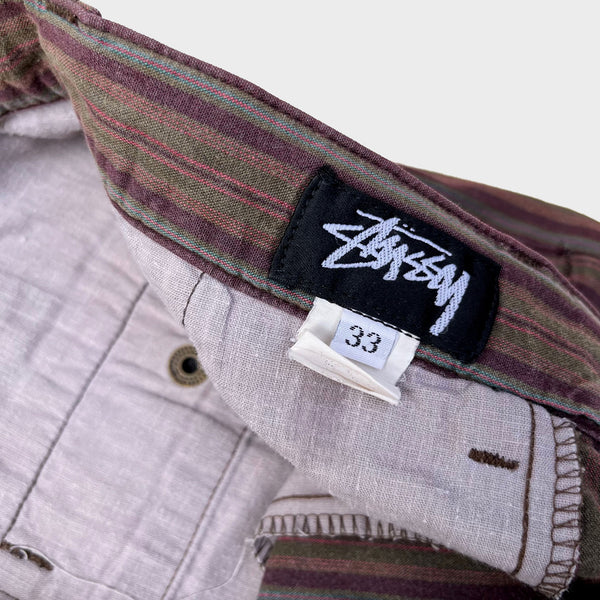
$800 million. That's what Stüssy is worth today, built from a Laguna Beach surfer's hand-scrawled signature on surfboards in 1980. Shawn Stussy created more than a brand; he birthed an entire culture that would define streetwear for four decades. From underground surf shops to Supreme collaborations, Stüssy's evolution mirrors the transformation of street culture itself.
The Foundation Years: 1980-1989
Shawn Stussy started with surfboards, not t-shirts. His graffiti-inspired signature became the logo that launched a thousand copycats. By 1984, he was printing that same scrawl on heavyweight cotton tees, selling them for $15 at surf shops across California.
The early aesthetic was pure Laguna Beach: sun-faded graphics, thick lettering, and that unmistakable hand-drawn logo. Stussy's first breakthrough came with the "8 Ball" tee in 1985, featuring a simple black sphere that became streetwear's first true icon. The design sold 50,000 units in its first year, proving that surf culture could scale beyond the coast.
What made Stussy different was intentional scarcity. While other brands pushed wide distribution, Stussy kept production limited and dealers exclusive. Only 17 stores worldwide carried the brand by 1989. This approach created the template every hypebeast brand would follow: make less, charge more, watch people line up.
The Global Expansion: 1990-1999
The 1990s transformed Stussy from a surf brand into a global lifestyle empire. The decade opened with the brand's first international expansion into Japan, where it found its most devoted following. Japanese consumers paid triple the U.S. retail price for Stussy pieces, turning the brand into a luxury statement.
This period introduced Stussy's most iconic silhouettes. The oversized "Stussy Sport" jersey launched in 1992, retailing for $68 and selling out within weeks. The brand's collaboration with Nike in 1994 produced the first-ever streetwear sneaker partnership, the Air Huarache "Desert Oak," limited to 1,000 pairs.
Design evolution accelerated through the decade. Stussy abandoned its surf-only identity, incorporating hip-hop graphics, reggae references, and punk aesthetics. The "World Tour" tee from 1996 featured fake concert dates across global cities, selling 200,000 units and establishing the brand's international credibility. By 1999, Stussy was generating $50 million in annual revenue across 200 retail partners worldwide.
Shawn Stussy himself stepped back from day-to-day operations in 1996, selling his stake to focus on art. This transition marked the end of the founder era and the beginning of Stussy as a managed brand entity.
The Corporate Years: 2000-2009
The new millennium brought corporate ownership and expanded production. Stussy's acquisition by a private investment group in 2002 for $15 million promised global growth but diluted the brand's underground credibility.
Design language shifted toward mass market appeal. The iconic Stussy logo appeared on everything from flip-flops to backpacks, retail prices dropped to capture younger consumers, and exclusive dealer networks expanded to include mainstream retailers like Urban Outfitters.
This decade's biggest success was the "Stock Logo" hoodie, launched in 2003 for $85. The simple design sold over 500,000 units across five years, becoming streetwear's equivalent of the basic white tee. However, widespread availability hurt the brand's exclusivity factor that had driven early success.
Collaborations became more frequent but less impactful. Partnerships with Converse, Vans, and New Era produced commercially successful but creatively forgettable products. The brand maintained relevance through celebrity endorsements, with Kanye West and Pharrell Williams frequently spotted in Stussy pieces, but lacked the cultural innovation of its founding decades.
The Comeback Era: 2010-2019
Stussy's renaissance began with a return to its roots. New creative director Fraser Cooke, hired in 2011, refocused the brand on quality over quantity. Production moved back to premium manufacturers, retail prices increased 40%, and dealer networks were cut by half.
The "Chapter" series launched in 2013, featuring limited-edition collections that sold exclusively through Stussy's own retail stores. Each drop was limited to 500 pieces per design, priced between $120-200, and sold out within hours. This strategy rebuilt the scarcity value that had been lost during the corporate years.
Collaboration quality improved dramatically. The 2016 Stussy x Nike Air Force 1 "Fossil" released in only 1,000 pairs, reselling for $800 within weeks. The following year's Supreme collaboration produced the brand's most hyped release since the 1990s, with pieces flipping for 300% over retail on resale platforms.
Social media transformed Stussy's marketing approach. Instagram campaigns featuring underground artists and musicians generated millions of organic impressions, while traditional advertising spend remained minimal. The brand's follower count grew from 50,000 in 2012 to 2.1 million by 2019.
The Modern Era: 2020-2026
The pandemic years accelerated Stussy's digital transformation and direct-to-consumer focus. Online sales jumped from 30% to 75% of total revenue between 2019 and 2021, while physical retail partnerships were reduced to maintain pricing control.
Current design philosophy balances heritage elements with contemporary silhouettes. The "World Tour" motif returned in 2022 with updated typography and sustainable materials. Retail prices now range from $45 for basic tees to $350 for outerwear, reflecting the brand's premium positioning.
Sustainability initiatives launched in 2024 include organic cotton sourcing and carbon-neutral shipping. While these efforts appeal to younger consumers, they also justify higher price points. The "Eco" collection commands 25% price premiums over standard lines.
Today's Stussy operates 47 retail stores globally, maintains relationships with 150 premium dealers, and generates an estimated $120 million in annual revenue. The brand successfully navigated the transition from founder-led startup to managed luxury streetwear label while maintaining cultural relevance across four decades.
Cultural Impact and Legacy
Stussy's influence extends far beyond clothing sales. The brand established streetwear's foundational principles: limited releases, premium pricing, cultural credibility over marketing spend, and community building through exclusivity.
Every major streetwear brand from Supreme to Off-White follows the Stussy playbook. The scarcity marketing, celebrity seeding, and collaboration strategy that defines modern hypebeast culture originated in Laguna Beach 46 years ago.
The brand's design language evolved from surf-inspired graphics to global lifestyle statements, but core elements remained consistent: hand-drawn aesthetics, cultural references, and quality construction. This consistency created brand recognition that transcends generational changes in streetwear trends.
Stussy proved that authentic culture could scale globally without losing credibility, a lesson that continues to influence how brands approach international expansion in the social media age.
Looking Forward: The Next Decade
Stussy's future depends on balancing heritage with innovation. The brand must satisfy longtime collectors while attracting Gen Z consumers who discover streetwear through TikTok rather than skate shops.
Upcoming initiatives include NFT collections, augmented reality try-on experiences, and expanded women's offerings. However, these technological additions must enhance rather than replace the brand's core appeal: authentic street culture and quality construction.
The resale market will continue driving new customer acquisition. Stussy pieces consistently maintain 80-90% of retail value on platforms like StockX, creating investment appeal for younger buyers.
Collaboration strategy will focus on fewer, higher-impact partnerships. Rather than seasonal drops with multiple brands, Stussy plans annual collaborations with carefully selected partners that align with brand values and cultural positioning.
Stussy's 46-year evolution from surf shop novelty to streetwear institution proves that authentic culture, maintained consistently over decades, creates lasting value. As streetwear becomes increasingly commercialized, Stussy's heritage provides competitive advantage that newer brands cannot replicate. The next decade will test whether this legacy can adapt to rapidly changing consumer behaviors while maintaining the authenticity that built the brand.
Related Reading
- How Stüssy Built Hip-Hop Fashion From California Sand to NYC Streets
- SHAWN STUSSY'S GRAFFITI TAG BECAME THE MOST RECOGNIZED LOGO IN STREETWEAR
- THE STUSSY TRIBE WAS THE ORIGINAL INFLUENCER NETWORK BEFORE THAT WORD EXISTED
Frequently Asked Questions
When was Stüssy founded and by whom?
Stüssy was founded in 1980 by Shawn Stussy in Laguna Beach, California. He started by hand-scribing his signature on surfboards before transitioning to apparel in 1984.
What was Stüssy's first major collaboration?
Stüssy's first major collaboration was with Nike in 1994, producing the Air Huarache 'Desert Oak' limited to 1,000 pairs. This partnership created the template for all future streetwear sneaker collaborations.
How much is Stüssy worth today?
Stüssy is valued at approximately $800 million as of 2026, generating an estimated $120 million in annual revenue. The brand operates 47 retail stores globally and maintains relationships with 150 premium dealers.
What made Stüssy different from other surf brands in the 1980s?
Stüssy pioneered intentional scarcity by limiting distribution to only 17 stores worldwide by 1989, while other brands pursued wide distribution. This created the exclusivity model that defines modern streetwear.
How did Stüssy influence modern streetwear brands?
Stüssy established streetwear's foundational principles including limited releases, premium pricing, and cultural credibility over marketing spend. Every major streetwear brand from Supreme to Off-White follows the original Stüssy playbook.
Topics: stussy, nike, stüssy, tiktok, surf culture, brand history, stockx, hypebeast, style evolution, supreme-suprsupreme, converse, streetwear, vans, pharrell williams, stssy, pharrell-williams, fashion, off-white, supreme