This House in Ahmedabad Was Built From Four Different Soils—and It Shows
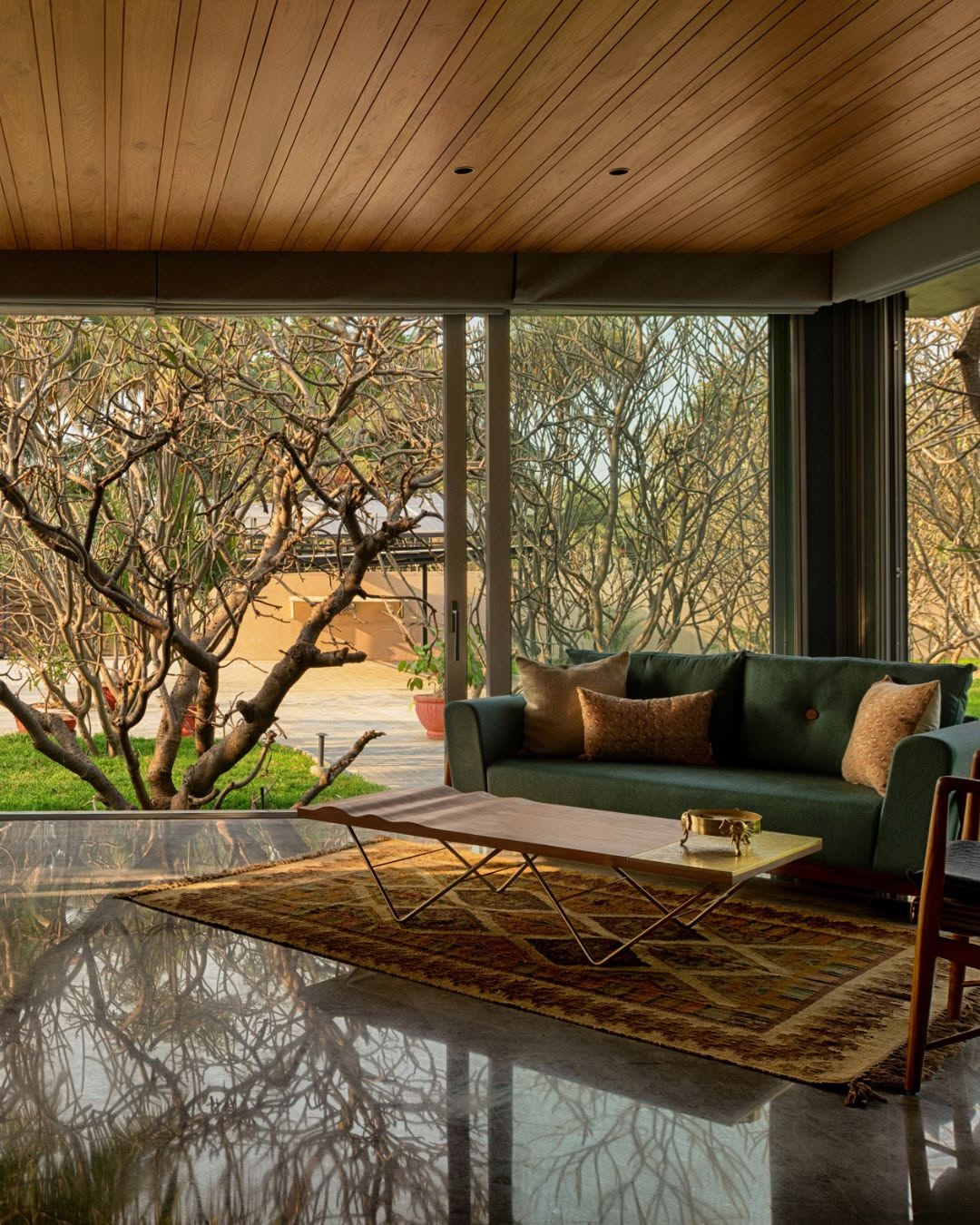
Hiren Patel Architects' 790-square-metre 'A House Born of Four Soils' uses rammed earth from four neighboring regions to create geological strata walls in Ahmed.
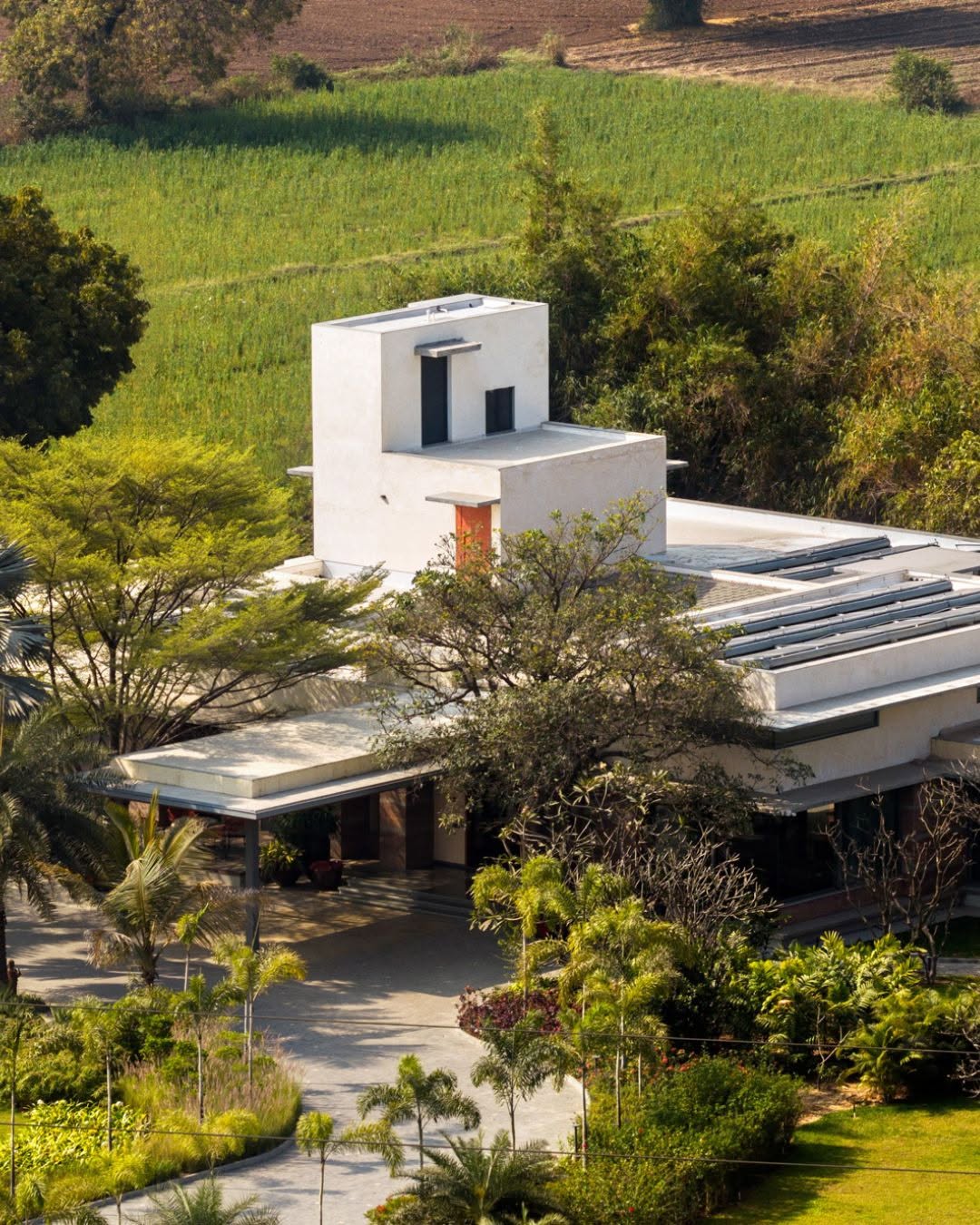
The house remembers where it came from. That's the point.
The Material Decision That Defined Everything
Ahmedabad-based Hiren Patel Architects + Design named the project honestly: A House Born of Four Soils. Sand sourced from four neighboring regions was compacted into the rammed-earth walls, producing layered strata of color and texture that Dezeen's Jon Astbury described as a "geological canvas." The technique is ancient and labor-intensive—rammed earth construction requires controlled compaction of dampened soil in formwork, layer by layer, with each successive pour producing the visible horizontal bands that read as topographic cross-section. The house doesn't reference the landscape it sits in. It is made from it.
The Site: Arid Outskirts, 790 Square Metres
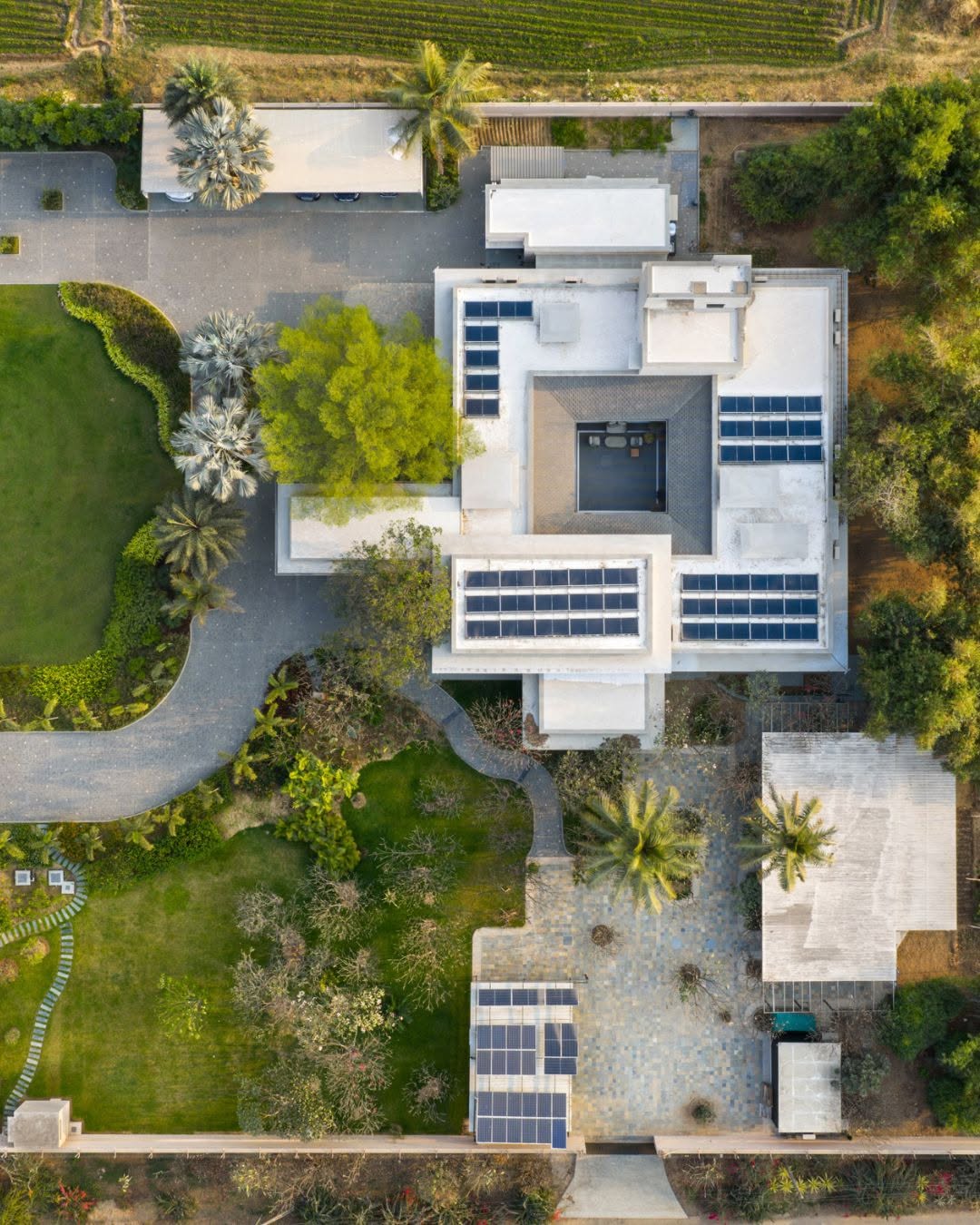
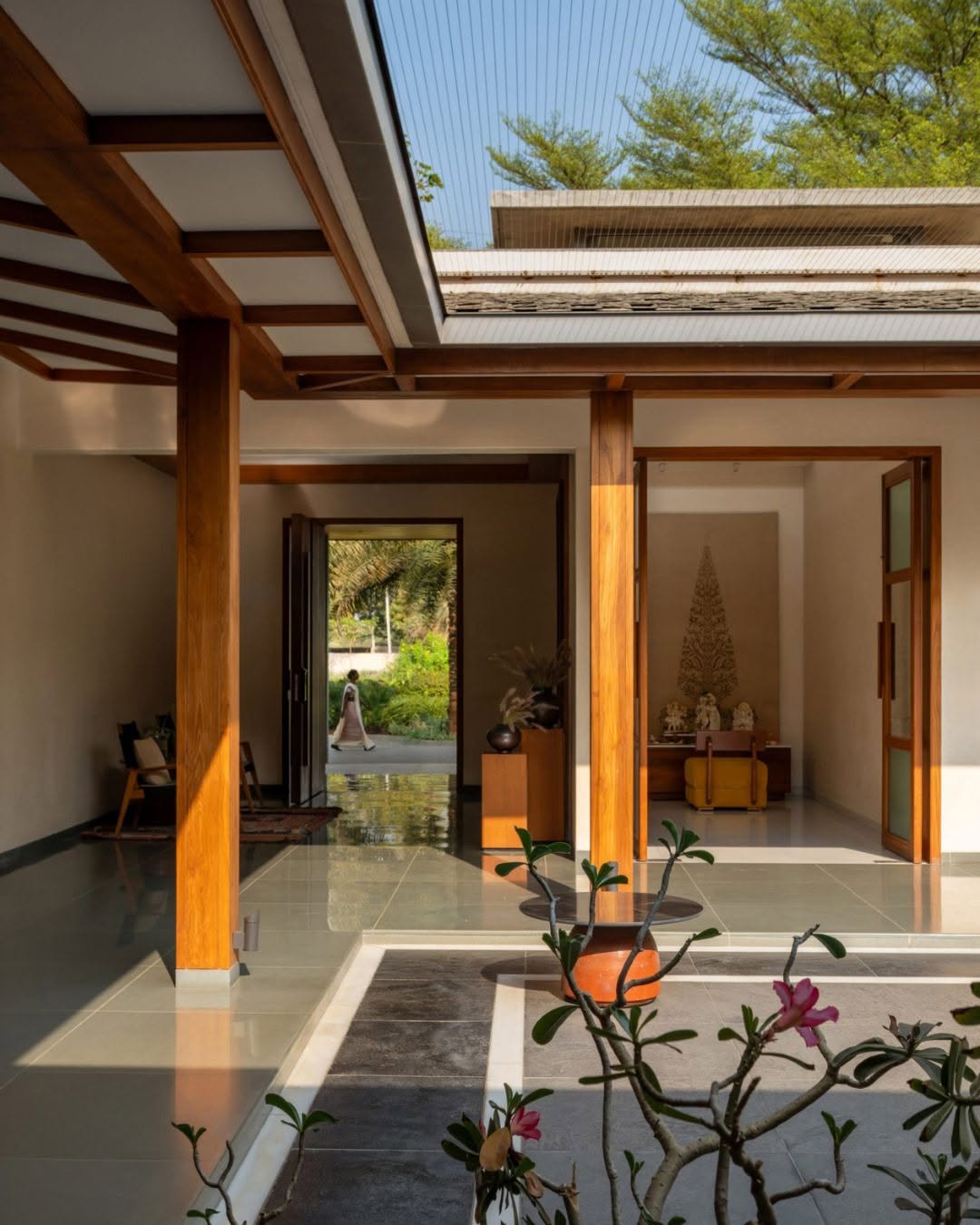
The home occupies an open, arid site on the outskirts of Ahmedabad—flat, exposed, and demanding a spatial logic that can organize comfort in conditions that resist it. HPAD's answer was low-slung volumes organized around a central paved courtyard, with every room oriented to connect directly with that central space. The courtyard is the thermal and social engine of the house—a traditional Indian planning device executed here without nostalgia, just function. Surrounding the main house is a garden of lawns, trees, and ponds. A standalone guest annexe sits to the north. A garage to the south. The entrance arrives through a winding path past a lotus pond, sheltered under a timber-lined canopy.
The Interior Palette: Stone, Teak, Lime
The material restraint carries through to the interior: local stone, teak carpentry, and lime plaster. No imported surfaces. No material that requires an explanation of provenance unavailable from the surrounding region. The design philosophy is stated explicitly in HPAD's project notes—a "living, porous membrane" prioritizing elemental materials and minimalist luxury rooted in Indian context. That framing positions the project inside a much older conversation about regionalist Indian modernism, in which the correct luxury is specificity of place rather than universality of finish.
Why This House Is a Design Argument Worth Paying Attention To
Architecture has been in a decade-long struggle to reconcile material ethics with climatic necessity and aesthetic ambition. Projects that do it convincingly—that produce a house where every material decision is a correct one and the visual result earns its complexity—are not common. A House Born of Four Soils is one of those projects. The strata in the walls aren't decorative. They're the accumulated evidence of a design decision made before the first brick was laid. The house makes a case for itself in geological time, and that's a credential most buildings can't claim.
Related Reading
- ADIDAS HYPERBOOST EDGE IS THE RUNNING SHOE THAT ADMITS BOOST NEEDED AN UPGRADE
- ARSHAM'S ORGANIC WAVES RESHAPE Equinox HOLLYWOOD
- AUDEMARS PIGUET DROPS RARE 150TH ANNIVERSARY MERCH
Topics: focus-48-69, dezeen