LICHTENSTEIN BRUSHSTROKES CLOSE AT GAGOSIAN AFTER 37 DAYS
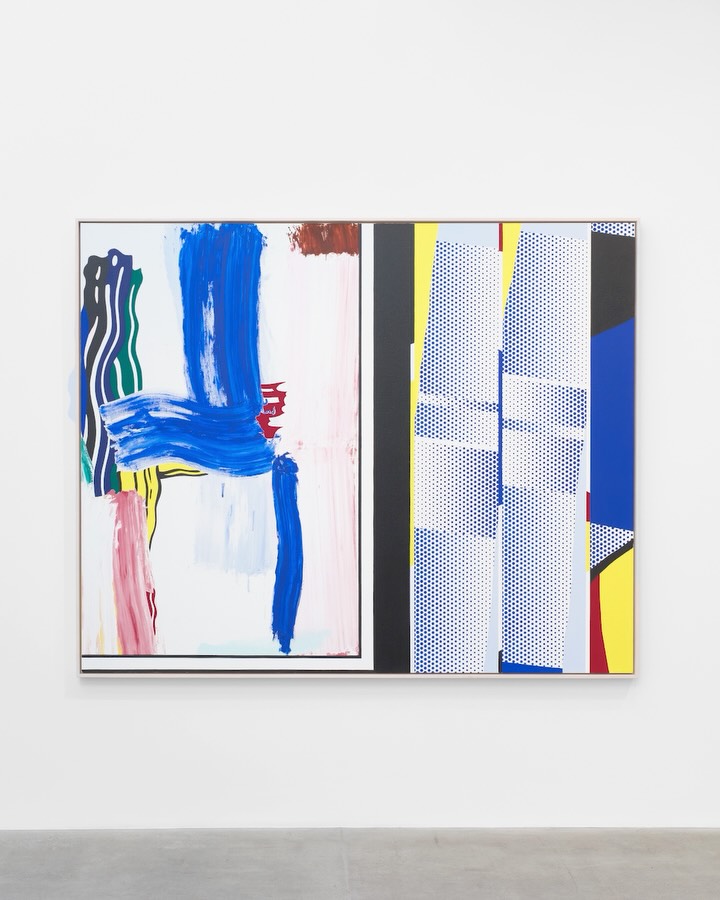
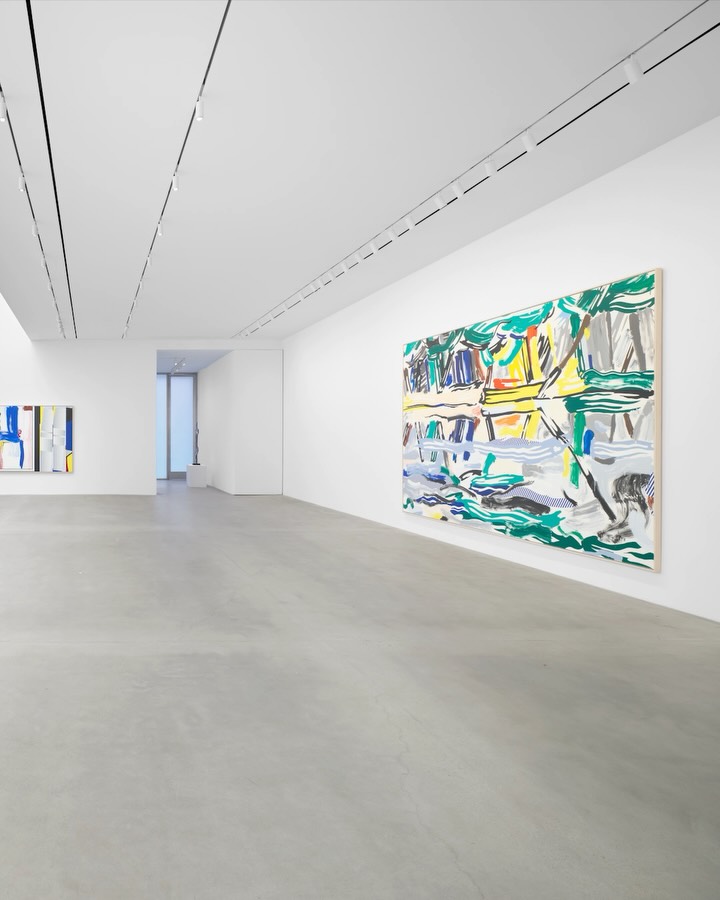
Gagosian's 'Roy Lichtenstein: Painting with Scattered Brushstrokes' closed April 25, 2026 after a 37-day run at 541 West 24th Street, New York. The exhibition assembled works exclusively from the Lichtenstein Family Collection, focusing on the brushstroke paintings of the 1980s. Key works included Forest Scene with Temple (1986) at 304.8 by 457.8 centimeters and a 1982 bronze Brushstroke sculpture. A Whitney retrospective follows in October 2026.
Key Points
- The show ran March 19 to April 25, 2026 at Gagosian 541 West 24th Street, New York
- All works came exclusively from the Lichtenstein Family Collection — no loans, no museum pieces
- Key works include Forest Scene with Temple (1986, 304.8x457.8cm) and Brushstroke bronze sculpture (1982)
March 19 to April 25, 2026. Thirty-seven days. Gagosian 541 West 24th Street. Roy Lichtenstein.
"Painting with Scattered Brushstrokes" closed last Saturday. The show assembled a body of work from one source: the Lichtenstein Family Collection. No museum loans, no private collectors asked to participate. The work the estate kept for itself.
That distinction matters more than it usually gets credit for. A retrospective built from institutional loans reflects the art world's consensus about what an artist means. A show built from the family collection reflects what the people closest to the work believed it meant. Those two archives overlap but they are not identical.
1965. The Brushstroke Becomes a Target.
Lichtenstein first used the brushstroke as subject matter in 1965. Not as a technique. As a target. Abstract Expressionism had made the gestural mark sacred in the decade prior. De Kooning, Kline, Pollock. The spontaneous gesture on canvas was evidence of authentic self. It was, by the logic of the movement, the most honest thing a painter could put on a surface.
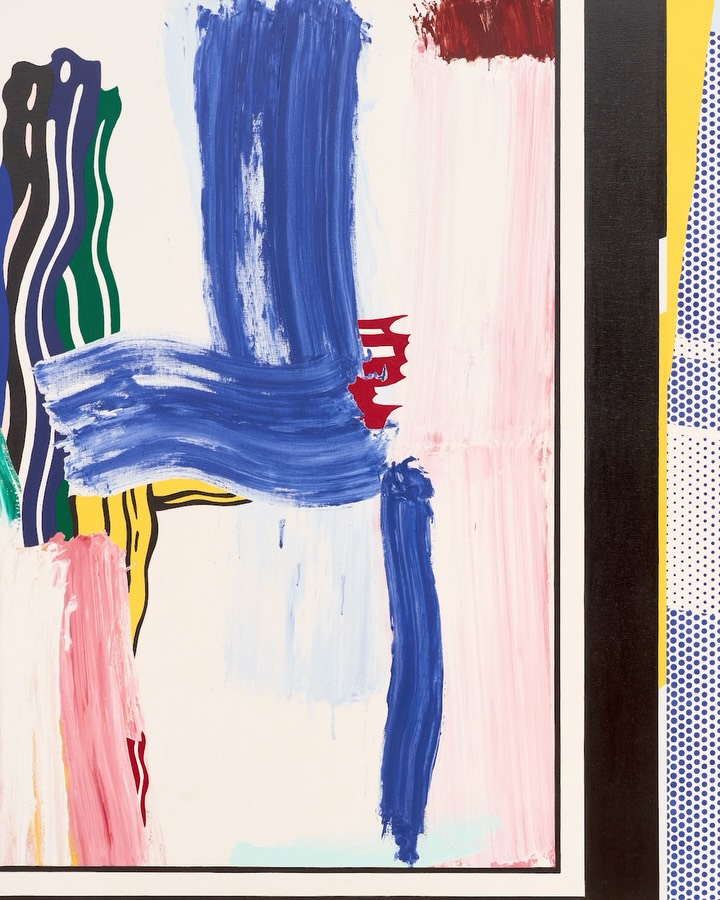
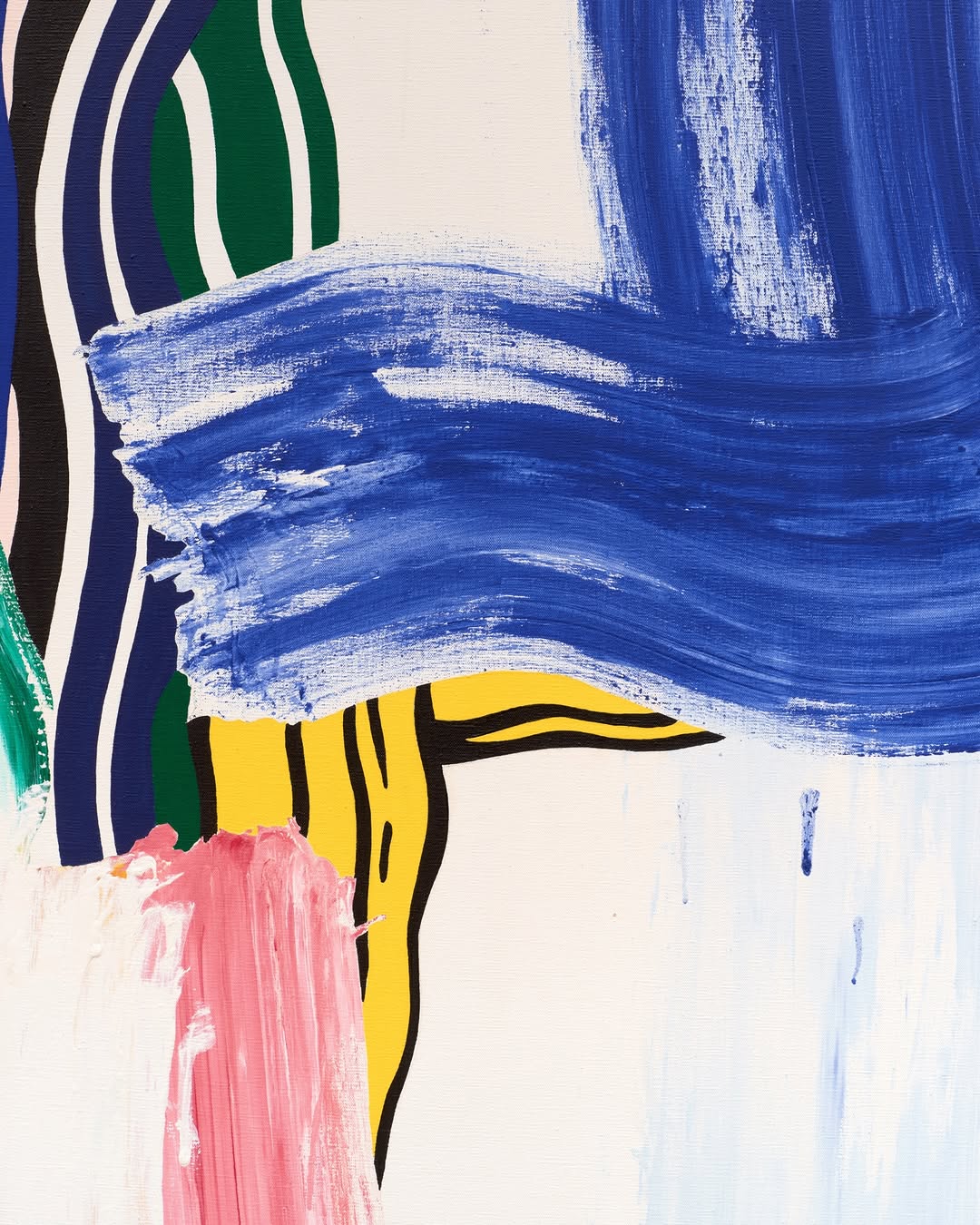
Lichtenstein saw that claim and translated it into flat color, clean outline, and Ben-Day dot patterning. His brushstrokes look like illustrations of paintings rather than paintings themselves. That was the point. He was not mocking Abstract Expressionism. He was examining its argument about authenticity by rendering it in a visual language designed to look manufactured.
The 1980s return to the brushstroke motif, which is where this show focuses, adds a layer of complexity. By that decade Lichtenstein is no longer attacking the original argument. He is interrogating his own interrogation of it. Forest Scene with Temple, made in 1986, measures 304.8 by 457.8 centimeters. The brushstrokes in that painting have become architectural. They are not marks. They are structure.
Family Collection Logic
The Lichtenstein Family Collection is a deliberate archive. The estate has been active in managing Lichtenstein's market and reputation since his death in 1997. They chose what to keep, what to sell, what to loan and when. A show built exclusively from what they kept is a statement about what they believe defines the work.
Five of the key pieces in "Painting with Scattered Brushstrokes" are from the 1980s. River Scene from 1987, acrylic, oil, and graphite pencil on canvas at 198 by 304.8 centimeters. Paintings: Mirror from 1984 at 177.8 by 218.4 centimeters. The 1982 bronze Brushstroke sculpture, 54.25 by 27.5 by 11 inches, edition of six plus zero-of-six posthumous. These are the objects the family chose to hold through decades of auction pressure. That kind of retention at this scale is a statement of conviction about long-term significance.
Avis Berman and the Whitney, October 2026
Gagosian scheduled this show in March for reasons that extend beyond the gallery calendar. Avis Berman's biography, "Becoming Roy Lichtenstein: The Path to Pop," publishes in fall 2026. The Whitney Museum of American Art opens a major Lichtenstein retrospective in October 2026. The institutional reckoning with Lichtenstein's full career is scheduled.
The Gagosian show at 541 West 24th is pre-positioning. It puts the family's definition of the work into the room before the institutional definition arrives. By October, the Gagosian framing — Lichtenstein as rigorous formal thinker, not just the guy who painted comic books — will have had six months to circulate. That framing will shape how the Whitney show gets reviewed.
The Bronze Brushstroke Is the Key Piece
Of everything in the show, the 1982 bronze Brushstroke is the most compressed argument. Lichtenstein took a gesture that Abstract Expressionism claimed was the mark of authentic feeling, turned it into a two-dimensional Pop illustration, and then cast it as a three-dimensional metal object. The joke about painting became a sculpture. That is three moves in one object. It is also edition of six, which means the market implications are specific.
The bronze has appeared in the Gagosian catalogue before. Its inclusion in a family collection show signals that the estate considers it central to the argument, not peripheral.
The Conversation Between Rollout and Revelation
The music industry parallel is closer than it appears. Beyonce's Lemonade was a visual album that required linear engagement in a skip culture. Kendrick's "Mr. Morale" front-loaded argument and required patience before the payoff arrived. Both used their medium against the medium's expected behavior.
Lichtenstein did the same. His brushstrokes require you to hold two readings simultaneously: the painterly gesture and the illustration of a painterly gesture. That double awareness is the experience. Without it the paintings are flat. With it they are among the most formally complex works of the 20th century.
The show closed. The Whitney opens in October. Lichtenstein is not finished being argued about.
Related Reading
- 1M fans join Ticketmaster waitlist for Kanye West’s SoFi Stadium comeback show
- ALOK BREAKS GUINNESS RECORD WITH 2 MILLION FANS AT CARNIVAL
- ASAP ROCKY ENDS THE WAIT WITH DON'T BE DUMB, AND DRAKE BETTER BE LISTENING
Related: WARHOL AND BASQUIAT PAINTED FOR TWO HOURS AND IGNITED ART'S WILDEST COLLAB.
Frequently Asked Questions
What was the Lichtenstein Gagosian show in 2026?
'Roy Lichtenstein: Painting with Scattered Brushstrokes' ran March 19 to April 25, 2026 at Gagosian's 541 West 24th Street location, assembling works exclusively from the Lichtenstein Family Collection.
What is the significance of the brushstroke motif in Lichtenstein's work?
Lichtenstein first approached the brushstroke as subject in 1965, using flat Pop-inflected marks to interrogate Abstract Expressionism's claims of spontaneity and authenticity.
What major Lichtenstein retrospective is coming in 2026?
Avis Berman's biography 'Becoming Roy Lichtenstein: The Path to Pop' publishes in fall 2026, aligning with a major retrospective at the Whitney Museum of American Art in October.
Topics: new-york, art, pop-art, exhibition, lichtenstein-family, whitney-museum, roy-lichtenstein, brushstroke, gagosian, whitney museum