PUMA'S NEVER NOT SUEDE CAMPAIGN LEANS ON 58 YEARS
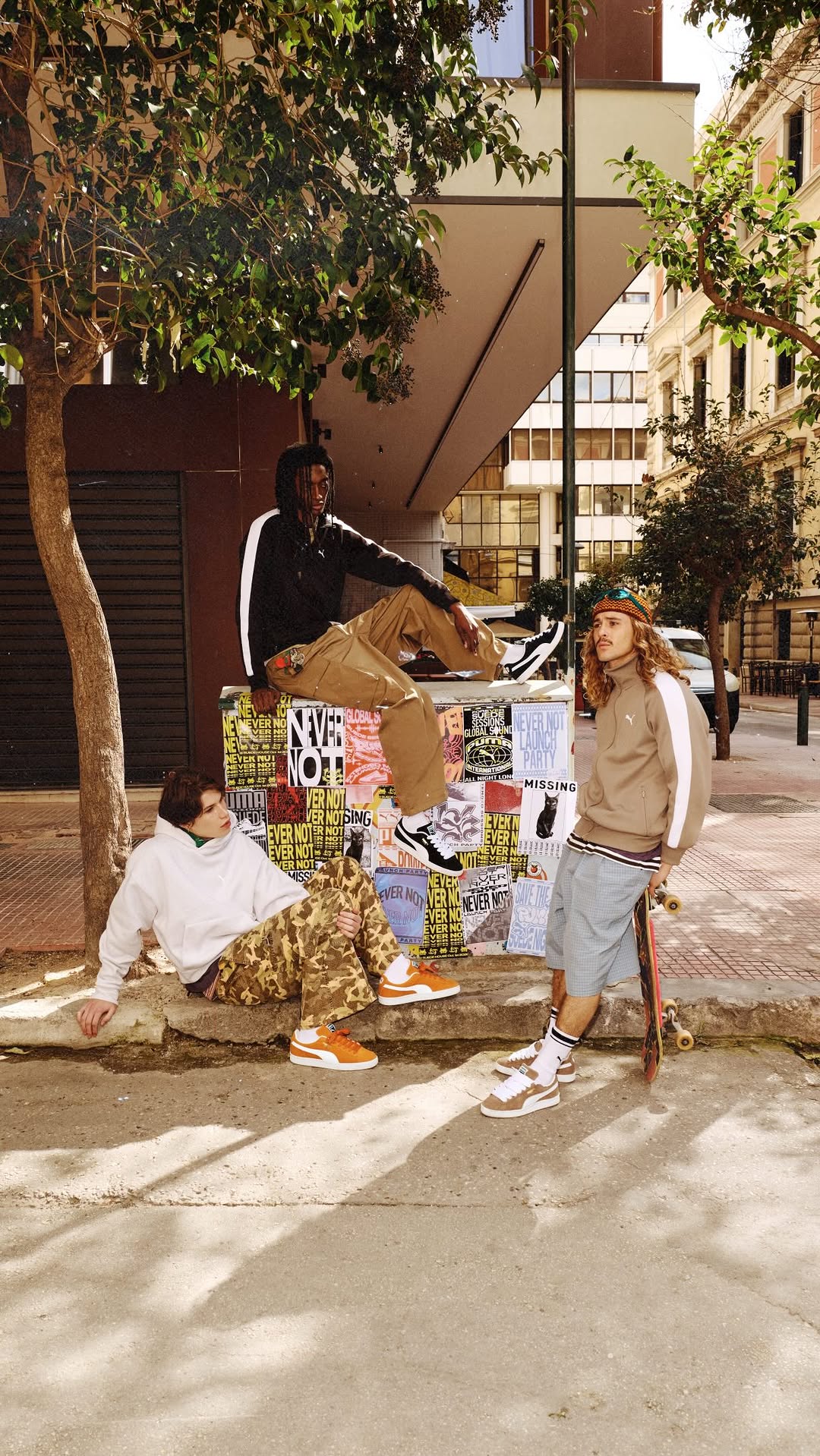
Puma released Never Not Suede, a brand campaign with no attached product drop, reasserting the Suede sneaker it introduced in 1968 as its defining silhouette. The campaign runs the same week as Puma's ASAP Rocky Suede 94 collaboration, pairing archive messaging with an active retail release built on the same shoe family.
Key Points
- Puma's Never Not Suede campaign carries no product SKU or price, only brand messaging.
- The Suede launched in 1968 and has kept its Formstrip design unchanged for 58 years.
- The campaign runs the same week as the separate ASAP Rocky Suede 94 collaboration.
A napped leather side panel called the Formstrip has appeared on the same silhouette for 58 years without a structural redesign. Puma just built an entire campaign around that fact, and the campaign does not attach to a single new product.
Never Not Suede carries no SKU, no price, no release date. It is a brand film, three lines of caption, and a shoe that has not needed reinvention since 1968. That absence of product is the actual story. Puma is spending marketing budget defending a silhouette instead of selling one, which only makes sense if you look at what else the brand is doing with that same silhouette this exact week.
Suede Takes Dye Better Than Leather, and That Decision Is Still Load Bearing
Puma introduced the Suede in 1968, breaking from the canvas and full grain leather construction that dominated sneakers at the time. The material choice was not aesthetic first, it was functional. Suede absorbs dye more evenly across a napped surface than smooth leather does, which meant Puma could turn a single last into an unlimited number of colorways without retooling. That one decision from 1968 is the entire reason the Suede became a platform instead of a single shoe. Every colorway drop since, from archive reissues to this month's collaborations, is running on a construction shortcut invented before color blocking was even a marketing term.
Compare that to a full grain leather sneaker, where a new colorway usually means a new tannery order and a new finishing process. Suede sidesteps that cost structure entirely. A napped hide takes a dye bath and comes out looking intentional, which is part of why Puma could support this many simultaneous Suede projects, the Rocky collaboration, the Jil Sander exclusive, and a plain brand film, without any of them competing for the same production line. The material is doing quiet operational work that the campaign never mentions.
Walt Frazier Turned a Material Choice Into a Signature Model
Three years after launch, Walt Frazier signed with Puma and asked for exactly what the suede construction made possible, a low cut model he could get in a new color for every game. That request is why the Clyde name attached itself to the silhouette, and why basketball culture claims the shoe as much as the brand's own archive team does. A year earlier, at the 1968 Mexico City Olympics, Tommie Smith raised a fist on the medal stand in Puma footwear, linking the model to a moment of protest before Frazier ever wore it competitively. Puma did not create either moment. It has spent every campaign since trying to stand credibly next to them.
Fifty Eight Years and a Recognizable Silhouette Nobody Redesigned
Puma's ASAP Rocky Suede 94 collaboration drops July 16 for $120, running on the exact same Formstrip and last that Never Not Suede is asking people to feel sentimental about. That is not a coincidence in scheduling. The brand message campaign primes the emotional case while the actual product carries the transaction, a split that lets Puma run archive nostalgia and new retail revenue through the same silhouette without one undercutting the other. Puma's collaboration with Jil Sander worked the same trick from the luxury end in April, restricting a nylon Suede variant to Jil Sander doors while the mainline silhouette stayed available everywhere else.The Value Read
There is nothing to buy here, and that is the point worth naming. Never Not Suede is not a product review, it is a moat defense, an attempt to make sure the Suede still means something the moment a Rocky collab or a Jil Sander exclusive needs that meaning to sell. Fifty eight years without a structural redesign is either the laziest possible product roadmap or the strongest possible argument that the original construction decision was correct the first time. The dye absorbing suede that let one last become a hundred colorways is still doing that job in 2026, and Puma is smart enough to spend a whole campaign making sure buyers remember why.
Expect this pattern to keep repeating whenever Puma stacks multiple Suede projects in the same quarter. The brand film runs first or alongside, never after, because it is cheaper to remind people why a silhouette matters than to convince them a new one should. Nike does this with the Air Force 1 every few years. Adidas does it with the Samba on a longer cycle. Puma just did it with less product to hide behind, which makes the bet more honest even if the campaign itself sells nothing directly.
Frequently Asked Questions
What is Puma's Never Not Suede campaign?
It is a brand message campaign with no new product attached, reasserting the Puma Suede sneaker as the brand's defining silhouette since 1968.
Is there a new Puma Suede product tied to this campaign?
No, this specific campaign carries no SKU, price, or release date. It runs alongside a separate ASAP Rocky Suede 94 collaboration releasing July 16.
What is the Formstrip on a Puma Suede?
It is the signature side panel cut from the same suede as the upper, a design element Puma has kept unchanged across nearly six decades of Suede releases.
When did the Puma Suede launch?
The Suede launched in 1968, breaking from the canvas and leather construction that dominated sneakers at the time.
Why is suede leather used instead of standard leather?
Suede takes dye more evenly than full grain leather, which is part of why Puma originally chose it and why Walt Frazier requested it for a new colorway every game in 1971.
Is the Puma Suede connected to Walt Frazier?
Yes, Frazier signed with Puma in 1971 requesting a low cut suede model, and his name later became attached to the Clyde version of the silhouette.
Does the Suede's design change between releases?
The core last and Formstrip have stayed structurally consistent since 1968, with colorway and material treatment as the primary variables across collaborations.
Topics: sneakers, formstrip, fashion, puma, adidas, brand-marketing, archive-fashion, footwear, streetwear, nike, jil-sander, suede, jil sander