ALEXANDER MCQUEEN ARCHIVES LOOK 11 FROM ITS 2002 SHOW
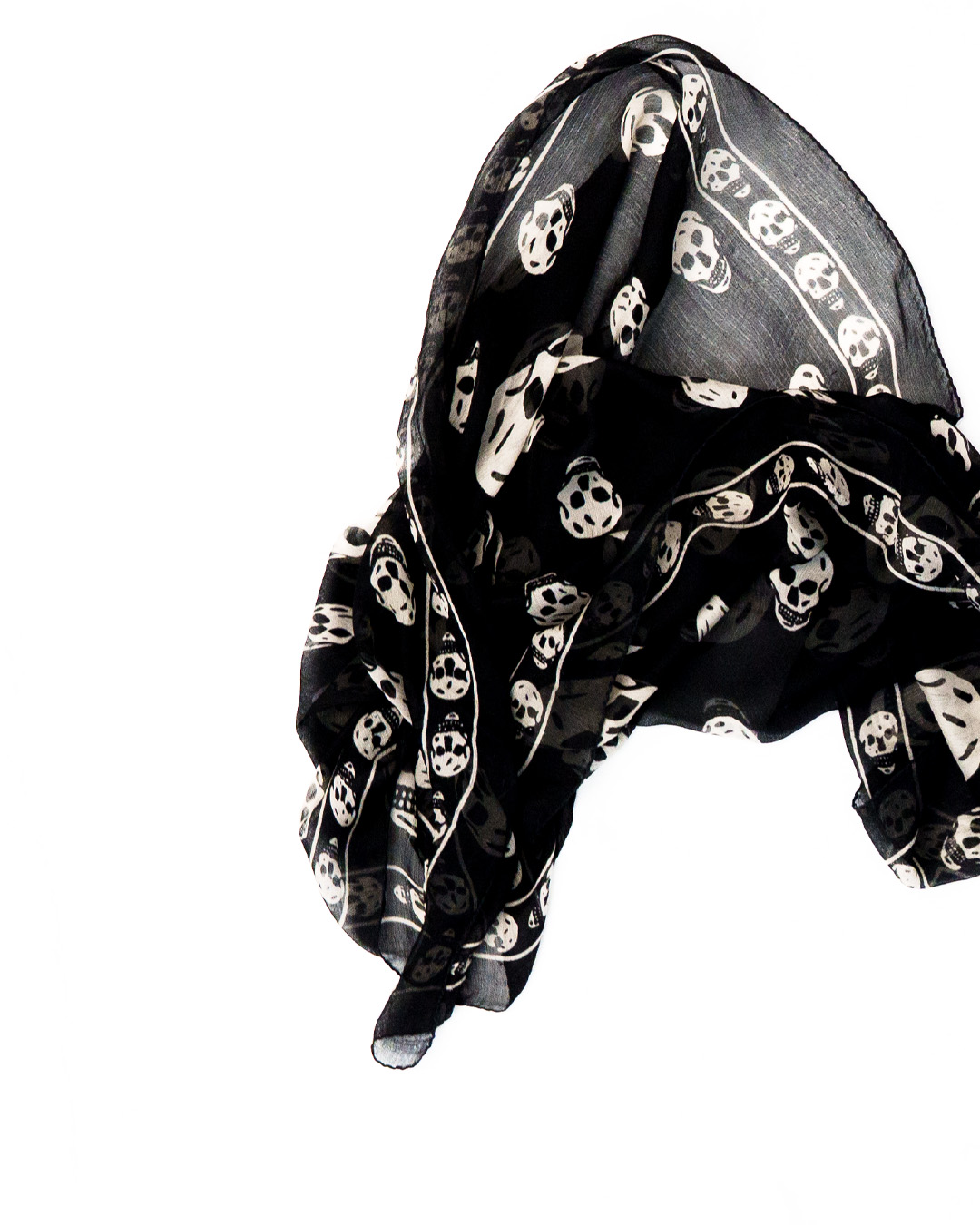
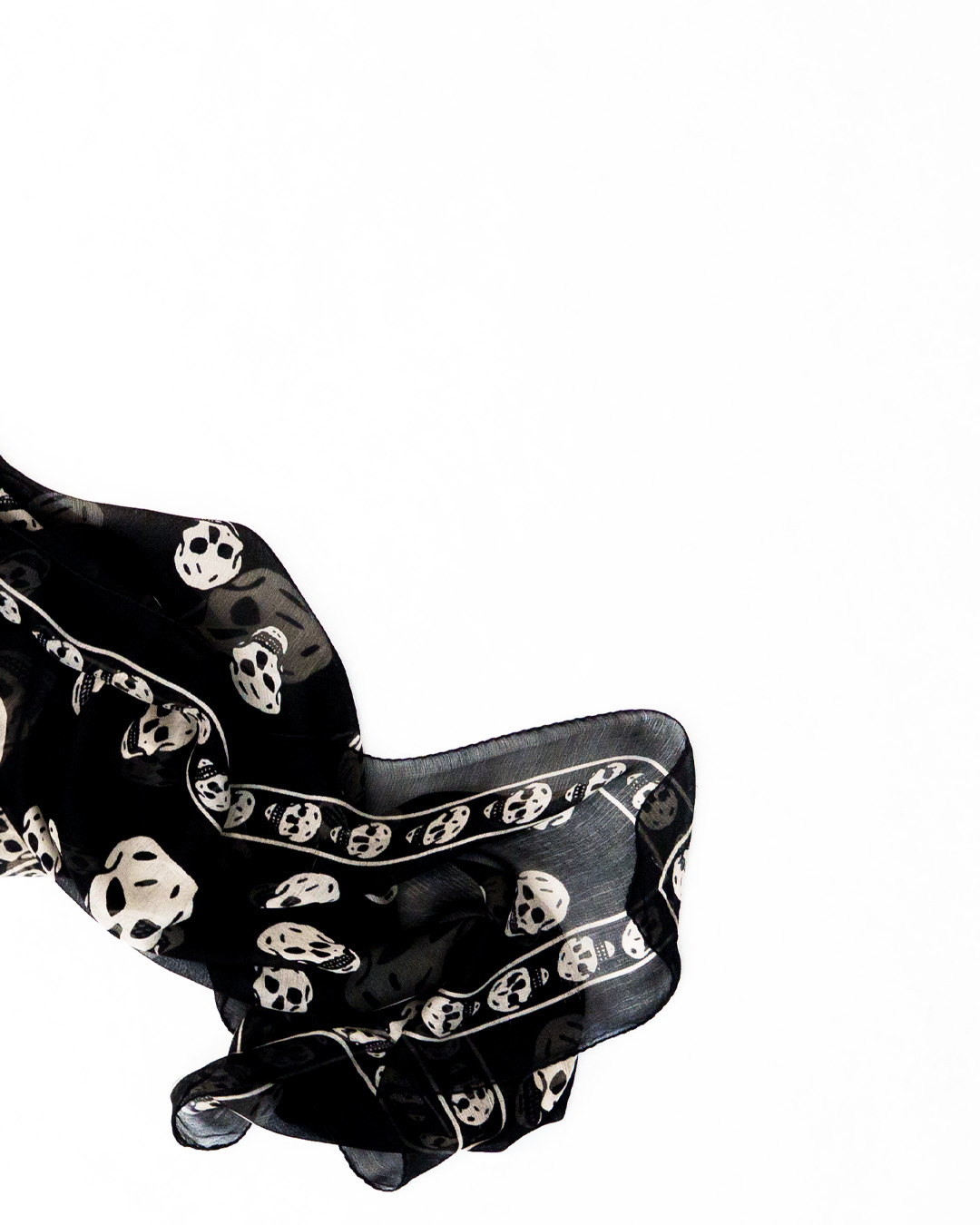
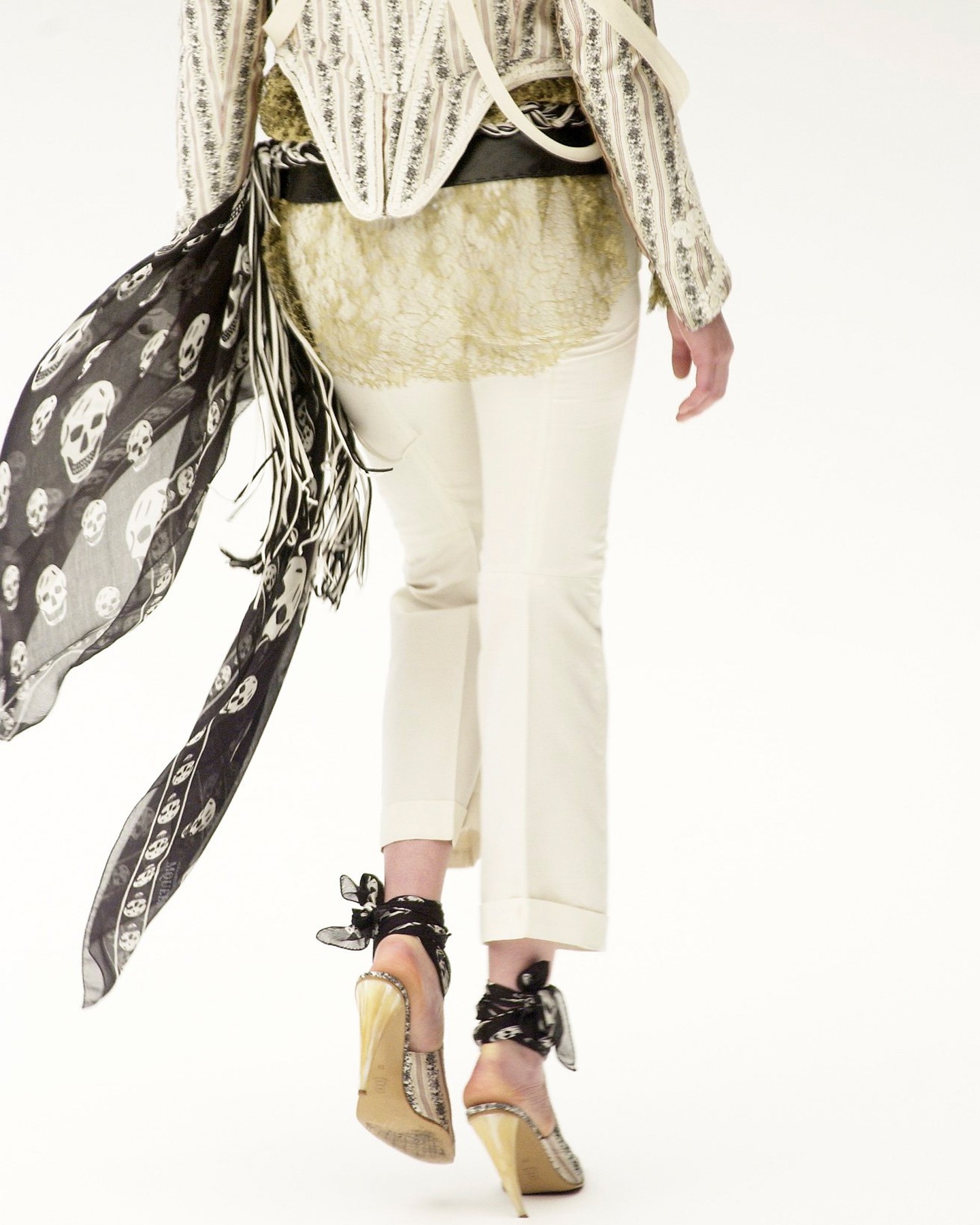
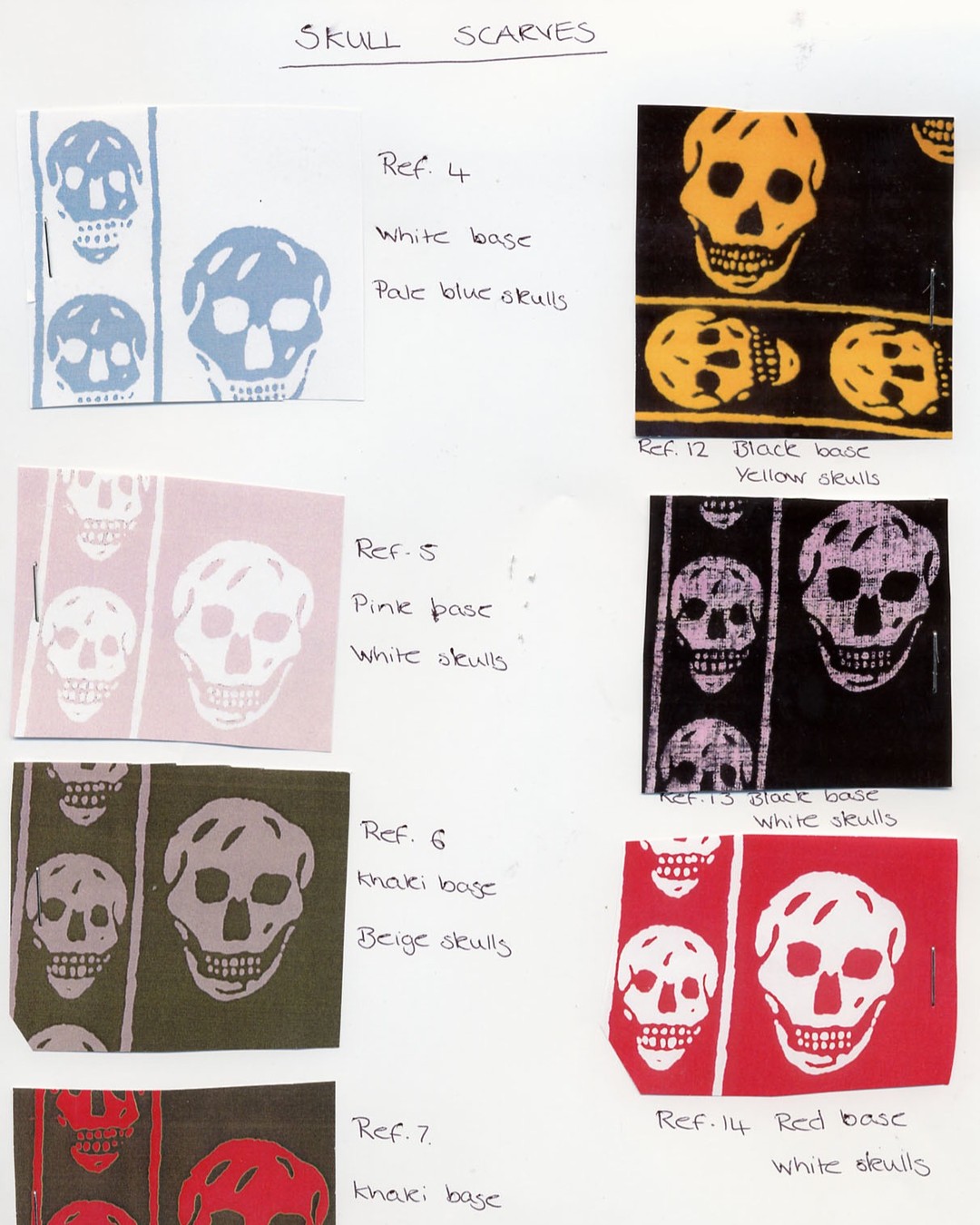
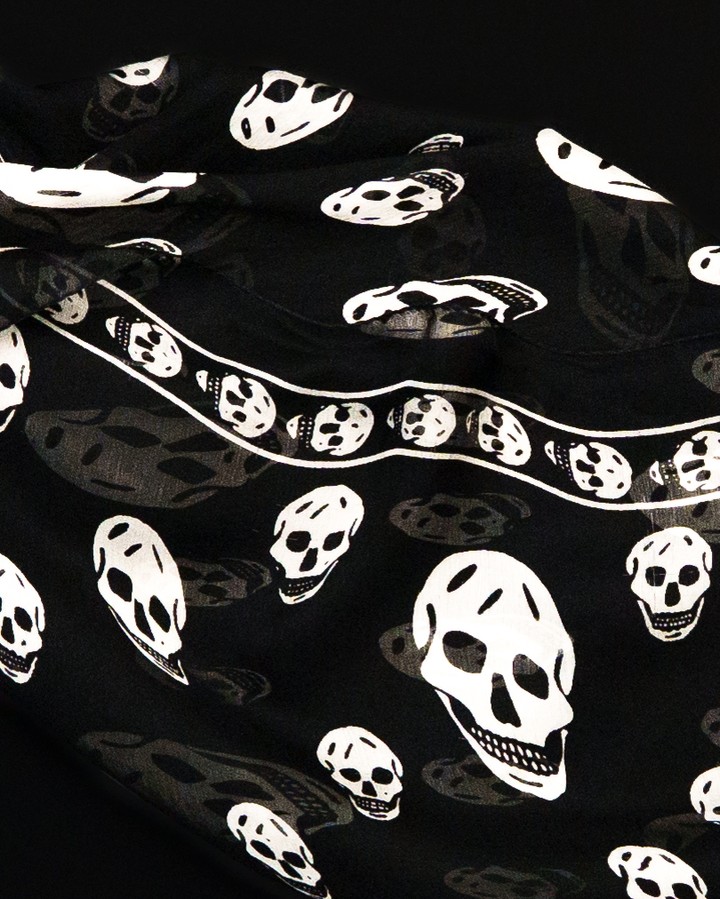
Alexander McQueen's Skull Scarf debuted on Look 11 and Look 17 of the brand's Irere runway show, staged October 5, 2002 during Paris Fashion Week and styled by Katy England. The scarf is made of black silk chiffon and its skull print was drawn from pirate flag imagery. In 2026 Alexander McQueen revisited the piece in an archival series called Documenting McQueen, pairing a FirstView runway photograph, the archive has documented fashion week since 1995, with a new image of the scarf itself.
Key Points
- Skull Scarf debuted on Look 11 and Look 17 of McQueen's Irere show, October 5, 2002.
- FirstView, founded in 1995, supplies the runway image. Its archive holds 8 million photos.
- The scarf is black silk chiffon, not cotton, styled by Katy England into the pirate flag motif.
October 5, 2002. A bare white stage in Paris, one screen behind it, and Alexander McQueen sending out a scarf that would outlast every other piece from that season. More than two decades later, the house is running its own runway footage back through a series called Documenting McQueen, and episode four spends its entire runtime on that same scarf, the black silk chiffon Skull Scarf from the Irere collection. This is not a nostalgia post. It is a brand treating its own catwalk as primary source material, the same way a record label treats a master tape it is reissuing rather than a meme it is recycling.
Look 11 and Look 17 Carried the Whole Scarf
The Skull Scarf first appeared on two specific looks in the Irere show, Look 11 and Look 17, both styled by Katy England, McQueen's longtime stylist. Irere was McQueen's 21st collection for his own label, staged October 5, 2002 during Paris Fashion Week, with models circling a bare white stage while a three part narrative moved through shipwrecked pirates, conquistadors and tropical birds. Women's Wear Daily called it the hands down favorite of the season and later named it one of its top dozen shows of the year. The scarf was one small accessory inside a much larger production, and it is the specific part still generating new content two decades on.
FirstView Has Documented Runways Since 1995
FirstView is the archive supplying the runway still that anchors the new post, and it has photographed catwalk shows since 1995. Don Ashby and Marcio Madeira built the service from photography they were already shooting, Madeira from Paris starting in 1978 and Ashby from New York starting in 1984, and the combined archive now runs past eight million images used by roughly 400 publications. Finally Offline already traced the scarf's shipwreck origin and its resale range on 1stDibs in an earlier piece on the skull motif's revival under Sean McGirr, but that piece pulled from resale listings, not from a runway archive photo credited by name. The second half of the new post, a present day image of the scarf itself, was shot separately by a photographer credited as chanel.jm, pairing a current object photograph with a runway record instead of only republishing one or the other.
Chiffon Moves. Cotton Does Not.
Black silk chiffon is the fabric named in the post itself, and chiffon is a sheer, plain weave textile light enough to move in still air. That property is why the scarf drapes the way it does around a neck or a head, closer in weight to a pocket square than to a cotton bandana, and it is a lighter material than the cotton flags that inspired the skull graphic in the first place. The print itself pulled from pirate flag iconography, an idea Katy England pushed into styling almost every exit with a scarf knotted at the neck or tied over the head. A cotton version would have held a stiffer knot and photographed flatter. Silk chiffon collapses into the soft folds visible across every photograph of the piece, which is part of why it reads as fashion first and prop second.
Forget the Reissue. Look at Who Is Filming It.
Alexander McQueen posting its own archive is not the same activity as a resale platform reposting a popular photo, and the difference is control over the record. A brand telling its own history across four numbered episodes, with credited photographers for both the runway image and the current object shot, is building a citable archive rather than recirculating a graphic that already sells itself. This is the same instinct behind Nike's Virgil Abloh Archive line pulling directly from Pyrex and Off White era pieces for its SNKRS drops, treating old runway and studio material like a catalog rather than a mood board. Both approaches turn a two decade old object into new content without touching the product itself.
Two Decades Old, Still Not a New Drop
Nothing in Documenting McQueen episode four is for sale, and that detail separates archival content from a marketing push. The house shared a 22 second clip and a five image carousel of a scarf that debuted in 2002, credited two photographers by name, and pointed the caption only toward the fuller Irere episode rather than a product link. That is the read on this specific post: it functions as a citation, built from Look 11, Look 17, Katy England's original styling, and a FirstView archive image predating most of the internet's current fashion coverage. The next test is whether episode five extends the same restraint to a different Irere exit, or whether the series eventually folds in a shop link once the audience is built.
Frequently Asked Questions
What is the Alexander McQueen Skull Scarf?
It is a black silk chiffon scarf printed with a repeating skull motif that Alexander McQueen introduced on the runway for its Spring Summer 2003 Irere collection.
When did the Skull Scarf first appear on the runway?
It appeared on Look 11 and Look 17 of the Irere show, which was staged October 5, 2002 during Paris Fashion Week.
Who styled the original Irere runway show?
Katy England, Alexander McQueen's longtime stylist, styled the show and pushed the skull print into a bandana treatment across multiple exits.
What is Documenting McQueen?
Documenting McQueen is an ongoing archival series from the Alexander McQueen account that pairs an original runway photograph with a present day image of the same piece.
Who took the runway photograph used in the new post?
The runway image is credited to FirstView, a runway photo archive founded in 1995 by Don Ashby and Marcio Madeira that has documented fashion week since before online fashion coverage existed.
Is the Skull Scarf still sold today?
Alexander McQueen has reissued the Skull Scarf multiple times, including a Damien Hirst collaboration and pieces styled by current creative director Sean McGirr, though this post links to an archival episode, not a shop page.
What fabric is the Skull Scarf made from?
The scarf is silk chiffon, a lightweight sheer weave that drapes rather than holds a stiff knot, unlike the heavier cotton bandanas that inspired its pirate flag graphic.
What was the Irere collection about?
Irere was Alexander McQueen's 21st collection, a three part narrative moving through shipwrecked pirates, conquistadors and tropical birds, and Women's Wear Daily named it one of the season's top shows.
Topics: alexander-mcqueen, fashion-history, virgil abloh, irere, silk-chiffon, virgil-abloh, runway-photography, alexander mcqueen, firstview, archive-fashion, sean, sean-chess, skull-scarf, katy-england, nike, paris-fashion-week