LOUIS VUITTON RUNS SEVEN EXHIBITIONS ACROSS SIX CITIES IN SPRING 2026
Louis Vuitton's Spring-Summer 2026 Arts and Culture Program celebrates the 20th anniversary of the Espaces Louis Vuitton gallery network and the 10th anniversary of the Fondation's Hors-les-murs initiative. The program presents seven free exhibitions across six cities, including Jean-Michel Othoniel in Beijing, Rina Banerjee in Tokyo, Jeff Koons in Osaka, and Alexander Calder at the Fondation Louis Vuitton in Paris. The Espaces model, which provides free admission to all exhibitions embedded in flagship stores, is estimated to cost $35-45 million annually and has hosted over 400 artists since 2006.
Key Points
- Louis Vuitton's Espaces network is estimated to cost $35-45 million annually to operate and has hosted over 400 artists across 14 spaces since 2006.
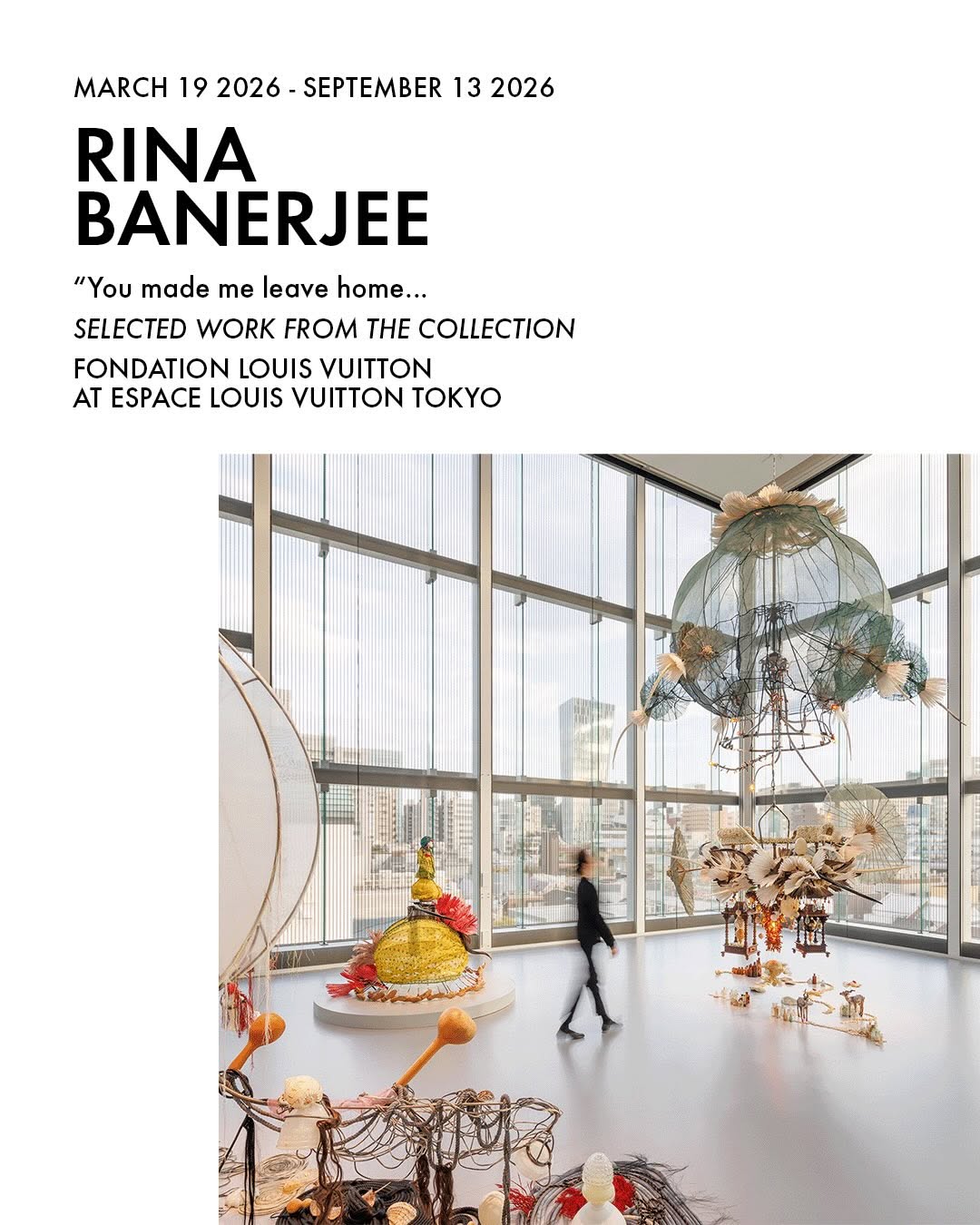
- Rina Banerjee's Tokyo exhibition, running March 19 to September 13 2026, places her found-object assemblage in direct proximity to Japan's Mono-ha tradition.
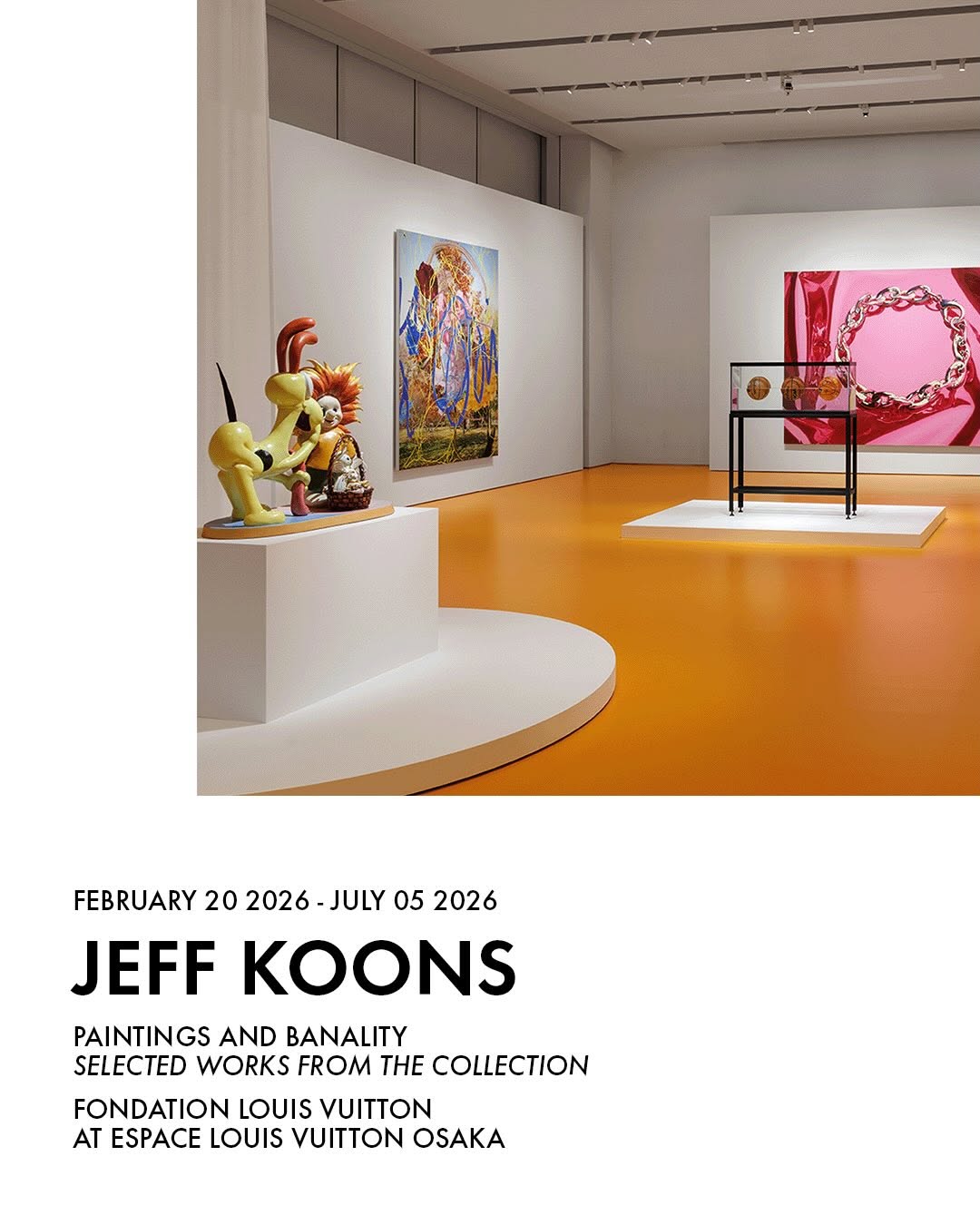
- The Jeff Koons retrospective in Osaka covers the arc from his 1980s Banality series (under $50K) to Rabbit's 2019 record $91.1M auction result.
Twenty years of free admission to an art program that most fashion houses would charge for is worth examining closely.
Louis Vuitton's Spring-Summer 2026 Arts and Culture Program carries two anniversaries at once: the 20th year of Espaces Louis Vuitton, the network of free gallery spaces embedded inside flagship stores on six continents, and the 10th year of the Fondation Louis Vuitton's Hors-les-murs initiative, which places works from the Fondation's permanent collection in partner institutions around the world, also free. The spring program encompasses seven exhibitions across Beijing, Tokyo, Osaka, Hong Kong, Venice, and Paris, each presenting a different argument about what a fashion house can do with art beyond using it as backdrop for a runway.
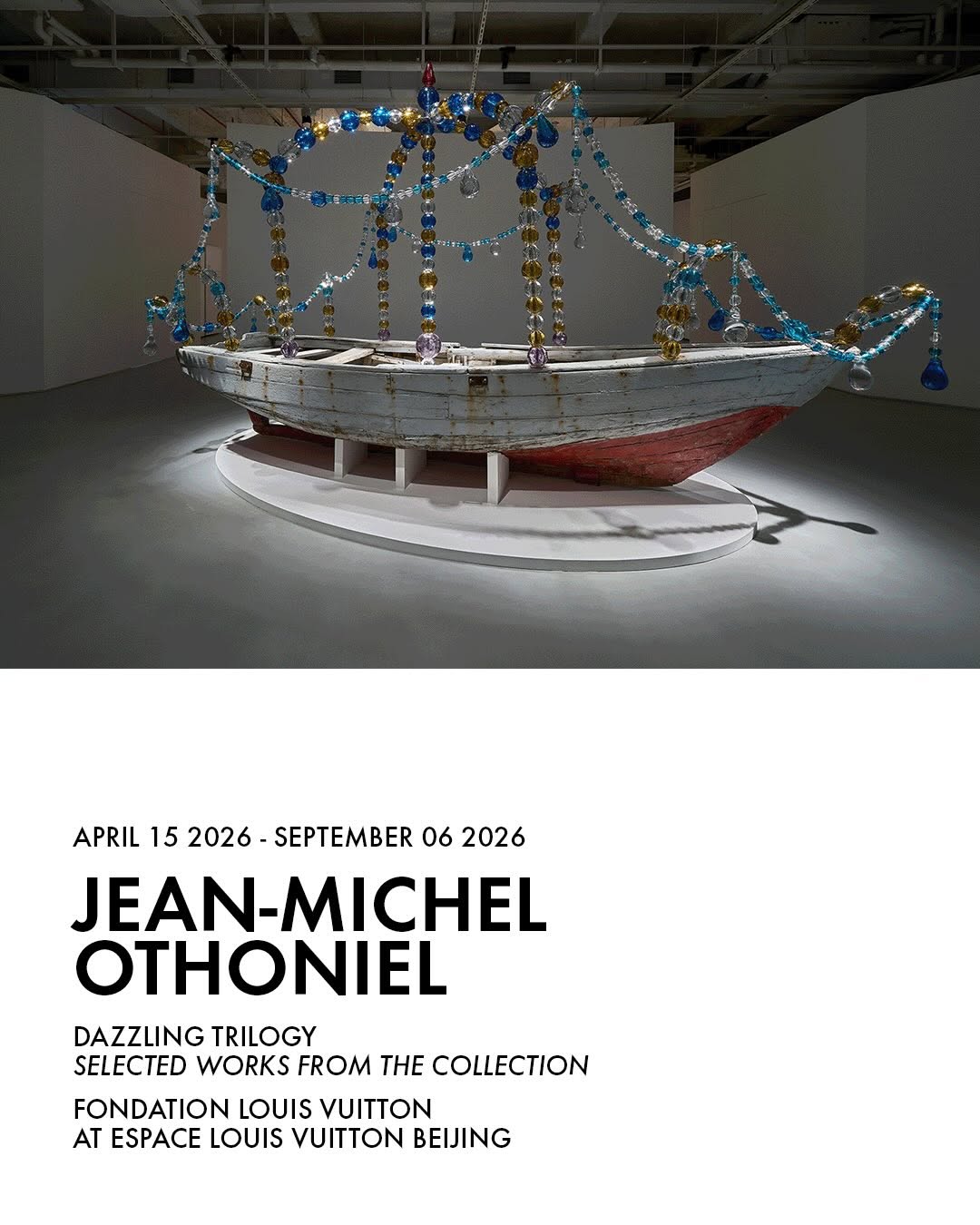
Jean-Michel Othoniel in Beijing, April 15 to September 6
Espace Louis Vuitton Beijing is hosting Othoniel's Dazzling Trilogy, three large-scale glass installations built around light, migration, and memory. The centerpiece is Rivière Rose, a site-specific work commissioned for the space. Othoniel, born in 1964 in Saint-Etienne, France, has worked with Murano-technique glass since the early 1990s. His relationship with vividly colored spherical forms began as a response to the AIDS crisis; the earliest works were explicit about mortality and transformation. By 2026, the glass bead works have entered museum collections on four continents and been installed in the gardens of Versailles. The Beijing show connects the studio history to a new geography without flattening either.
Rina Banerjee in Tokyo, March 19 to September 13
The Tokyo show, titled You Made Me Leave Home, presents the South Asian diaspora artist's mystical female sculptures and large installations assembled from found objects: textiles, feathers, animal horns, taxidermy, glass. Banerjee, who was born in Calcutta in 1963 and trained at Yale School of Art, spent decades making work that the market did not know how to process. The Whitney Museum's 2018 retrospective changed that calculus. The Tokyo placement is deliberate; Japan's relationship with found-object assemblage stretches from Mono-ha through Yayoi Kusama, and Banerjee's work sits in uncomfortable proximity to that tradition in a way that generates real critical friction.
Jeff Koons in Osaka, Through July 5
The Osaka exhibition traces Koons from his 1980s Banality series through his most recent monumental paintings, a retrospective arc that is as much a case study in market mechanics as it is in artistic development. The Banality series, which appropriated kitsch objects to interrogate taste hierarchies, sold at the time for under $50,000 per piece. Koons' Rabbit sold at Christie's in 2019 for $91.1 million, the highest price ever achieved for a work by a living artist at auction. The Osaka show does not hide this trajectory. It presents it.
Calder at the Fondation in Paris, April 15 to August 16
The Paris showing of Calder. Rêver en équilibre is the season's anchor exhibition for the Fondation Louis Vuitton itself. Alexander Calder's mobiles need no introduction in the art historical sense, but the Fondation's installation of kinetic works throughout Frank Gehry's 2014 building creates something that static reproductions cannot communicate: the relationship between mass in motion and the building's own angular glass sails, which Gehry designed to appear mid-movement. Standing inside the Fondation during a Calder installation is one of the few times architecture and sculpture genuinely complete each other.
What Twenty Years of Free Access Actually Means
The Espaces model, free admission everywhere, no ticketing infrastructure, no membership required, is a $40 million annual operating decision. Louis Vuitton does not publish the number, but independent estimates based on staff, lease rates in flagship locations, and programming costs have ranged between $35 million and $45 million per year since 2020. The cultural logic is straightforward: a customer who enters the Champs-Elysées flagship to see an Othoniel installation and leaves without purchasing anything has still been inside the building. The commercial logic is more layered. By 2026, Espaces has hosted over 400 artists across 14 spaces. That is a curatorial record that most dedicated art institutions cannot match.
Related Reading
- Artschwager's Approximate Objects Extended Through May 23
- CHUCK CLOSE ON PAPER: WHAT PACE IS SHOWING BEFORE APRIL 25
- Daniel Arsham Cast the W124 Steering Wheel Four Times in 2015
Frequently Asked Questions
What is Louis Vuitton's Arts and Culture Program for Spring 2026?
Louis Vuitton's SS26 program marks the 20th anniversary of Espaces and 10th anniversary of Hors-les-murs, presenting seven free exhibitions across Beijing, Tokyo, Osaka, Hong Kong, Venice, and Paris.
Who are the artists in Louis Vuitton's 2026 cultural program?
Jean-Michel Othoniel (Beijing), Rina Banerjee (Tokyo), Jeff Koons (Osaka), Frank Gehry (Hong Kong), Amoako Boafo (Venice), Alexander Calder and Armineh Negahdari (Paris).
Is admission free to Louis Vuitton's Espaces exhibitions?
Yes, all Espaces Louis Vuitton exhibitions are free and open to the public, a model the brand has operated since 2006 at an estimated annual cost of $35-45 million.
Topics: louis vuitton, espaces-louis-vuitton, daniel-arsham, whitney-museum, daniel arsham, alexander-calder, spring-2026, jean-michel-othoniel, whitney museum, louis-vuitton, fondation-louis-vuitton, art, jeff-koons