LIGHT HOUSE HID 800 SQUARE METERS BEHIND NOTTING HILL
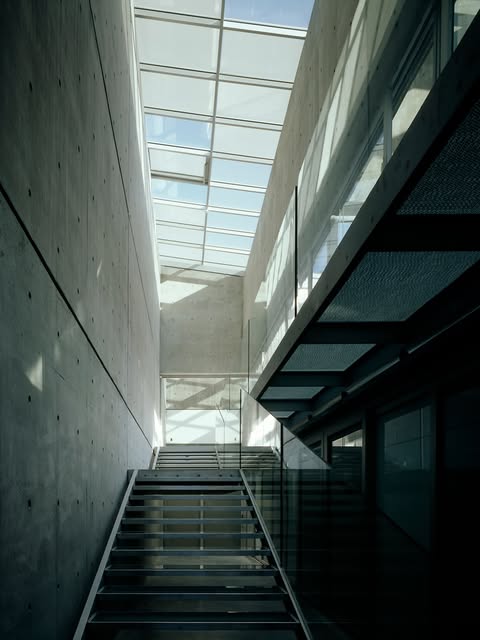
Light House is an 800 square meter concrete home Gianni Botsford Architects completed in Notting Hill, London in 2005, engineered with Arup for site specific daylight through a sky facade of alternating opaque and transparent layers. The house won a 2006 RIBA Award and a Manser Medal shortlist, and is now owned by Fendi creative director Kim Jones, formerly of Louis Vuitton menswear and Dior Homme.
Key Points
- Arup modeled site specific daylight data to engineer Light House's concrete sky facade.
- The 800 square meter Notting Hill house won a 2006 RIBA Award and a Manser Medal shortlist.
- Kim Jones, now Fendi's creative director, called the listing a wildcard he almost skipped.
Eight hundred square meters of concrete sit behind a Notting Hill terrace, and from the street you cannot see any of it. Gianni Botsford Architects spent nine years designing and building Light House on an enclosed backland site, finishing in 2005 for a family of two academics and their two children. Twenty years later the same rooms belong to Kim Jones, the designer who ran menswear at Louis Vuitton, ran Dior Homme, and now sits at Fendi. The house did not change. The owner did.
Botsford's argument, poured into raw concrete and a roof the size of a small courtyard, was that light is a material you can engineer as precisely as steel. Arup ran the numbers and proved him right.
32 Meters of Beam Carry the Roof
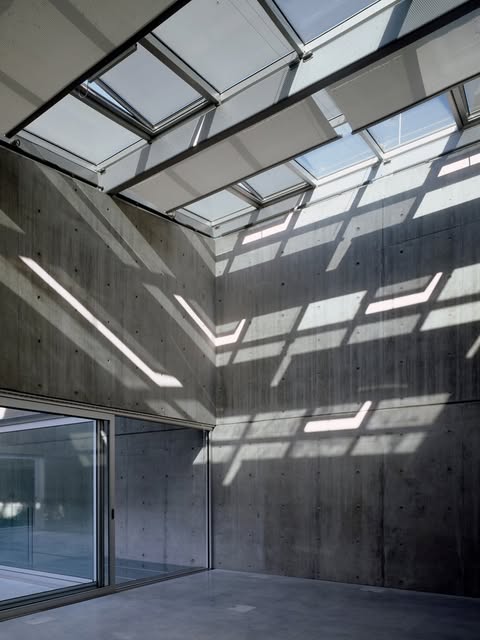
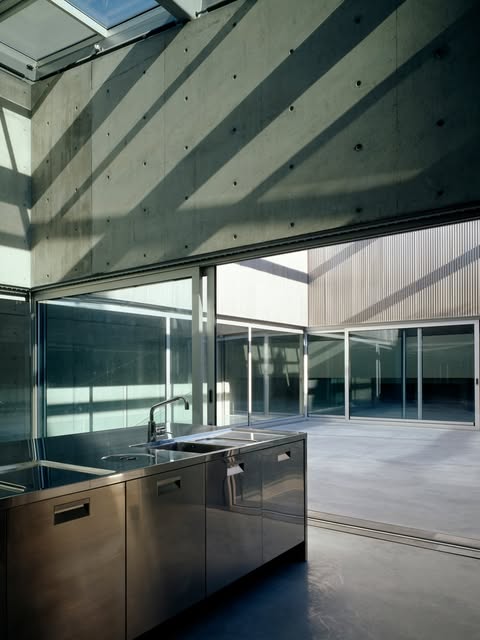
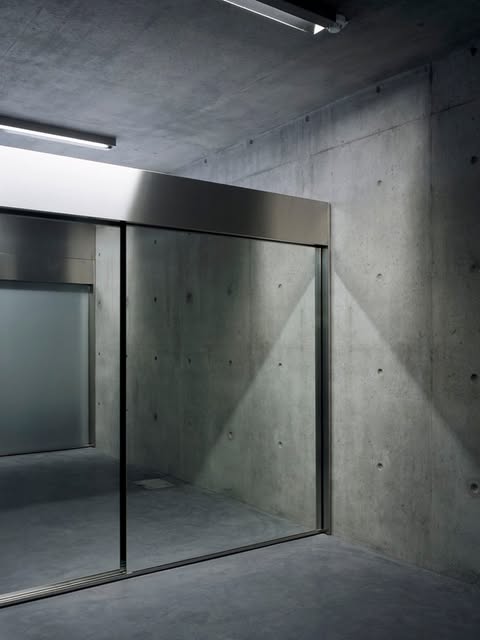
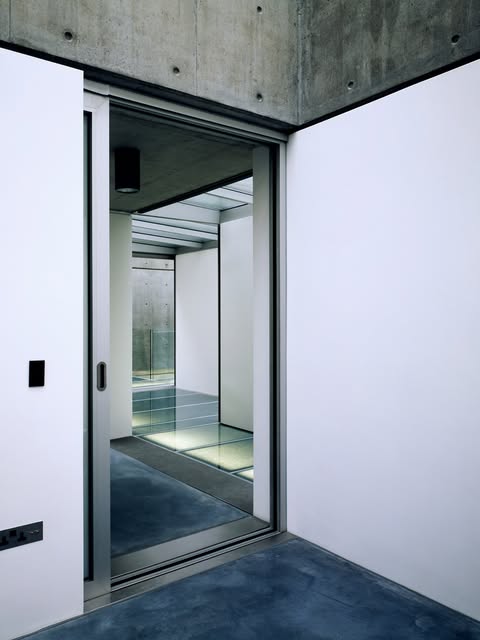
A grillage of deep, tapering concrete beams spans from vertical cantilevers eight to ten meters high and thirty two meters long, forming the high level enclosure over the main room. Exposed, in situ concrete does three jobs at once here. It acts as an environmental moderator, storing and releasing heat as the London weather shifts through a day. It puts the pour marks and formwork joints on display instead of hiding them behind plaster. And structurally, it is the only material that could take the vertical cantilever loads without a forest of internal columns cluttering the plan.
The site itself is the real constraint. Backland plots in Georgian London are boxed in on all four sides by neighboring terraces, so lateral views were never an option. Botsford's plan gives up on the horizon entirely and sends every sightline upward, toward a sky that changes the room's temperature and color by the hour.
Arup Called It an Environmental Moderator
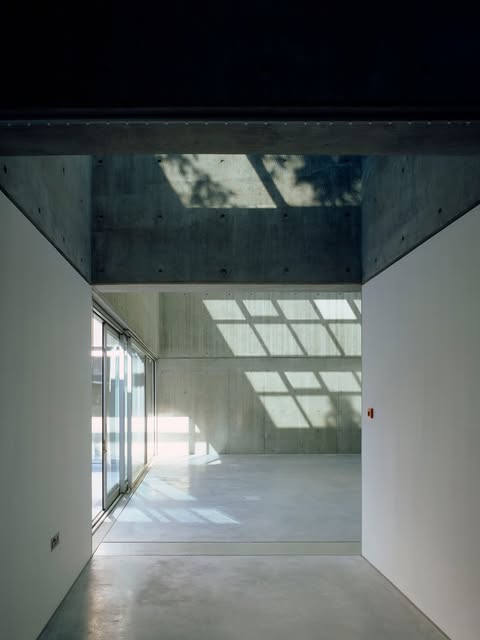
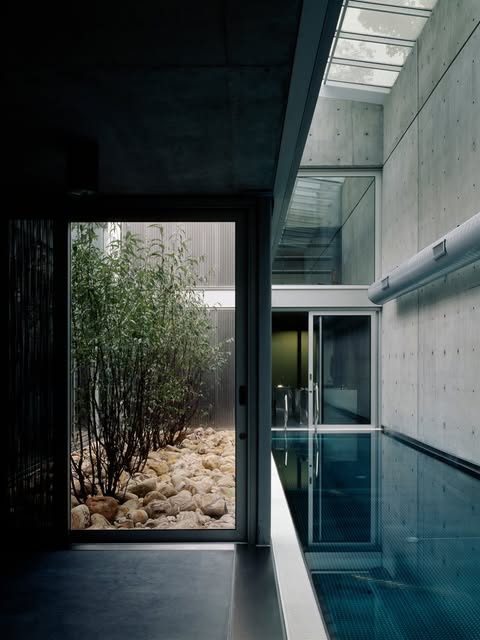
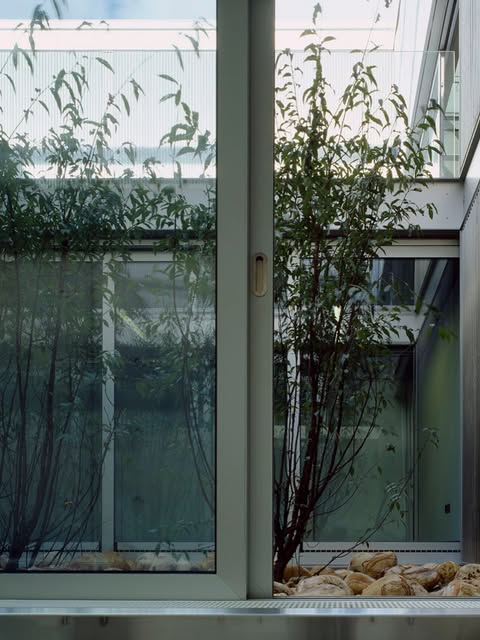
Engineers on the project modeled solar and daylight conditions for individual sections of the site across a full year, building a database specific to London's weather rather than a generic sun path diagram. The result was a sky facade, alternating opaque and transparent layers that filter direct light without blocking it outright. A lap pool sits below, with terraces holding lush planting and rock pushed into the negative space between concrete masses.
Finally Offline covered a similar bet on raw material honesty in a 1970s Milan house where two decades of concrete coexist under one roof, where brutalist structure was left exposed rather than dressed up. Light House makes the same wager at a domestic scale, betting that concrete left alone reads as more honest than concrete finished to look like something softer.
A 2006 RIBA Award Went to a House You Cannot Find
Light House won a RIBA Award in 2006 and was shortlisted for the Manser Medal the same year, architecture's prize specifically for houses. Judges for both cited the same paradox that makes the project work. A structure built almost entirely from concrete, steel, aluminum, and glass reads, from the pavement, as nothing at all. The Guardian described it as all but invisible on completion, hidden inside a block that gives no hint of the eight hundred square meters behind its face.
That invisibility is the design decision, not an accident of siting. Botsford chose to spend the budget on daylight engineering and structural ambition rather than a facade meant to be photographed from the street.
Kim Jones Went Shopping for a Victorian
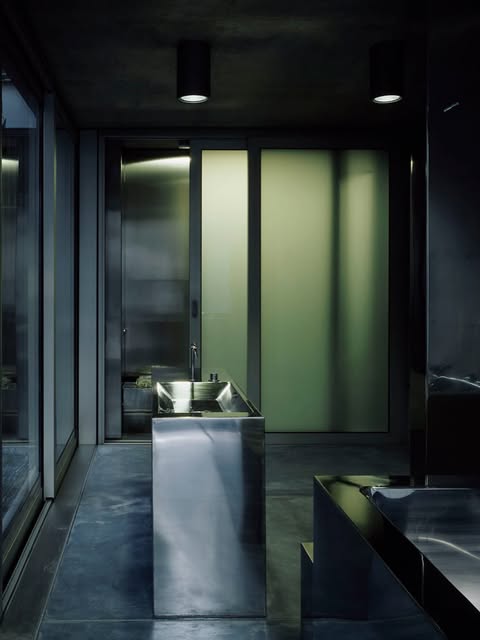
Jones was viewing period London properties, the kind with cornicing and a fireplace in every room, when his estate agent added Light House to the list as a wildcard. He walked in and stopped looking. The interior he built inside Botsford's shell leans brutalist and gallery like, bare concrete and polished stainless steel holding art and objects gathered across three fashion houses.
Jones spent his career reading fabric and proportion for Louis Vuitton menswear, for Dior Homme, and now for Fendi, the same instincts he told 032c shaped how he arranged the house room by room. The connection between his day job and his address is not incidental. A designer who spent two decades at Louis Vuitton, most recently building the SS27 collection around Pharrell Williams, lives inside a building that treats material choice with the same seriousness he brings to a runway.
Most Concrete Ages Worse Than This
Twenty years on, Light House still stands on its original structure with no public record of a major renovation, a rarer outcome than the architecture press usually admits. Compare that to Christian Kerez's Bahrain car parks, concrete architecture of real ambition that is coming down after barely a decade because the site it occupied got reassigned. Botsford's structure survived because the constraint, an unbuildable backland plot boxed in by four neighbors, gave the concrete a job no other material could do.
Eight hundred square meters, a 2006 RIBA Award, and a fashion designer who almost did not view the property. Light House is proof that material honesty outlasts trend, and that the most photographed rooms in a house can still be invisible from where most people stand.
Related: Zaha Hadid Architects Published 19 Renders of Beijing Daxing and Every One Is a Structural Argument.
Frequently Asked Questions
What is Light House in Notting Hill?
Light House is an 800 square meter concrete home Gianni Botsford Architects completed in 2005 on an enclosed backland site in Notting Hill, London.
Who designed Light House?
Gianni Botsford Architects designed Light House, working with structural and environmental engineers at Arup on the daylight modeling and concrete beam structure.
How big is Light House?
Light House sits on an 800 square meter site, with a grillage of concrete beams spanning up to 32 meters supported by vertical cantilevers 8 to 10 meters high.
Who owns Light House now?
Fashion designer Kim Jones, who has led menswear at Louis Vuitton, Dior Homme, and now Fendi, owns Light House and lives there today.
When was Light House completed?
Gianni Botsford Architects finished Light House in 2005 after roughly nine years of design and construction beginning in 1996.
Did Light House win any architecture awards?
Light House won a RIBA Award in 2006 and was shortlisted for the Manser Medal, architecture's prize for houses, the same year.
Why is Light House hidden from the street?
Light House sits on a backland plot boxed in by neighboring Georgian terraces, so Botsford designed the concrete structure to send daylight upward rather than build a street facing facade.
What engineering firm worked on Light House?
Arup modeled solar and daylight conditions across the site through a full year to engineer the house's sky facade and structural cantilevers.
Topics: kim-jones, 032c, fendi, dior, zaha-hadid-architects, zaha hadid architects, pharrell williams, louis-vuitton, pharrell-williams, brutalism, gianni-botsford, light-house, arup, louis vuitton, riba-award, london-architecture, notting-hill, focus-63-89, concrete-architecture