HERZOG DE MEURON TURNS AN ARMY TOWER INTO A PEAK
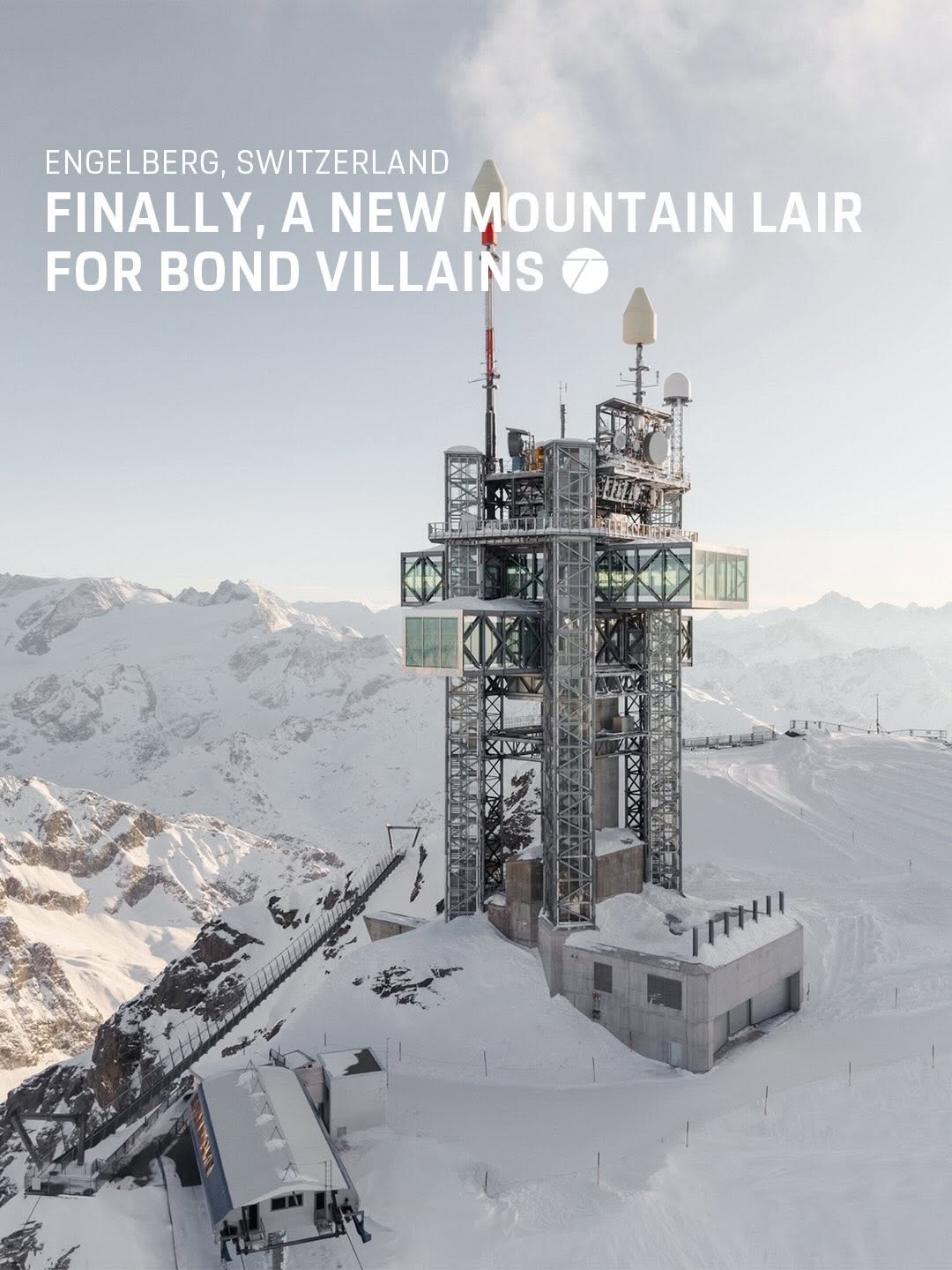
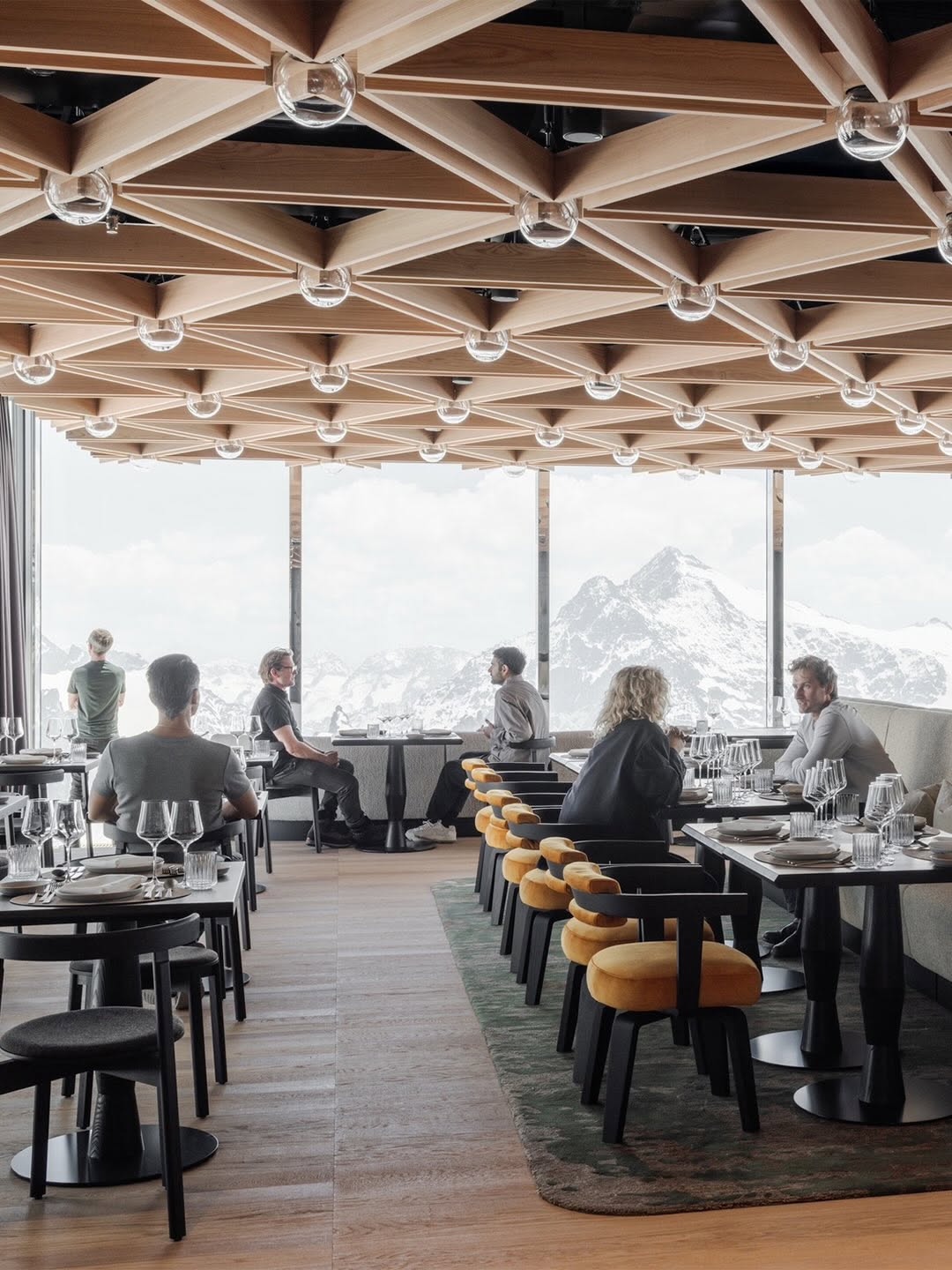
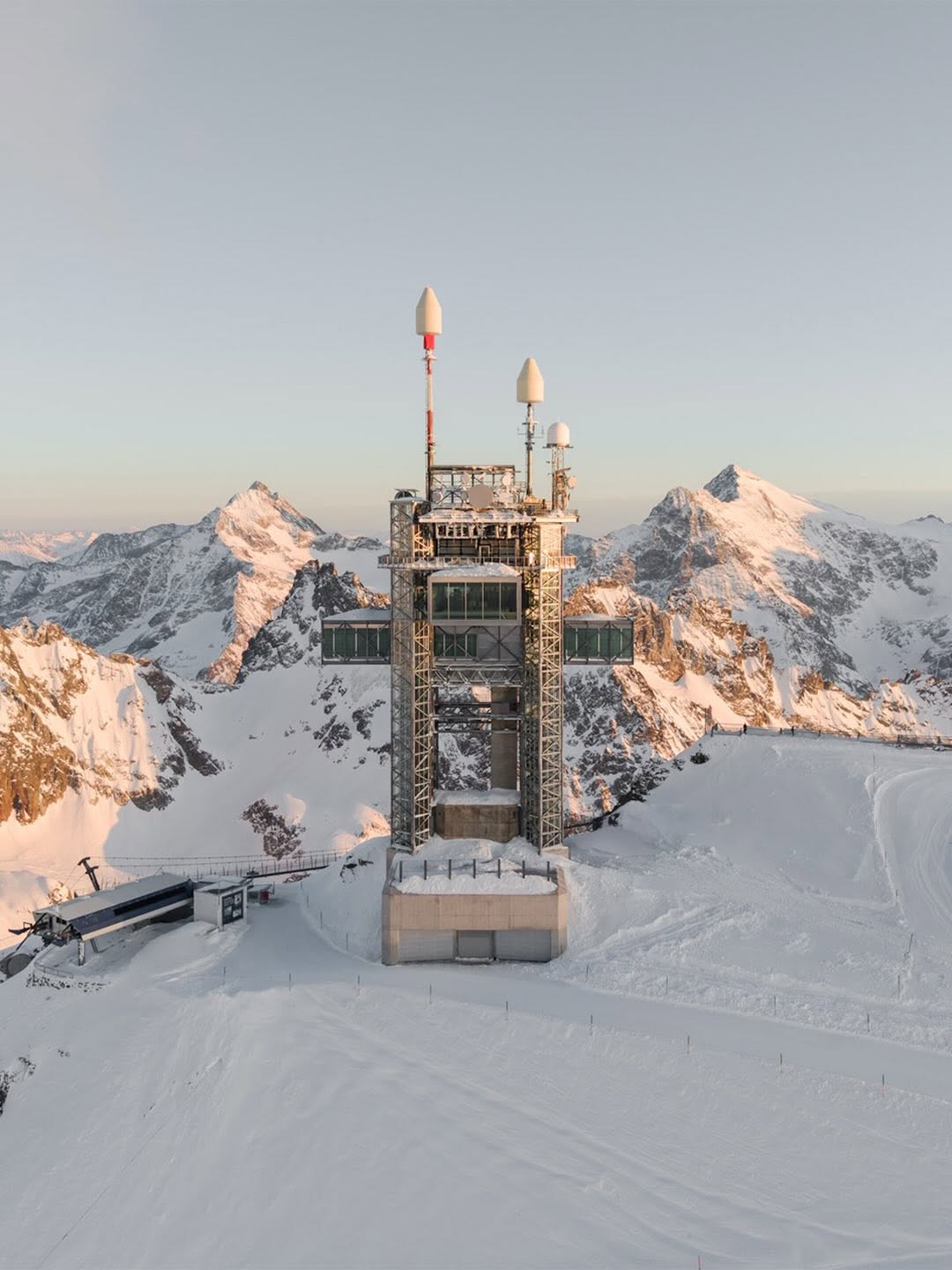
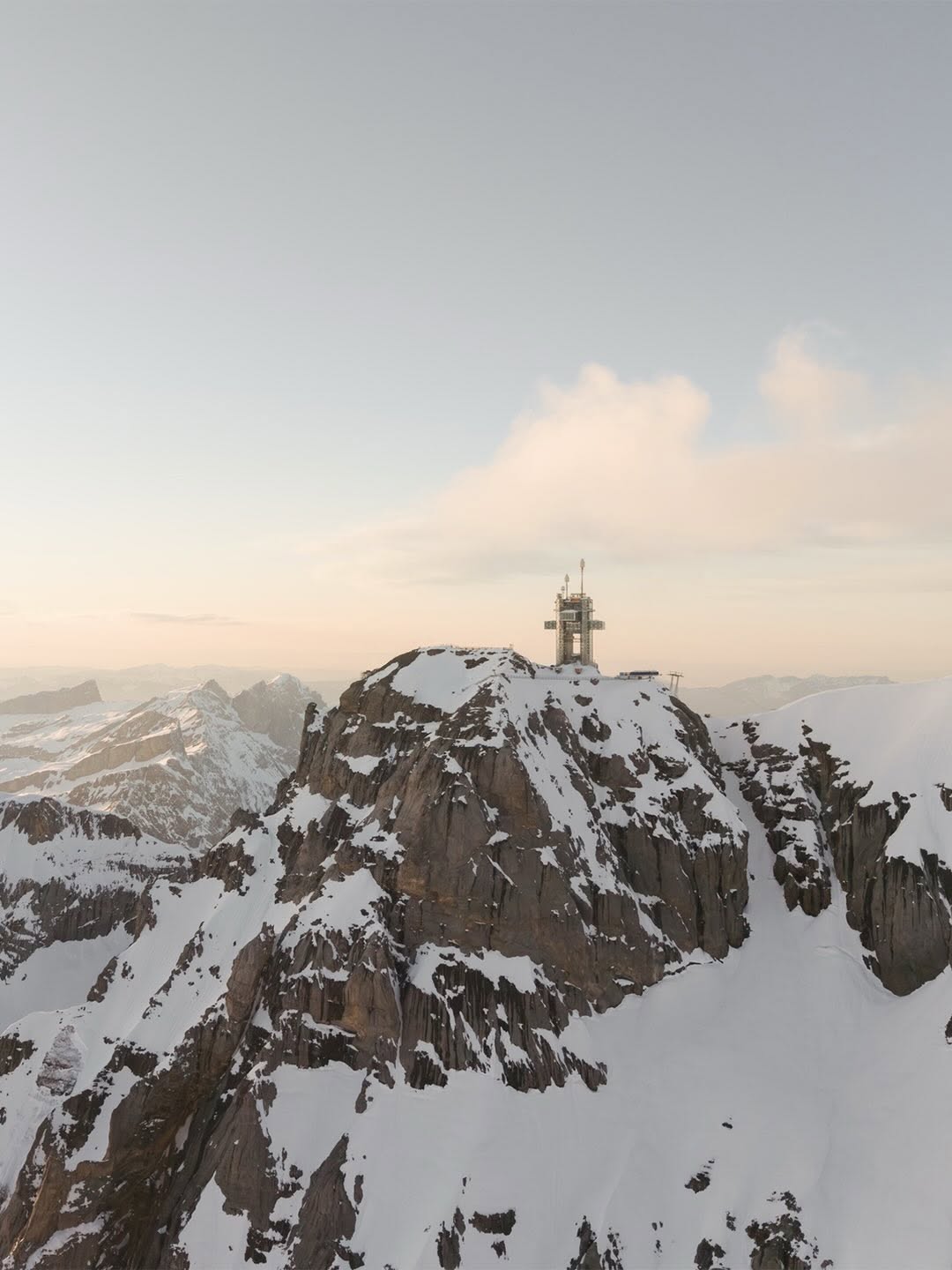
Herzog and de Meuron transformed a 1980s Swiss Army antenna tower at more than 3,000 metres above Engelberg into the TITLIS Tower, a glass walled observatory and restaurant. Rather than demolish the existing 56 metre structure, the architects wrapped it in glazed volumes and circulation towers, preserving the original frame. It positions adaptive reuse at extreme altitude as the more ambitious architectural move than building new.
Key Points
- Herzog and de Meuron reworked a 1980s Swiss Army antenna tower above Engelberg, Switzerland.
- The original 56 metre tower was built in the 1980s for telecommunications and anchored into limestone.
- The TITLIS Tower sits at more than 3,000 metres above sea level.
- The architects added two horizontal glazed volumes and four vertical circulation towers around the existing frame.
- A weather protected tunnel runs through the rock from the mountain station and glacier cave to the tower base.
Three thousand metres above sea level, on a peak above Engelberg, there is now a glass observatory that used to be a Swiss Army antenna tower. Herzog and de Meuron did not knock down the 1980s telecommunications structure and start over. They wrapped it, glazed it, and turned it into a restaurant in the sky. The TITLIS Tower is what happens when the most respected architects in Switzerland decide the harder move is to keep the old bones.
A military antenna becomes an alpine destination. The reuse is the whole idea.
Why They Kept the Old Tower
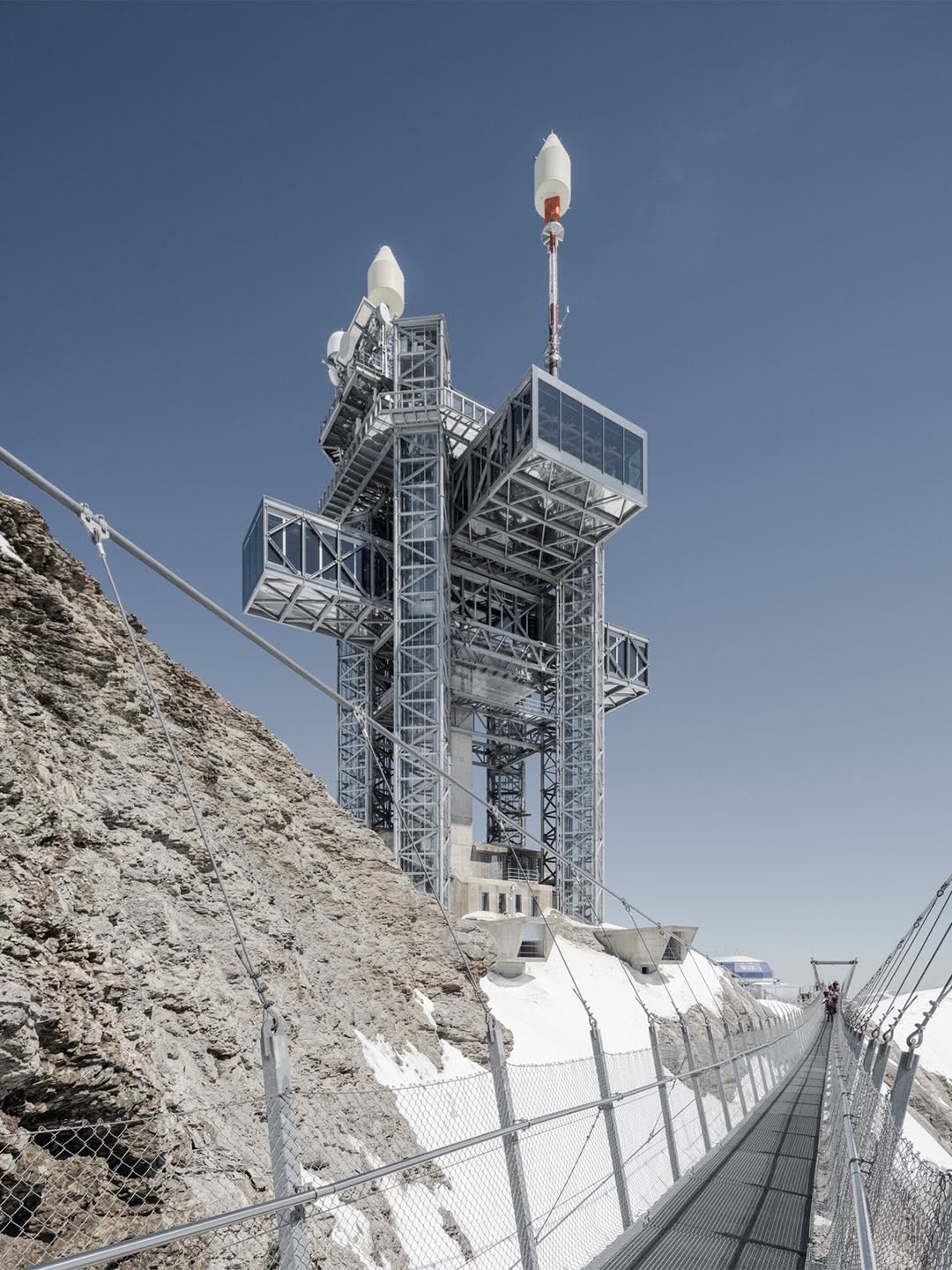
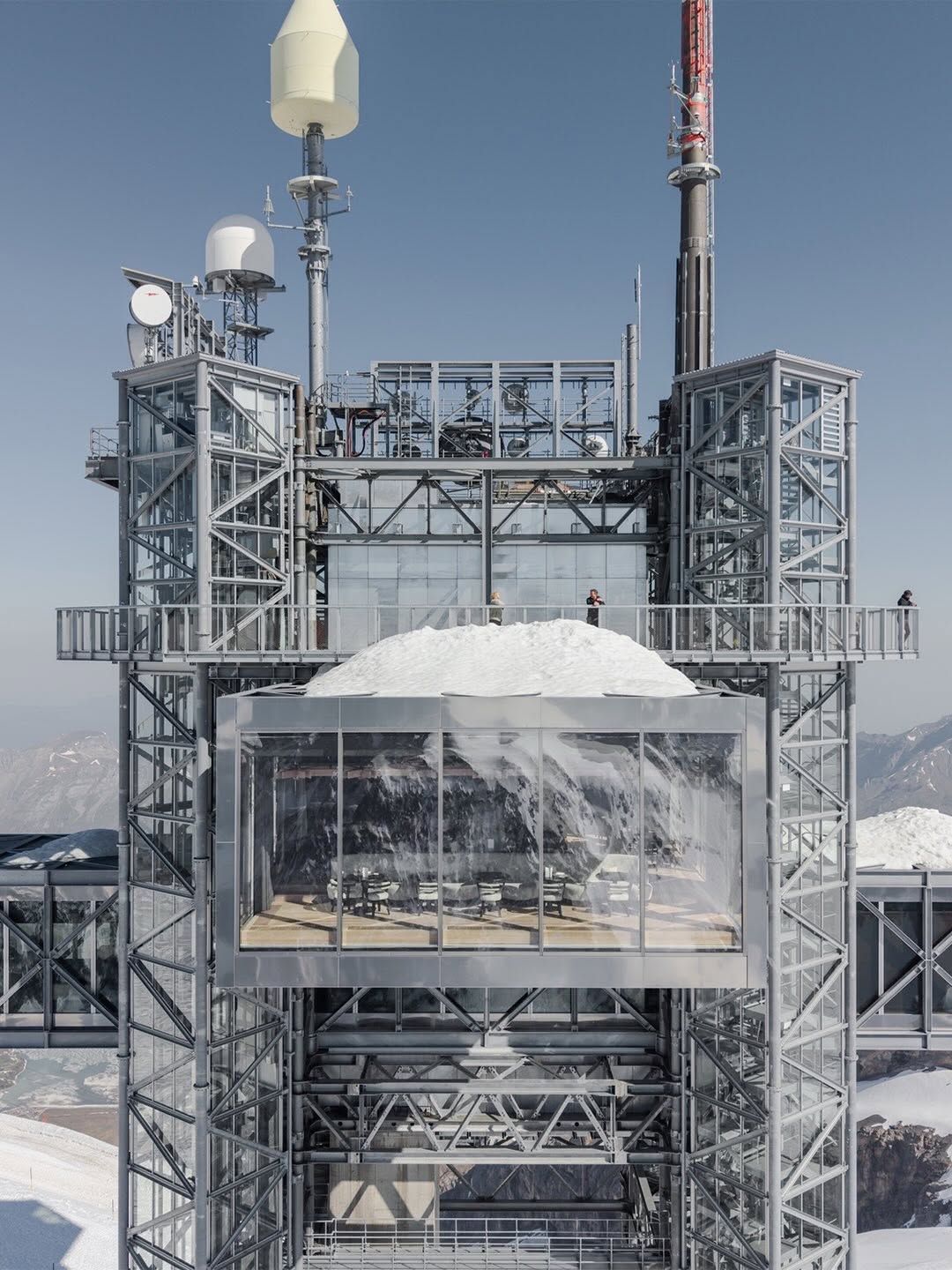
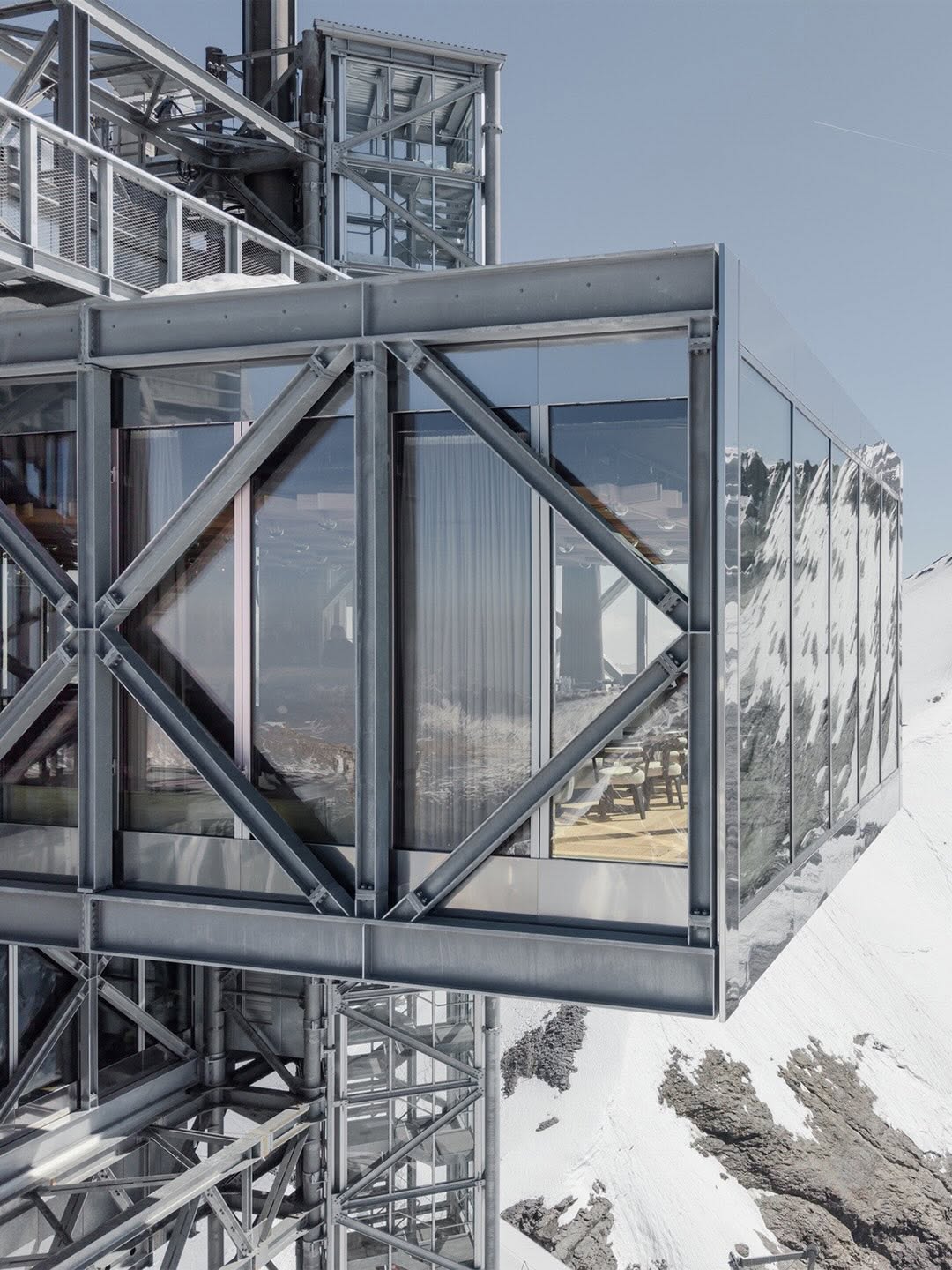
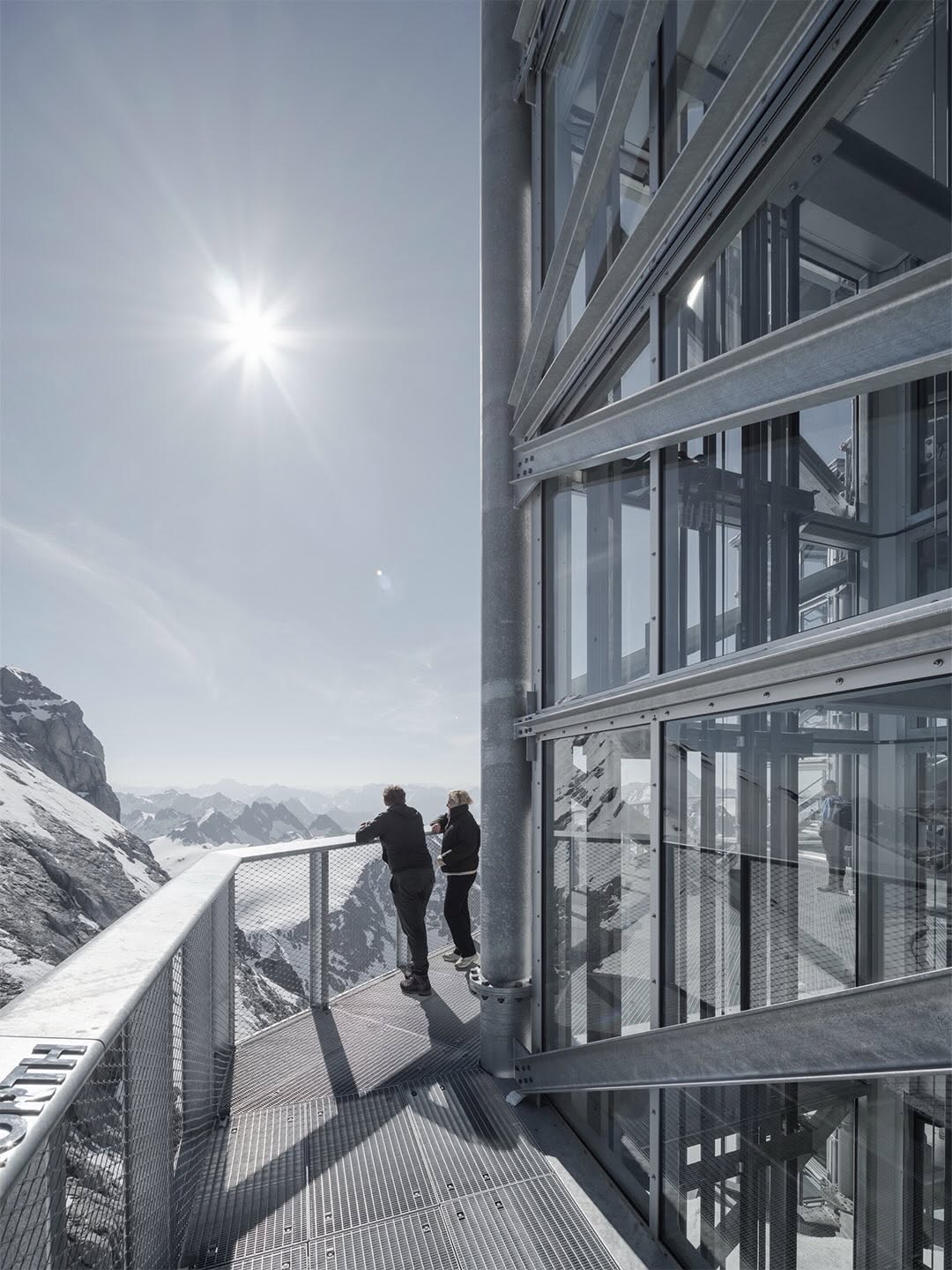
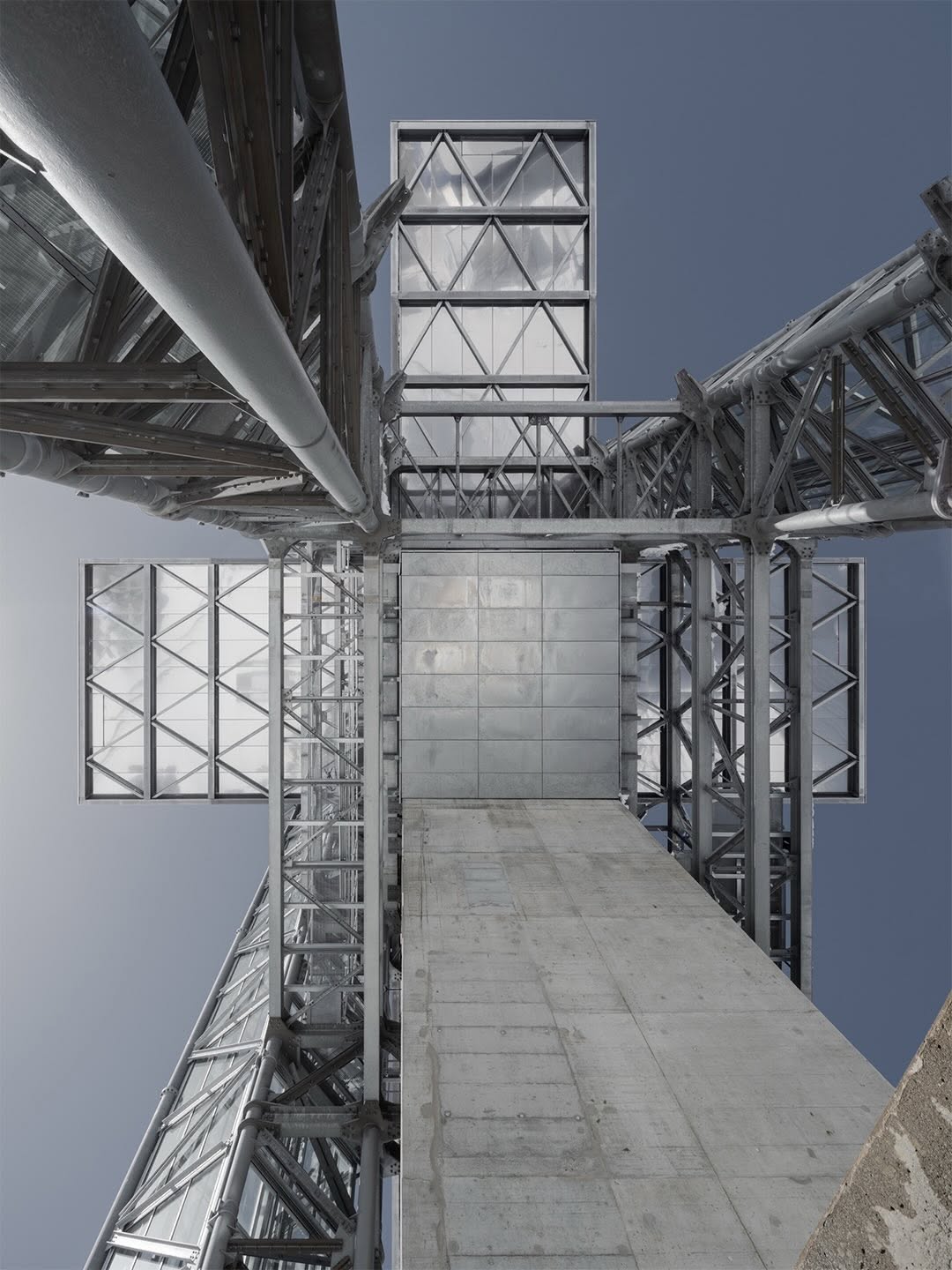
The original structure was a 56 metre tower built in the 1980s for telecommunications, anchored deep into the limestone and wrapped in a light steel frame. The easy path would have been demolition. Clear the peak, pour a new foundation, build the glass box from scratch. Herzog and de Meuron did the opposite. They preserved the existing frame and built around it, adding two horizontal glazed volumes and four vertical circulation towers.
That choice is the architecture. Adaptive reuse at 3,000 metres is harder than new construction, not easier. The architects had to work with the constraints of a structure designed for antennas, not for people, and turn it into a public observatory and restaurant without erasing what was there. The existing tower becomes the spine. The new volumes hang off it. The result is stranger and more specific than anything a clean slate would have produced.
The Approach Is Pure High Altitude Cinema
The entry sequence is the part that turns infrastructure into experience. A weather protected tunnel runs through the rock from the mountain station and glacier cave, guided by a reflective steel band, before opening into the tower''s base. From there, lifts and stairs carry visitors up through the exposed frame to the viewing platform, where the full mountain range opens around them.
That choreography is deliberate. The architects built anticipation into the ascent, moving visitors through rock and frame before the reveal. The mountain does the final work. The building''s job is to frame it, and the exposed structure lets the visitor feel the altitude and the engineering on the way up rather than hiding it behind finished walls.
The Cross Industry Read on Reuse as the Ambitious Move
Adaptive reuse has become the most respected discipline in architecture precisely because it is harder than building new. Working with an existing structure, honoring its constraints, and transforming it without erasing it requires more skill than a blank site. Cross reference. Norm Architects walked into a Tribeca industrial building and left it entirely itself, the same principle at street level.
Cross reference again. The Type7 build one like we used to project preserved a barely running car rather than modifying it. The TITLIS Tower is the architectural version. Keep the bones, work the constraint, transform without erasing. The reuse is the ambition. Demolition is the surrender.
Why Herzog and de Meuron and Why Here
Herzog and de Meuron are among the most decorated architects in the world, with Tate Modern, the Beijing National Stadium, and a catalog of buildings that reshaped what major architecture looks like. Taking on a Swiss alpine tower is a return to their home country and to a scale of intervention that is intimate compared to their stadium work but extreme in its setting. At 3,000 metres, every engineering decision is harder, every material has to survive alpine conditions, and every visitor experience is shaped by the altitude.
Engelberg is one of Switzerland''s most visited alpine destinations, which gives the project a real audience. This is not a remote folly. It is a working observatory and restaurant at a major tourist peak, which means the architecture has to perform as infrastructure while reading as cinema.
What the 10 Plate Carousel Documents
The post runs deep, ten images documenting the tower, the glazed volumes, the approach tunnel, and the alpine setting. The carousel format suits the project because the experience is sequential, from the rock tunnel to the frame to the platform. Ten plates give the building room to show the reuse, the engineering, and the views that justify the whole intervention.
What to Watch Next
Three things. Whether the TITLIS Tower becomes a model for adaptive reuse of alpine and infrastructure buildings elsewhere. Whether the project draws architectural tourism beyond the existing Engelberg visitor base. And whether Herzog and de Meuron continue working at extreme altitude and with existing structures rather than only new landmark commissions.
A 1980s army antenna tower, 3,000 metres up, reborn as a glass observatory. Herzog and de Meuron chose the harder path and kept the old bones. The mountain provides the view. The architecture earns the climb.
Frequently Asked Questions
What is the TITLIS Tower?
A glass walled observatory and restaurant by Herzog and de Meuron, built by reworking a 1980s Swiss Army antenna tower at more than 3,000 metres above Engelberg, Switzerland.
Did they demolish the original tower?
No. The architects preserved the original 56 metre 1980s structure and added two horizontal glazed volumes and four vertical circulation towers around it.
How do visitors reach it?
A weather protected tunnel runs through the rock from the mountain station and glacier cave to the tower base, then lifts and stairs ascend through the frame to the viewing platform.
Topics: engelberg, switzerland, alpine-architecture, observatory, tate, herzog-de-meuron, type7, adaptive-reuse, titlis-tower, design, architecture, culture