C.P. COMPANY'S BI-FACE JACKET IS TWO COATS IN ONE SEAM
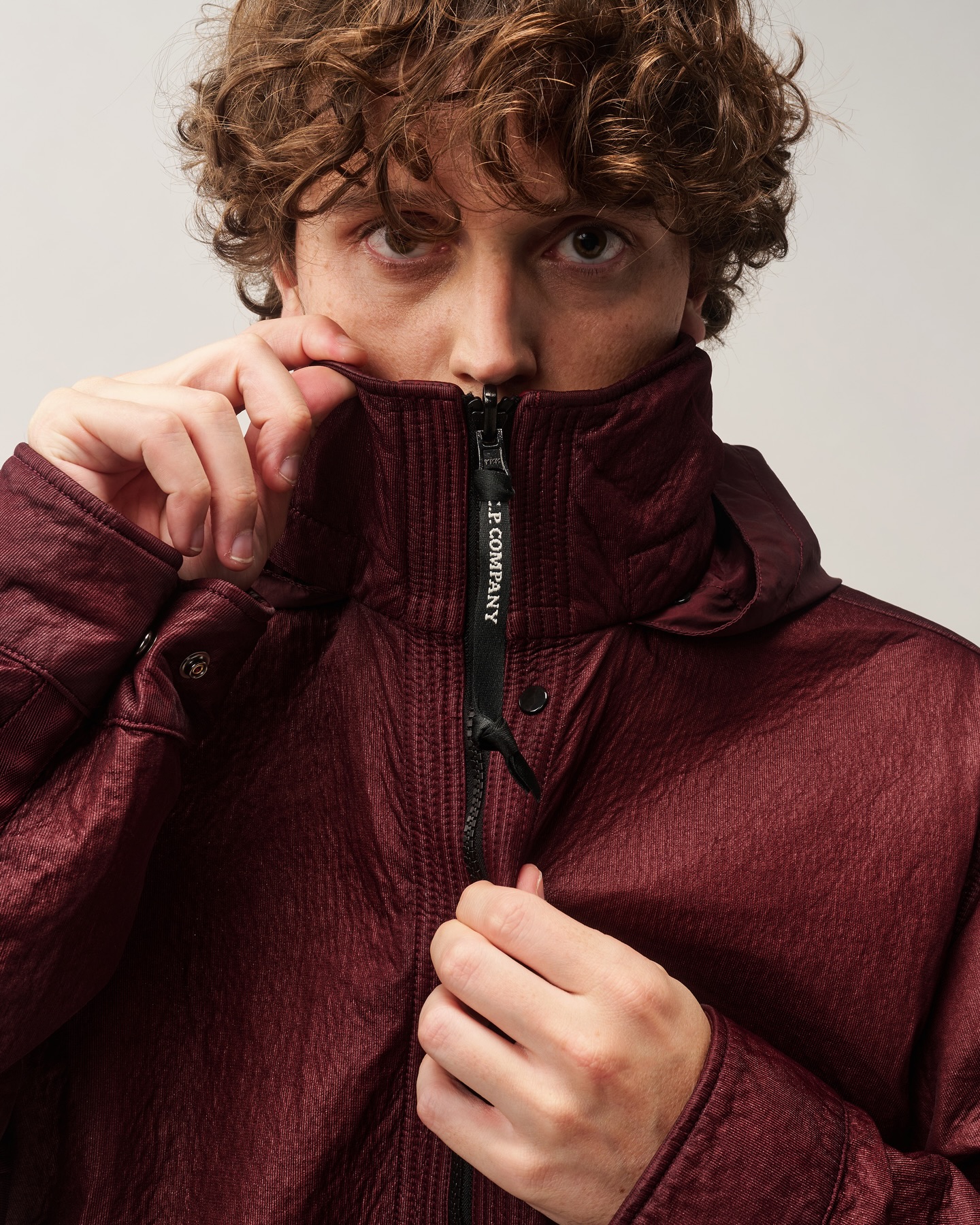
C.P. Company's Bi-Face jacket, part of the FW026 collection, reverses a light catching nylon mesh into a crinkled, matte nylon felt within one seam. The piece extends a fabric first design philosophy C.P. Company has run since Massimo Osti founded the brand in Bologna in 1971.
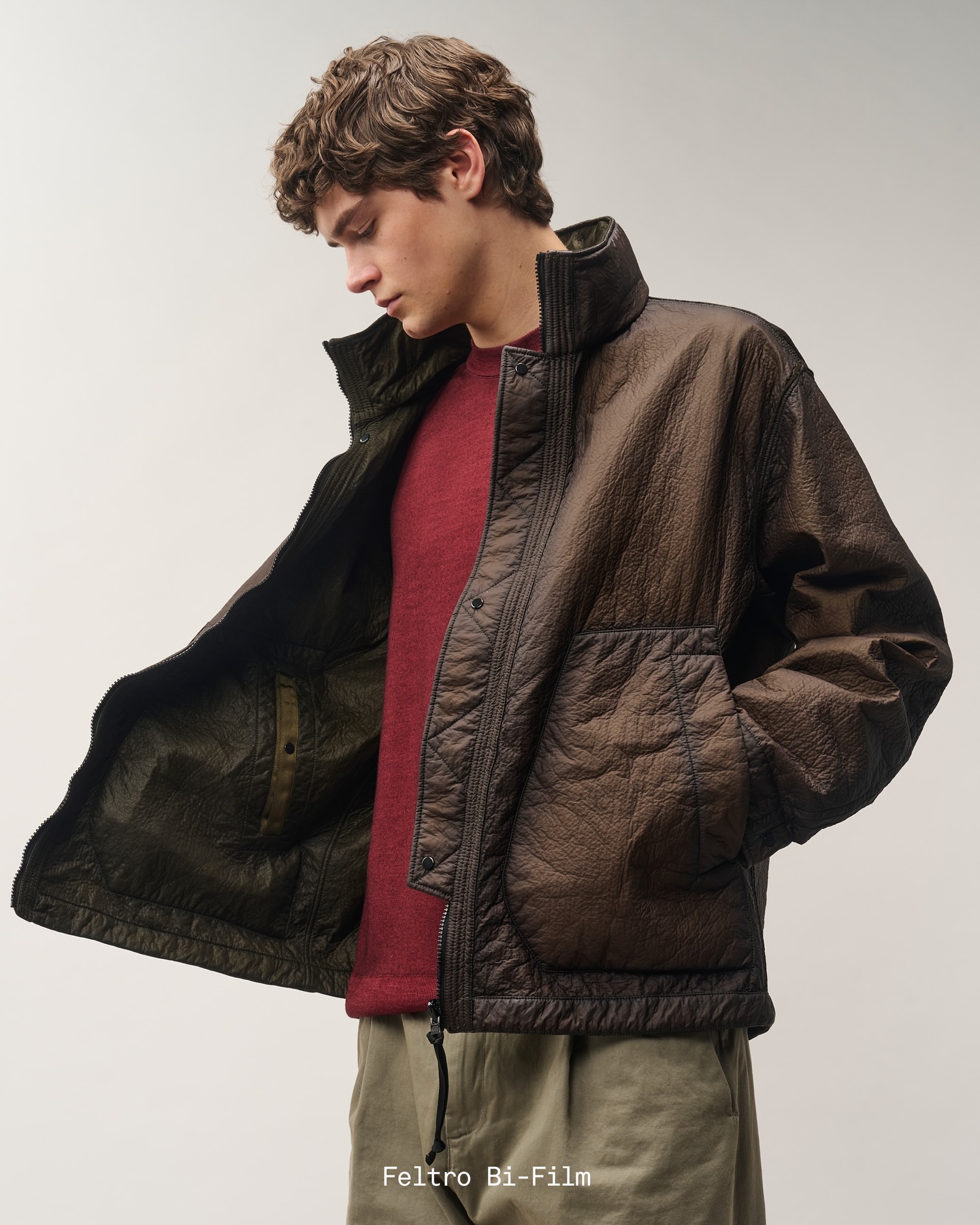
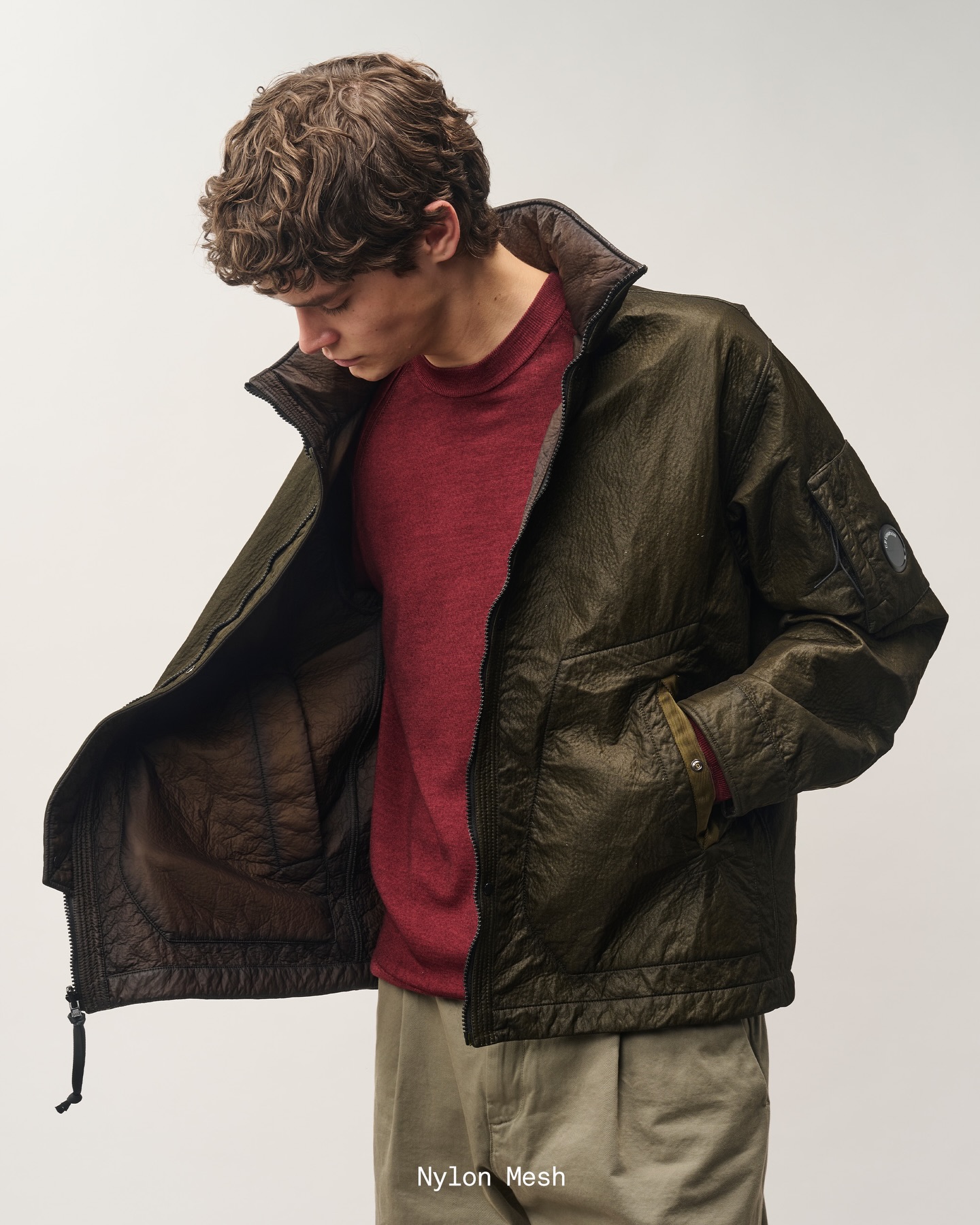
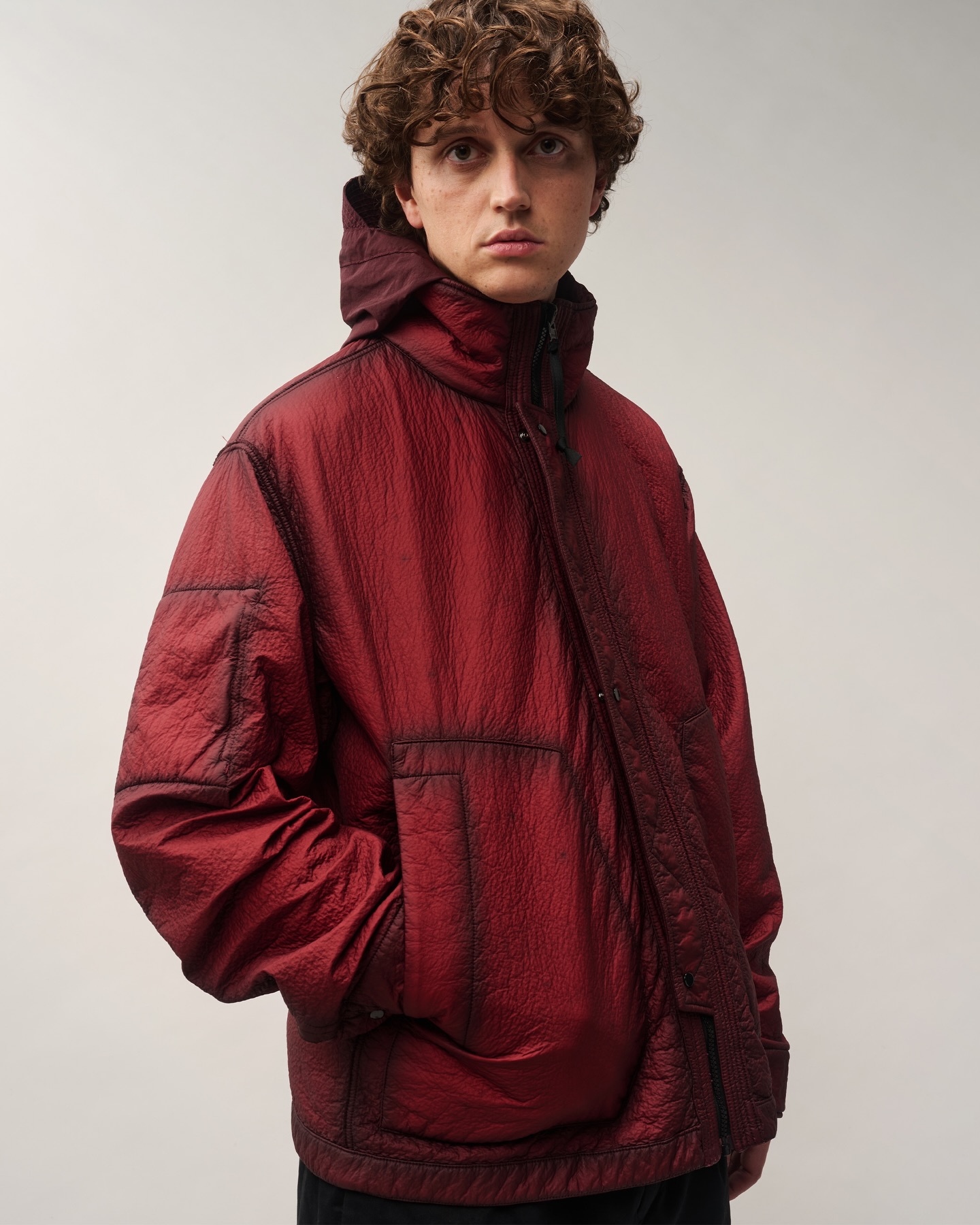
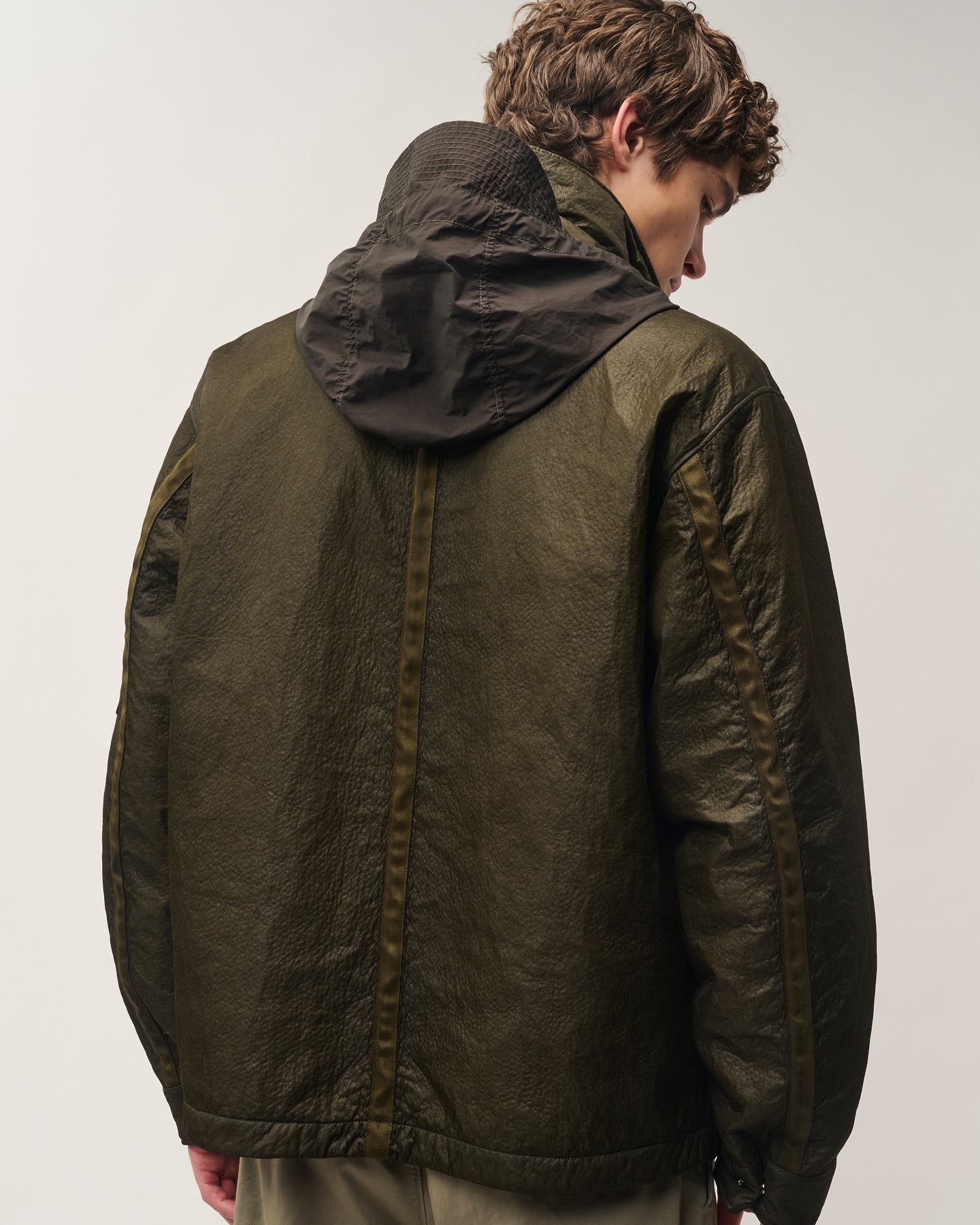
Key Points
- Bi-Face bonds light catching nylon mesh on one face to crinkled matte felt on the reverse in one seam.
- C.P. Company built its fabric first approach in 1988 with Massimo Osti's Mille Miglia Goggle jacket.
- Sibling jacket Gore G-Type retails from 969.50 euros to 1,892 dollars, C.P. Company's usual reversible bracket.
C.P. Company's Bi-Face jacket does not pick a side. One surface is a light catching nylon mesh, the reverse a crinkled, matte nylon felt, and the FW026 collection is betting a jacket earns its price by solving two problems instead of one. That argument, what the brand calls engineered adaptability, is not a style trick tucked inside a reversible zipper.
It runs through Bi-Face's construction, and it runs through more than fifty years of C.P. Company treating fabric science, not marketing copy, as the actual product.
Two Fabrics Share One Seam Allowance
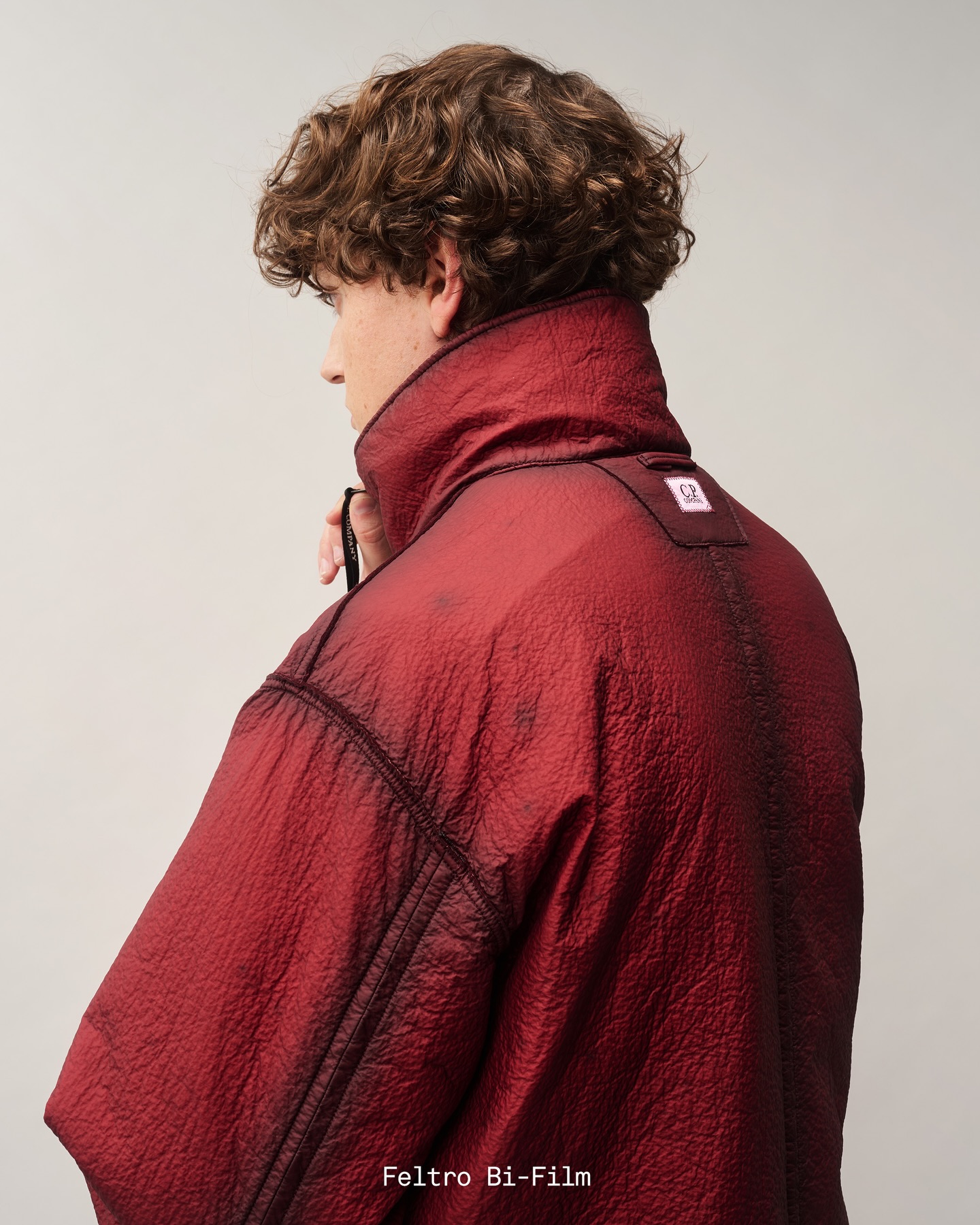
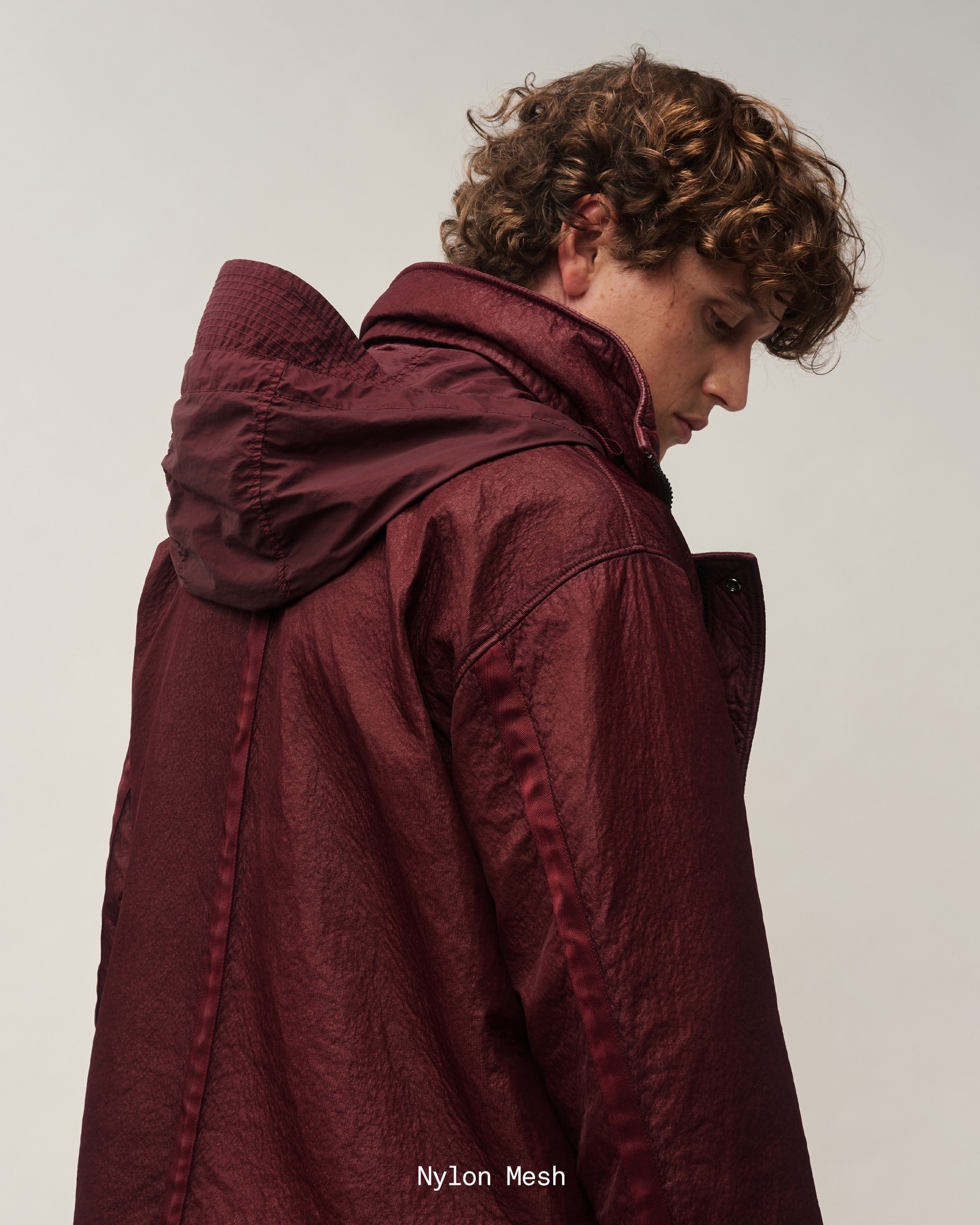
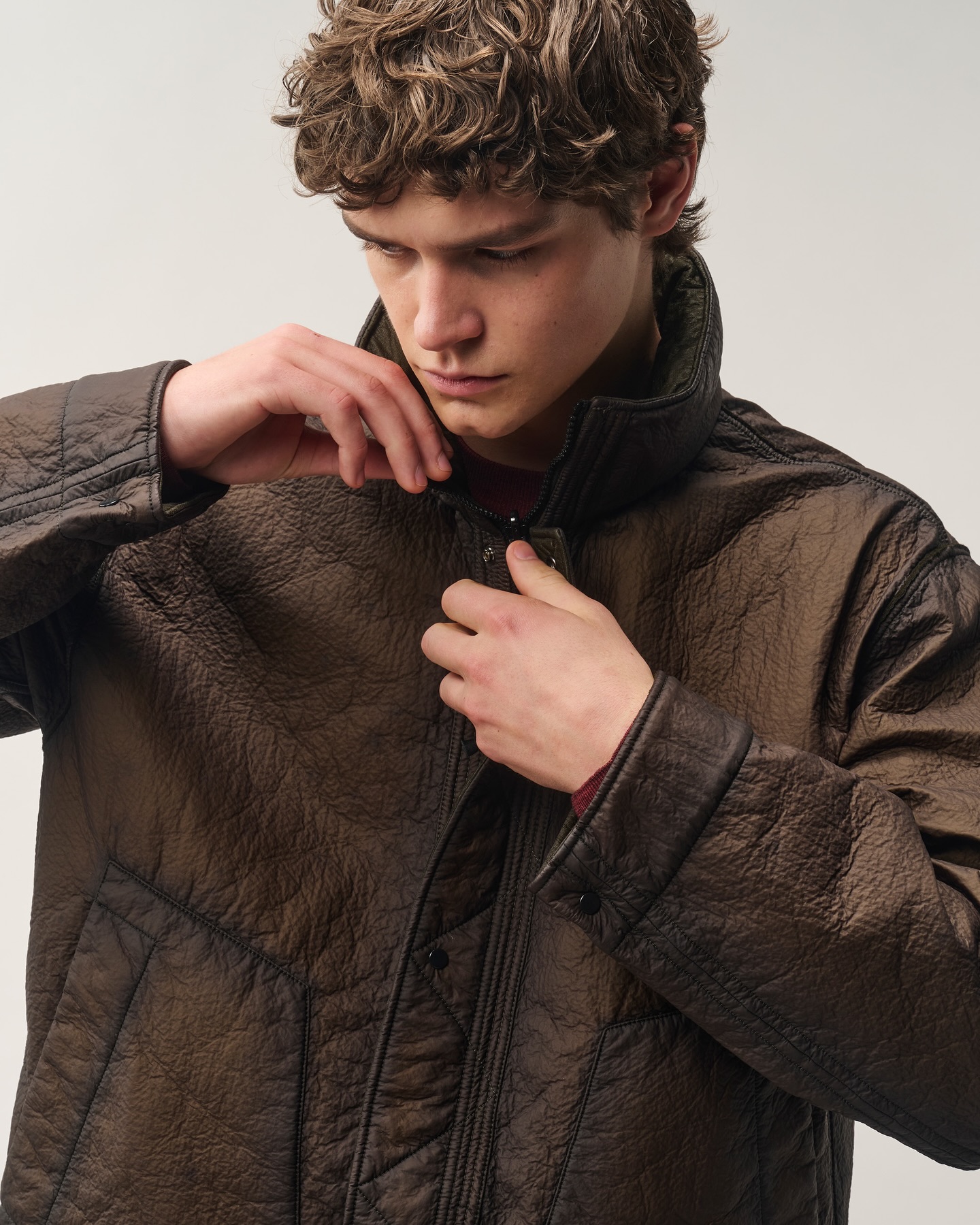
The Bi-Face jacket bonds two distinct nylon finishes into a single reversible shell rather than pairing a shell with a separate liner. One face is a light catching nylon mesh, its open weave built to reflect light in motion and read almost metallic under a streetlamp. The reverse is a crinkled, matte nylon felt, dry to the touch and textured like bonded fleece, built for a jacket that wants to disappear into daylight instead of catching it. C.P. Company presents the pairing as contrasting identities, expressed through vibrant seasonal colours rather than one safe neutral running both faces.
Finally Offline has tracked this same material honesty this month in Miu Miu's cotton drill cowboy hat, where the house swapped felt for a woven cotton twill specifically because the shape needed to survive rain, not just photograph well. C.P. Company is running the same math on a jacket that has to survive two moods in one closet instead of one.
Massimo Osti Never Trusted One Fabric to Do the Job
C.P. Company was built in Bologna in 1971 by Massimo Osti on the idea that a garment's fabric, not its cut, should carry the innovation. His clearest early proof of that arrived in 1988 with the Goggle jacket, engineered for the open cockpit drivers and navigators of the Mille Miglia endurance race, with two tinted lenses built directly into the hood so a driver never had to reach for separate eyewear at speed.
Osti based the hood on a protective design he found in Japanese civil defense gear, then finished the jacket with a cold garment dyeing process chosen specifically so it would not damage the suede inserts underneath. That willingness to solve a wearer's actual problem before worrying about how the jacket photographed is the same logic running through Bi-Face nearly four decades later. The names changed. The habit of engineering the fabric first did not.
Adaptability Was Already the Product, Not a Bonus
C.P. Company sold adaptability as the actual product before Bi-Face existed, pairing a three layer Windstopper membrane from Gore Tex Labs with a garment dyed reversible shell in its Gore G-Type jacket. Bi-Face pushes that same idea further using two nylon finishes instead of a membrane, so reversing the jacket changes texture and light response rather than just color.
The Gore G-Type sibling jacket already retails from about 969.50 euros at Boozt to upward of 1,892 dollars through other stockists for the same three layer construction, so Bi-Face landing in a comparable four figure bracket would track with what C.P. Company already charges for reversible technical outerwear built this way. The brand's Metropolis Series carries a related fabric, Chrome-R, spun from regenerated multifilament nylon with a strength to weight ratio the brand claims runs eight times that of industrial steel, certified under the Global Recycled Standard and engineered specifically to hold garment dye. Salomon is running a parallel bet in footwear with its XT Icons capsule, stripping four trail silhouettes down to one restrained palette so the construction argument has to carry the shoe without a collaborator's name attached. C.P. Company is making the identical bet on a jacket, betting the fabric science sells itself once a customer actually turns the garment inside out.
Forget the Terrace Cred. Weigh the Fabric.
C.P. Company earns the reversible premium on Bi-Face because the two faces solve two different problems, not because the brand can lean on football terrace nostalgia. A nylon mesh side built to catch light in a city at night and a crinkled felt side built to read as an entirely different garment in daylight are two functional decisions bonded into one seam, not a marketing flourish.
That terrace history is real. Oasis wore C.P. Company alongside Stone Island through the Britpop years, and the Italian sports luxe look Liam Gallagher built his silhouette around still shapes how the brand gets discussed decades later. Bi-Face does not need that borrowed credibility. Between a 1988 Goggle jacket engineered for the Mille Miglia and a 2026 jacket engineered to be two garments at once, C.P. Company is still selling the same argument, that the fabric decides what the jacket is worth. The FW026 collection, including Bi-Face, is live now at cpcompany.com and in C.P. Company's flagship stores.
Related: C.P. COMPANY DRESSES FOUR WASHINGTON SQUARE CHESS PLAYERS.
Related: PALACE REUSES ITS EMOJI A SECOND TIME FOR GORE-TEX.
Frequently Asked Questions
What is the C.P. Company Bi-Face jacket?
The Bi-Face jacket is a reversible piece from C.P. Company's FW026 collection that bonds a light catching nylon mesh on one face to a crinkled, matte nylon felt on the other.
What fabrics does the Bi-Face jacket use on each side?
One side is a light catching nylon mesh with a subtle sheen, and the reverse is a crinkled, matte nylon felt with a dry, textured hand.
When was C.P. Company founded and by whom?
C.P. Company was founded in Bologna in 1971 by Massimo Osti, who built the brand around fabric innovation rather than silhouette.
What was C.P. Company's Goggle jacket?
The Goggle jacket, introduced in 1988, was engineered for Mille Miglia endurance race drivers and built two tinted lenses directly into the hood so drivers did not need separate eyewear.
How much does a C.P. Company reversible jacket typically cost?
The brand's Gore G-Type reversible jacket, a related technical piece, retails from about 969.50 euros at Boozt to roughly 1,892 dollars at other stockists.
What is C.P. Company's Chrome-R fabric?
Chrome-R is a regenerated multifilament nylon used in the brand's Metropolis Series, certified under the Global Recycled Standard and engineered specifically to hold garment dye.
Where can someone buy the C.P. Company Bi-Face jacket?
The FW026 collection, including the Bi-Face jacket, is available at cpcompany.com and in C.P. Company's flagship stores.
Is C.P. Company connected to Britpop fashion?
Yes, Oasis wore C.P. Company alongside Stone Island through the Britpop years, a connection that still shapes how the brand is discussed today.
Topics: italian-fashion, salomon, c.p. company, stone island, miu-miu, massimo-osti, cp-company, gore-g-type, goggle-jacket, c-p-company, reversible-jacket, bi-face, miu miu, metropolis, metropolis-series, technical-outerwear, stone-island, fw026-collection