CHATGPT WORK LAUNCHES FREE WITH GPT 5.6 AND CODEX BUILT IN
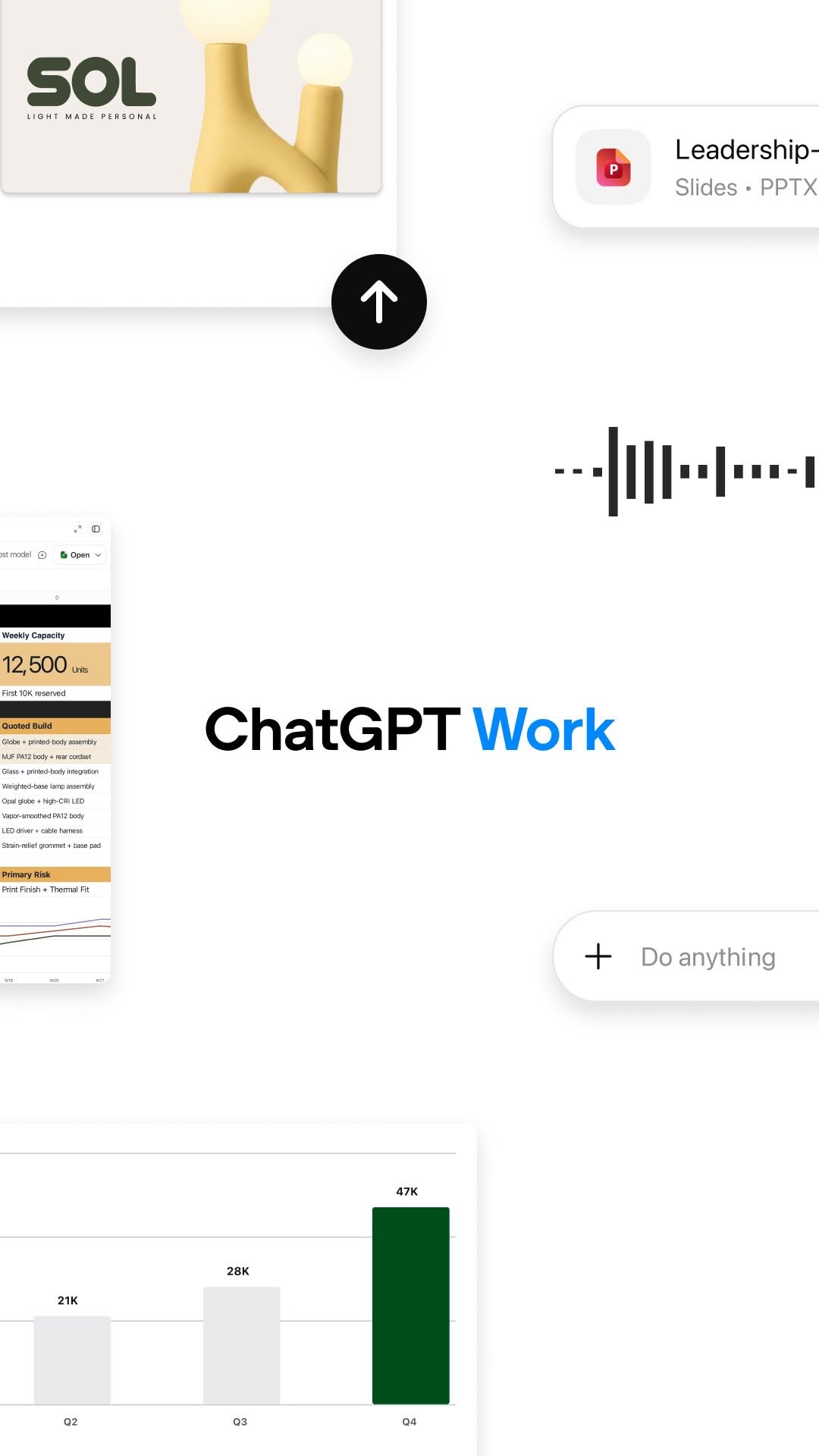
OpenAI launched ChatGPT Work on July 9, 2026, merging its Codex coding agent into the ChatGPT desktop app for Mac and Windows and making the combined app free on every plan. The launch also made GPT 5.6 public, splitting the model into three priced tiers: Sol at 5 dollars input and 30 dollars output per million tokens, Terra at 2.50 and 15, and Luna at 1 dollar and 6. Free and Go accounts are limited to the Terra tier, while Sol requires a Plus subscription or higher.
Key Points
- ChatGPT Work merges Codex and Chat into one free desktop app on Mac and Windows today.
- GPT 5.6 splits into three tiers: Sol at 5 dollars, Terra at 2.50, Luna at 1 dollar per million tokens.
- Free and Go accounts get Terra only. Sol, the flagship tier, needs a 20 dollar Plus plan or higher.
I opened the new ChatGPT desktop app at 11am ET and the first thing I noticed was what was missing. The separate Codex icon in my dock was gone. In its place was one app with three tabs: Chat, Work, and Codex, merged into a single window on both Mac and Windows, free for everyone starting today. That is the actual news. Not another model number. A company deciding that asking a user to juggle two apps to get one job done was a bug, not a feature.
ChatGPT Work is OpenAI's new agent, built on Codex and the newly public GPT 5.6, and it is designed to run a whole task instead of answering one prompt at a time. You describe the outcome. You do not outline the steps. Say you want a deck built from three files sitting in your Drive folder, and Work pulls the context, drafts the analysis, and keeps working while you do something else. That is a real behavior change from the copy paste loop most people still run with ChatGPT, where you feed it one chunk at a time and stitch the output together yourself.
GPT 5.6 Is Not One Model. It Is Three Prices.
GPT 5.6 replaces the old single number with three tiers that OpenAI calls Sol, Terra and Luna, and each one is priced differently per million tokens. Sol is the flagship at 5 dollars input and 30 dollars output, the only tier with max reasoning effort unlocked. Terra runs 2.50 and 15, built to match the older GPT 5.5 at half the cost. Luna is the bargain tier at 1 dollar and 6 dollars output, meant for high volume tasks where speed matters more than depth.
The naming choice is the quiet feature nobody is demoing. A version number forces a launch event. A tier name lets OpenAI improve Terra or Luna on its own schedule without you noticing a new release, the same trick Apple pulled when it stopped announcing every A series chip revision by name. Sol, Terra and Luna can each get better independently, and the improvement just shows up in your existing chat window. That is a lock in mechanic disguised as a naming convention.
Free Users Get the App. Not the Brain.
Free and Go accounts only get Terra, the middle tier, when they use ChatGPT Work or Codex. Plus, Pro, Business, Enterprise and Edu accounts can pick between Sol, Terra and Luna and set the reasoning effort themselves, and they get Work on web and mobile the same day as the desktop rollout, not weeks later. So the desktop merger is free and global today, exactly as promised in the launch post, but the model doing your reasoning depends entirely on what you pay. That is the incentive map in one sentence. The habit forming part, the single app that plans your whole workflow, ships to everyone. The part that actually thinks the hardest, Sol, stays behind the 20 dollar Plus wall.
This is not new behavior from OpenAI. When it folded Voice Mode into GPT Live in July, the pattern was the same: widen the free funnel, meter the frontier model. Give away the interface. Charge for the intelligence.
Codex Stopped Being a Separate App Today
The Codex app is gone as a standalone product, absorbed into ChatGPT alongside Chat and Work, and every plan tier including Free can now open it from the same window. That matters more than it sounds. Codex was OpenAI's coding agent, previously walled off from the consumer app, which meant casual users never touched it and developers had to context switch between two logins. One app removes that friction entirely, and it puts a coding agent in front of people who were never going to install a separate developer tool.
Compare that to how Meta handled its own AI hardware push with Ray-Ban Meta smart glasses: different device, same logic. Bundle the AI feature into something the user already has open, rather than asking them to adopt a new destination. OpenAI just did the software version of that inside its own app.
Try It, Skip Sol for Now
Download the app if you already use ChatGPT for real work. The Work tab genuinely changes the task from prompt and wait to describe and walk away, and that is worth learning even on Terra. Skip the Plus upgrade to Sol unless a task is actually failing on Terra first. At 5 dollars input and 30 dollars output per million tokens, Sol is priced for people running production workloads, not for someone who wants a deck built once a week. The free tier already ships the habit change. The 20 dollar tier just ships more horsepower behind it, and most days you will not notice the difference until the task gets hard enough to need it.
Related: GPT 6 ASTRA CROSSED A CYBER RED LINE ON LAUNCH DAY.
Related: Meta Launches Muse AI Agent: App, Price, What It Does.
Frequently Asked Questions
What is ChatGPT Work?
ChatGPT Work is OpenAI's new agent built on Codex and GPT 5.6 that plans and executes multi step tasks, like building a deck or report, from a single description instead of step by step prompts.
How much does ChatGPT Work cost?
The merged ChatGPT desktop app with Work and Codex is free for everyone on Mac and Windows. Which GPT 5.6 tier you get depends on your plan, and the flagship Sol tier is limited to Plus, Pro, Business, Enterprise and Edu accounts.
What is the difference between GPT 5.6 Sol, Terra and Luna?
Sol is the flagship tier priced at 5 dollars input and 30 dollars output per million tokens, Terra is a balanced tier at 2.50 and 15 dollars, and Luna is the efficiency tier at 1 dollar and 6 dollars, built for high volume tasks.
Is GPT 5.6 free to use?
Free and Go accounts can use GPT 5.6 through the Terra tier only inside ChatGPT Work and Codex. Sol and Luna require a Plus plan or higher, where users can also set the reasoning effort.
What happened to the Codex app?
OpenAI folded the standalone Codex app into the ChatGPT desktop app, so Chat, Work and Codex now live in one window on every plan, including Free.
When did ChatGPT Work launch?
ChatGPT Work launched globally on the ChatGPT desktop app for Mac and Windows on July 9, 2026, with Plus, Pro, Business, Enterprise and Edu accounts getting the same experience on web and mobile the same day.
Can I use ChatGPT Work on mobile?
Yes, Plus, Pro, Business, Enterprise and Edu users get ChatGPT Work on web and mobile at launch, while the desktop app is open to every plan including Free.
Does ChatGPT Work replace Codex for developers?
Codex still exists as a tab inside the merged app rather than a separate download, so developers keep the same coding agent without switching apps or logins.
Topics: ray-ban, ray-ban-meta, ray-ban meta, chatgpt-work, meta, gpt-5-6, openai, productivity-tools, artificial-intelligence, ai-pricing, codex, ai-agents, apple, chatgpt