CASA AV ROTATES 9 DEGREES TO CATCH PICO DE ORIZABA
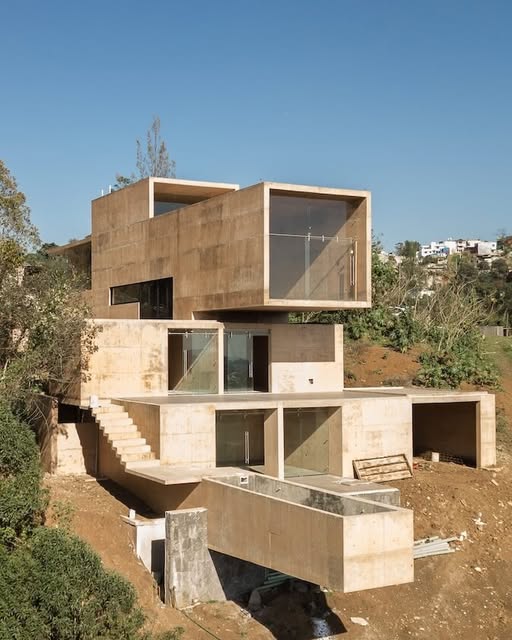
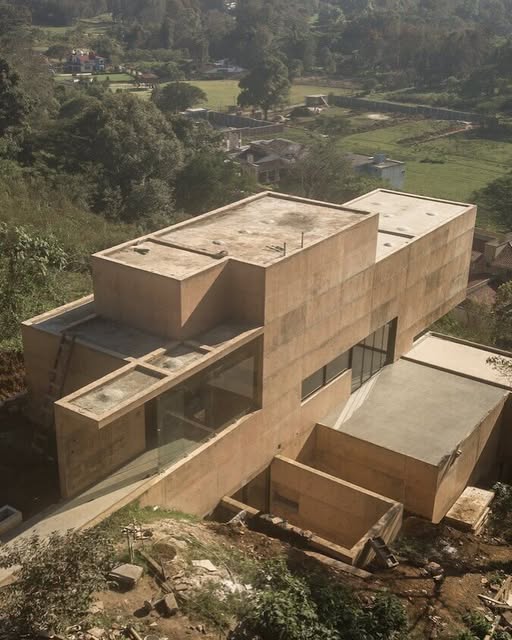
Casa AV by Rafael Pardo sits in Xalapa, rotated 9 degrees off the lot to catch Pico de Orizaba. Concrete, steel, glass. 80 percent green space.
Key Points
- Casa AV is rotated nine degrees off its lot lines to align with Pico de Orizaba; the volcano determines the building position.
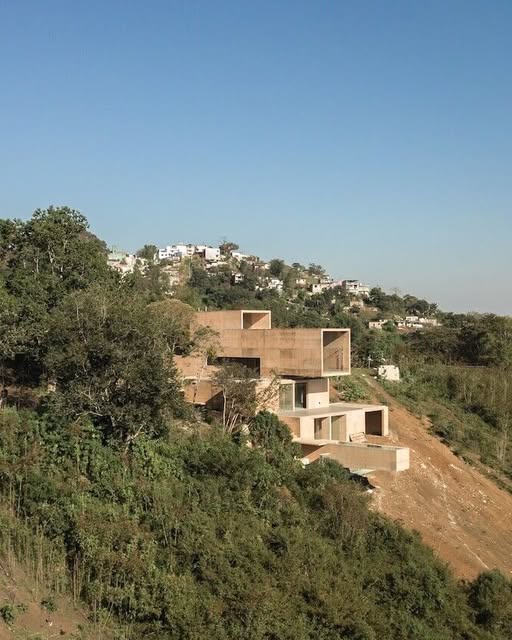
- Rafael Pardo built on less than 20 percent of the 950 square meter plot; the landscape, not the structure, is the primary subject.
- Concrete, steel, and glass do distinct structural work without overlap; material honesty applied to a hillside in Veracruz.
Nine degrees. That is the rotation.
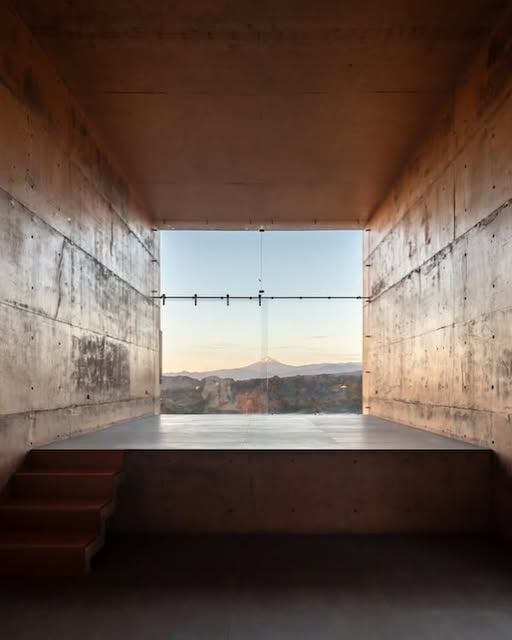
Rafael Pardo placed Casa AV on a hillside west of Xalapa, Mexico on a 950 square meter plot, then rotated the building nine degrees off the survey lines. Not for the view in general. For one specific point on the horizon: Pico de Orizaba, at 5,636 meters the third highest peak in North America. The house was not placed. It was aimed.
The building covers approximately 20 percent of the site. The architects left roughly 80 percent as green space. These two decisions explain everything.
Rafael Pardo Called It a Periscope. That Is Accurate.
A periscope does not show you the whole view. It shows you one precise point, hidden from every other angle, revealed by deliberate positioning. Rafael Pardo used that word to describe Casa AV, and the word is doing real work here.
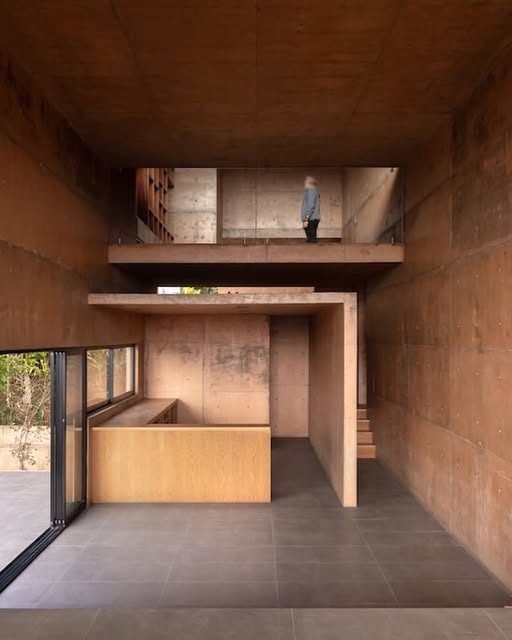
The house is not designed to command the landscape. It is designed to find one thing in it. Step inside and the sequence confirms the logic: compressed entry, warm concrete rooms that build pressure, then openings that release the view straight to the volcano. You do not arrive at Pico de Orizaba. The house delivers it to you at the right moment, at the right distance, in the right frame.
950 Square Meters. Nine Degrees. Two Volcanoes.
The primary orientation targets Pico de Orizaba. The lateral facade addresses Cofre de Perote, a secondary volcano at 4,282 meters that anchors the side view. The building reads less like an object dropped onto a slope and more like an instrument calibrated to two fixed points in space.
That calibration cost something. Rotating a building off its lot lines adds coordination complexity to every structural decision. The concrete pours, the steel connections, the glass spans; all of them respond to a geometry that does not align with the survey. A rotation of nine degrees is not an accident. It is a commitment made early and honored through every subsequent technical decision on the site.
Concrete, Steel, and Glass Without Apology
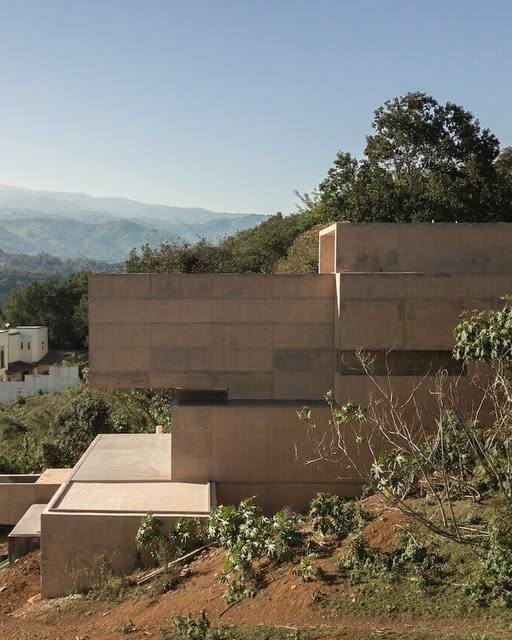
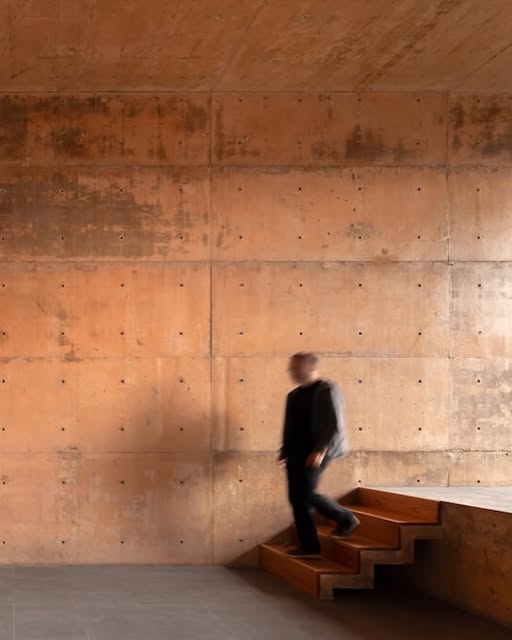
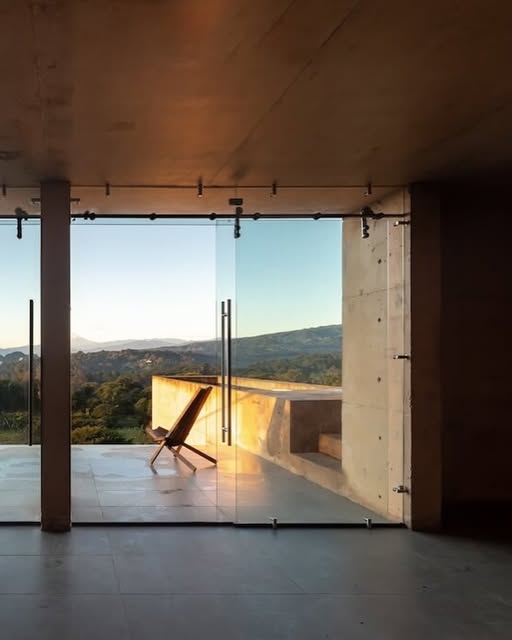
Casa AV uses three materials. Concrete for structure and thermal mass. Steel for span and connection. Glass for the moments where the boundary between inside and landscape needs to dissolve. This is not a material palette with ambitions beyond those three things. That is the point.
Xalapa sits at roughly 1,400 meters elevation with a subtropical highland climate: warm days, cool nights, significant rainfall. Thermal mass is not a philosophical choice here. It is an environmental response. Concrete holds the day's heat and releases it slowly, which is exactly what you want at elevation when the temperature drops after dark.
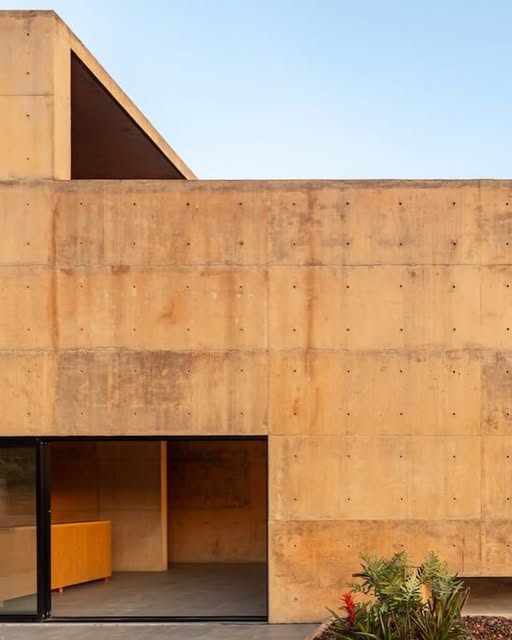
Concrete reads warm here, according to the project documentation, not cold. That outcome requires specific aggregate selection and formwork choice. It does not happen automatically. Paulo Mendes da Rocha's Casa Millán from 1974 made the same argument on a São Paulo slope: that concrete is not an industrial material pretending to be domestic, it is a domestic material that most designers do not know how to use. Rafael Pardo appears to know how to use it.
The structural material does the structural work. The glass does not pretend to be a wall. The concrete does not pretend to be stone.
The Site Is the Client
Leaving 80 percent of a 950 square meter plot as green space is not a small decision. It means the building is sized by the landscape requirements, not the program ambitions. Bofill Taller de Arquitectura's approach to hillside sites operated from a similar premise: the site is not a host for the building; the building is a guest on the site.
Casa AV is a periscope, not a monument. It finds one point on the horizon, holds that position, and leaves the rest of the hill to the hill. The photographs by Naser Barzani, Onnis Luque, and Edmund Summer document this without argument: the building is smaller than the view it was built to frame.
The spec sheet for Casa AV is simple. Nine degrees. Concrete, steel, glass. Three materials, two volcanoes, one building that knows what it is there to do.
Frequently Asked Questions
Where is Casa AV located?
Casa AV is located on a hillside west of Xalapa, in Veracruz state, Mexico. The site is a 950 square meter plot with sightlines to Pico de Orizaba and Cofre de Perote.
Who designed Casa AV?
Casa AV was designed by architect Rafael Pardo, operating under the studio @arq.rafaelpardo. The project was documented by photographers Naser Barzani, Onnis Luque, and Edmund Summer.
Why is Casa AV rotated nine degrees off the lot lines?
The building is rotated nine degrees to align the primary facade directly with Pico de Orizaba on the horizon. The rotation is driven by the exact position of the volcano, not by the property survey grid.
What materials were used to build Casa AV?
Casa AV is built from concrete, steel, and glass. The concrete provides structure and thermal mass suited to Xalapa altitude. Steel handles the spanning elements. Glass dissolves the boundary between interior and landscape.
What is Pico de Orizaba and why does it matter to this design?
Pico de Orizaba, also called Citlaltepetl, is a dormant volcano at 5,636 meters, the third highest peak in North America. Casa AV was rotated and positioned specifically to frame this peak from the primary living spaces.
How much of the Casa AV site is built on?
The building covers approximately 20 percent of the 950 square meter plot. Rafael Pardo left roughly 80 percent of the site as green space, keeping the landscape as the primary subject of the project.
Topics: focus-56-49