BOILER ROOM POINTED A CAMERA AT THE BACK WALL AND BUILT THE MOST IMPORTANT MUSIC PLATFORM OF THE DECADE
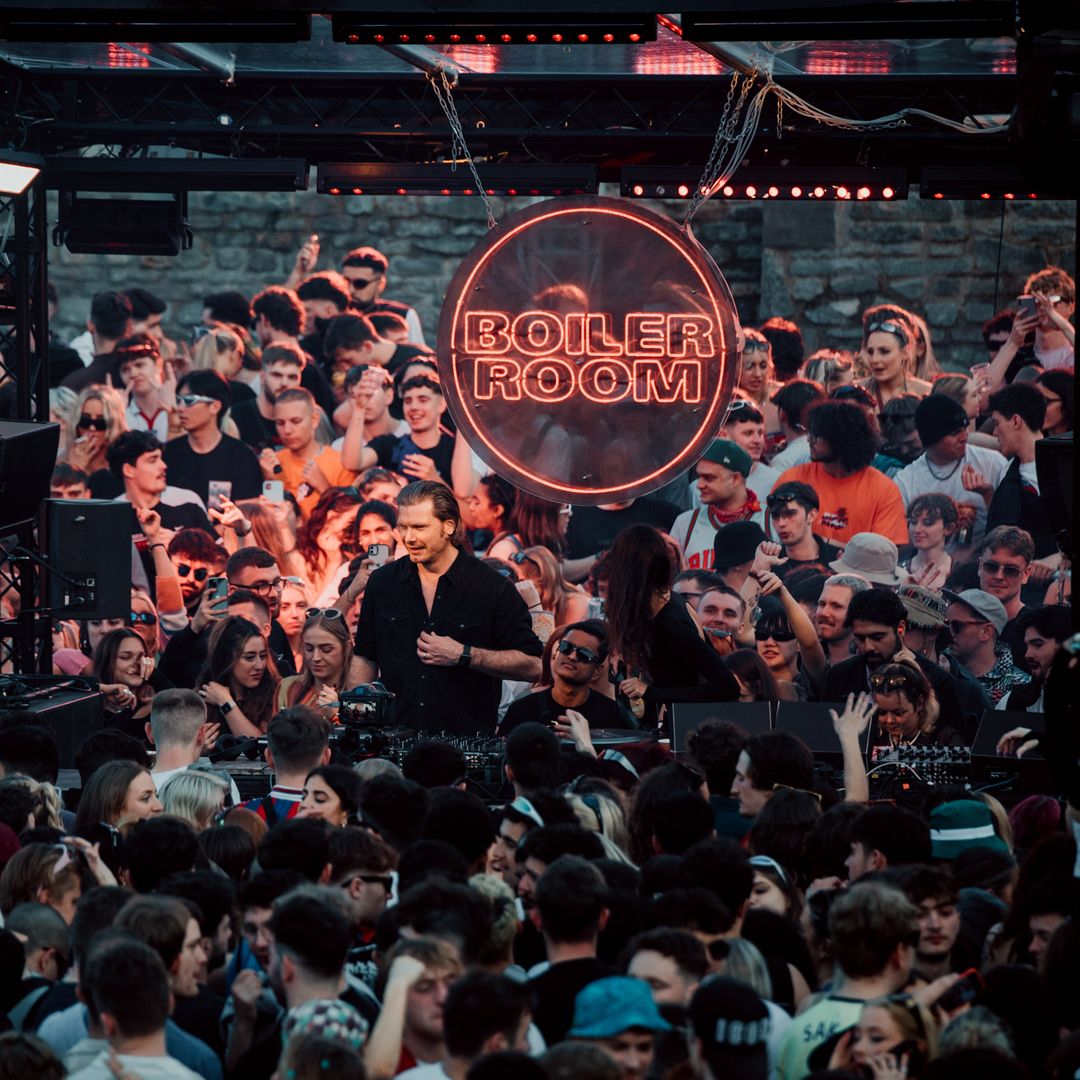
Boiler Room is a London-founded music streaming platform known for its fixed back-wall camera format. Launched in 2010, it reached 1 billion YouTube views by streaming underground DJ sets worldwide without becoming a label or traditional streaming service.


Key Points
- Boiler Room's fixed back-wall camera was a practical budget decision that accidentally created the most recognizable visual format in underground music
- The Kanye West 2013 set proved intimacy at scale was possible: 200 people in a room, millions watching, no production
- Boiler Room kept underground credibility through brand sponsorships by holding editorial control over bookings and never changing the visual format
The Back Wall of a Warehouse in London
In 2010, a DJ set up equipment in a small East London apartment and streamed the set to the internet with a single fixed camera pointed at the back wall. There was no stage, no lighting rig, no production budget. There were maybe 40 people in the room. Within a few years, Boiler Room had streamed sets from Daft Punk, A Rocky, Kanye West, Four Tet, and Aphex Twin. The fixed camera looking at the back wall of the crowd became the most recognizable visual format in underground music.
The brand is now 15 years old, has streamed from over 200 cities, and has accumulated more than 1 billion YouTube views. It did all of this without becoming a music label, a festival promoter, or a streaming service. It stayed a camera in a room.
How It Started
Thristian Richards and Blaise Bellville launched Boiler Room in London in 2010. The original concept was unglamorous: stream DJ sets live online so people who could not get into the venue could watch. The fixed camera angle, which would become iconic, was a practical choice. No camera operators, no cuts, no production. Just a feed.
The format captured something that polished festival coverage could not: the actual social physics of underground music. You could see who was in the room. You could see the crowd react in real time. The back-wall camera turned the audience into part of the performance, and it turned watching a Boiler Room stream into a form of cultural information. Who was there told you as much as who was playing.
Early sets by Actress, Burial collaborators, and figures from London's then-thriving bass music scene gave Boiler Room immediate credibility with the audience that mattered most. Once that credibility was established, it attracted artists who wanted the specific kind of documentation that Boiler Room provided.
The Global Expansion
Boiler Room moved from London to New York, Berlin, Los Angeles, Tokyo, and eventually everywhere. The formula scaled because it required almost nothing to execute locally: a venue, a DJ, a camera, a stream. The production overhead that would have made a traditional media company expensive to replicate was simply absent.
Berlin sets during the techno boom became some of the most-watched in the archive. New York hip-hop sessions brought in a completely different audience. The platform became genuinely global without becoming generic because the format forced each stream to reflect the actual room it was filmed in.
By 2016, brands including Ballantine's and Red Bull were sponsoring Boiler Room events. This created tension. The audience was deeply suspicious of commercialization. Boiler Room managed it by keeping the visual format unchanged and keeping editorial control over the booking. A sponsored set still looked like every other Boiler Room set. The brand stayed intact because the aesthetic was impossible to fake.
The Cultural Moment That Defined It
The Kanye West Boiler Room set in 2013 was chaotic, controversial, and watched by millions. It was also the clearest example of what made the platform different from everything else. Here was the biggest pop star in the world, in a small room, with a fixed camera and no stage production. The lack of spectacle was the spectacle. The event generated days of conversation not because it was polished but because it was raw in a way that could not be manufactured.
That set, and dozens like it, taught a generation of artists and fans that intimacy at scale was possible. You could have a room of 200 people and an audience of 200,000. The camera was the bridge, and the format was the promise: what you see is what actually happened.
What Boiler Room Sells
Boiler Room does not sell music. It does not take a cut of streams or downloads. What it sells is documentation and access, in that order. The archive is the product. Every set ever streamed is available, and the archive functions as a living map of underground music culture over the past 15 years.
For artists, a Boiler Room set is a credential. It signals a certain kind of seriousness, a certain relationship to the actual culture rather than its commercial surface. For labels and brands, a Boiler Room partnership signals alignment with that culture. The platform has maintained enough independence that the association still means something.
The ticket business, which grew alongside the streams, gives Boiler Room a revenue line that scales with its cultural reach without requiring it to become a traditional promoter. Events sell out. The archive keeps growing. The camera stays fixed.
Boiler Room proved that you could build a global media platform around underground music without compromising either word. It stayed underground. It went global. The fixed camera looking at the back of the crowd became one of the defining visual formats of music culture this century, and it happened because two people in London decided not to move the camera.
Related Reading
- SZA WAITED FIVE YEARS FOR SOS AND OUTSOLD EVERYONE
- Why Spotify Pays Artists So Little and Why It Still Matters
- ALOK BREAKS GUINNESS RECORD WITH 2 MILLION FANS AT CARNIVAL
Frequently Asked Questions
What is Boiler Room?
Boiler Room is a London-based music platform founded in 2010 that streams DJ sets with a fixed camera format. It has over 1 billion YouTube views across streams from 200-plus cities.
Who started Boiler Room?
Boiler Room was founded by Thristian Richards and Blaise Bellville in East London in 2010, initially streaming sets from a small apartment with a single fixed camera.
Why is Boiler Room influential?
Boiler Room maintained credibility by keeping editorial control over bookings and an unchanged visual format through brand sponsorships, ensuring every stream reflected the actual room rather than a produced spectacle.
Topics: boiler-room, youtube, music-platform, spotify, red bull, london, boiler-room-boilerroomtv, streaming, red-bull, boiler room, livestreaming, dj-culture, techno, sza, underground-music, music, electronic-music