BODE FRAMES TOBACCO SILK HORSES WITH SEQUINS
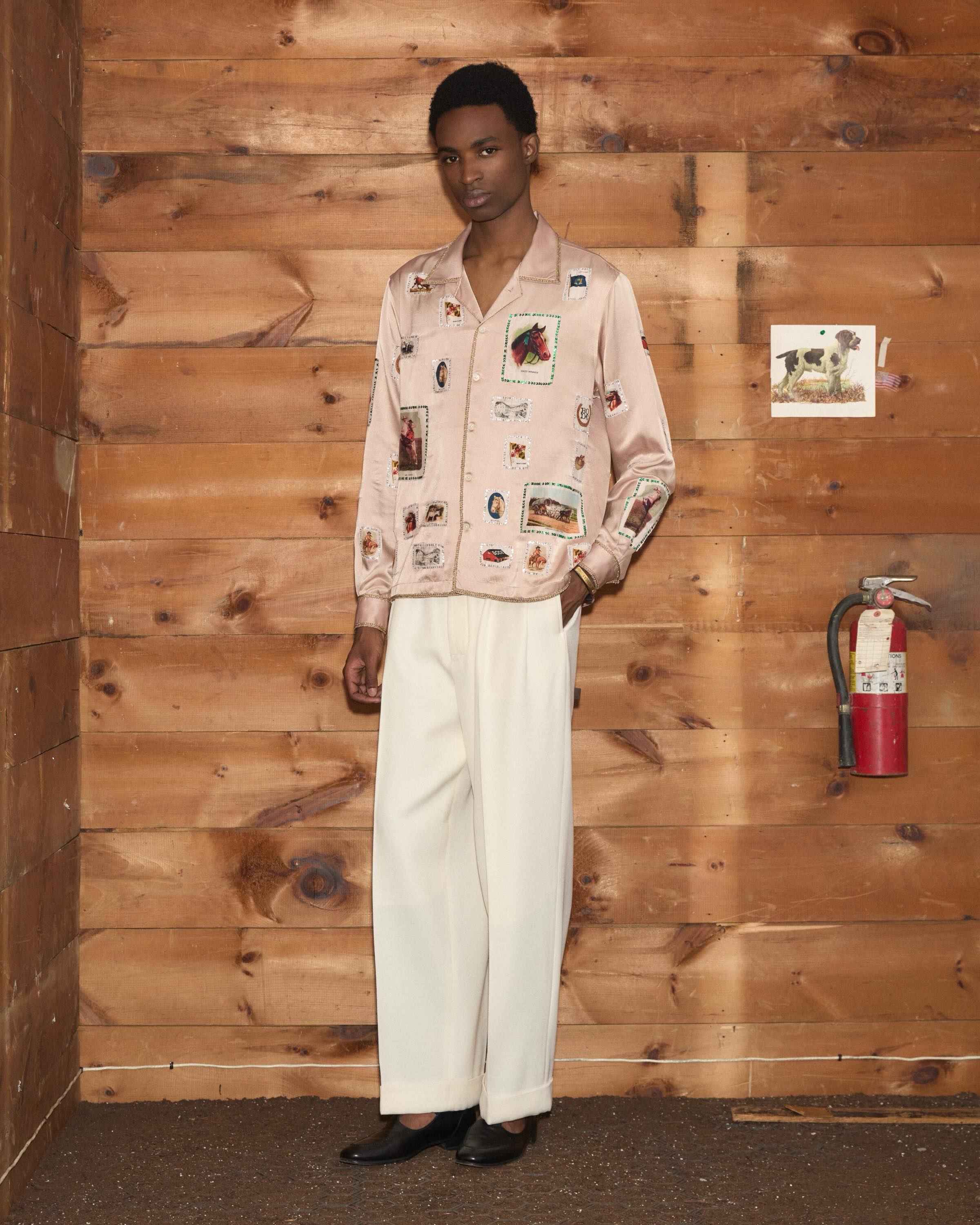
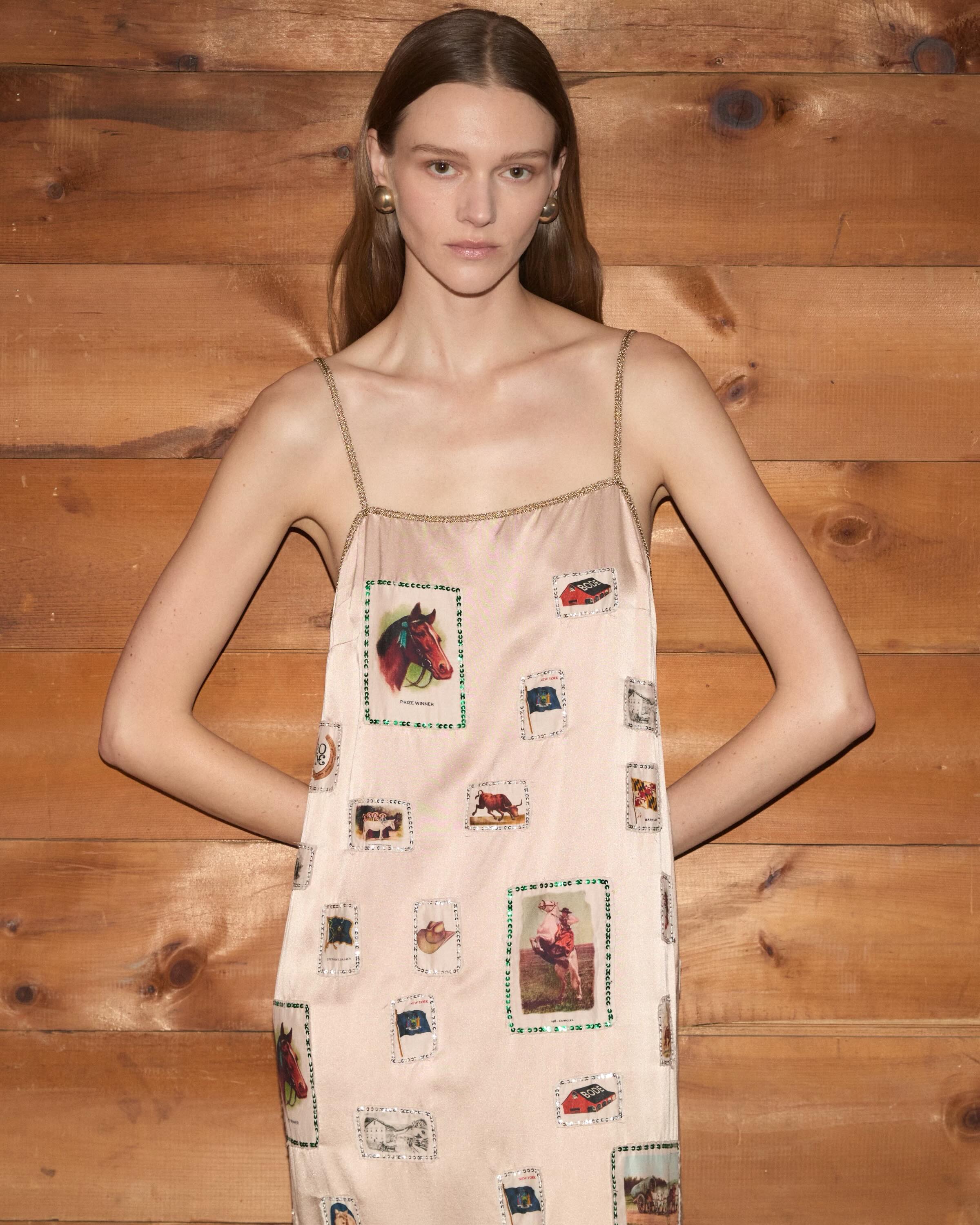
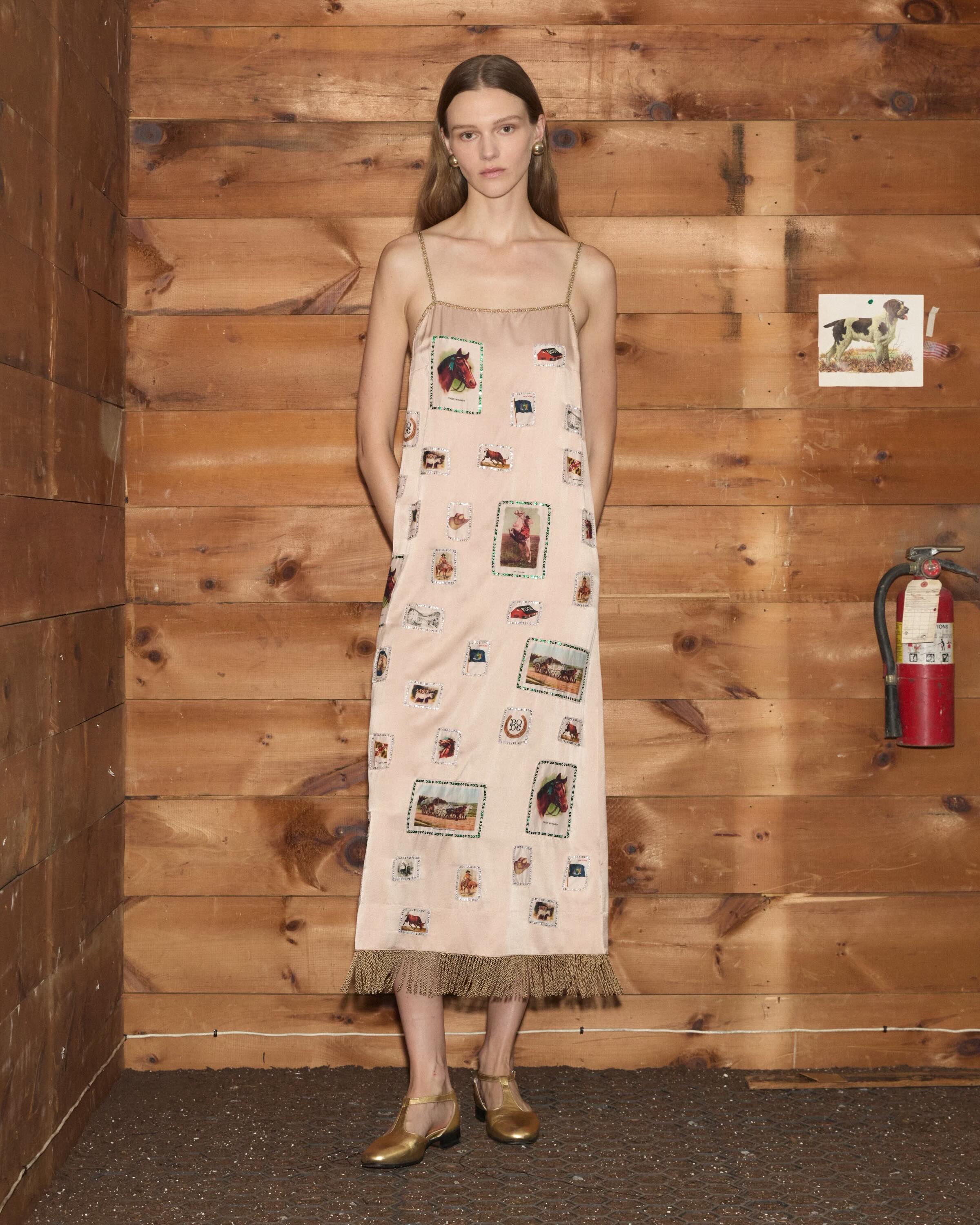
Bode’s Equestrian Patch Dress and Long Sleeve Shirt reproduce nineteenth century tobacco silks on a pink silk ground. Horses, barns, cowboys and cowgirls are appliquéd and framed with sequins, with both pieces announced in stores and online.
Key Points
- The pieces reproduce nineteenth century tobacco silk imagery.
- Sequins frame patches appliquéd onto pink silk.
- The dress is listed at $1,500 and the shirt at $1,400.
Bode Equestrian Patch pieces reproduce nineteenth century tobacco silks on a pink silk ground, with sequins framing horses, barns, cowboys and cowgirls. The dress and long sleeve shirt are available through the brand's stores and website, turning a source once collected for domestic craft into two wearable arrangements.
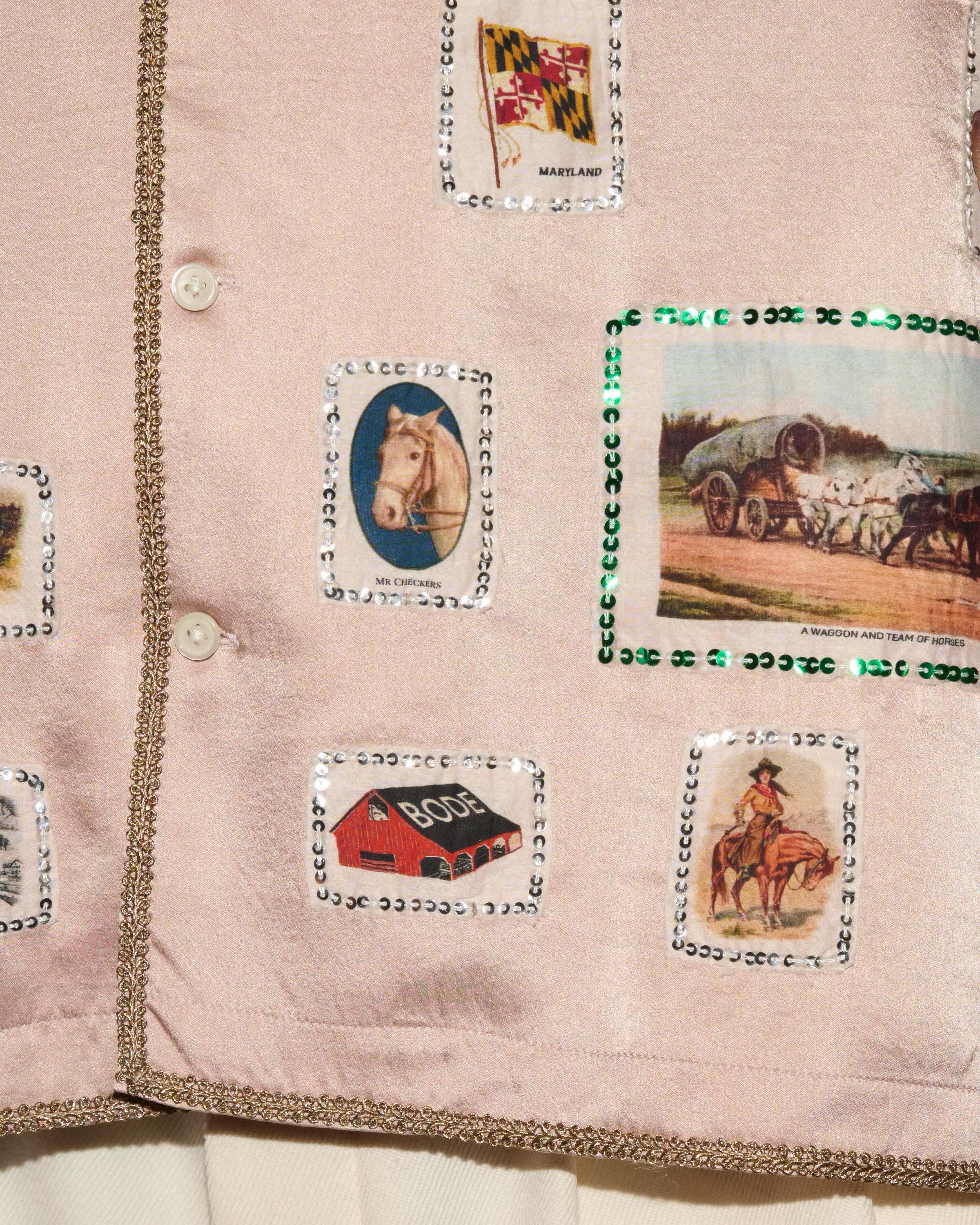
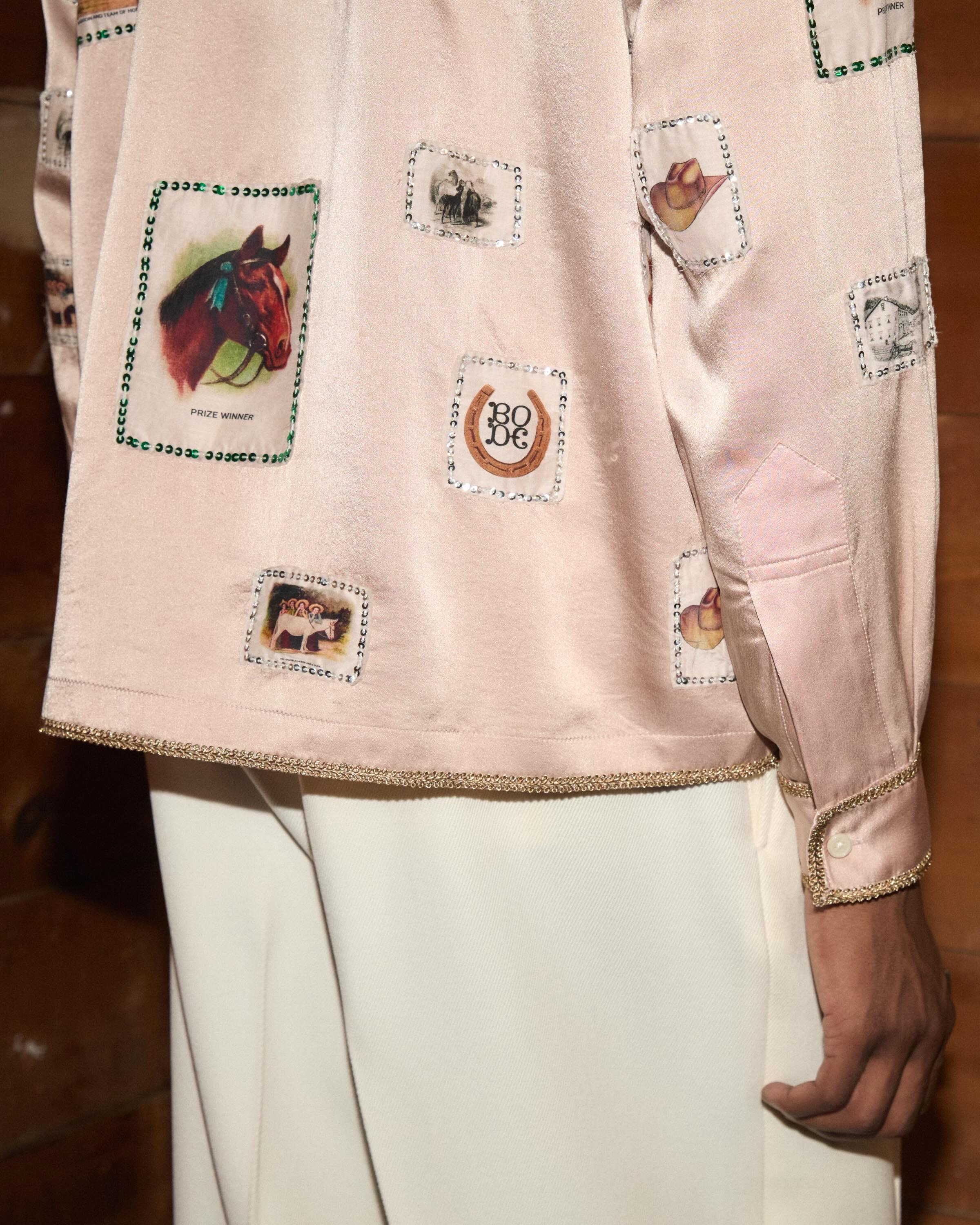
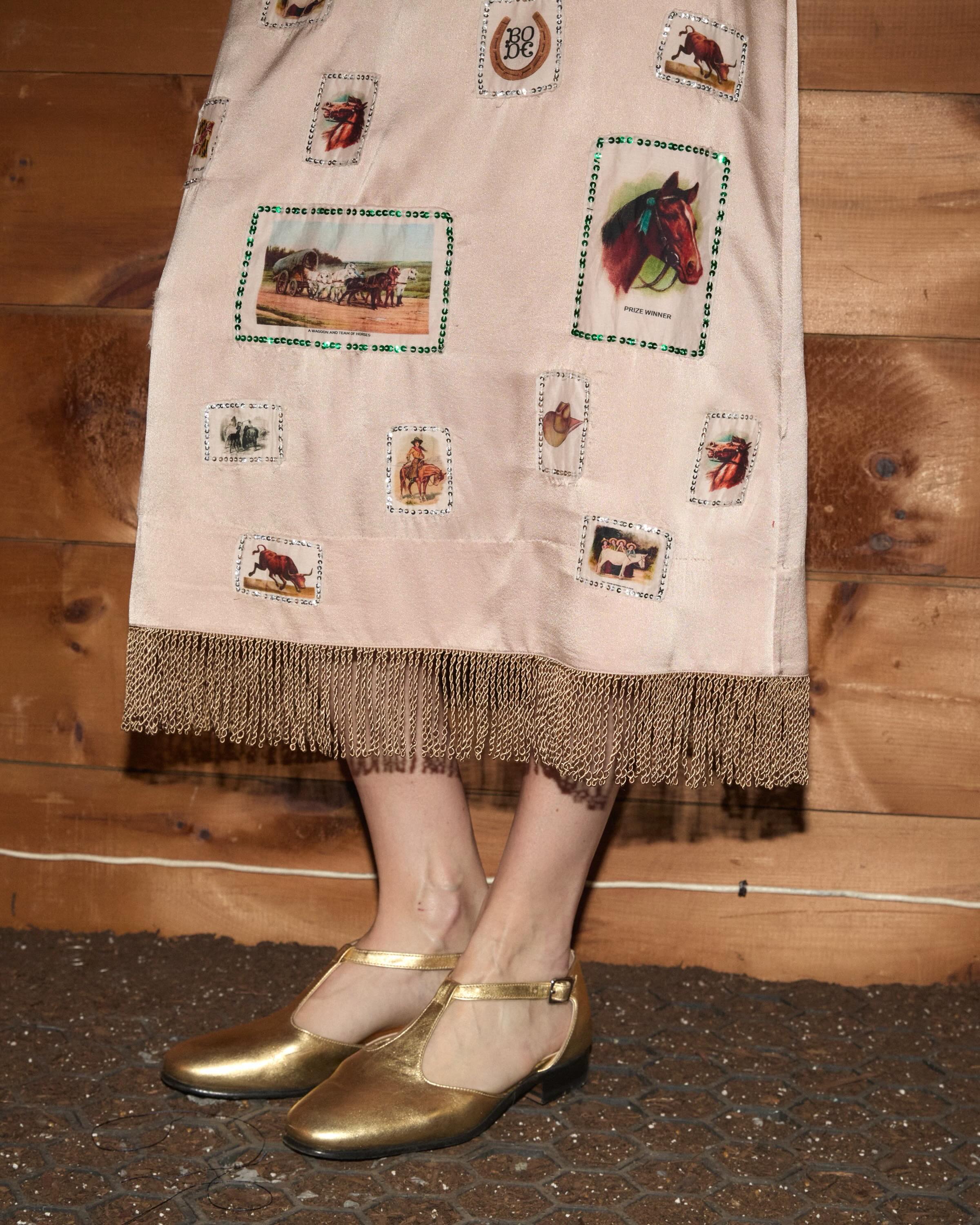
In the photographs, the patches differ in size and orientation. Some are broad enough to hold an entire scene; others work more like small picture cards. The pink ground remains visible between them, giving the garments an assembled surface with visible intervals between the individual illustrations.
Bode's earlier Barrel Racer jean also drew on equestrian imagery, using a pony motif associated with 1996. The Equestrian Patch pieces reach further back, and their source comes with a different history of collecting, saving and sewing small printed images together.
Tobacco Packaging Supplied the Original Scraps
Bode dates the practice of inserting illustrated silk or flannel scraps into tobacco packaging to around the 1870s onward. The brand describes series devoted to subjects such as butterflies, flags, athletes, actors and educational institutions.
The series format made the scraps more than isolated decorations. Several images could be gathered under one subject, then rearranged by the person keeping them. In Bode's account, women collected the pieces for home crafts, with pillows and quilts surviving from the Victorian and Edwardian periods.
That history explains the garment's visible seams between images. A collection of small pictures already invites assembly. Bode preserves those separate units through reproduced patches. Each horse or barn occupies its own framed area, with the pink ground continuing between the images.
The clothing uses reproductions of those historical silks. It should not be read as a claim that each new shirt contains original scraps removed from nineteenth century tobacco packages. The source is old; the current pieces translate it into a newly made garment.
Pink Silk Holds the Pictures Apart
Both the Equestrian Patch Dress and Long Sleeve Shirt use a pink silk ground with appliquéd picture patches. Sequins frame those patches, adding a reflective border around the reproduced imagery.
The pink areas between the pictures are important to the arrangement. They keep a horse from merging into a neighbouring barn scene and give the smaller rectangles room to remain legible. In the closer photographs, the eye can follow a patch's edge before moving to the next image.
The sequin borders add another separation. Their small repeated points distinguish the picture from the ground without requiring a heavy solid outline. Under the photographed light, some edges catch attention before the illustration inside them, creating a different route across the garment from the one a plain printed grid would offer.
The result is visibly pieced even when the garment's silhouette is simple. A viewer can recognise the shirt or dress from a distance, then move closer to read the individual scenes and their borders.
Dress and Shirt Change the Same Vocabulary
The dress uses narrow straps and a long, uninterrupted body, while the shirt distributes the patches across a boxier long sleeve shape. The photographs show the shirt paired with pale trousers, leaving the decorated upper half as the main field of colour.
The dress gives the patch arrangement a longer vertical run. On the shirt, sleeves and the front opening interrupt that field, so the pictures have to work around a different set of edges. The source imagery stays consistent while the shape carrying it changes.
RRL's six piece patch kit offered patches as separate objects to be placed by their owner. Bode's garments arrive with the arrangement already made. The comparison makes the role of placement clear: a loose patch invites a future decision, while these sequinned borders fix each image within the pink silk.
Bode Lists Two Separate Purchase Options
The checked Bode listings price the Equestrian Patch Dress at $1,500 and the Long Sleeve Shirt at $1,400. The release announcement names both stores and online sales, with availability dependent on the chosen piece and size.
The two listings attach the historical reference to a named dress and a named long sleeve shirt. A shopper can choose the longer dress silhouette or the shirt's sleeves and front opening while retaining the pink ground and framed imagery.
Horses and barns give the pieces their equestrian subject, but the borders explain their construction. Reproduced tobacco silks, appliqué and sequins preserve the look of separate collected pictures, then let the dress and shirt arrange them across two different bodies.
Frequently Asked Questions
What inspires Bode’s Equestrian Patch pieces?
Collectible nineteenth century tobacco silks depicting equestrian subjects.
What images appear on the patches?
Horses, barns, cowboys and cowgirls.
Does Bode use original nineteenth century scraps?
Bode describes them as reproductions of historical tobacco silks.
What is the ground fabric?
The brand specifies pink silk with appliqué and sequin borders.
How much are the dress and shirt?
The checked listings give $1,500 for the dress and $1,400 for the shirt.
Can the pieces be purchased online?
Bode announces availability in stores and online, subject to item and size stock.
Topics: bode, equestrian-patch, tobacco-silks, applique, sequins, pink-silk, textile-history