BOAFO PRESSES BURANO LACE INTO CANVAS AT PALAZZO GRIMANI
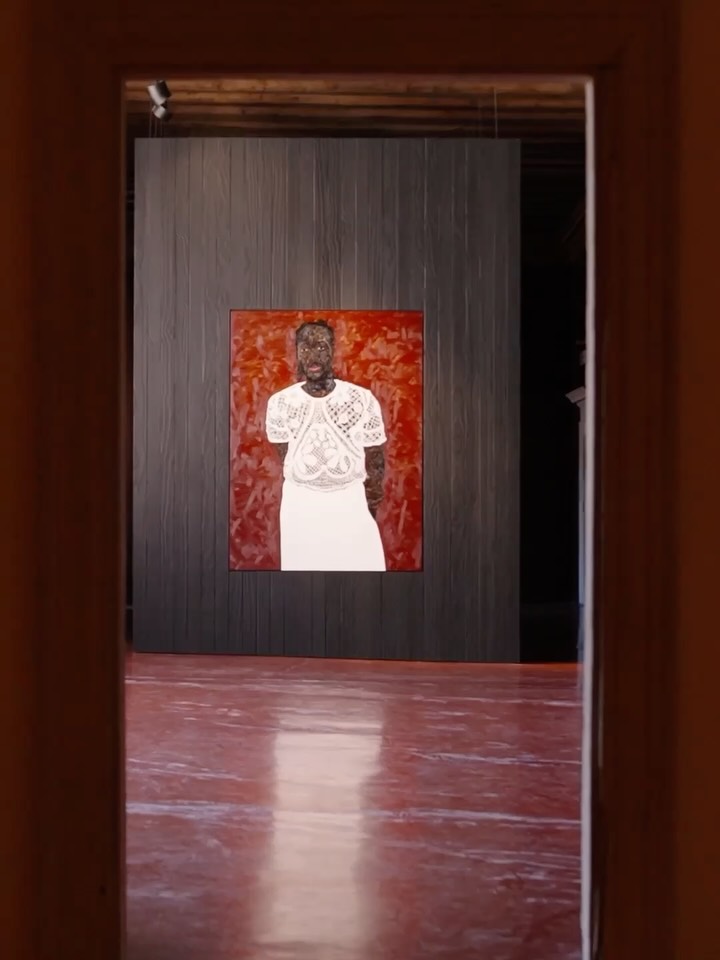
Amoako Boafo's first Italian solo exhibition, It doesn't have to always make sense, opened May 6, 2026 at Museo di Palazzo Grimani in Venice and runs through November 22, timed to the 61st Venice Art Biennale. The show debuts a new paper transfer technique that presses Burano lace and damask patterns into his signature finger painted oil portraits.
Key Points
- Boafo debuts a new paper transfer technique pressing Burano lace and damask into his oil portraits.
- The show runs May 6 through November 22, 2026 at Museo di Palazzo Grimani during the 61st Biennale.
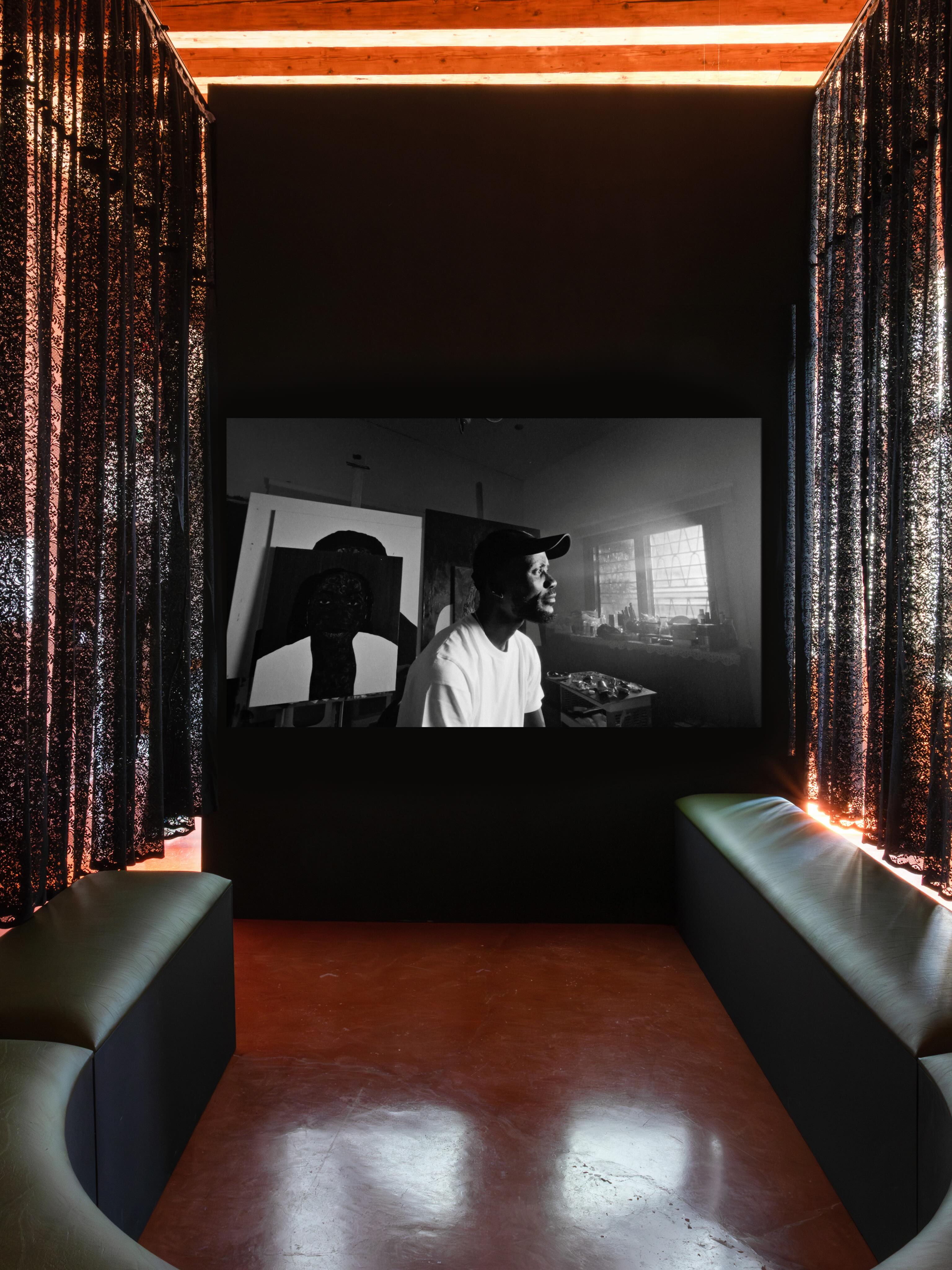
- Gagosian paired the opening with a Maco Film short shot in Accra and photos by Leonardo Cestari.
Amoako Boafo does not reach for a brush when he wants skin to hold light. He presses his fingers straight into wet oil, the technique that carried him from a walk up studio in Vienna to museum walls in under six years. Inside the Renaissance rooms of Museo di Palazzo Grimani in Venice, that same technique now has a partner. For his first Italian solo show, titled "It doesn't have to always make sense," Boafo spent the past year teaching himself a second process: pressing Burano lace and damask patterns directly onto canvas through a paper transfer method he had never used before this exhibition. The show opened May 6 and runs through November 22, 2026, timed to the 61st Venice Art Biennale.
The Lace Is Pressed Into the Paint, Not Painted On
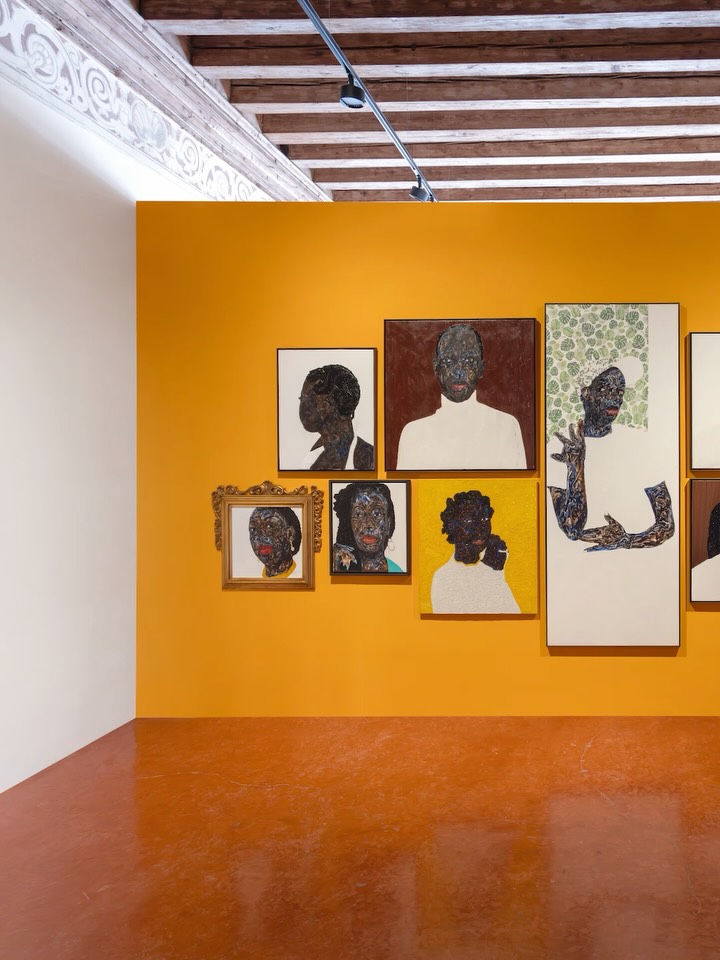
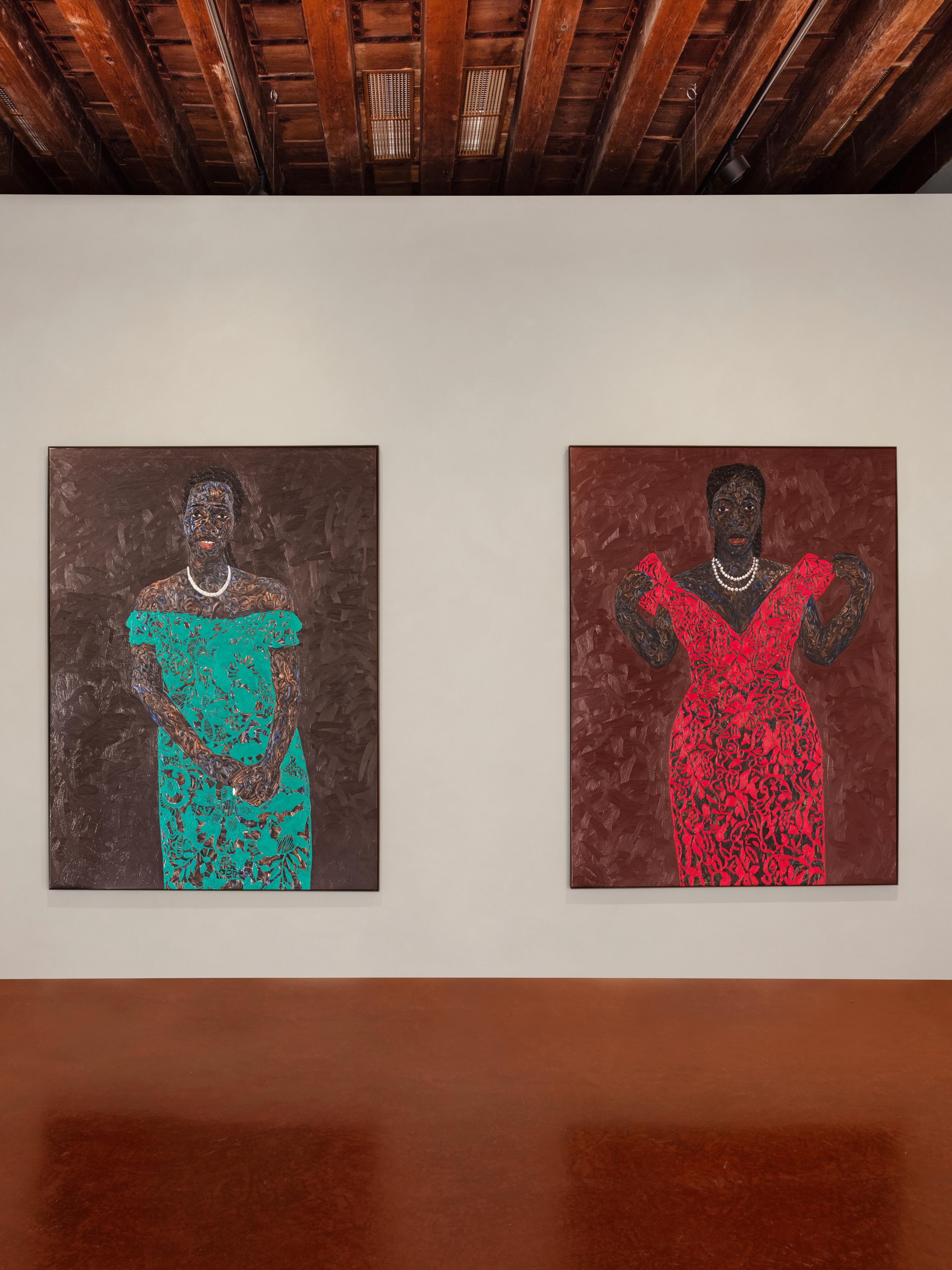
The new technique impresses Burano lace and embroidery motifs directly onto the canvas surface through a paper transfer, then Boafo works his fingers over the printed pattern to blend it into the skin and clothing of his subjects. It is a method he only started developing in the last year, which makes this show its public debut rather than a survey of settled work. Behind the paintings, the gallery walls carry custom wallpaper printed with damask, a fabric pattern once reserved for Venetian nobility's clothing and for liturgical textiles, and historically a marker of trade between Venice and the Ottoman world. Ghanaian palettes and textures sit directly against that Venetian print, so the portraits argue with their own background instead of floating in front of it.
Leonardo Cestari Shot the Rooms Gagosian Chose for a Painter Who Uses His Hands
Photographer Leonardo Cestari's installation views, shared alongside Gagosian's original announcement of the Palazzo Grimani exhibition, place the new canvases inside a building that answers to the Musei archeologici nazionali di Venezia e della Laguna, Venice's network of archaeological museums, not a contemporary art institution. Gagosian did not rent white walls for this show. It inserted a living Ghanaian painter into rooms whose usual residents are Renaissance stucco and Roman antiquities, and the new works were made specifically to respond to that architecture rather than shipped in as a touring set. The friction is the point. Flat Ghanaian color fields hung against gilded ceilings read as a deliberate mismatch, not an oversight, and that mismatch is what a Biennale audience will spend six months walking through.
A Short Film Follows Boafo Back to Accra Before the Opening
Gagosian paired the installation photography with a short film, credited to Maco Film, that follows Boafo in Accra as he prepares the new body of work before it ships to Venice. Boafo was born in Accra on May 10, 1984, trained first at Ghanatta College of Art and Design, then at the Academy of Fine Arts Vienna, where he still keeps a studio. The film keeps the origin visible at the exact moment institutional polish could erase it, showing the artist in the city where he learned to paint rather than only in the palazzo where the market will judge the results. It is the same instinct Dior leaned on in 2020, when it hired Boafo to paint the invitation art for its Spring Summer menswear collection instead of just crediting a design team.
Sterling Ruby Got a Film Crew Too. Boafo Got One Person and a Camera.
Gagosian increasingly treats process documentation as inventory rather than an afterthought. When Sterling Ruby's Flower Funeral opened in Paris, Pushpin Films toured the atelier before the bronzes were fully cast; Boafo's Venice show gets Maco Film shooting him alone in his own city instead. Different scale, same reasoning. A gallery this large does not need extra marketing for a museum collaboration timed to a Biennale, so commissioning a short film anyway signals that the artist's process is now part of what collectors are buying, worth documenting the way a foundry stamps a maker's mark into bronze.
Five Museums Already Hold His Work. Venice Adds a Different Kind of Proof.
Boafo's paintings already sit in the collections of LACMA, the Guggenheim, the Hirshhorn Museum, the Rubell Museum and the Albertina in Vienna. None of those acquisitions required him to retire a signature technique in public. This one did. An artist five years into serious market heat rarely risks a settled formula for a public unveiling, and Boafo did it inside a museum that answers to Venice's archaeological authority, in front of a Biennale audience that will pass through the rooms for six months straight. If the paper transfer lace technique holds up past November 22, expect it folded into gallery inventory descriptions within a year, the same way finger painted became shorthand for his name once collectors started repeating it back in 2019.
Related: FREE THE YOUTH REVIVES THE AJ16 SHROUD FOR GHANA TRIBUTE.
Related: PACE GALLERY HOSTS ROBERT NAVA'S FIRST TOKYO SOLO SHOW.
Frequently Asked Questions
What is Amoako Boafo's exhibition at Palazzo Grimani about?
It doesn't have to always make sense is Amoako Boafo's first solo exhibition in Italy, featuring new paintings made specifically to respond to the architecture and history of Museo di Palazzo Grimani in Venice.
When does Amoako Boafo's Venice exhibition open and close?
The exhibition opened May 6, 2026 and runs through November 22, 2026, timed to coincide with the 61st Venice Art Biennale.
What new technique does Boafo use in the Palazzo Grimani show?
Boafo debuts a paper transfer method, developed within the last year, that impresses Burano lace and embroidery motifs directly onto canvas before he blends them with his signature finger painted portraits.
Is this Amoako Boafo's first exhibition in Italy?
Yes, Gagosian and Museo di Palazzo Grimani describe it as Boafo's first solo exhibition in Italy.
Where is Museo di Palazzo Grimani located?
Museo di Palazzo Grimani is in Venice and operates as part of the Musei archeologici nazionali di Venezia e della Laguna, the city's network of archaeological museums.
Who photographed the Amoako Boafo exhibition installation?
Photographer Leonardo Cestari shot the installation views released with the exhibition, alongside a short film credited to Maco Film.
What museums hold Amoako Boafo's work?
Boafo's paintings are held by LACMA, the Guggenheim, the Hirshhorn Museum, the Rubell Museum and the Albertina in Vienna.
Does Amoako Boafo's exhibition coincide with the Venice Biennale?
Yes, the show is timed to open alongside the 61st Venice Art Biennale and runs through the Biennale's full six month run.
Topics: amoako-boafo, venice-biennale-2026, ghana, lacma, painting, dior, palazzo-grimani, guggenheim, gagosian, hirshhorn, contemporary-art, venice