AGENT WARS PUTS FIVE PRINTED BRIDGES UNDER LOAD
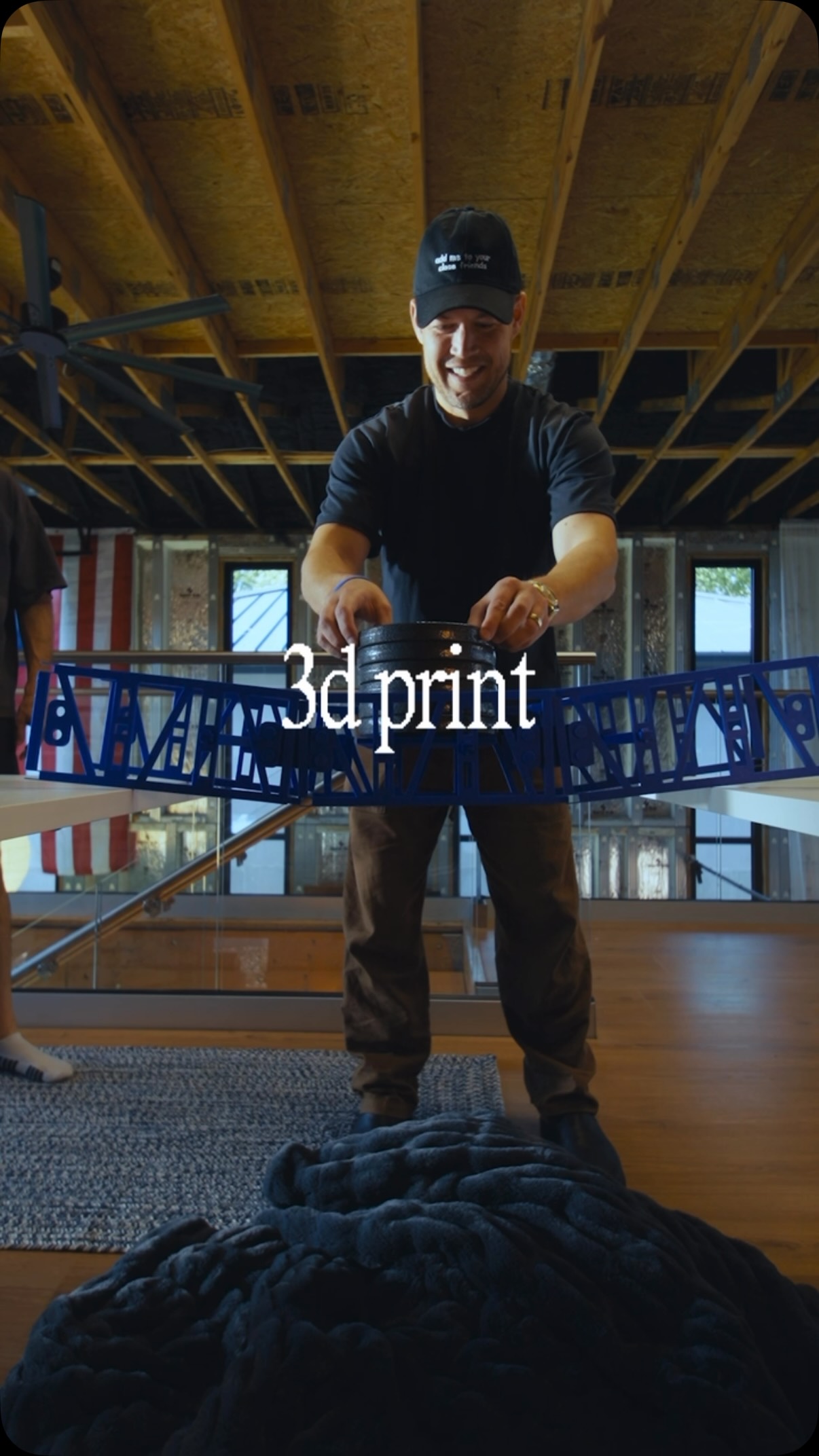
Agent Wars Episode 02 challenged five AI systems to design printed bridges under common span, filament and print time limits. Creator rpn reports an estimated 130 lb winning load for the entry labelled Claude Opus 5.5; the results are not an independent general model benchmark.
Key Points
- The brief required a two foot span, at most 500 g of filament and less than 18 hours of printing.
- The creator reports an estimated 130 lb winning load from 17 parts and 441 g of filament.
- Two entries failed before a successful load test, for different assembly and stability reasons.
Agent Wars Episode 02 gave five AI systems a bridge to build and a simple way to lose: gravity. The winning entry, labelled Claude Opus 5.5 by creator rpn, reportedly held an estimated 130 pounds. More revealing than that headline is how little hardware it needed compared with the other entries.
This was a creator's physical challenge, with results reported in rpn's episode account. It offers a useful view of generated designs leaving the screen. It does not establish a general ranking of the underlying AI models.
Two feet and 500 grams leave little room for excuses
The brief imposed a two foot span, a maximum of 500 grams of filament and less than 18 hours of printing. The creator also specified the type of load and where it would sit on the bridge. Those constraints connect the drawing to the fabrication budget: adding more plastic cannot be the answer indefinitely.
There are several competitions inside that brief. A design has to print, its pieces have to fit, the assembled structure has to stand, and only then can the load test start. A strong looking render gets no credit for clearing a stage that the physical object fails.
Earlier discussion of Claude's context window concerned how much material a system could process. Here the interesting constraint is the output: a finite pile of printed parts that another person must assemble. Reading a longer brief and delivering a workable joint are different accomplishments.
Claude's 17 parts carried the reported win
rpn gives the following figures. Model names and reasoning labels are reproduced as the creator identifies them; the table is an account of this episode, not independent verification of those model versions or their wider capabilities.
| Creator's model label | Reported load result | Parts | Filament | Print time |
| :--- | :--- | ---: | ---: | :--- |
| Claude Opus 5.5, High | Estimated 130 lb | 17 | 441 g | 9 h 11 m |
| Meta Muse Spark 1.3, High | 26.5 lb | 49 | 478 g | 13 h 12 m |
| OpenAI GPT 6 Astra, High | Estimated 17.5 lb | 29 | 442 g | 15 h 44 m |
| SpaceXAI Grok 4.7, High | Could not stand after assembly | 29 | 460 g | 12 h 22 m |
| Kimi K3, High | Could not be assembled | 35 | 446 g | 11 h 19 m |
The leading entry used the fewest parts and the least filament, and finished printing first. That makes this more interesting than a design winning by exhausting its allowances. Claude's reported 441 grams left 59 grams unused; Meta's 478 grams left 22.
More joints did not buy more capacity
On the reported figures, the winner held about 4.9 times Meta's load while using 32 fewer parts. Its printing time was four hours and one minute shorter. These are calculations from rpn's numbers, not additional measurements, and the estimated 130 pound figure makes the load comparison approximate.
A part count alone cannot explain a bridge's strength. Shape, joints, print settings and how the load reaches the supports all matter. Fewer parts can reduce assembly work, but this episode does not isolate which design decision produced the gap.
That distinction is familiar in sport: the score identifies the winner without explaining every cause of the win. Here, manufacturing choices are entangled with whatever reasoning happened before the printer started. The physical result deserves attention without turning every difference into a claim about intelligence.
Assembly failure belongs on the scoreboard
Grok and Kimi produced printed components, according to the creator, but did not reach a successful load test. One bridge could not stand on its own; the other could not be put together. Reporting both as simply zero pounds would conceal two different problems.
The first suggests an assembled object that failed a basic stability requirement. The second stops earlier, at the relationship between its components. Neither diagnosis tells us whether a revised prompt or another attempt would fix it. Both tell us that print completion was an inadequate success measure.
The Navier Stokes credit dispute raised questions about the work and people behind an AI result. A bridge challenge makes a smaller version of that question tangible: who specified the task, prepared the files, assembled the pieces and decided the test was finished?
Ask for repeat attempts before crowning a model
The accessible account does not provide enough information to separate model choice from tool access, iteration count, human adjustments or fabrication settings. It also does not establish repeated trials under a shared statistical protocol. Those omissions limit what can be inferred from a compelling filmed result.
The useful next episode would repeat the brief, disclose intervention and preserve failed attempts alongside successful ones. That would show whether the gap survives another run, and whether the assembly failures were persistent weaknesses or repairable mistakes.
For this round, the combination worth remembering is 17 parts and 9 hours 11 minutes. A reported 130 pound hold earns Claude the episode; reproducing it would make the result much harder to dismiss.
Frequently Asked Questions
What is Agent Wars Episode 02?
A creator run challenge asking five AI systems to design bridges for 3D printing and load testing.
Who reports the bridge results?
Creator rpn reports the figures in the episode’s accompanying account.
What limits did the bridge challenge impose?
A two foot span, no more than 500 grams of filament and less than 18 hours of printing.
What load did the winning entry hold?
The creator estimates 130 pounds for the entry labelled Claude Opus 5.5.
How many parts did the winning bridge use?
The reported design used 17 parts and 441 grams of filament.
Does the episode establish a general AI ranking?
No. Repeat trials and shared details of tooling, intervention and fabrication would be needed for wider conclusions.
Topics: rpn, meta, agent-wars, engineering, focus-27-55, bridges, openai, claude, 3d-printing, ai