WHO is BANKSY? IDENTITY REVEALED!!
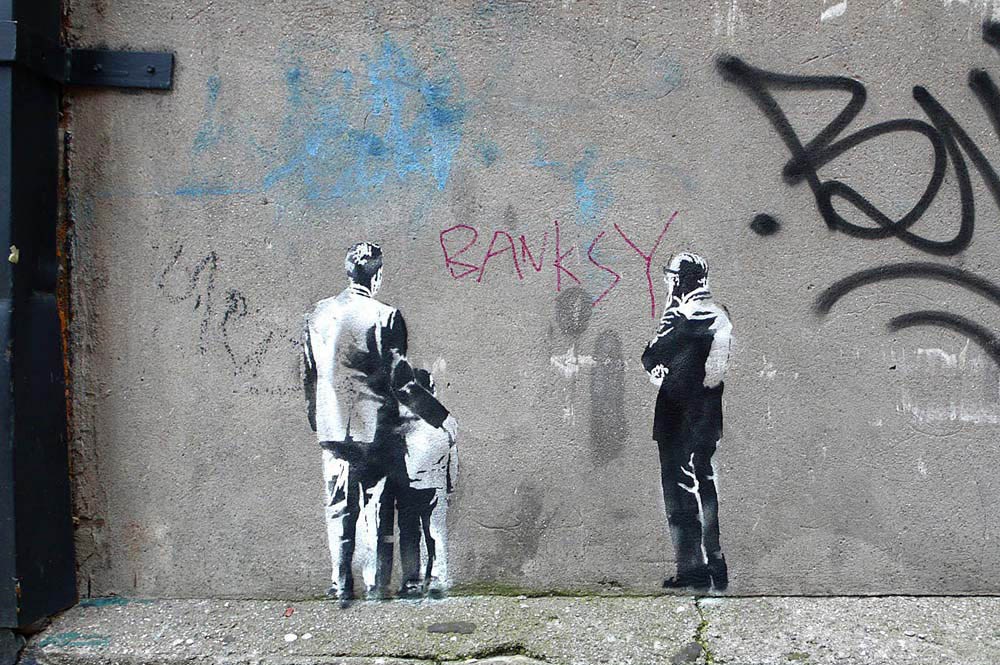
A March 13, 2026 Reuters investigation identifies Banksy as Robin Gunningham, a Bristol-born artist who legally changed his name to David Jones around 2008 to evade public records after being unmasked by The Mail on Sunday. The breakthrough combined a 2000 arrest record from a Manhattan rooftop, property filings, and immigration records showing David Jones crossing into Ukraine on October 28, 2022, the same day Banksy murals appeared in war zones.

Key Points
- Reuters investigation published March 13, 2026 identifies Banksy as Robin Gunningham using a signed 2000 arrest confession from Manhattan rooftop
- Gunningham legally changed his name to David Jones around 2008 after The Mail on Sunday unmasked him, with approximately 6,000 British men sharing the same name
- Immigration records show David Jones crossed into Ukraine on October 28, 2022, the exact day Banksy murals appeared in war-torn villages
- Banksy's secondary market sales total $248.8 million since 2015, with Love is in the Bin selling for $25 million after a 2018 shredding stunt increased value by 1,700 percent
- Pest Control serves as Banksy's authentication body and gatekeeper, managing operations through a web of British companies that transformed street art into a high-stakes commercial enterprise
The Stencil Finally Falls
We finally have a face to the prolific artist!
A major Reuters investigation published on March 13, 2026 reveals the real identity of the world's most elusive street artist, Banksy, ending three decades of intrigue. Anonymous art just became an extinct category.
Decades later, Reuters investigators discovered these court records and identified the man as Robin Gunningham, the Bristol-born artist who adopted the Banksy pseudonym years earlier. The smoking gun came from an unlikely source: In September 2000, Banksy was arrested at 4:20 a.m. on the roof of 675 Hudson Street in Manhattan for defacing a Marc Jacobs fashion billboard. The international news organization uncovered a handwritten and signed confession from Banksy to a disorderly conduct misdemeanor charge from about 25 years ago ... and his signature seems to read "Robin Gunningham."
This is not about street art anymore. This is about supply chains.
The David Jones Deception
In 2008, Reuters discovered through property records and corporate filings that Robin Gunningham legally changed his name. He chose David Jones, one of the most common names in Britain, with approximately 6,000 men sharing it in 2017. The name change happened right after The Bristol native had been "unmasked" as Banksy in 2008 by The Mail on Sunday. The British tabloid said its year-long investigation had "come as close as anyone possibly can to revealing" Banksy's identity.
The breakthrough came when Steve Lazarides, Banksy's former longtime manager, revealed that Gunningham legally changed his name to David Jones around 2008 to disappear from public records completely. "There is no Robin Gunningham," Lazarides said, explaining that he helped arrange a legal name change for the artist around 2008.
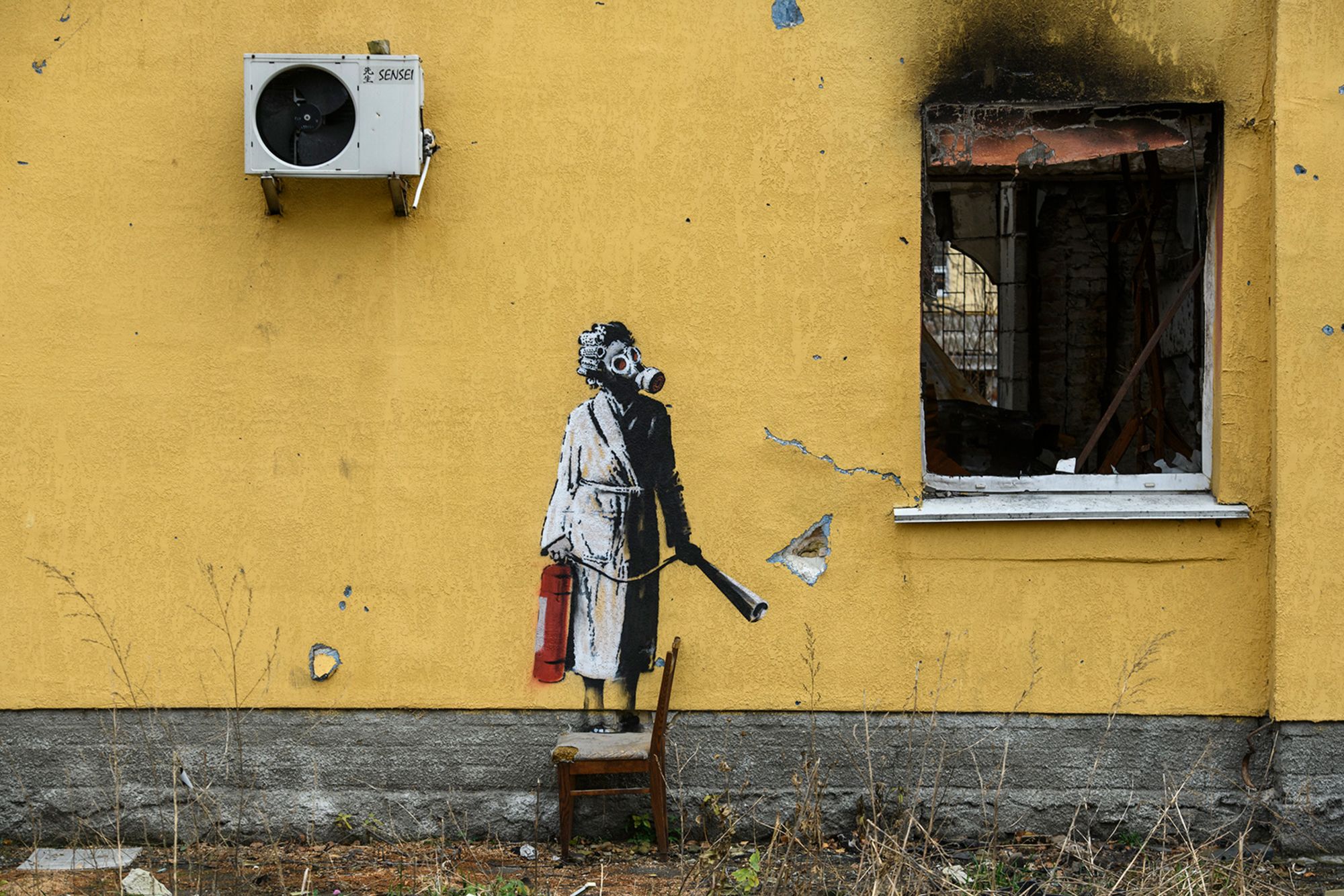
The Ukraine evidence sealed it. Immigration records show that a 'David Jones' born on the same date as Robin Gunningham crossed into Ukraine on October 28, 2022, the very day when iconic Banksy murals began appearing in war-torn villages.
The Authentication Empire
Banksy's business model depends on scarcity. Since 2015, secondary market sales of works tied to the artist have totaled an estimated $248.8 million, a scale that amplifies the consequences of any authentication dispute. The artist's operations, managed largely through a web of British companies with Pest Control at the center, have transformed street art into a high‑stakes commercial enterprise. Pest Control serves as the artist's gatekeeper and authentication body.
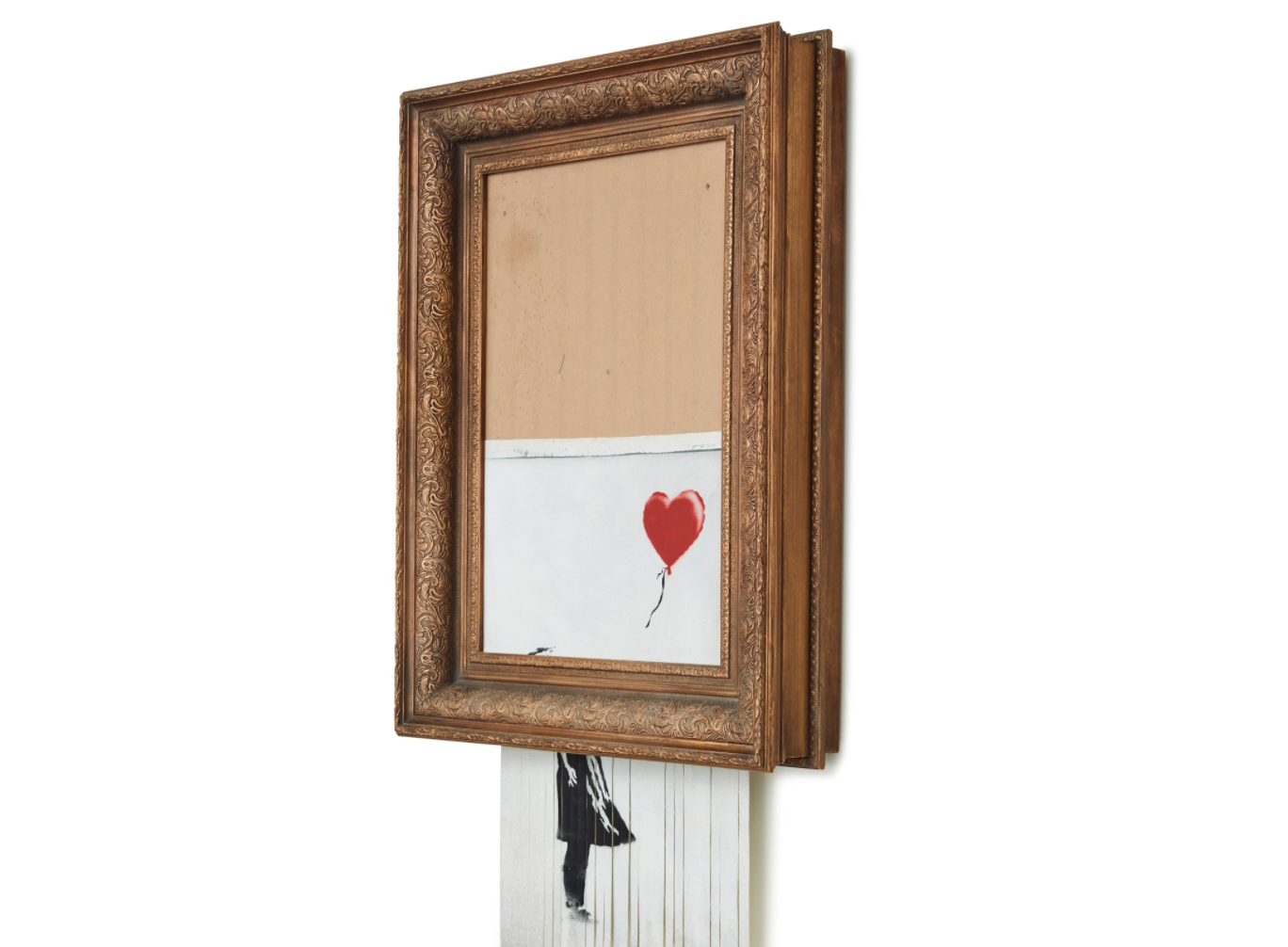
The numbers prove identity never mattered to collectors. In 2018, Banksy's iconic Girl with Balloon sold for $1.4 million, then was shredded by a hidden mechanism Banksy built into the frame. That same piece, renamed Love is in the Bin, sold three years later for approximately $25 million. The destruction stunt increased value by 1,700 percent.
The Counterattack
His long-time lawyer, Mark Stephens, wrote to Reuters that Banksy "does not accept that many of the details contained within your enquiry are correct." Without confirming or denying Banksy's identity, Stephens urged us not to publish this report, saying doing so would violate the artist's privacy, interfere with his art and put him in danger.
"Working anonymously or under a pseudonym serves vital societal interests. It protects freedom of expression by allowing creators to speak truth to power without fear of retaliation, censorship or persecution – particularly when addressing sensitive issues such as politics, religion or social justice," the lawyer said.
What Happens Next
The mystery was always a marketing device, not an artistic necessity. Art market analysts differ on whether the identity revelation will affect Banksy's commercial value. But the data suggests otherwise. Banksy prints have been climbing steadily regardless of speculation about his identity.
Expect copycat artists to flood the market with Robin Gunningham signatures. Expect Pest Control to become even more aggressive about authentication. Expect the next Banksy to be completely anonymous from day one, learning from this unmasking.
Anonymity in the internet age was always temporary. Robin Gunningham just learned that the hard way.
Related Reading
- AMOAKO BOAFO OPENS FIRST ITALIAN SOLO AT PALAZZO GRIMANI VENICE
- ART BASEL SPOTLIGHTS THOMAS HOUSEAGO BRUSSELS SOLO SHOW
- Artschwager's Approximate Objects Extended Through May 23
Frequently Asked Questions
What is Banksy's real name?
According to Reuters, Banksy is Robin Gunningham, born in Bristol. He legally changed his name to David Jones around 2008 to disappear from public records.
How did Reuters identify Banksy?
Reuters uncovered a handwritten confession from a September 2000 arrest at 675 Hudson Street in Manhattan for defacing a Marc Jacobs billboard, combined with property records, corporate filings, and immigration data showing David Jones entering Ukraine on October 28, 2022, when Banksy murals appeared in war villages.
Why did Banksy change his name?
After being unmasked by The Mail on Sunday in 2008, Gunningham legally changed his name to David Jones, one of the most common names in Britain with approximately 6,000 men sharing it, to completely disappear from public records.
How much is Banksy's work worth?
Since 2015, secondary market sales of Banksy works have totaled an estimated $248.8 million. His Girl with Balloon sold for $1.4 million in 2018, was shredded, renamed Love is in the Bin, and resold for approximately $25 million in 2021, a 1,700 percent increase in value.
Topics: focus-60-81