Ryan Sandes Has 18 Years at the Top. Salomon Made a Film About What Comes After.
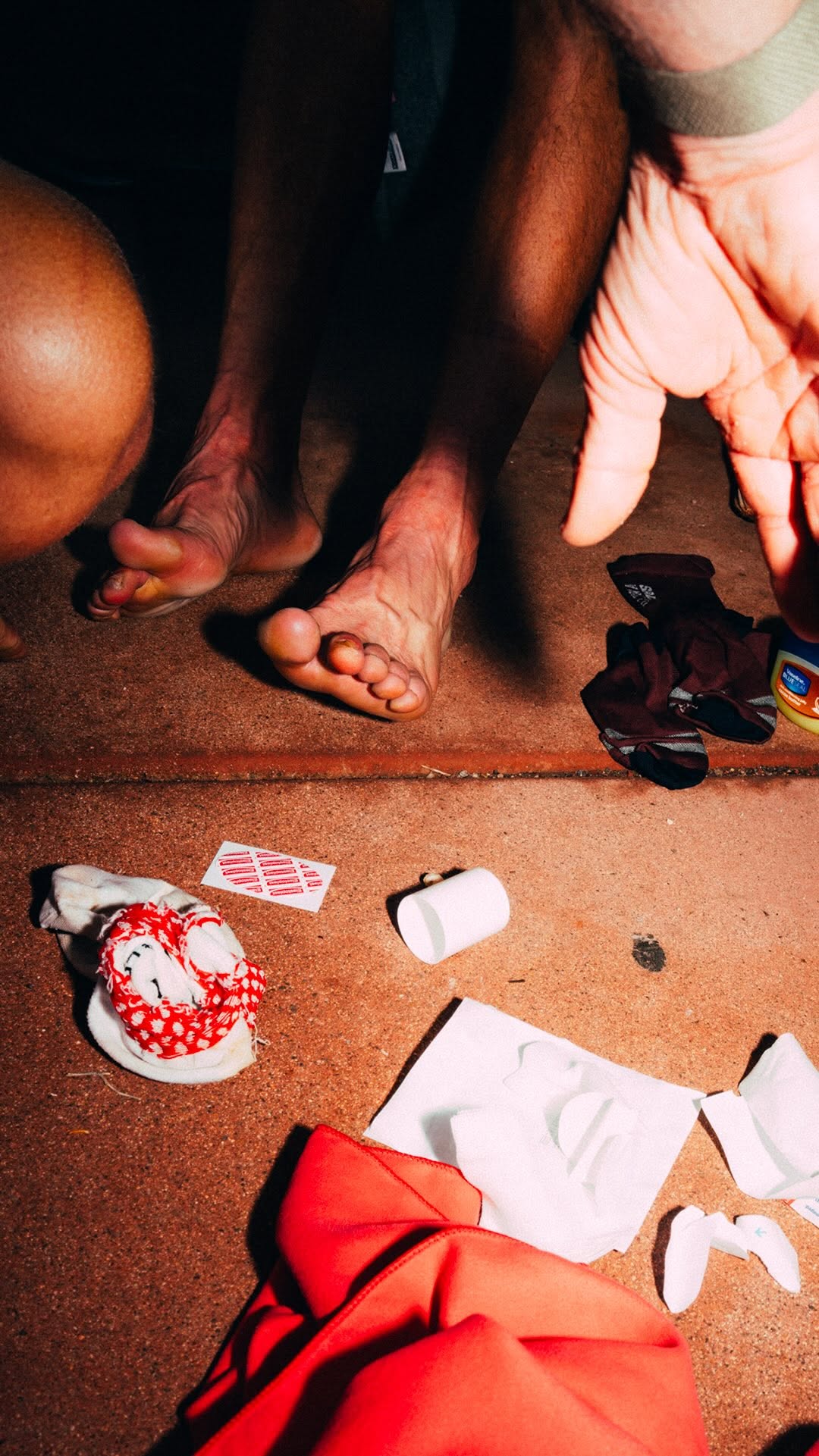
Ryan Sandes, a South African professional ultrarunner with an 18-year career including wins at UTMB and the Gobi March, is the subject of the latest Salomon TV episode "The Journey With No End," documenting his run at the Cocodona 250. Sandes finished second at the 2025 edition of the 250-mile Arizona race. The film frames his return not as a performance story but as a psychological portrait of an athlete examining why he still competes.
Key Points
- Ryan Sandes has been a professional ultrarunner for 18 years, winning UTMB, the Gobi March, and multiple stage races across six continents.
- The Salomon TV documentary "The Journey With No End" documents his Cocodona 250 run as a psychological portrait, not a race recap.
- Cocodona 250 covers 250 miles of Arizona terrain with approximately 50,000 feet of elevation gain; Sandes finished second in the 2025 edition.
Eighteen years is a long time to be at the top of anything. In ultrarunning, where the body accumulates vertical gain in six-figure feet per year, it is longer than most careers in professional sports.
Ryan Sandes has been doing it since 2008. The Cocodona 250 film is about whether that is still the point.
The Cocodona 250 Is 250 Miles of Arizona Desert
Cocodona 250 is not a race most people finish. It covers 250 miles of Arizona terrain, including the Bradshaw Mountains, with approximately 50,000 feet of elevation gain across the full course. The 2025 edition saw Sandes finish second, a result that in any other sport would generate headlines. In ultrarunning, finishing second in a 250-mile event in your late 30s after 18 years as a professional is a specific kind of data point about athletic longevity.
The Salomon TV episode, "The Journey With No End," frames this not as a race recap but as a psychological portrait: a professional athlete returning to a brutal event not for the podium but for a reconnection with the original reason he runs. That distinction is everything. A race document is data. This is anatomy.
Sandes at 18 Years: The Career Math
Sandes turned professional in the late 2000s when Salomon's trail running program was still building its athlete roster. He has won the Ultra-Trail du Mont-Blanc, the Gobi March, and multiple stage races across terrain ranging from the Himalayas to South Africa's Drakensberg. His career spans the period when trail running moved from a niche endurance subculture to a legitimate professional category with prize money, media coverage, and a global race circuit.
He has said recently that he can imagine being at "the tail end of the racing side" of his career, while also saying he cannot imagine a day without running. That tension, between competitive career and the activity itself, is the documentary's subject. Salomon understood that this is a more interesting story than another race win.
Salomon TV and the Long-Form Bet
Salomon has been building Salomon TV as a content infrastructure since the early 2010s. The platform hosts athlete films, expedition documents, and training content. "The Journey With No End" is the newest episode and follows the established format: a professional athlete, a significant event, a camera crew from @wanderingfever with photography from @cortneywhite_.
The production team is not incidental. Wandering Fever is a filmmaking duo specializing in adventure and lifestyle documentary. Their visual language is wide landscapes, intimate close-ups, and silence used as punctuation. The film about Cocodona 250 will not look like a race recap. It will look like a film about why a person runs into a desert alone for 250 miles.
This is the same move Nike made with "Breaking2" in 2017 and "Kipchoge: The Last Milestone" in 2019. Sport as documentary rather than broadcast. The race is the premise; the human psychology is the product.
Gear Is Secondary. That Is the Point.
Salomon is an equipment company. The film does not lead with gear. This is deliberate. The brand's long-form content strategy has consistently prioritized athlete narrative over product feature, which is a bet that emotional identification with the athlete transfers to the shoe and the pack more effectively than a feature comparison chart.
For Salomon, the Cocodona episode functions as the most expensive customer acquisition cost they have, but the cost is amortized across years of watch time, social shares, and brand perception. A runner watching "The Journey With No End" and then buying Salomon because they felt something during the film is worth ten runners who bought from a sponsored post.
The Question Sandes Is Actually Asking
Sandes finished second at Cocodona 250 in 2025, then ran Marathon des Sables in April 2026 and placed fifth. He is not declining. He is renegotiating the terms of why he competes.
The film asks whether competitive success and personal joy in running can coexist at 18 years in. The honest answer, which the film appears willing to give, is that they sometimes cannot, and that the athletes who survive longest are the ones who figure out which one to protect.
Salomon had the rare instinct to film the question rather than the answer. That is why this is worth watching.
Related Reading
- EMMA COOK-CLARKE WON THE ROUTEBURN CLASSIC ON HER FIRST ATTEMPT
- RONALDINHO NETFLIX DOCUMENTARY DROPS APRIL 16 WITH MESSI INTERVIEWS
- 17 TITLES AND THE LAKERS STILL WANT MORE
Frequently Asked Questions
Who is Ryan Sandes?
Ryan Sandes is a South African professional ultrarunner and Salomon athlete with an 18-year career. He has won the Ultra-Trail du Mont-Blanc, the Gobi March, and multiple stage races across the Himalayas, Drakensberg, and global desert circuit.
What is the Salomon TV episode about Ryan Sandes?
The episode is called The Journey With No End and documents Sandes running the Cocodona 250, a 250-mile Arizona race, framed as a psychological portrait of why an 18-year professional returns to an extreme event after a career at the top.
What is Cocodona 250?
Cocodona 250 is a 250-mile ultramarathon across Arizona terrain including the Bradshaw Mountains, featuring approximately 50,000 feet of elevation gain. Ryan Sandes finished second in the 2025 edition.
Topics: documentary, endurance-sport, ryan-sandes, ultrarunning, salomon, salomon-tv, trail-running, cocodona-250, nike