TYPE7 MADE CAR PHOTOGRAPHY A DESIGN MOVEMENT

Type7 is an automotive photography studio founded by Ted Gushue that applies architectural photography principles to car culture. The studio shoots on medium format Hasselblad cameras and has commissioned work from Porsche, Lamborghini, Bugatti, and Mercedes Benz.

Key Points
- Type7 shoots on Hasselblad X2D 100C medium format at 100 megapixels
- Client list includes Porsche, Lamborghini, Bugatti, Pagani, and Mercedes Benz
- Quarterly print journal sells at $45 per issue covering automotive design culture
The Lens
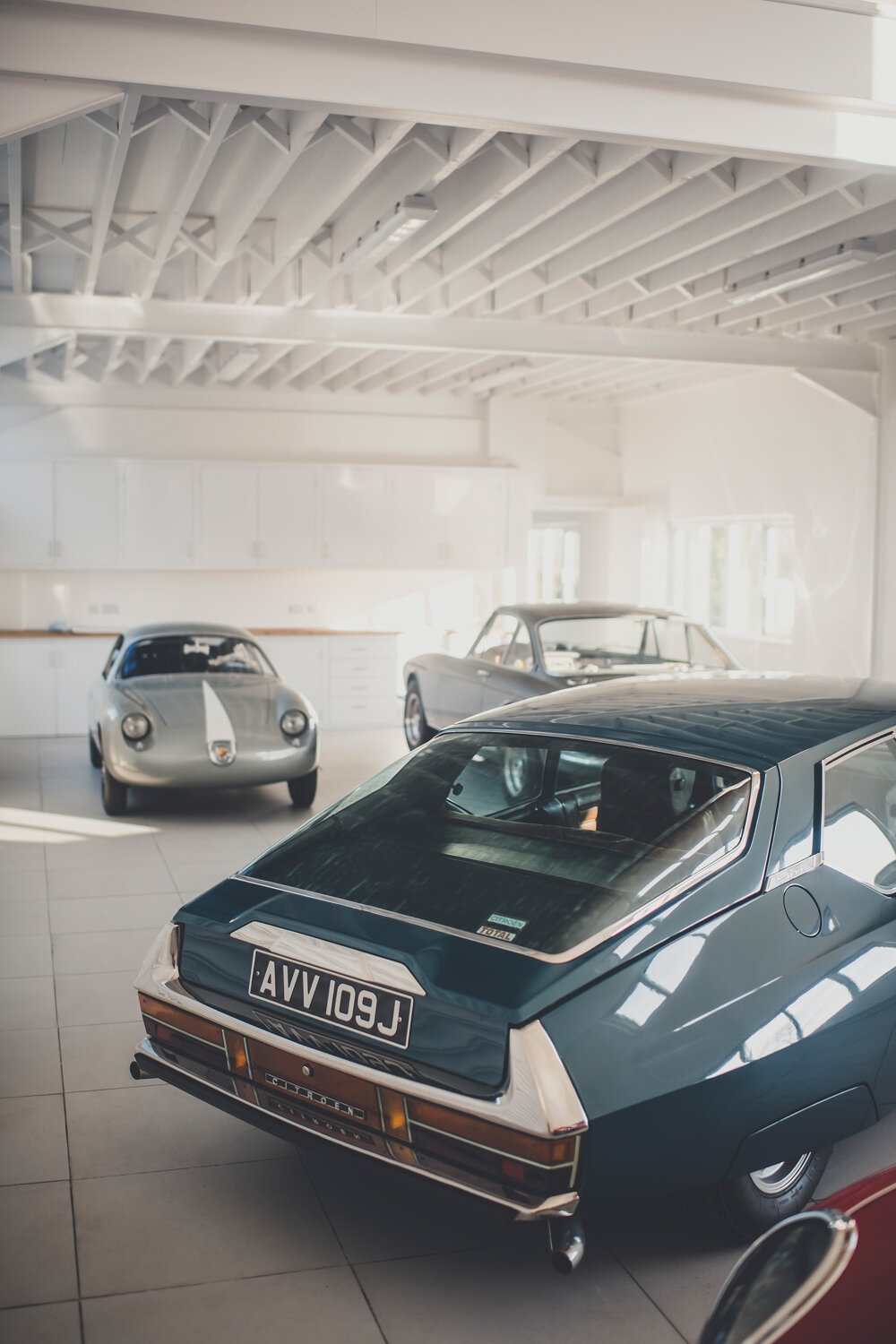
Type7 photographs cars the way architectural photographers shoot buildings: natural light, considered composition, no motion blur, no smoke, no artificial drama. Ted Gushue founded the studio in 2019 after working as head of partnerships at Petrolicious, the automotive storytelling platform. The visual language is specific: golden hour light hitting paint at oblique angles, emphasis on surface texture and body line rather than speed, interiors shot like still life paintings. The cars are always stationary. The photograph is always about the object, not the action.The Method
Gushue shoots primarily on medium format digital cameras, specifically the Hasselblad X2D 100C, which produces 100 megapixel files with a tonal range that renders automotive paint with the accuracy of a color swatch. The choice matters: medium format sensors produce shallower depth of field at equivalent apertures, which isolates the car from the environment while keeping the entire body in focus. The post processing is restrained. No composite skies. No heavy color grading. The images look the way the car looked in person, which is the entire point.The Client List
Porsche, Lamborghini, Bugatti, Pagani, and Mercedes Benz have all commissioned Type7 for editorial and campaign work. The commissions range from $15,000 for a single car editorial to six figure campaign budgets for multi day shoots. Type7 also produces a quarterly print journal that sells for $45 per issue and covers automotive culture through the lens of design, architecture, and lifestyle rather than performance metrics. The journal functions as a portfolio and a brand positioning tool: it tells potential clients exactly what the aesthetic will look like before a single email is exchanged.The Influence
Type7 aesthetic has been widely copied on Instagram, where automotive photography accounts have shifted from the drag strip, flames, and motion blur style toward the architectural approach Gushue popularized. The hashtag "automotive photography" on Instagram generates 14 million posts. The top performing images consistently follow the Type7 template: static car, natural light, architectural backdrop. Gushue does not acknowledge the influence directly. The images speak at a volume that makes attribution unnecessary.The Position
Type7 operates in the gap between commercial automotive photography and fine art photography. The work is too commercial for galleries. It is too considered for magazine advertising. That gap is exactly where premium brands want to position themselves in 2026: content that looks editorial but functions as advertising, created by a studio small enough to maintain a consistent aesthetic across every output. Gushue employs fewer than 10 people. The portfolio competes with agencies 20 times larger. The lesson: in an era of content volume, a rigidly consistent visual identity is more valuable than production capacity.The Visual Language
Type7 made car photography a design movement by treating every image like a piece of graphic design rather than a car ad. The compositions emphasize negative space, natural light, and architectural framing. Stefan Bogner and his team photograph cars in locations chosen for their visual tension: Alpine passes, brutalist parking structures, and desert roads where the landscape dwarfs the vehicle.
Type7 proved that automotive photography does not need studio lighting, reflectors, or post-production retouching to sell the emotion of a car. The natural light philosophy produces images that feel more honest than anything a brand could produce in house, and automotive manufacturers from Porsche to Singer commission Type7 because the images sell the driving experience more effectively than specifications or performance data. Bogner turned car photography into art photography, and the $4,000 per print secondary market proves the audience agrees.
The formula is deceptively simple but impossible to copy: take genuine expertise, wrap it in taste that costs decades to develop, and serve it without apology to an audience that does not yet know they want it. The brands, artists, and athletes who mastered this formula share one trait that no competitor has been able to replicate: they treated the work as the entire point and let the market catch up on its own schedule. That patience is the product, and the product is worth exactly what someone is willing to pay for the privilege of association.
Related Reading
- SCHUPPAN 962CR FAILED SUPERCAR PROJECT RESURFACES IN DESIGN STUDY
- TYPE7 SPOTLIGHTS INNOVATIVE MEXICAN ARCHITECTURE PROJECT
- Why Cars and Skiing Have Always Needed Each Other
Frequently Asked Questions
What is Type7?
Type7 is an automotive photography studio founded by Ted Gushue in 2019 that applies architectural photography principles to car culture, creating images that emphasize surface, light, and design over speed and action.
What camera does Type7 use?
Type7 primarily shoots on the Hasselblad X2D 100C, a medium format digital camera producing 100 megapixel files with tonal range optimized for rendering automotive paint accurately.
Topics: automotive-photography, print-journal, medium-format, car-photography, type7, visual-culture, design, porsche, ted-gushue, hasselblad, lamborghini