TOMMIE SMITH RAISED A FIST IN PUMA SUEDES AND CHANGED WHAT A SNEAKER COULD MEAN
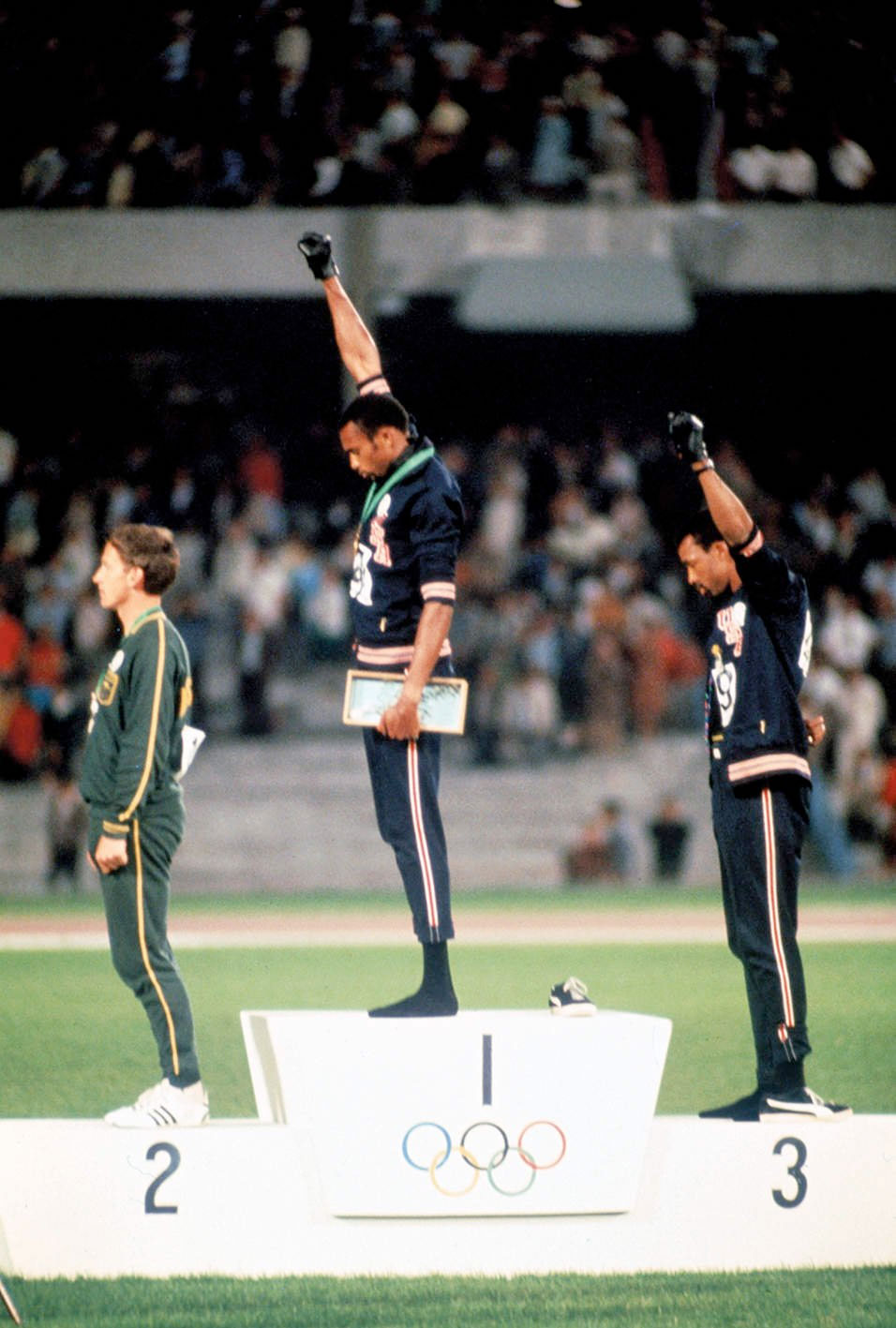
The Puma Suede was on Tommie Smith feet at the 1968 Olympics Black Power salute. It became foundational to B-boy culture and Rihanna turned the platform into 2016 Shoe of the Year.
Key Points
- Tommie Smith wore Puma Suedes when he raised the Black Power fist at the 1968 Olympics in Mexico City
- Puma exists because Rudolf and Adolf Dassler split their German shoe factory into Puma and Adidas in 1948
- Rihanna Puma Creeper sold out in three hours and won Shoe of the Year at FN Achievement Awards in 2016
October 16, 1968. Mexico City.
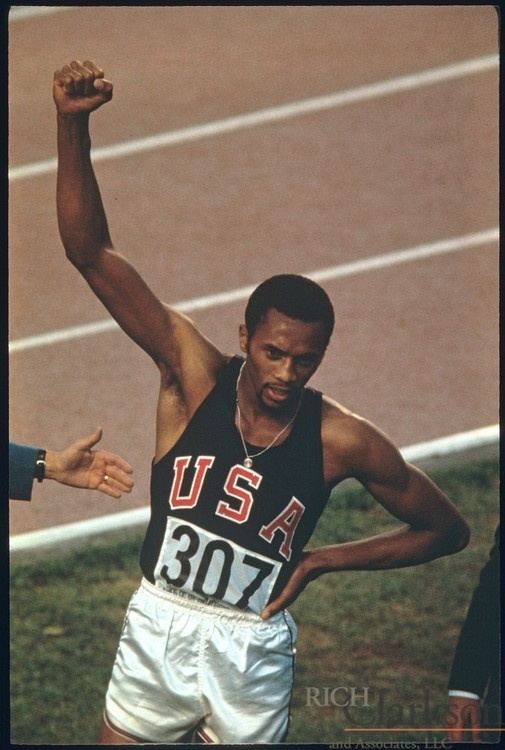
Tommie Smith crossed the finish line first in the 200 meters at the 1968 Summer Olympics in Mexico City, setting a world record of 19.83 seconds. He was wearing Puma Suedes. On the medal podium, Smith and bronze medalist John Carlos raised black-gloved fists during the national anthem, heads bowed. Smith wore a black scarf. Carlos wore a bead necklace. Both men went shoeless during the anthem, wearing black socks to represent Black poverty. But on their feet during the race and the walk to the podium were Puma Suedes, the same shoes that would become one of B-boy culture's most important silhouettes fifteen years later.
The protest cost both men their Olympic careers. The United States Olympic Committee expelled Smith and Carlos from the Games within 48 hours. Both received death threats. Smith didn't run competitively again. The photograph of the salute became one of the defining images of 20th century protest. And the shoes on their feet entered history not as product placement but as witness to the moment.
Rudolf Dassler's Other Company
Puma exists because two brothers couldn't share a factory. Rudolf and Adolf Dassler made athletic shoes together in Herzogenaurach, Germany until 1948, when a personal feud (allegedly involving wartime accusations and an Allied bombing shelter argument) split the company in two. Adolf kept the existing operation and renamed it Adidas. Rudolf crossed the river and started Puma. The town divided along brand lines. Residents wore either Puma or Adidas. Intermarriage between "Puma families" and "Adidas families" was discouraged for decades.
The Puma Suede debuted as a basketball shoe in 1968, the same year as Smith's Olympic protest. It was originally called the Puma Crack (a reference to the crack of a starting pistol, not the drug). The name was changed as crack cocaine entered public consciousness in the 1980s. The shoe's construction was simple: full suede upper, rubber cupsole, metallic Puma formstrip on both sides. The simplicity made it versatile. It could be worn on a basketball court, a dance floor, or a protest podium.
B-Boy Foundation
The Puma Suede became foundational to B-boy culture in New York during the late 1970s and early 1980s. Breakers wore Puma Suedes because the flat suede sole allowed smooth spinning on cardboard and linoleum. The shoe gripped enough to execute footwork but slid enough for power moves. The thick suede upper was durable enough to survive the abrasion of floor contact. Clyde Frazier's Puma Clyde (a derivative of the Suede with his signature) was the preferred model, but the standard Suede outsold it three to one because it was $20 cheaper.
The Beastie Boys wore Puma Suedes throughout their initial punk and early hip hop period. DJ Kool Herc, widely credited as hip hop's founder, has been photographed wearing Puma Suedes at Bronx block parties in the mid-1970s. The shoe predated the Run-DMC Adidas endorsement deal by nearly a decade. Before hip hop had sponsorship, it had Puma Suedes bought at Mays department store with cash.
The Fenty Resurrection
Puma's revenue declined through the 2000s and early 2010s as Nike and Adidas dominated the sneaker market. In 2014, Puma named Rihanna as creative director of Puma Women's, a hire that skeptics called a celebrity stunt. Rihanna's first product, the Puma Creeper (built on a modified Suede platform), sold out in three hours when it released in 2015. The Creeper won Shoe of the Year at the FN Achievement Awards in 2016, the first time a celebrity collaboration had won the top prize.
Puma's stock price rose 50% between 2015 and 2017, directly correlated to the Fenty product line's commercial success. The Suede platform that Rihanna modified had been sitting in Puma's archive for 47 years. She didn't design a new shoe. She recognized that the Suede's simplicity was a canvas, not a limitation, and built a creeper sole underneath it.
The Puma Suede has been on the feet of an Olympic protester, a Bronx block party DJ, a B-boy spinning on cardboard, and a pop star who turned a dormant archive shoe into Shoe of the Year. It's the only sneaker that connects the 1968 civil rights movement to 2016 fashion culture through a direct material lineage. Same suede. Same formstrip. Same shoe. Different century.
Related Reading
- SPIKE LEE PUT THE JORDAN 4 IN DO THE RIGHT THING AND RADIO RAHEEM MADE IT IMMORTAL
- THE $5,000 FINE THAT TURNED A BANNED SNEAKER INTO A $200 BILLION EMPIRE
- ADIDAS ADISTARS AND KIM TURNBULL JUST SET THE 2026 SILHOUETTE AGENDA
Frequently Asked Questions
What happened with Puma Suedes at the 1968 Olympics?
Tommie Smith wore Puma Suedes when he ran the 200m world record of 19.83 seconds and gave the Black Power salute on the medal podium in Mexico City.
Why did B-boys wear Puma Suedes?
The flat suede sole allowed smooth spinning on cardboard and linoleum. The shoe gripped enough for footwork but slid enough for power moves.
How did Rihanna revive Puma?
Rihanna created the Puma Creeper on a modified Suede platform in 2015. It sold out in three hours and Puma stock rose 50 percent between 2015 and 2017.
Topics: sneakers, rihanna, 1968-olympics, fashion, adidas, focus-52-22, b-boy, sneaker-history, puma, fenty, nike, puma-suede