THE $5,000 FINE THAT TURNED A BANNED SNEAKER INTO A $200 BILLION EMPIRE
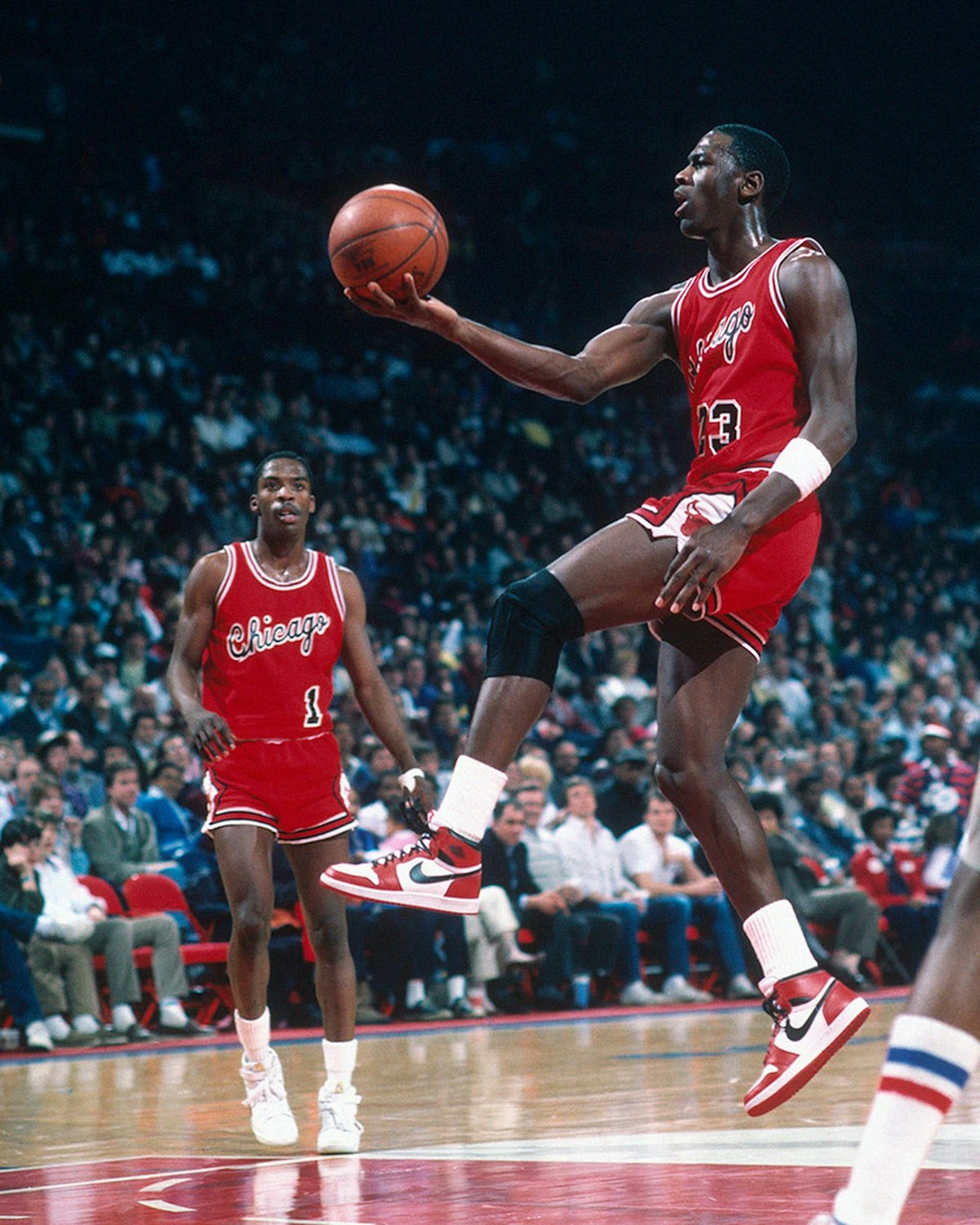
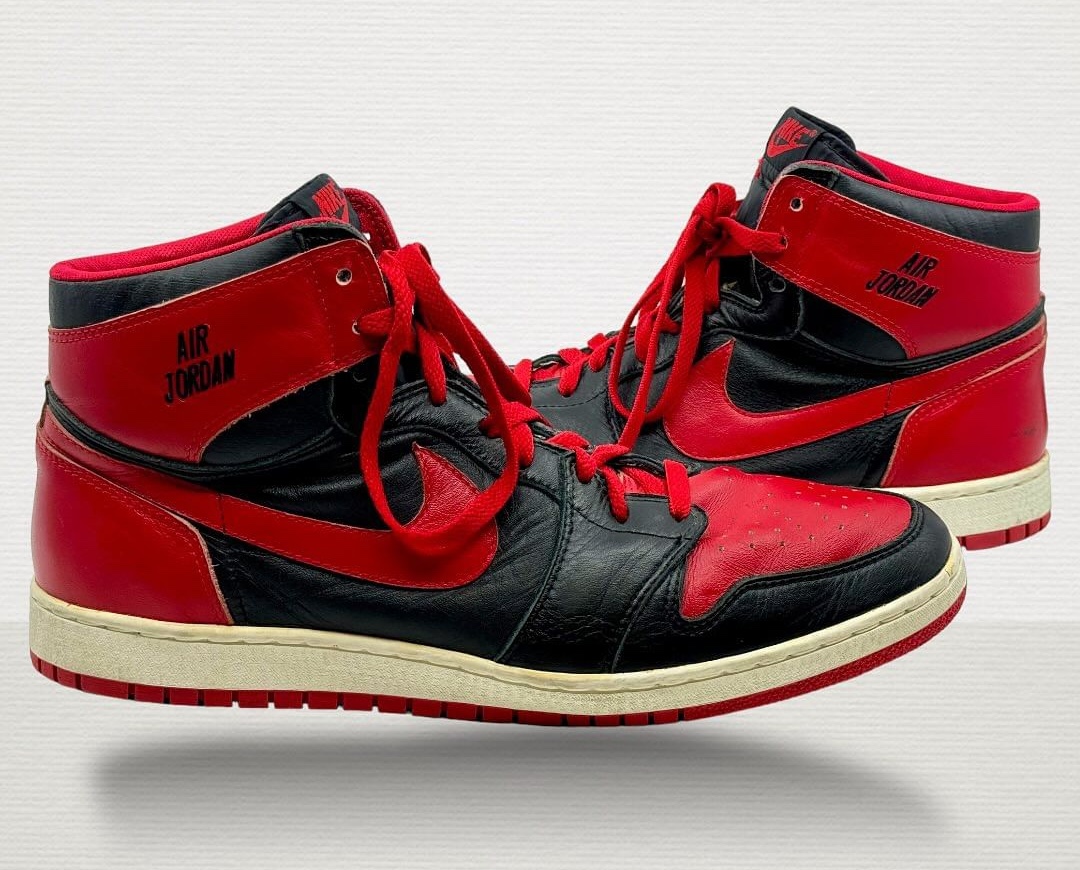
The Air Jordan 1, designed by Peter Moore for Nike in 1985, was banned by the NBA for violating uniform color rules. Nike paid every fine, turning the controversy into a marketing phenomenon. The shoe launched the Jordan brand, which generates $5.1 billion annually, and created the modern sneaker resale market.
Key Points
- Nike paid $410,000 in NBA fines for Jordan wearing the banned sneakers in 1984
- The Jordan brand generates $5.1 billion in annual revenue as of 2022
- Over 2.3 million pairs of Jordan 1s were sold on secondary markets in 2023
The Ban That Started Everything
On October 18, 1984, Michael Jordan laced up a pair of black and red sneakers for a preseason game against the New York Knicks. The NBA fined him $5,000 on the spot. The league rule was clear: shoes had to be at least 51% white and match the team uniform. Jordan's Nike Air Ship prototypes were neither. Nike paid every fine, every game, for the entire season. The total cost: roughly $410,000. The marketing value: incalculable.
Peter Moore's Masterpiece
Designer Peter Moore created the Air Jordan 1 with a single directive from Nike's Rob Strasser: make it impossible to ignore. The shoe borrowed its tooling from the Air Force 1 and the Dunk, but the colorblocking was Moore's genius. The "Bred" (black and red) colorway that got banned became the most famous sneaker palette in history. The Wings logo, also Moore's design, would become more recognizable than most Fortune 500 logos within a decade.
Nike projected 100,000 units in the first year. They sold $126 million worth by May 1985. The Jordan line would eventually become a standalone brand generating $5.1 billion annually by 2022.
From Courts to Corners
The Air Jordan 1 left basketball almost immediately. By 1986, it was the shoe of choice in hip hop, worn by everyone from Run-DMC's crew to the emerging streetwear scene in Lower Manhattan. Spike Lee cast himself as Mars Blackmon in the Jordan commercials, bridging sport and Black culture in a way no brand had attempted. The shoe became a uniform: Harlem, Brooklyn, South Side Chicago, Compton.
When skateboard culture adopted the Jordan 1 in the early 2000s, the shoe completed its third act. Lance Mountain's 2014 collaboration with Jordan Brand, featuring paint that chipped away to reveal Bred and Royal colorways underneath, cemented the shoe's status as the most cross-cultural sneaker ever made.
The Resale Economy
The Air Jordan 1 essentially created the modern sneaker resale market. When Virgil Abloh deconstructed the Chicago colorway for his "The Ten" Off-White collaboration in 2017, pairs sold for $190 retail and immediately resold for $2,500. The 1985 originals in wearable condition now fetch $15,000 to $30,000 at auction, with deadstock pairs occasionally exceeding $50,000.
StockX processes more Air Jordan 1 transactions than any other silhouette. In 2023 alone, over 2.3 million pairs of Jordan 1s were sold on secondary markets globally. No other sneaker comes close to that volume.
The Definitive Take
The Air Jordan 1 is not the most comfortable sneaker. It is not the most technologically advanced. It is the most important object in the history of athlete branding, the single product that proved a shoe could be a cultural artifact, a financial instrument, and a piece of wearable identity. Every sneaker collaboration, every limited drop, every $500 resale premium exists because of what happened on October 18, 1984, when a 21 year old rookie wore the wrong color shoes.
Related Reading
- SPIKE LEE PUT THE JORDAN 4 IN DO THE RIGHT THING AND RADIO RAHEEM MADE IT IMMORTAL
- UNBOXED 002: V.A.A. X AIR JORDAN 1 ALASKA REVIEWED
- UNBOXED 002: V.A.A. X AIR JORDAN 1 ALASKA REVIEWED
Related: Field Report: Inside Nike's Mamba Invitational 2026.
Frequently Asked Questions
Why was the Air Jordan 1 banned by the NBA?
The NBA fined Michael Jordan $5,000 per game for wearing the Air Jordan 1 because the black and red colorway violated the league rule requiring shoes to be at least 51% white and match team uniforms.
How much are original Air Jordan 1s worth?
Original 1985 Air Jordan 1s in wearable condition sell for $15,000 to $30,000, with deadstock pairs occasionally exceeding $50,000 at auction.
How much revenue does the Jordan brand generate?
The Jordan brand generated $5.1 billion in annual revenue in 2022, making it one of the most valuable sub-brands in athletic footwear history.
Topics: stockx, sneakers, virgil abloh, streetwear, virgil-abloh, focus-64-7, air-jordan-1, jordan-brand, michael-jordan, fashion, peter-moore, sneaker-history, nba, resale, off-white, jordan brand, nike