REI KAWAKUBO DRESSES THE VOID IN COMME DES GARCONS AW26
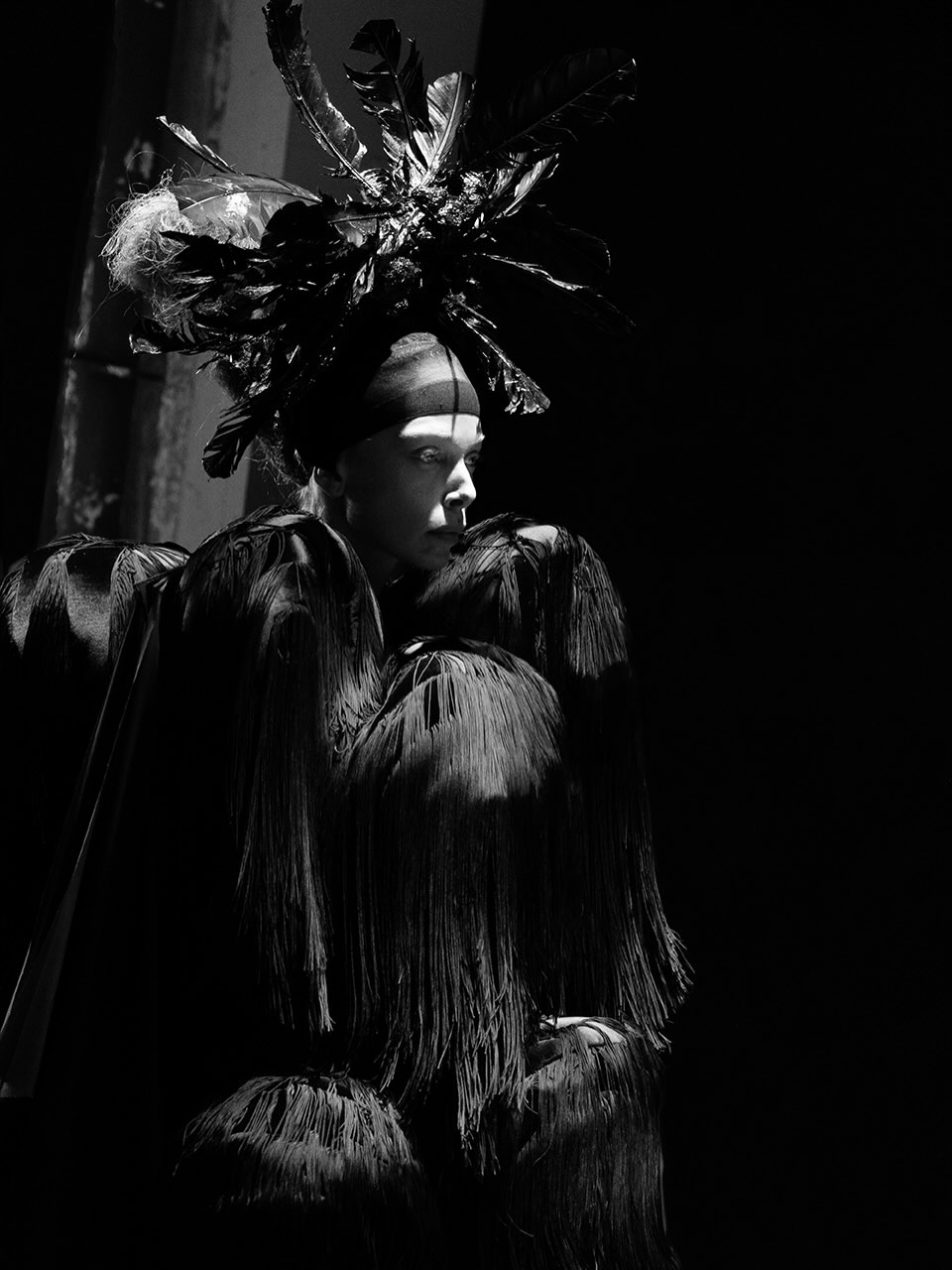
Rei Kawakubo's Comme des Garçons Autumn/Winter 2026 collection presented 16 monochromatic black ensembles in silk, velvet, lace, and jacquard, featuring 18th century panier-style silhouettes and wooden platform boots. Six Pepto-Bismol pink looks disrupted the all-black sequence before a final run of towering black silhouettes closed the show in silence.
Key Points
- Kawakubo used panier skirts, an 18th century silhouette, across multiple AW26 looks
- Six Pepto-Bismol pink looks interrupted 16 consecutive black ensembles in deliberate color disruption
- Comme des Garçons generates roughly $280 million annually, primarily from fragrance and PLAY line
The Silence Before the Fabric
Rei Kawakubo opened the Comme des Garçons Autumn/Winter 2026 show in near silence. No soundtrack. No pre-show DJ. Sixteen models walked out wearing exclusively black ensembles constructed from silk, velvet, lace, and jacquard, each manipulated into cascading volumes that obscured the body entirely. The wooden platform boots struck the floor like metronome clicks. It was the most aggressive quiet in Paris this season.
"Black is the color for me," Kawakubo said in the show notes. "The strongest. The best for creation. Rebel spirit. The universe. The black hole."
She is 83 years old. She has been showing in Paris since 1981. The collection felt less like a seasonal offering and more like a closing argument.
Construction and Anti-Construction
The silhouettes defied standard garment architecture. Several pieces featured panier-style skirts, the 18th century hip extension last seen in museum retrospectives of Vivienne Westwood's work. Others resembled urns or hourglasses, their forms achieved through internal boning and layered textile manipulation rather than tailoring.
The fabrics were uniformly rich. Silk organza provided structure where velvet provided weight. Lace panels appeared not as decoration but as load-bearing elements, stretched across ribcage-width gaps in otherwise opaque garments. Jacquard, woven with tonal patterns visible only under direct light, covered at least four looks from shoulder to floor.
Every piece was monochromatic black. No exception. Some were cinched at the waist with narrow ribbons in green or red, the only color permitted in the first two-thirds of the show. The effect was architectural: each look occupied space the way a Richard Serra sculpture occupies a gallery. You walked around it in your mind.
The Pink Disruption
Then the soundtrack stopped. Six models emerged in Pepto-Bismol pink. Same fabrics. Same volumetric principles. Entirely different register.
The pink was not playful. It was confrontational. Against sixteen consecutive black looks, it read as a deliberate violation, the visual equivalent of someone shouting in a library. Kawakubo has used color disruption before; her Spring 2017 collection introduced neon sculptural forms that the Metropolitan Museum later exhibited. This was subtler and more unsettling, because the pink pieces followed the same pattern language as the black ones. Only the hue changed. The meaning inverted entirely.
After the pink sequence, the music resumed for a final run of towering black silhouettes. The show ended without Kawakubo taking a bow.
Why This Matters Beyond the Runway
Comme des Garçons reported approximately $280 million in annual revenue in 2024, driven primarily by its fragrance business and the lower-priced PLAY line. The mainline collection, which Kawakubo designs personally, operates at a different altitude. It influences the designers who influence the market.
Demna's work at Balenciaga borrows her volumetric silhouettes. Rick Owens has cited her as the single most important living designer. When Kawakubo shows panier skirts in 2026, expect exaggerated hip details at Zara within 18 months.
The photographer Flo Kohl captured the collection details in a series that has already circulated to 2,580 engagements on the brand's Instagram. The images focus on texture rather than shape: close-ups of lace tension, velvet nap direction, and the grain of the wooden platforms. In a season of maximalist campaigns from Gucci and Prada, Comme des Garçons sold silence and material.
Kawakubo is not designing for the market. She is designing for the archive. AW26 will be studied the way her Spring 1997 "Body Meets Dress, Dress Meets Body" collection is still studied: as a statement about what clothing can mean when it stops trying to flatter.
The wooden platforms will be copied badly. The panier skirts will appear, diluted, on a dozen contemporary runways by next October. The pink disruption will be referenced in design school dissertations for a decade. None of that is the point. The point is that Kawakubo, at 83, is still the only designer in Paris showing collections that make other designers feel like they are not trying hard enough.
Related Reading
- How Rei Kawakubo Changed Everything
- COMME DES GARCONS REOPENS KYOTO FLAGSHIP WITH BOLD REDESIGN
- Why Comme des Garçons SS26 in CR Fashion Book Is Not a Campaign
Frequently Asked Questions
What was the Comme des Garçons AW26 collection about?
Rei Kawakubo presented 16 all-black looks in silk, velvet, lace, and jacquard with volumetric silhouettes, disrupted by six Pepto-Bismol pink pieces. Models wore wooden platform boots and walked in near silence.
What fabrics did Kawakubo use in AW26?
The collection featured silk organza, velvet, lace as structural elements, and tonal jacquard. Panier-style skirts and hourglass forms were achieved through internal boning and layered textile manipulation.
Why did Comme des Garçons use pink in an all-black show?
The six pink looks functioned as deliberate color disruption, following the same volumetric pattern language as the black pieces but inverting the emotional register, a technique Kawakubo has used since her Spring 2017 Met-exhibited collection.
Topics: flo-kohl, demna, velvet, balenciaga, avant-garde, rei-kawakubo, fashion, vivienne westwood, rick-owens, aw26, silk, gucci, prada, comme-des-garcons, vivienne-westwood, runway, rick owens, comme-des-garons, comme des garçons, paris-fashion-week