GUCCI PUTS RUBIES ON TITANIUM POPPIES FOR HIGH JEWELRY
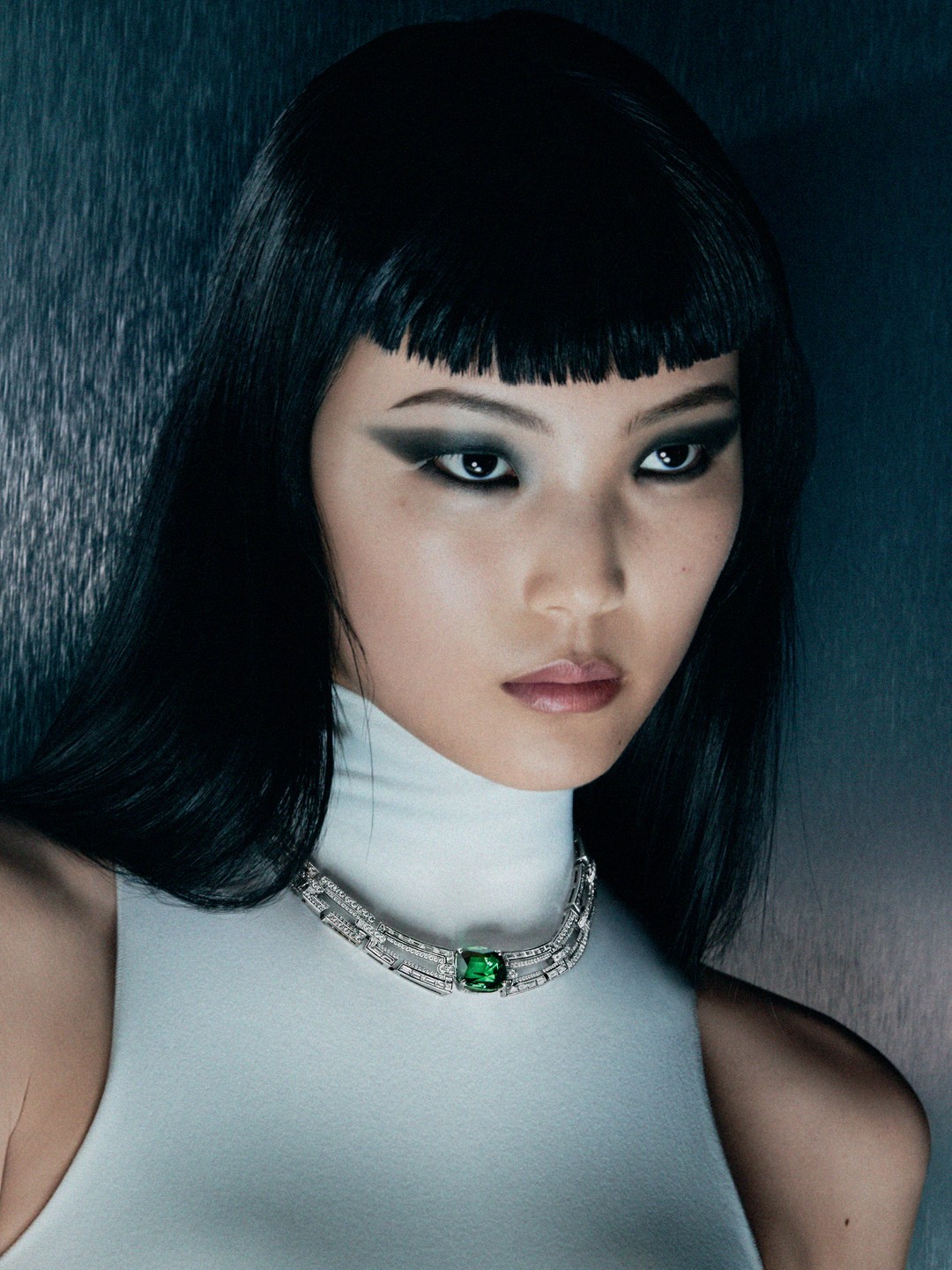
Gucci's newest high jewelry collection resets the House's Flora print, interlocking G logo, and Horsebit hardware in fine gemstones. Titanium poppy pieces carry rubies and rubellite, while the Labirinti Gucci suite pairs a 24.75 carat tanzanite with a 5.94 carat Paraiba tourmaline in one necklace. The Everlasting G suite floods Gucci's logo in diamond pave, green tourmaline, and baguette diamonds.
Key Points
- Gucci's Flora suite sets oversized poppies in titanium, not gold, with rubies and rubellite
- Labirinti Gucci pairs a 24.75 carat tanzanite with a 5.94 carat Paraiba tourmaline in one necklace
- Everlasting G floods Gucci's logo in diamond pave; Horsebit and Marina chain reset in tsavorite
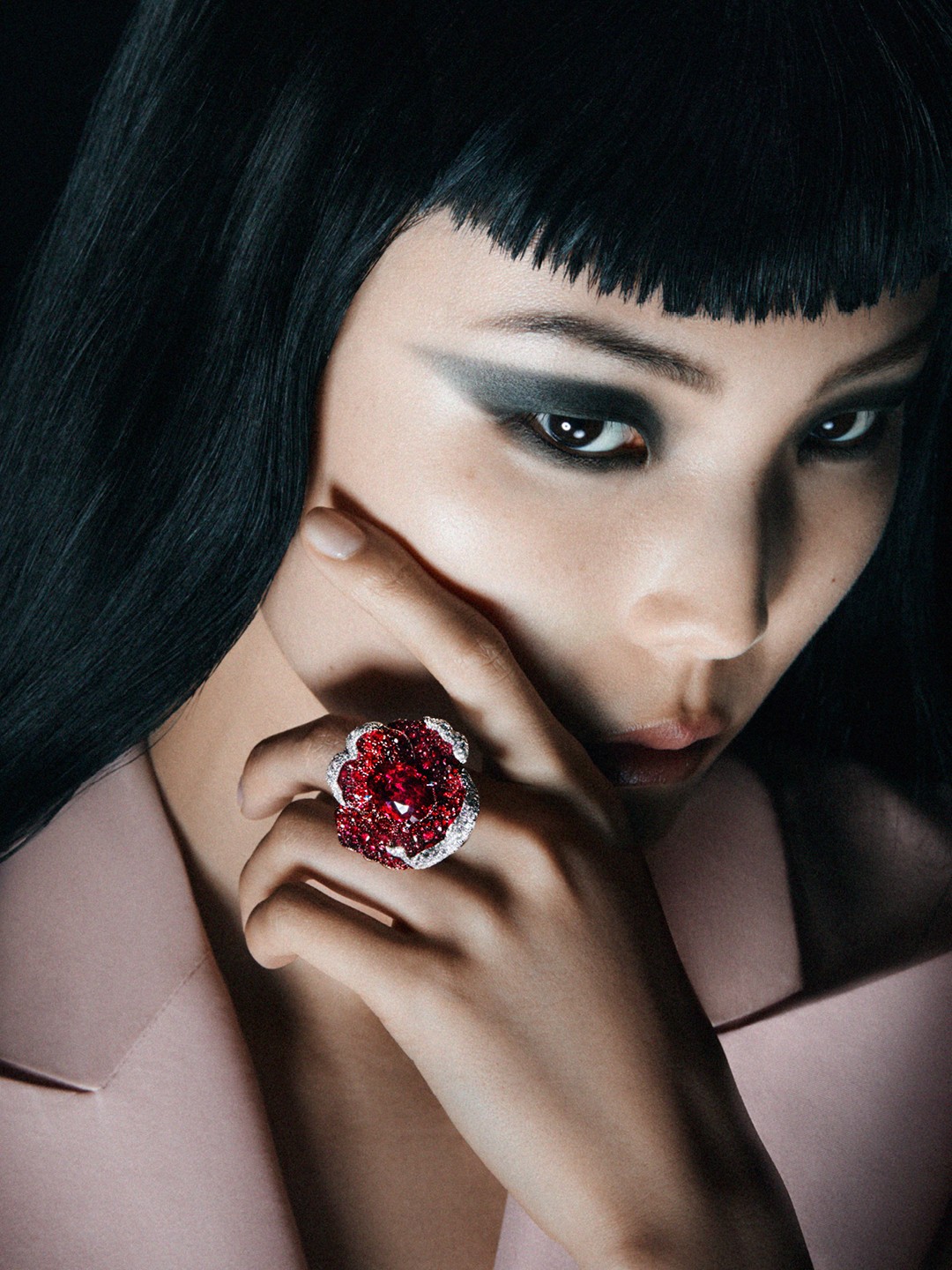
Titanium does not belong in fine jewelry. It belongs in surgical implants and racing bikes, too light and too hard to flatter under a jeweler's loupe the way gold does. Gucci used it anyway. The House's new high jewelry drop sets a full poppy motif, sculptural and oversized, in titanium carrying rubies and purple hued rubellites, and that single material choice tells you more about where Gucci's ateliers are headed than any runway note could.
The thesis is simple. Gucci is treating its own archive, the Flora print, the Horsebit, the interlocking G, as raw material for stone setting the way a tailor treats a bolt of cloth, and the results are more interesting than the brand's recent runway turbulence would suggest.
Titanium Carries the Poppies, Not Gold or Platinum
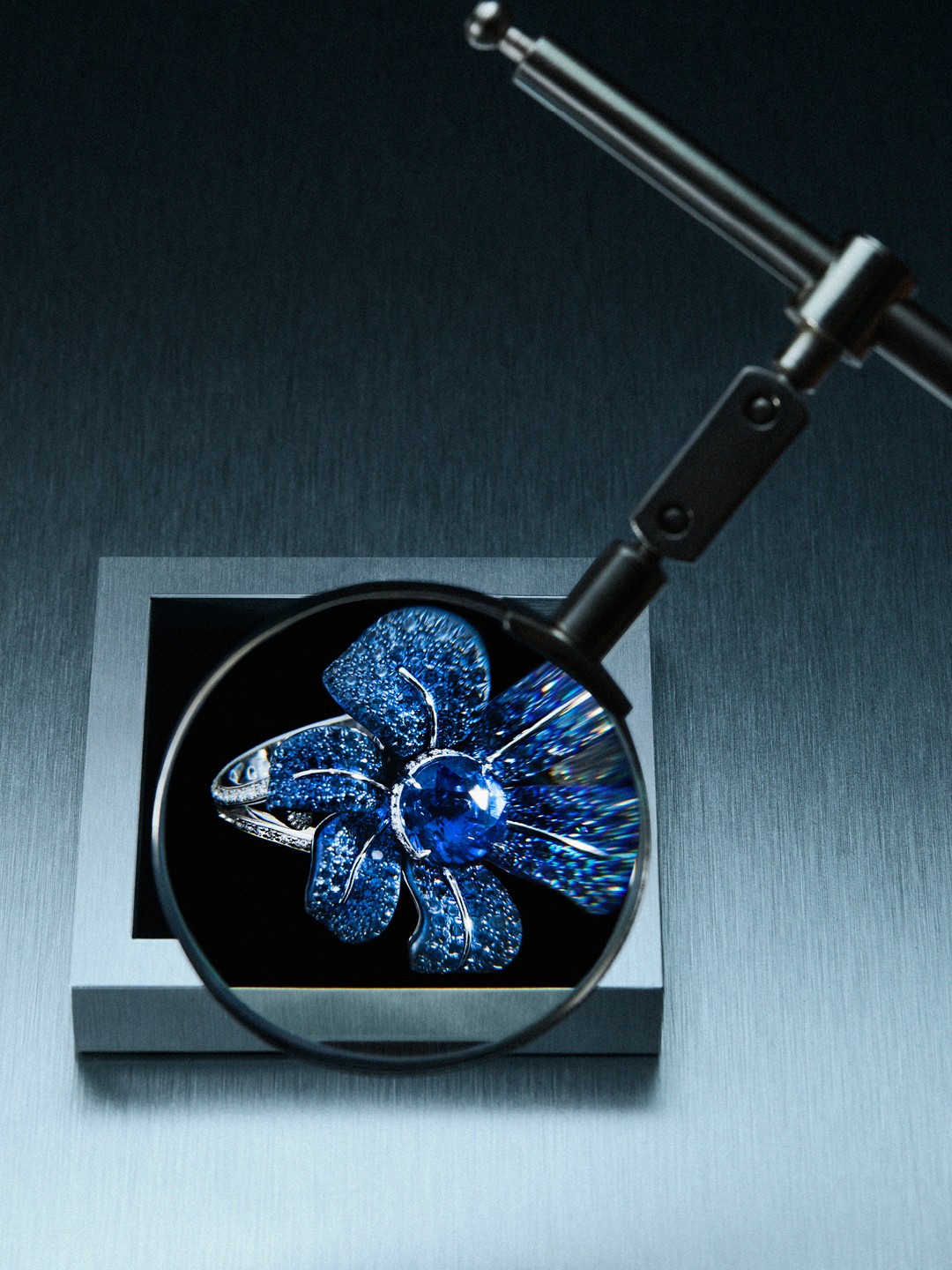
Gucci's Flora suite sets oversized poppy blooms in titanium, not gold or platinum, because the metal is light enough to hold a sculptural scale that would otherwise sag on an earlobe or a lapel. Rubies and rubellite fill the petals on the warm side of the collection. A companion Lily suite goes cooler, blue sapphires and diamonds set into titanium stems, both suites tracing to the same source: a 1966 Vittorio Accornero silk scarf commissioned as a gift for Grace Kelly, the print that has anchored Gucci's Flora line for sixty years. Finally Offline covered the Grace Kelly Flora revival at Gucci's Monte Carlo pop up in June, and this jewelry drop takes that same sixty year old scarf pattern and recuts it in gemstones instead of silk.
Everlasting G Turns Diamond Pave Into Architecture
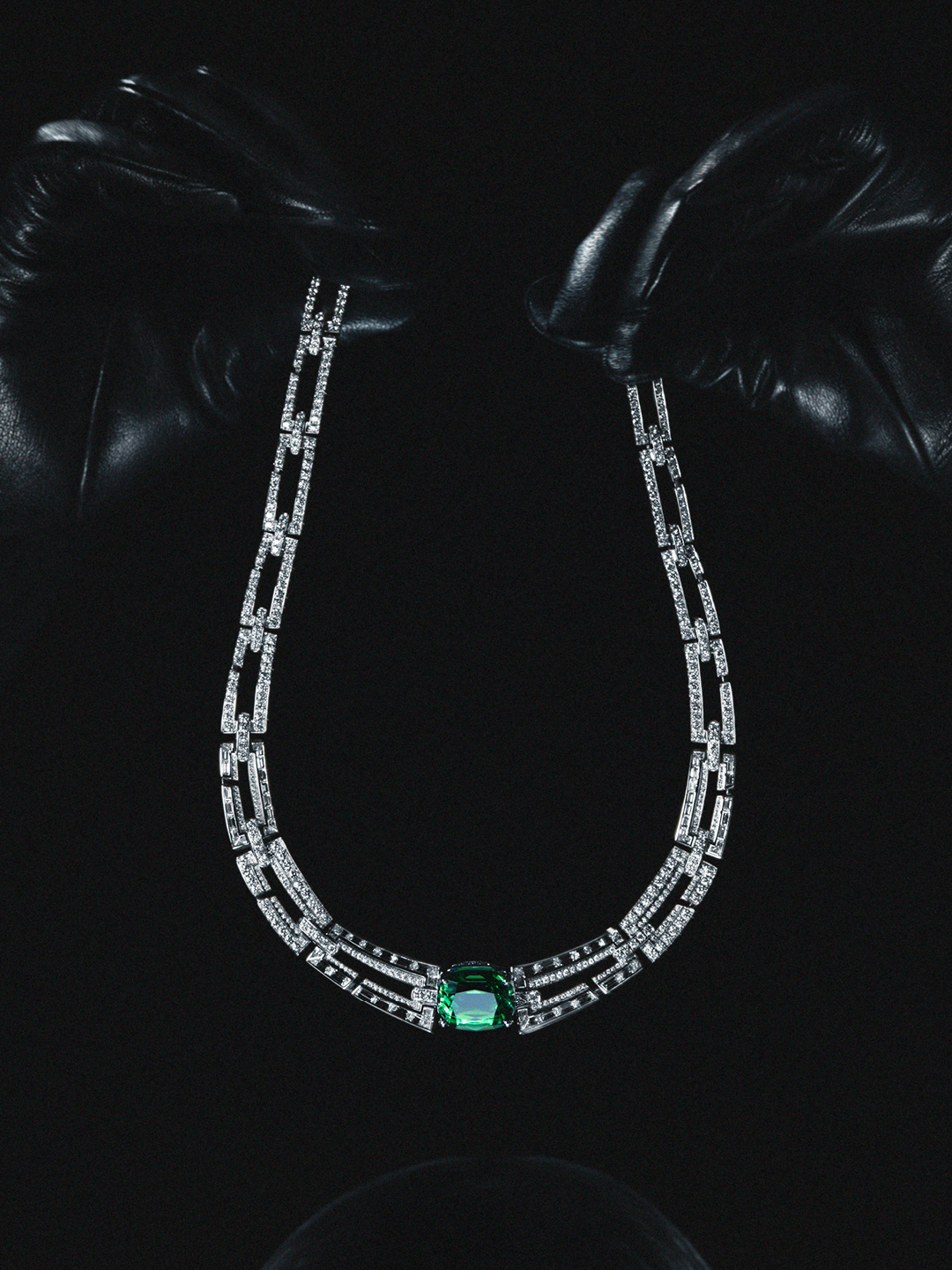
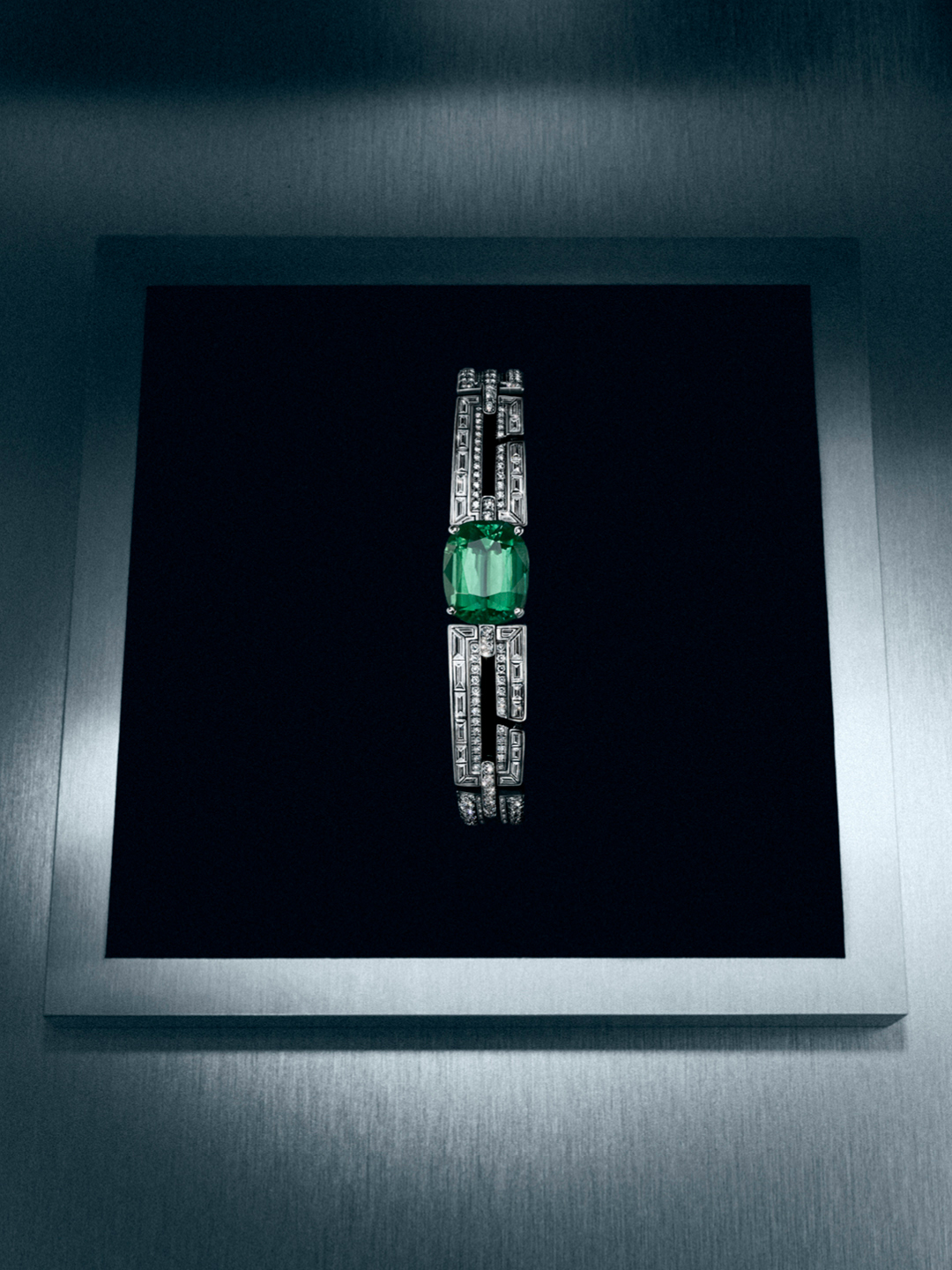
Everlasting G stretches Gucci's interlocking logo into elongated geometric forms, then floods the outline in diamond pave, green tourmalines, and baguette cut diamonds set in white gold. The monogram stops reading as a trademark and starts reading as structure, closer to how a jeweler treats a signature link chain than how a fashion house treats a logo. The same instinct reset the Horsebit and the Marina chain as jewelry candidates under the Iconic Signatures suite, both rebuilt in tsavorites, tanzanites, and white diamonds. Two accessory hardware pieces, a snaffle bit and a boat chain, now sit in the fine jewelry case instead of the leather goods one.
24.75 Carats of Tanzanite, Wrapped in Diamonds
The sharpest engineering in the drop sits inside Labirinti Gucci, a run of twenty new pieces built around linear, articulated diamond necklaces designed to move with the neck instead of sitting stiff against it. One centerpiece pairs a 24.75 carat cushion cut tanzanite with a 5.94 carat Paraiba tourmaline, both wrapped in cascading diamonds. Paraiba tourmaline commands a premium most colored stones cannot touch, copper bearing crystals mined almost exclusively out of Brazil and Mozambique, and pairing one at nearly six carats against a stone that size is a statement about sourcing budget as much as design.
The Horsebit Never Needed This Much Sparkle
A snaffle bit did not need tsavorite and diamond pave to work as a status signal. Gucci's Horsebit has closed loafers and bag straps since 1953 on the strength of the hardware alone, no stone required. Setting it in colored gemstones for Iconic Signatures is Gucci arguing that its own hardware, not just its prints, deserves the same fine jewelry treatment as a scarf motif. Gucci previously turned its own archive into a retail argument with the Bamboo bag's leather shortage origin story, and the same logic applies here. Heritage hardware, recut in a harder material or a rarer stone, costs more to produce but justifies a price a plain new design could never carry.
"Identity Needs No Proof"
Gucci's ready to wear runway changed creative directors this year, but the high jewelry atelier is still running on Alessandro Michele's maximalist grammar, the instinct behind a tennis star fronting a menswear campaign. Jannik Sinner fronted Gucci's Made in Italy push with the line "identity needs no proof," and that is the argument this jewelry collection makes in metal and stone instead of a slogan. The House does not need a new logo. It needs sixty year old flowers and a Horsebit, reset in tanzanite and rubellite.
A 24.75 carat tanzanite set into an articulated diamond necklace and a titanium poppy suite set in rubellite are not comparable to a seasonal accessory drop, and they are not meant to be. This is Gucci proving its ateliers can still execute the hardest version of the House's own archive, on a material almost no competing maison will touch at this scale. Watch for the Everlasting G diamond pave treatment to migrate into a more accessible capsule within a year. That is how Gucci has always tested a house code before committing it to the wider collection.
Related: VALENTINO GARAVANI DIES AT 93 AS ROME MOURNS ITS RED CARPET KING.
Frequently Asked Questions
What is Gucci's new high jewelry collection?
Gucci's newest high jewelry drop resets the House's Flora print, interlocking G logo, and Horsebit hardware in fine gemstones, including titanium poppy pieces set with rubies and rubellite.
What stones are used in Gucci's high jewelry?
The collection uses diamonds, green tourmalines, rubies, rubellite, blue sapphires, tsavorites, tanzanites, and Paraiba tourmaline across its Flora, Everlasting G, Iconic Signatures, and Labirinti Gucci suites.
How big is the tanzanite in the Labirinti Gucci necklace?
The centerpiece Labirinti Gucci necklace pairs a 24.75 carat cushion cut tanzanite with a 5.94 carat Paraiba tourmaline, both wrapped in cascading diamonds.
Why does Gucci use titanium instead of gold for the Flora pieces?
Titanium is light enough to support the oversized, sculptural scale of the poppy blooms without the piece sagging on an earlobe, which gold or platinum cannot do as easily at that size.
Is the Horsebit part of Gucci's high jewelry line?
Yes. The Iconic Signatures suite resets Gucci's Horsebit and Marina chain hardware in tsavorites, tanzanites, and white diamonds, moving both from leather goods hardware into fine jewelry.
Where does Gucci's Flora print originate?
The Flora print traces to a 1966 silk scarf illustrated by Vittorio Accornero and commissioned as a gift for Grace Kelly, and it has anchored Gucci's Flora line for sixty years.
Who is the face of Gucci's Made in Italy campaign?
Tennis player Jannik Sinner fronts Gucci's Made in Italy campaign under the line identity needs no proof, released alongside the House's 2026 high jewelry push.
Topics: italian-craftsmanship, luxury-jewelry, titanium-jewelry, paraiba-tourmaline, alessandro-michele, tanzanite, gucci-flora, gucci, horsebit, high-jewelry