GAGOSIAN CLOSES BASEL WEEK WITH GROTJAHN AND BURDEN
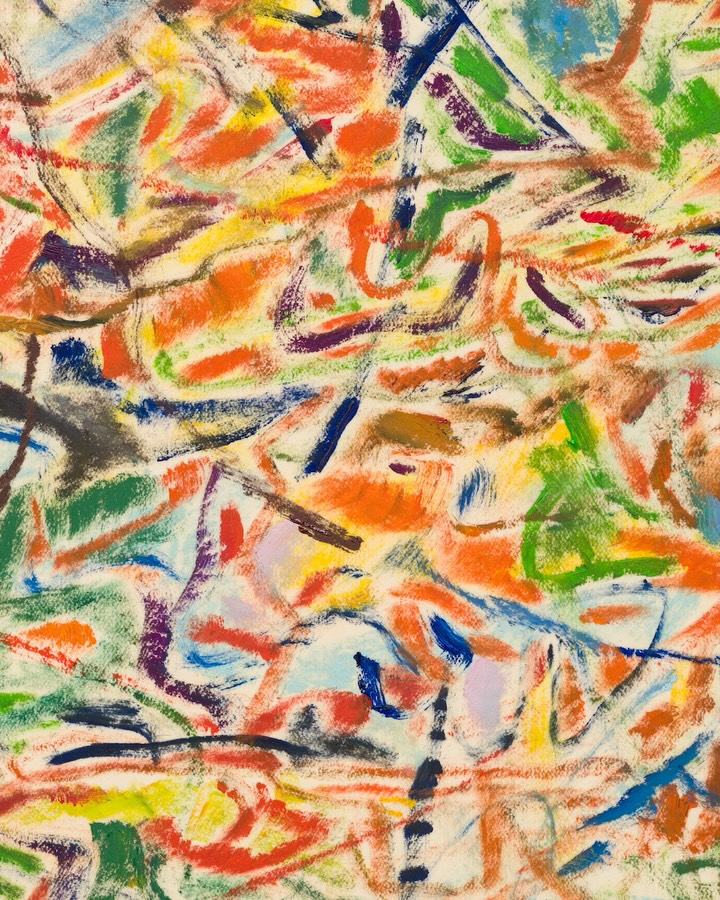
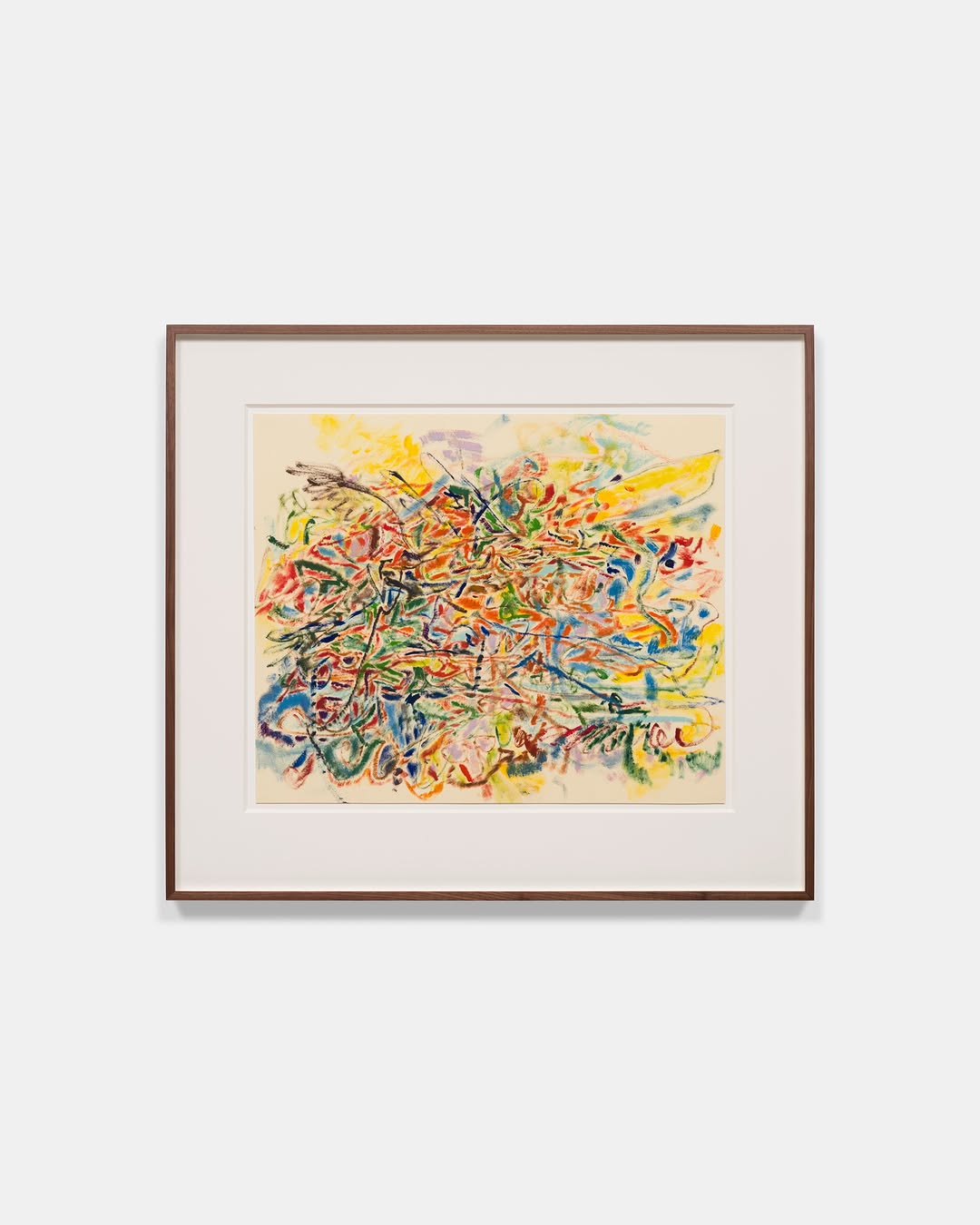
Gagosian closed its group exhibition Selections on June 21, 2026, at its Rheinsprung 1 space in Basel, ending a three-site Art Basel run that included a multi-artist booth and two Unlimited installations. The off-site show paired Mark Grotjahn and Jonas Wood with Helen Frankenthaler's 1978 painting Jockey, while Unlimited held Chris Burden's 1993 L.A.P.D. Uniforms and Ed Ruscha's 1987 A, B, C in Hall 1. Art Basel 2026 ran June 18 to 21 with 290 galleries and an Unlimited sector of 59 projects.
Key Points
- Selections closed June 21, 2026 at Gagosian's Rheinsprung 1 space, capping a three-site Basel run open since June 15
- Unlimited held Burden's 1993 L.A.P.D. Uniforms, each 88 by 72 by 6 inches scaled to a 7-foot-4 officer, plus Ruscha's 1987 A, B, C
- Art Basel 2026 ran June 18 to 21 with 290 galleries; Unlimited drew 59 projects across 16,000 square meters
Selections closes at Gagosian's Rheinsprung 1 space on June 21
Gagosian's group exhibition Selections closes today, June 21, 2026, at the gallery's Rheinsprung 1 space in Basel, a short walk from Messe Basel. The show ran from June 15 and brought together works by twentieth- and twenty-first-century artists including Mark Grotjahn, Helen Frankenthaler, and Jonas Wood. It is one of three Gagosian sites operating across the city during Art Basel week, alongside a multi-artist booth inside the fair and two historical installations in the Unlimited sector.
The timing is deliberate. Art Basel 2026 itself ran June 18 to 21 at Messe Basel, with preview days on June 16 and 17, so Gagosian opened its off-site room three days before the fair doors and held it open to the final bell. The gallery has long treated the host city as more than a booth, and this year it spread its presence across a public fair stand, a curated sector, and a private gallery show.
Mark Grotjahn and Helen Frankenthaler anchor the off-site group show
The Rheinsprung 1 exhibition leads with painting, pairing contemporary work by Mark Grotjahn with a postwar canvas by Helen Frankenthaler. Frankenthaler's Jockey, painted in 1978, measures 41 and three-eighths by 57 and a half inches and sets a field of ochre under transparent gray washes broken by reddish-brown, burnt orange, and royal blue.
Frankenthaler belonged to the second generation of postwar American abstract painters, and Jockey marks a shift away from the pure soak-stain method she pioneered toward broader brushstrokes worked over tinted canvas. Grotjahn, a Los Angeles painter known for his Butterfly and Face series, supplies the contemporary counterweight. The show also includes Jonas Wood's Fruit on Wood, a 2026 oil and acrylic still life of bananas, grapes, oranges, pineapples, and watermelons scattered across a tabletop, a reminder that the off-site room is built to sell as much as to survey.
A group show like this is a different proposition from a single-artist museum survey or a permanent installation. It is a snapshot of a gallery's inventory at one moment, assembled to read as a coherent argument about quality across seven decades of work.
Chris Burden's seven-foot police uniforms loom over Unlimited
Inside Messe Basel, Gagosian's Unlimited presentation centers on Chris Burden's L.A.P.D. Uniforms, a 1993 work of oversized police garments installed in Hall 1. Each uniform measures 88 by 72 by 6 inches and is built from wool serge, metal, leather, plastic, and a handgun, scaled to fit an imaginary officer seven feet four inches tall.
Burden made the piece during a 1992 to 1993 residency at the Fabric Workshop in Philadelphia, in the wake of the 1992 Los Angeles uprising that followed the acquittals of four LAPD officers in the beating of Rodney King. Each uniform carries a badge, belt, baton, handcuffs, bullets, and a Beretta handgun, and the set is hung so the outstretched sleeve of one nearly touches the next, ringing the room. The effect is a circle of looming institutional authority that dwarfs anyone who walks in.
Unlimited is the fair's home for work too large for a standard booth. The 2026 edition, curated by MoMA PS1 chief curator Ruba Katrib, gathered 59 projects across roughly 16,000 square meters, and Burden's uniforms sit among the most physically confrontational of them.
Ed Ruscha's A, B, C completes the three-site run
The second Gagosian work in Unlimited is Ed Ruscha's A, B, C, a 1987 painting also presented in Hall 1 during the June 15 to 21 window. Conceived for the Miami-Dade Public Library and rarely seen since, it enlarges three letters until they read as image and word at once. Ruscha, the Los Angeles painter who turned gas stations, single words, and Hollywood typography into his subject, pairs naturally with Burden as the West Coast half of Gagosian's historical pitch this week.
Together the two installations frame the gallery's booth and its off-site show, giving Basel visitors a Gagosian route that runs from a 1978 canvas to a 2026 still life. The fair's 2026 flagship brought together 290 galleries from 43 countries, and within that crowd Gagosian chose to spread thin rather than concentrate, betting that three rooms read louder than one. That logic mirrors how galleries increasingly stage culture as a multi-site event rather than a single hang.
Verdict
Gagosian's Basel week is a clean demonstration of scale used as strategy. Selections closes June 21 at Rheinsprung 1 with Frankenthaler's 1978 Jockey and Jonas Wood's 2026 Fruit on Wood, while Burden's 1993 L.A.P.D. Uniforms and Ruscha's 1987 A, B, C hold Hall 1 of Unlimited, the sector that drew 59 projects across 16,000 square meters this year. The same week that lost David Hockney reminds the market why these blue-chip names keep their value, and why a gallery will pay to occupy three rooms in one city to protect it.
Frequently Asked Questions
What is gagosian selections basel 2026?
Selections is a group exhibition at Gagosian's Rheinsprung 1 space in Basel featuring works by Mark Grotjahn, Helen Frankenthaler, Jonas Wood, and other twentieth- and twenty-first-century artists, running June 15 to 21, 2026.
When does gagosian selections close at art basel 2026?
Selections closes on June 21, 2026, the final day of Art Basel 2026 at Messe Basel.
Where is gagosian's off-site show during art basel 2026?
Gagosian's off-site group show Selections is held at Rheinsprung 1 in Basel, described as a short walk from Messe Basel.
What is chris burden lafd uniforms at art basel?
L.A.P.D. Uniforms is a 1993 work by Chris Burden consisting of oversized police garments, each measuring 88 by 72 by 6 inches and scaled to fit an imaginary officer seven feet four inches tall, installed in Hall 1 of the Unlimited sector at Messe Basel.
Who made chris burden lafd uniforms and why?
Chris Burden made L.A.P.D. Uniforms during a 1992 to 1993 residency at the Fabric Workshop in Philadelphia, in response to the 1992 Los Angeles uprising that followed the acquittals of four LAPD officers in the beating of Rodney King.
What is helen frankenthaler jockey painting?
Jockey is a 1978 canvas by Helen Frankenthaler measuring 41 and three-eighths by 57 and a half inches, featuring ochre fields under transparent gray washes broken by reddish-brown, burnt orange, and royal blue, included in Gagosian's Selections show.
What is ed ruscha abc painting at art basel 2026?
A, B, C is a 1987 painting by Ed Ruscha originally conceived for the Miami-Dade Public Library and rarely seen since, presented in Hall 1 of the Unlimited sector at Art Basel 2026 during June 15 to 21.
How many projects were in art basel unlimited 2026?
The Unlimited sector at Art Basel 2026, curated by MoMA PS1 chief curator Ruba Katrib, gathered 59 projects across roughly 16,000 square meters.
Topics: Basel 2026, Helen Frankenthaler, contemporary art, Unlimited, moma, art fair, Mark Grotjahn, Gagosian, Ed Ruscha, moma-ps1, gagosian, Chris Burden, art-basel, Art Basel, moma ps1, art basel