FERRARI 849 TESTAROSSA DELIVERS 1036 HORSEPOWER WITH ASSETTO FIORANO PACKAGE
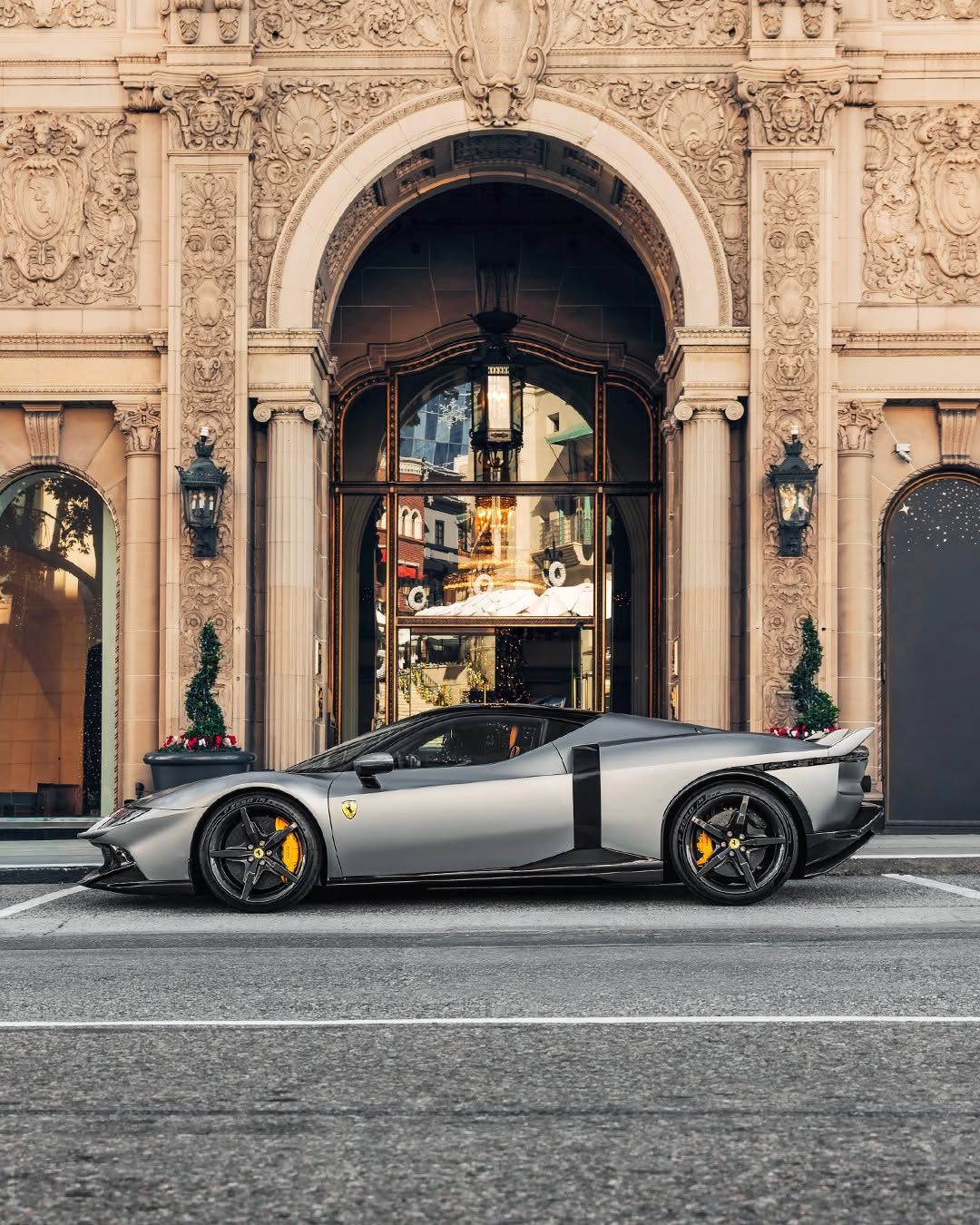
Ferrari unveiled the 849 Testarossa as the SF90 Stradale's successor, featuring 1,036 hp from a reworked twin-turbo V8 and three electric motors. The architectural design by Flavio Manzoni includes twin-tail aerodynamics and an optional Assetto Fiorano package that reduces weight by 30kg while adding track-focused aerodynamics.
Key Points
- 830 cv V8 engine produces 50 cv more than SF90 with largest turbos ever fitted to a Ferrari road car
- Assetto Fiorano package reduces weight by 30kg and generates 415kg of downforce at 250 km/h
- 1,570kg dry weight maintains SF90's mass despite 50 cv power increase through titanium components
The Numbers That Matter 1,036 horsepower. 2.3 seconds to 62 mph. 205 mph top speed. 0-200 km/h in 6.35 seconds. 1:17.5 Fiorano lap time, 1.5 seconds quicker than the SF90 Stradale. The 849 Testarossa maintains the SF90's 1,570 kg dry weight despite enormous performance increases through meticulous weight reduction including titanium fasteners and lighter valve gear. Ferrari claims this delivers the best power-to-weight ratio ever achieved by a model in their range. The "849" designation breaks down simply: 8 cylinders, 49 cubic centimeters displacement per cylinder. The V8 now produces 830 cv (819 hp) at 7,500 rpm, a 50 cv increase over the previous iteration, with a specific output of 208 cv/l.
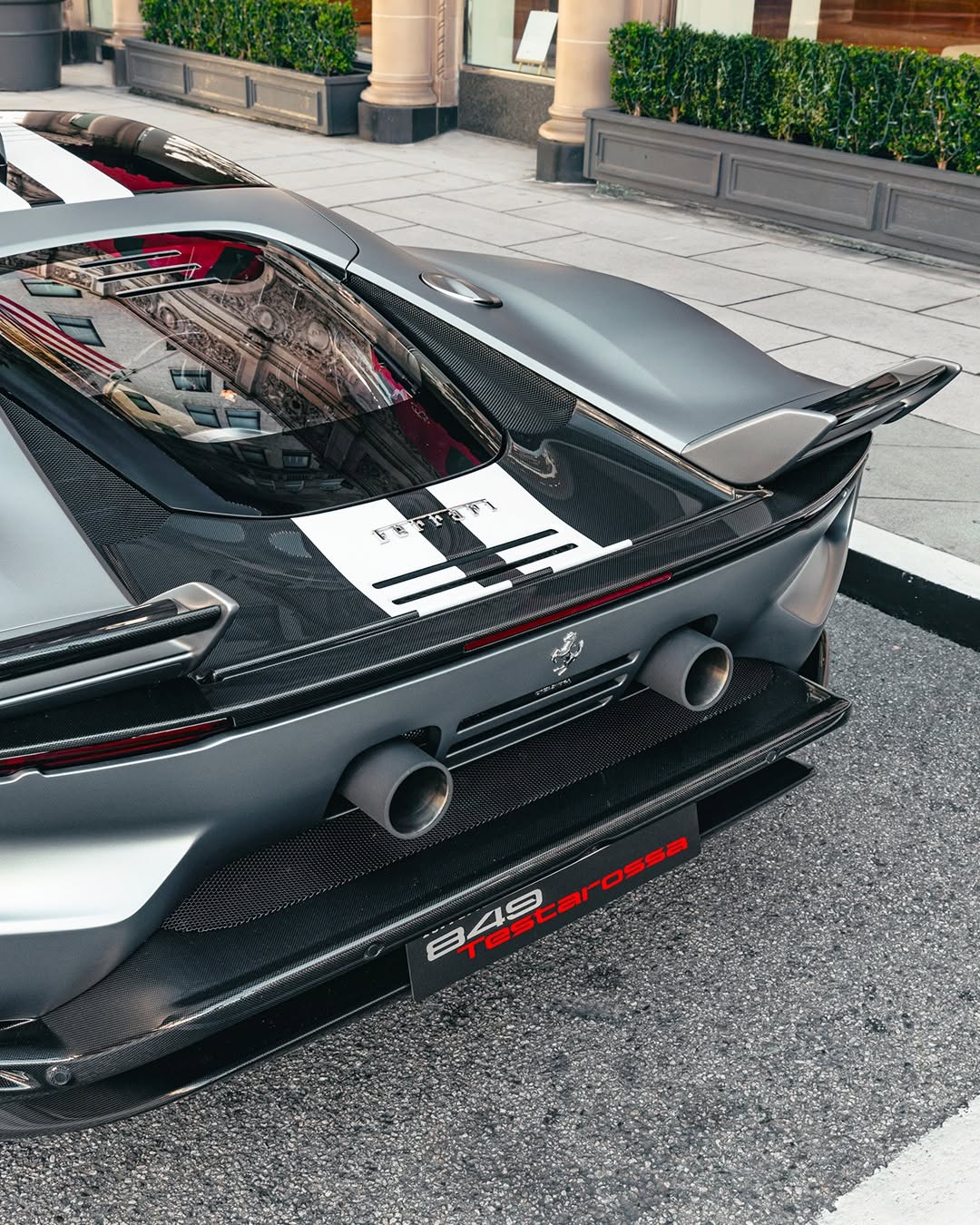
Constraint Bred Excellence Ferrari achieved the power increase while maintaining the same 3,990 cc displacement through completely reworked components: an all-new, larger turbocharger (the biggest ever on a production Ferrari), revised cylinder heads and block, new exhaust manifolds and intake plenums, titanium fasteners. The turbochargers are the largest ever fitted to a Ferrari road car with low-friction bearings, complemented by a fully Inconel exhaust system. Cooling requirements increased 15% over the SF90, achieved through deeper side intakes and revised channel systems in the doors. Two electric motors on the front axle make up the RAC-e system enabling 4WD and torque vectoring to maximize traction when exiting corners. The third electric motor, the MGU-K, is positioned on the rear axle and derives directly from Ferrari's Formula 1 experience.
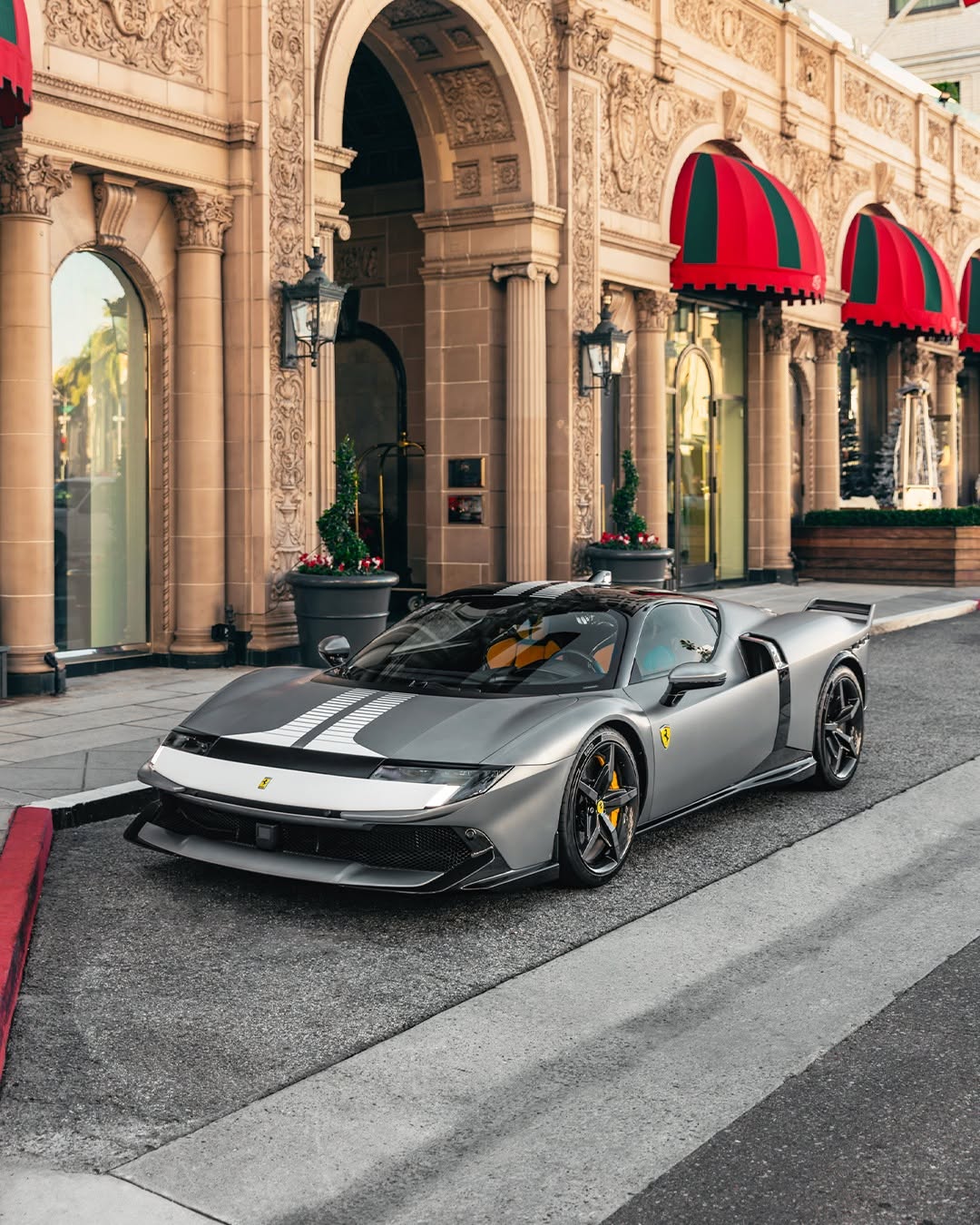
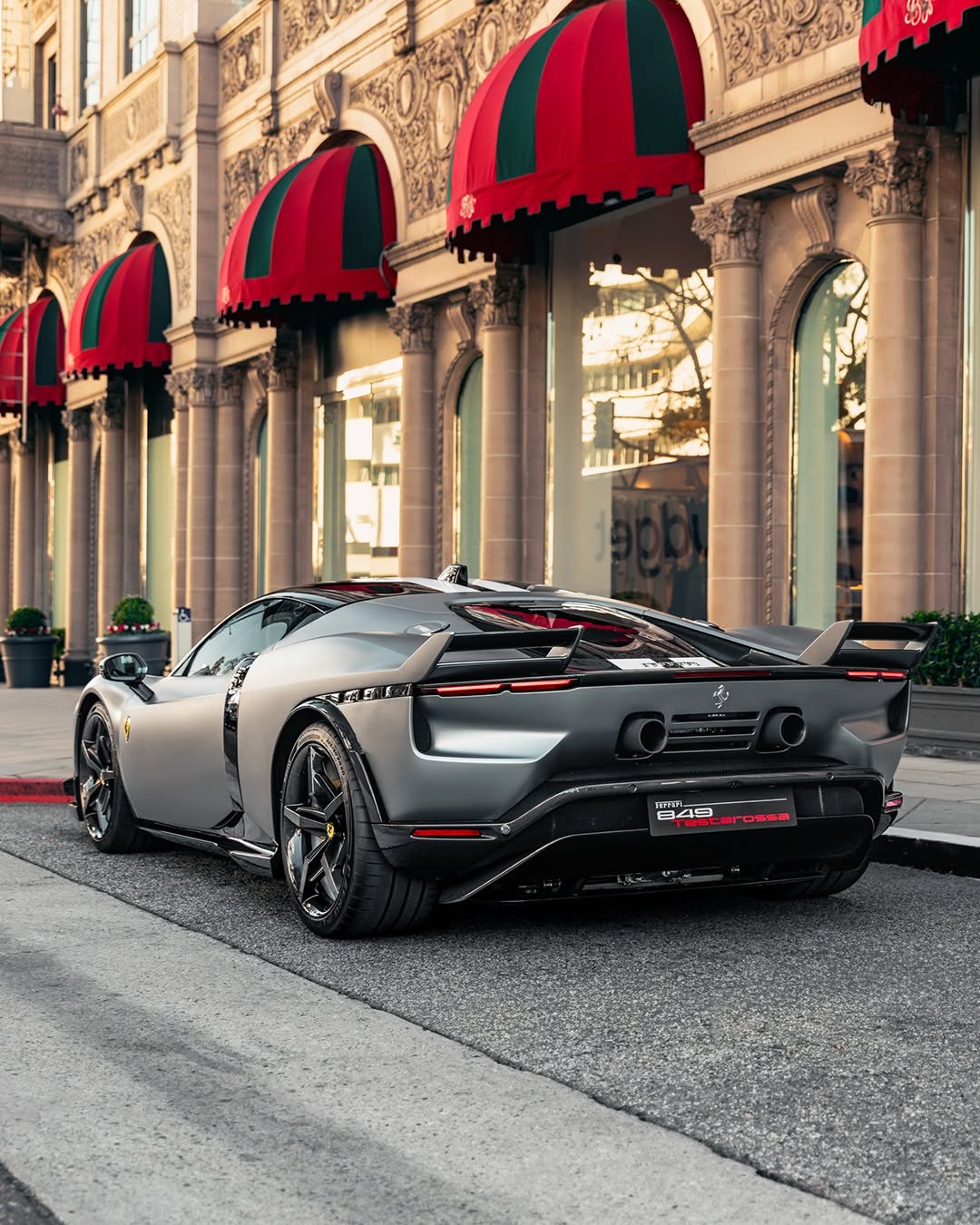
Material Honesty In Motion The 849 Testarossa was developed by the Ferrari Styling Centre, directed by Flavio Manzoni, with styling language that develops an architectural and futuristic direction citing Oscar Niemeyer's Mondadori headquarters as inspiration. The flank is dominated by doors with three-dimensional modeling that starts from the main crease line. The deeply sculpted upper surface achieves complex three-dimensionality never before seen on a standard production car. The panel is made of a single aluminum alloy molding thanks to Ferrari's advanced manufacturing. Dimensions: 185.8 inches long, 78.7 wide, 48.2 high on a 104.3-inch wheelbase. Tire sizes are 265/35R20 front and 325/30R20 rear on 9.5- and 11.5-inch rims.
The Assetto Fiorano Equation The Assetto Fiorano track package sheds approximately 66 pounds (30 kilograms) from the standard model, bringing dry weight down to just over 3,462 pounds (1,570 kilograms). The package includes carbon-fiber seats, titanium springs, optional carbon wheels, and enhanced aerodynamics. Aerodynamics are upgraded with larger flicks up front and twin wings at the rear that triple downforce compared to the standard twin-tail. Total downforce reaches 415 kg at 250 km/h, with the larger splitter contributing 10% front downforce, the twin-tail rear architecture adding 10% rear downforce, and cascading vortex generators underneath adding 20% downforce compared to the SF90 Stradale. Michelin Pilot Sport Cup 2 tires are specific to this setup, and for the first time you can pair Assetto Fiorano with a front axle lifter if you retain the MagneRide dampers.
Tactile Revolution Ferrari has ditched controversial touch-sensitive steering wheel controls in favor of physical buttons. The steering wheel now features physical buttons for Start/Stop function and suspension settings, replacing the frustrating touch-capacitive pads of previous models. The center console features a metal "grille" selector for gearbox modes that doesn't shift gears mechanically, but visually anchors the cabin in Ferrari's manual history. The F80-inspired gated selector floats on the driver-side sail, finished in aluminum. The driver-focused cockpit includes a new digital cluster with Apple CarPlay and Android Auto, MyFerrari Connect, and wireless charging.
Production Reality Unveiled to the public on 9 September 2025, production is planned to begin in the middle of 2026. European pricing starts at €460,000 for the coupe and €500,000 for the Spider, approximately $540,000 and $586,000 at current conversion rates. The Assetto Fiorano option adds $62,000. First deliveries of the coupe will begin in the first half of 2026, while the Spider will arrive in the second half of the year. First Australian deliveries expected in the first half of 2027. The 849 Testarossa represents Ferrari's answer to the constraint of extracting more performance from the same displacement while maintaining the same weight. It finally feels cohesive as the most powerful production powertrain Ferrari has ever offered. The architecture is honest about what it is: a precision instrument designed around the constraint of hybrid regulations and the material reality of what 1,036 horsepower requires from aluminum, titanium, and carbon fiber.
Related Reading
- FERRARI F80 FIRST US DELIVERY HITS LA AT $3.9 MILLION
- LAMBORGHINI REVIVES the MIURA LEGEND
- FERRARI IS BRINGING THE GTO, F40, AND F50 ON THE SAME ROAD FOR THE LEGACY TOUR
Frequently Asked Questions
How much more powerful is the 849 Testarossa than the SF90?
The 849 Testarossa produces 1,036 hp compared to the SF90's 987 hp, a 49 hp increase. The V8 engine alone gains 50 cv, now producing 830 cv versus the SF90's 780 cv.
What does the Assetto Fiorano package include?
The Assetto Fiorano package reduces weight by 30kg through carbon-fiber wheels, lightweight seats, and titanium springs. It adds enhanced aerodynamics generating 415kg of downforce at 250 km/h and includes Michelin Pilot Sport Cup 2 tires.
When will the Ferrari 849 Testarossa be available?
Production begins in mid-2026, with coupe deliveries starting in the first half of 2026 and Spider deliveries in the second half. European pricing starts at €460,000 for the coupe.
How does the 849 Testarossa's design differ from the SF90?
Flavio Manzoni's design features architectural, geometric lines inspired by 1970s sports prototypes. Key elements include three-dimensional doors that function as aerodynamic ducts, a twin-tail rear design, and a bridge-like front fascia.
Topics: italian, aerodynamics, prancing-horse, supercar, testarossa, assetto-fiorano, formula-1, hybrid, automotive, focus-50-66, design, formula 1, flavio-manzoni, ferrari, apple