CHAOFFICE TURNED A BEIJING WASTELAND INTO A HOUSE WITH A SLIDE
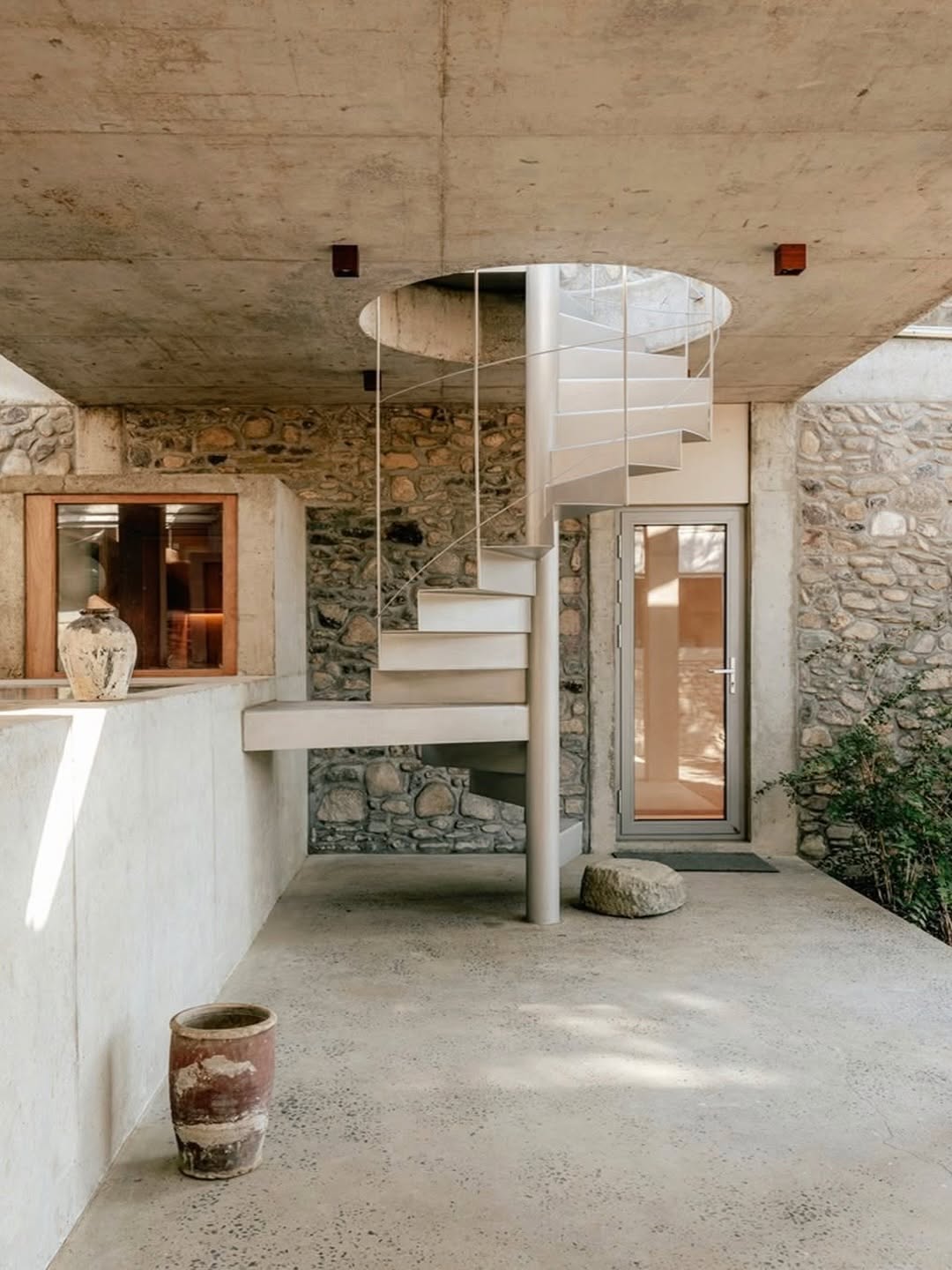
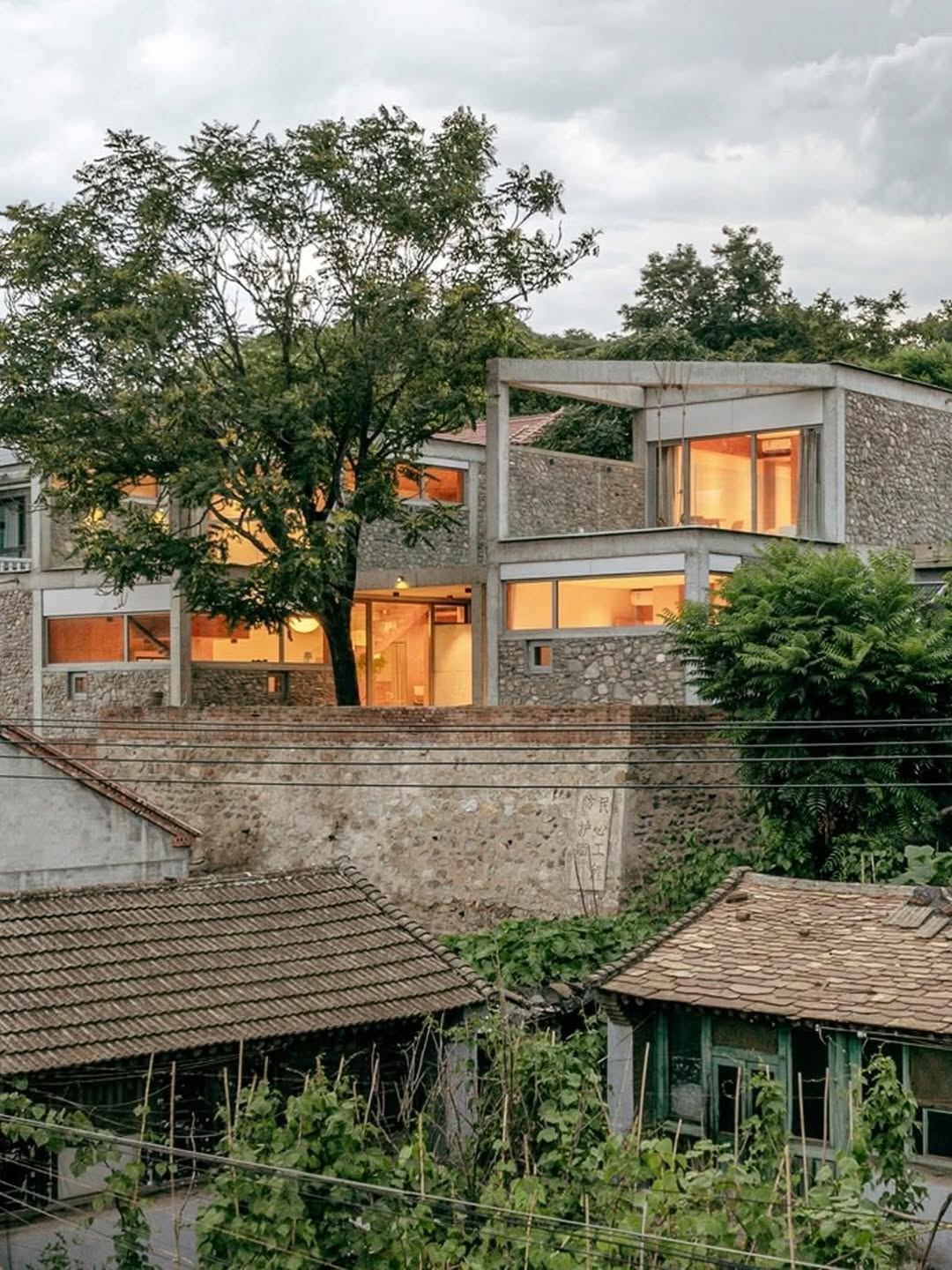
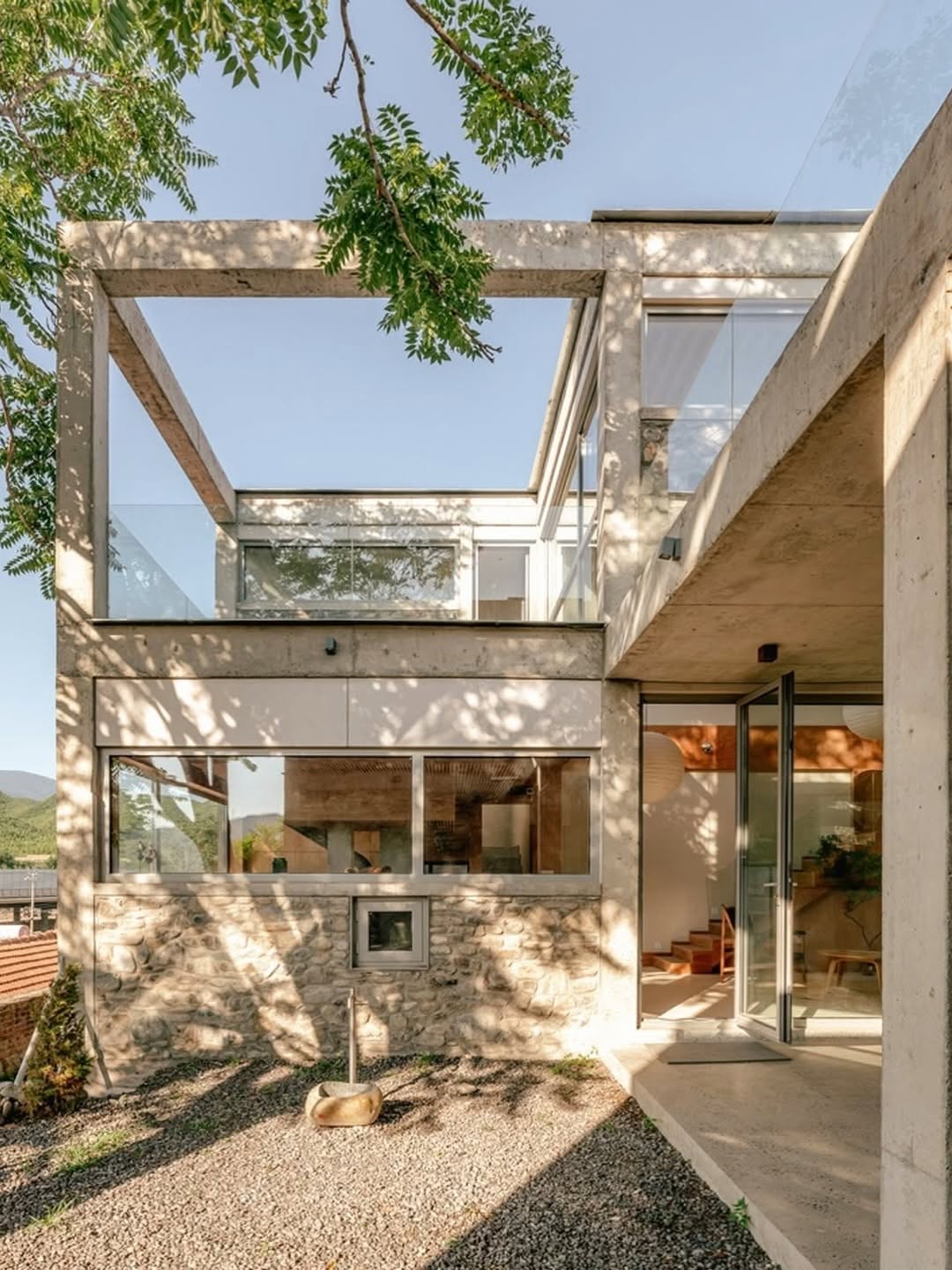
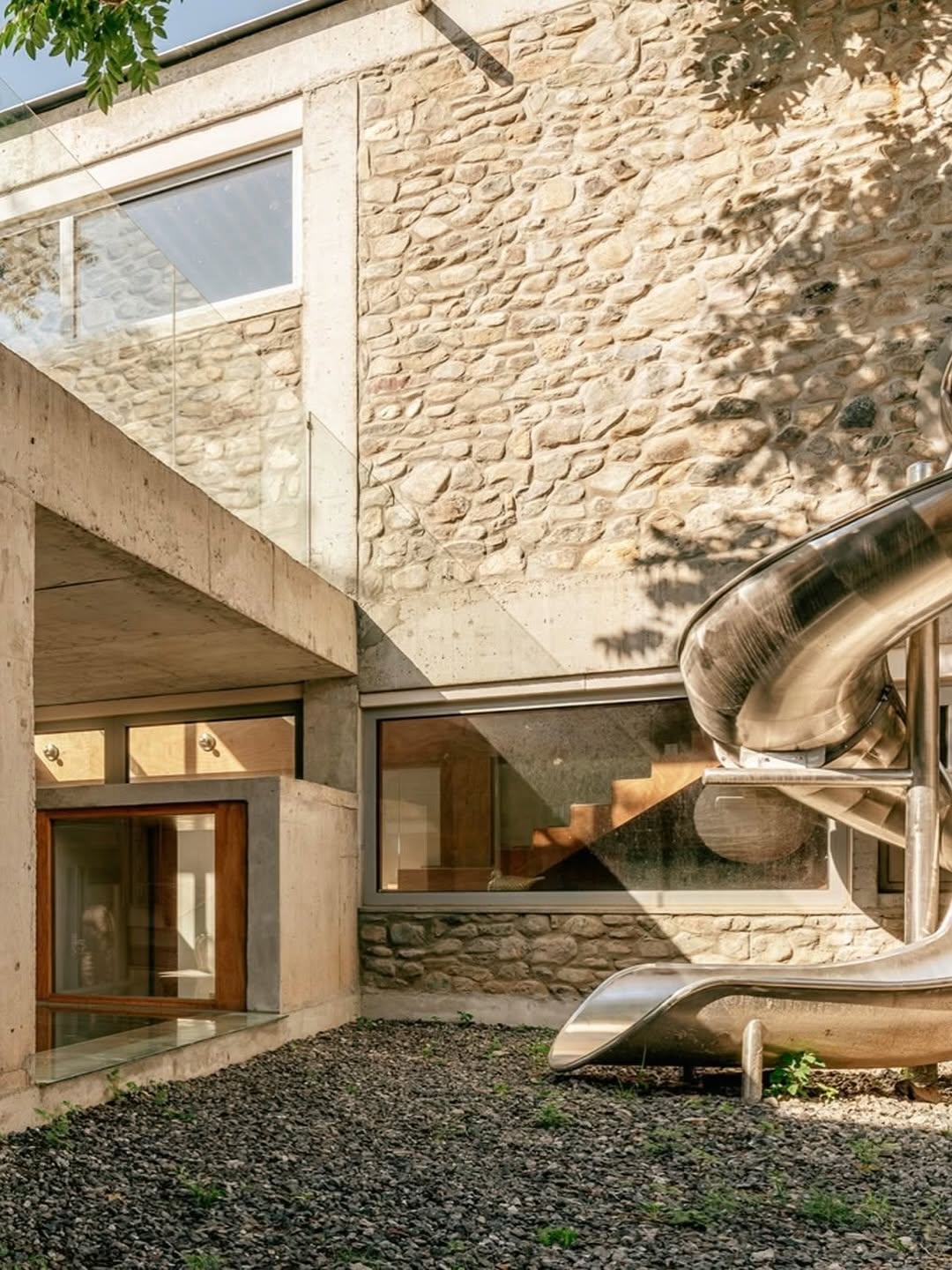
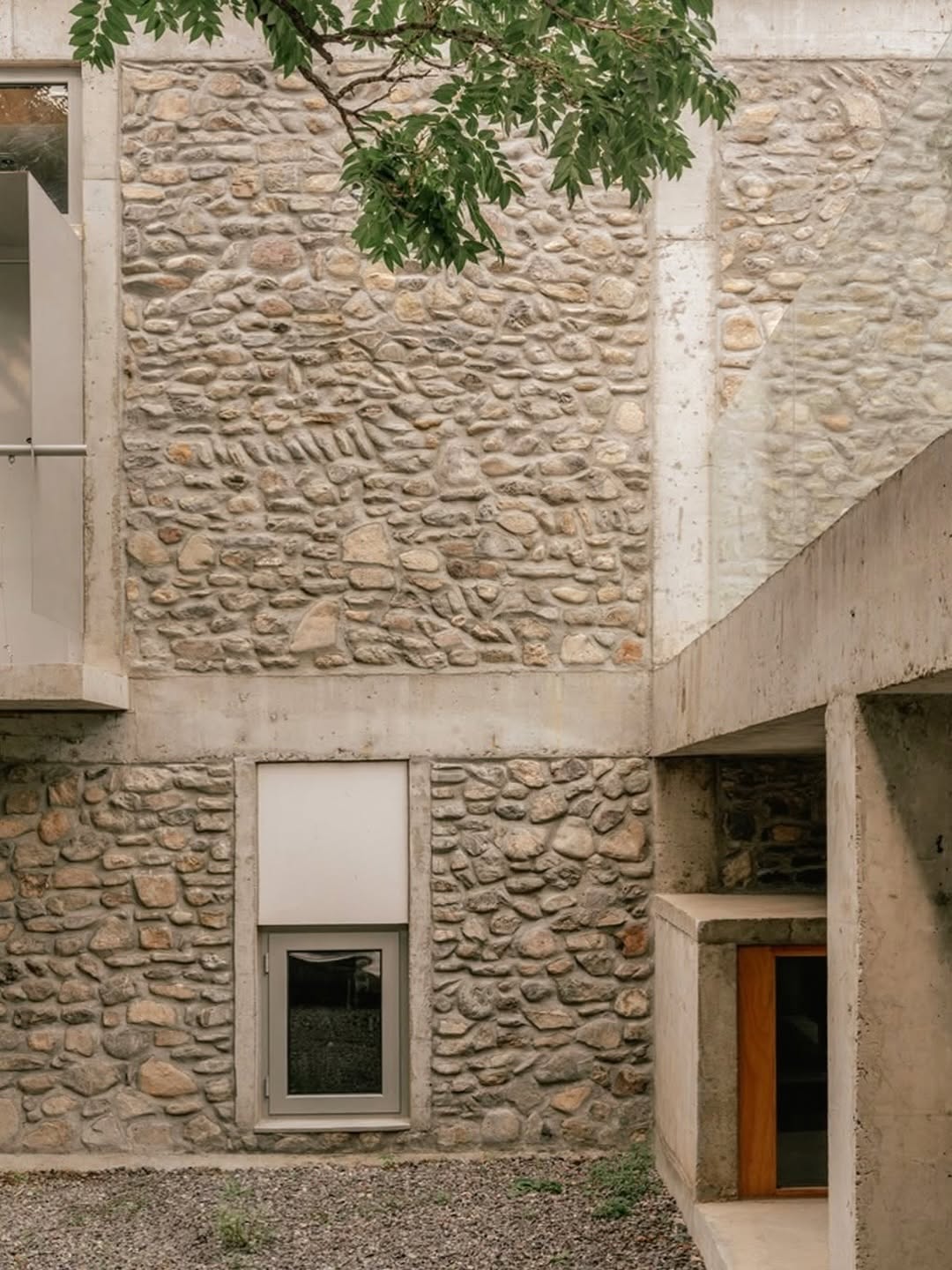
Chaoffice built the House of Bluff in Junxiang Village, Beijing, using a 4.5-by-4.5-meter concrete cube as the repeating structural module. Reclaimed stone from the original collapsed building infills the exposed concrete frame, creating walls that appear centuries old. A stainless steel slide connects the upper terrace to the garden, resolving a vertical circulation gap while becoming the project's most traveled image.
Key Points
- Chaoffice built the House of Bluff in Junxiang Village, Mentougou, Beijing using a 4.5m concrete cube module stacked across a terraced hillside.
- Reclaimed stone from the original collapsed building was used as wall infill in the exposed concrete frame, eliminating new cladding costs and preserving thermal mass.
- A stainless steel tube slide connects the upper terrace to the garden, solving a vertical circulation gap in a five-bedroom house built across uneven terrain.
The site in Junxiang Village, Zhaitang, Mentougou District, on the western edge of Beijing, was not salvageable. The original building had partially collapsed. Walls were down, rubble was spread across the terraced hillside, and the structural grid was gone. Chaoffice did not demolish what remained. They built inside it.
That decision is the entire project.
4.5 Meters, Repeated Until It Becomes Architecture
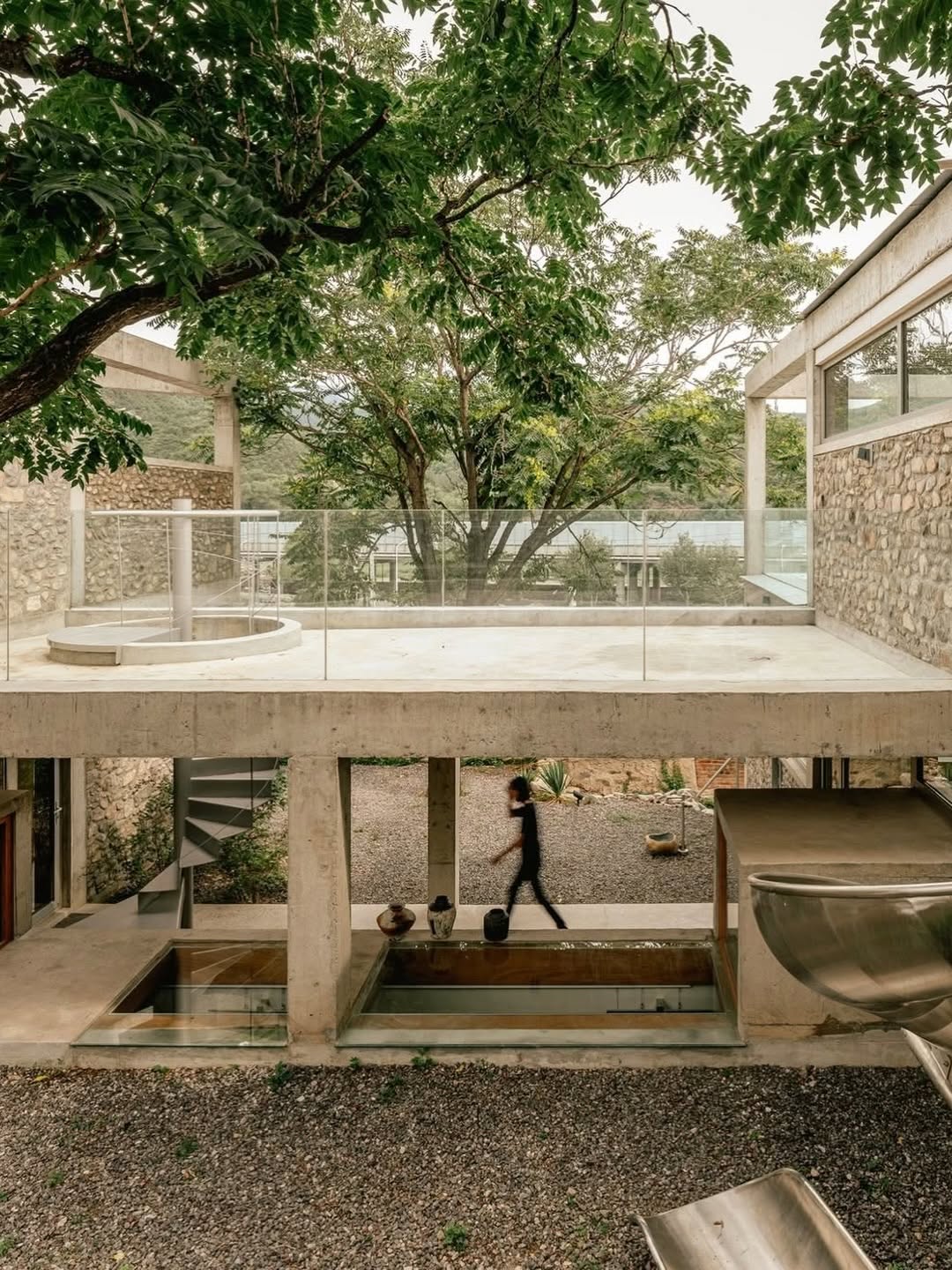
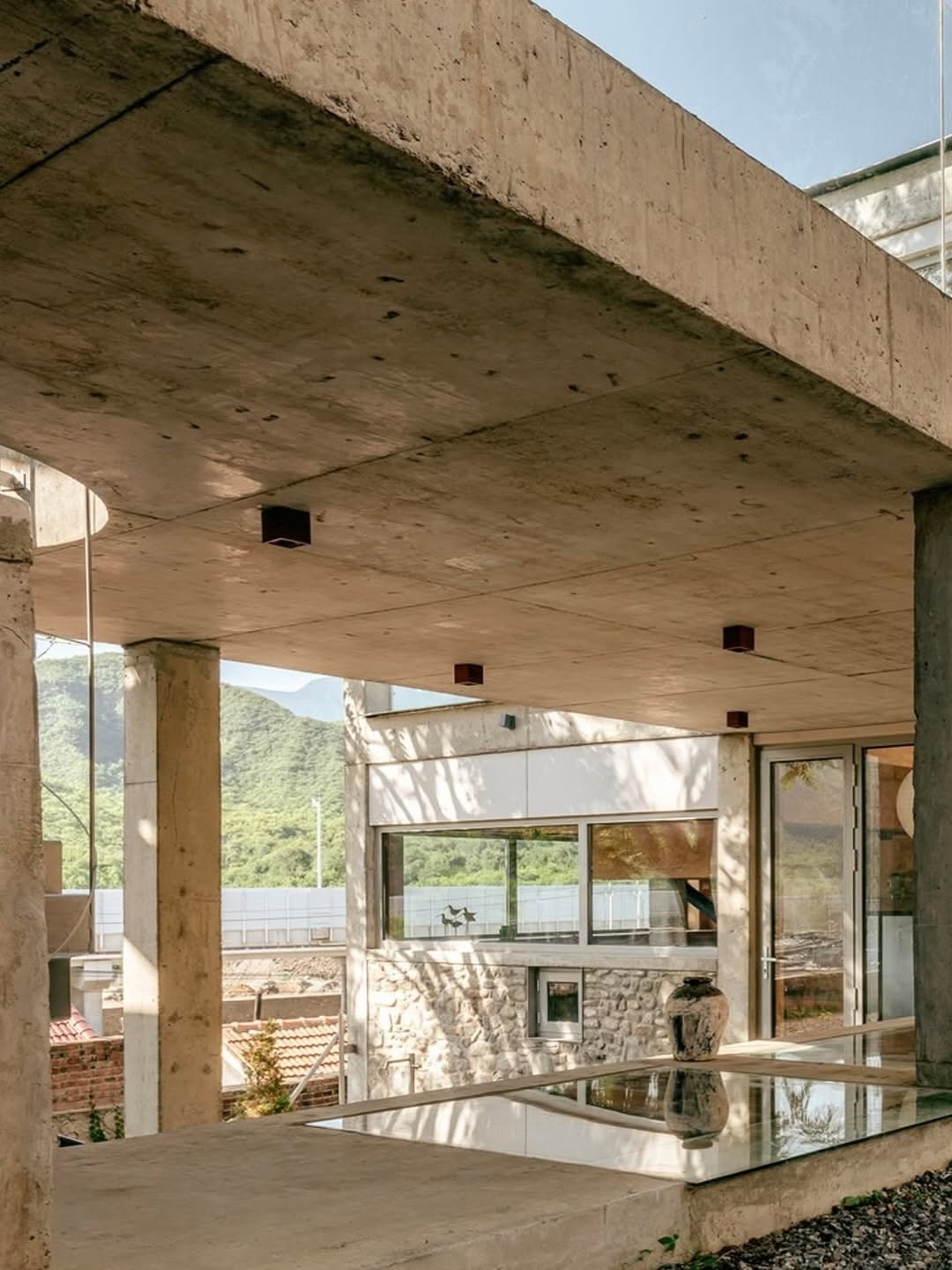
The House of Bluff is organized around a single module: a 4.5 by 4.5 meter concrete cube. That cube is repeated and stacked across the hillside, adapting to the terrace levels rather than flattening them. The exposed concrete frame is then infilled with reclaimed stone pulled from the original collapsed walls on site, creating an exterior that looks like it was built two centuries ago rather than completed in 2024.
This is not decorative archaeology. It is material honesty at the structural level. The stone had to go somewhere. The budget could not absorb new cladding material. The decision to reuse the ruins as the walls created a thermal mass that new construction would have cost significantly more to replicate.
Finally Offline covered Slow Coral Design's cliff-face cafe in the Yandang Mountains, which won Dezeen's hospitality award in 2025. Both projects share a commitment to working within site constraints rather than against them. The Chaoffice approach goes further: it makes the constraint the visual argument.
The Slide Is Not the Joke. It Is the Thesis.
A stainless steel tube slide runs from the upper terrace to the garden. This is the detail that travels. Dezeen covered it. Type7 posted it. It photographed beautifully.
But the slide is not whimsy. In a five-bedroom house on a terraced hillside, vertical circulation is a problem. Stairs occupy floor area. The slide connects levels that do not align neatly, resolves a circulation gap, and costs less to construct than a secondary staircase. The choice to make that solution visually extreme is what makes the house a statement.
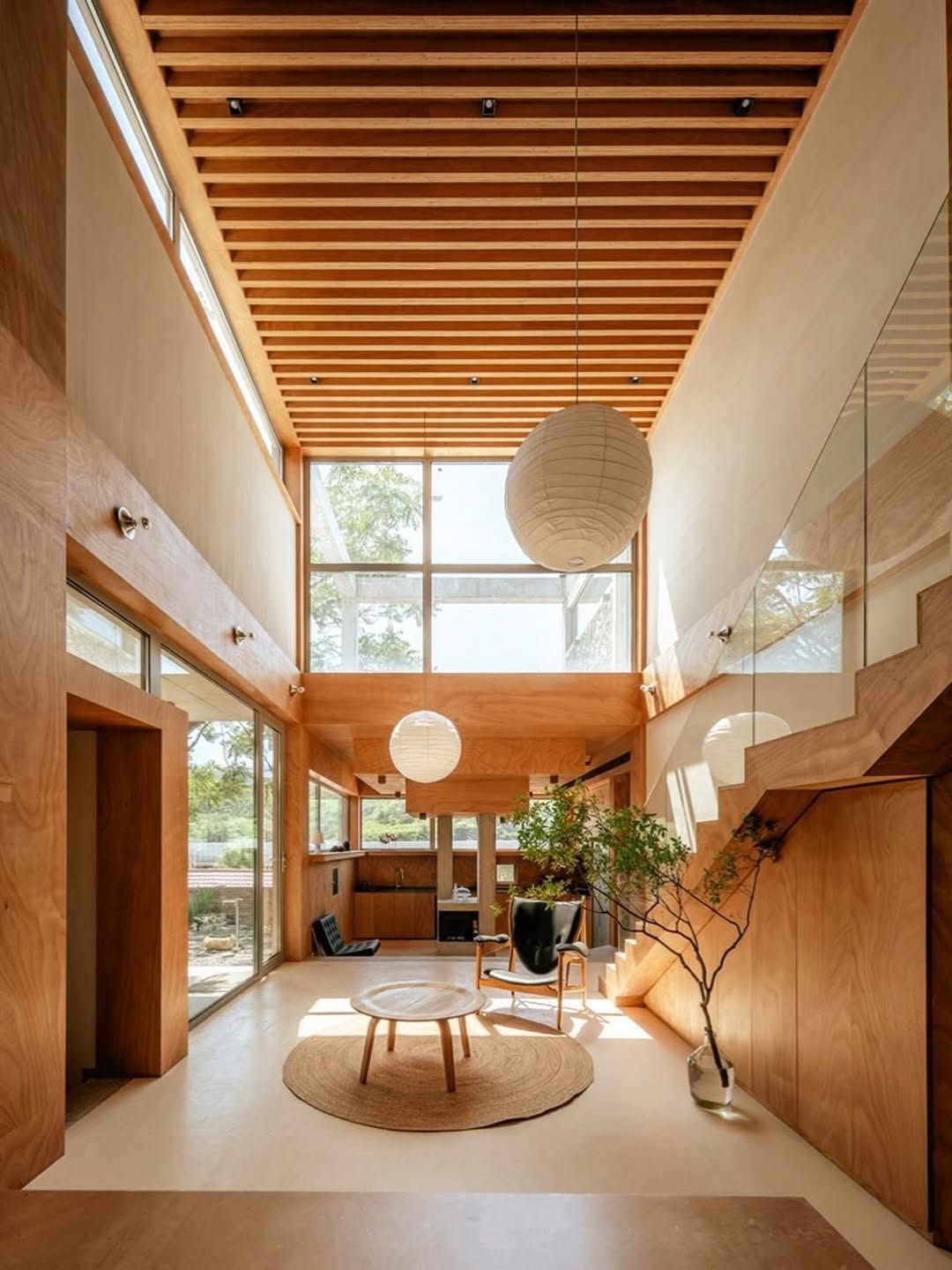
A sunken outdoor bathtub positioned to face the mountain profile, a tree growing through a deliberate gap in the terrace, and Noguchi paper lanterns in a double-height living space with slatted timber screens are all extensions of the same logic: constraint met with specificity rather than compromise.
Warm Wood Interior Against Cold Stone Exterior
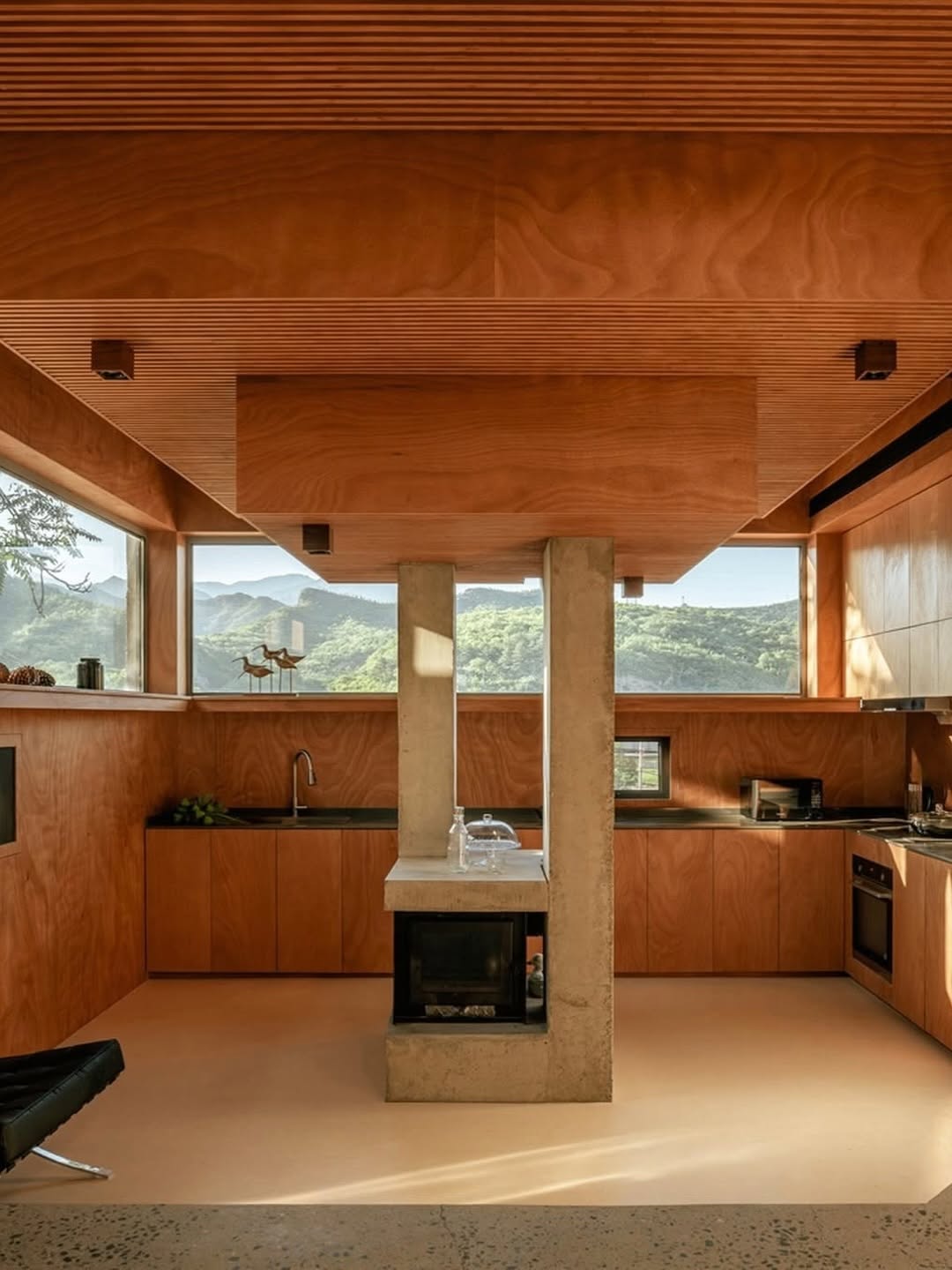
The materials split by function. The exterior uses exposed concrete frames and reclaimed stone, which weathers with the hillside and resists the temperature swings common at elevation outside Beijing. The interior shifts entirely: warm plywood panelling, timber screens with a pattern that filters light without blocking it, and a double-height living volume that reads as quietly Japanese in its spatial restraint.
That combination, cold exterior and warm interior, is not unusual in contemporary Chinese rural architecture. What makes Chaoffice's execution notable is how abruptly the transition happens. You cross a threshold and the material logic changes completely. The stone does not bleed into the wood. The two languages stay separate and the house reads better for it.
Jessica Helgerson's Portland renovation, covered earlier this year, applied similar logic to a 1970s Pacific Northwest structure: read the existing building as an asset, not an obstacle. Chaoffice goes further by making the ruin legible in the finished wall.Junxiang Village Is Becoming a Portfolio
The House of Bluff is not Chaoffice's only project in Junxiang Village. The studio has also completed the House of Passages and the House of Steps in the same area, which suggests a sustained presence in a single rural settlement rather than a commission-by-commission practice.
That kind of geographic concentration is unusual and significant. Chaoffice is building a village. Not in the development sense: in the sense that each completed house creates context for the next one. The client base for the second project already had a reference. The third client could walk to the second. The slide at the House of Bluff is the most visible proof of concept for that entire strategy.
Temperature: early. This is the beginning of a body of work, not the culmination.
Frequently Asked Questions
What is Chaoffice House of Bluff?
The House of Bluff is a residential project by Beijing studio Chaoffice in Junxiang Village, Mentougou District. It uses a repeated 4.5m concrete cube module, reclaimed stone from the original collapsed building, and a stainless steel slide connecting terrace levels.
Where is the Chaoffice House of Bluff located?
The house is located in Junxiang Village, Zhaitang, Mentougou District, on the western edge of Beijing, China. The site was previously a partially collapsed building that was incorporated into the new structure.
Why does the House of Bluff have a slide?
The stainless steel tube slide solves a vertical circulation problem in a five-bedroom house built across uneven terraced hillside. It is a functional solution to a structural constraint that also became the project s most distinctive visual feature.
Topics: house-of-bluff, chaoffice, concrete-architecture, junxiang-village, dezeen, focus-48-56, rural-architecture, type7, beijing, design, china-architecture