ARCHITECTS LOVE RICK OWENS MORE THAN FASHION EDITORS

Rick Owens is a fashion designer whose brutalist aesthetic bridges fashion and architecture. His stores feature poured concrete and custom furniture ($8K-$180K), covered by architecture publications alongside runway shows. Brand revenue is estimated at $150-200M and remains independently owned.
Key Points
- Rick Owens Paris flagship features poured concrete and furniture he designed from alabaster
- Furniture sold through Carpenters Workshop Gallery at $8K to $180K
- Brand revenue estimated at $150 to $200 million, independently owned after declining LVMH and Kering
The Crossover
Rick Owens retail stores do not look like fashion stores. The Paris flagship on Place du Palais Royal, completed in 2014, features poured concrete walls, exposed steel beams, and furniture Owens designed himself from alabaster, plywood, and moose antlers. The interior looks like a bunker designed by someone who read Le Corbusier and Tadao Ando but decided they were too cheerful. Architecture publications, from Dezeen to Architectural Digest, cover Owens store openings with the same editorial weight as his runway shows. Vogue covers the clothes. Dezeen covers the spaces. The spaces get shared more.The Design Language
Owens lives and works in a former Sovrintendenza building in Venice, a brutalist concrete structure on the Giudecca canal he has occupied since 2014. His furniture line, sold through Carpenters Workshop Gallery at prices ranging from $8,000 for an alabaster stool to $180,000 for a bronze daybed, is exhibited alongside works by the Campana brothers and Wendell Castle. The furniture shares the clothing DNA: monolithic forms, raw materials, deliberate discomfort. A Rick Owens chair is not designed for comfort. It is designed to make you sit the way the chair wants.The Concrete Connection
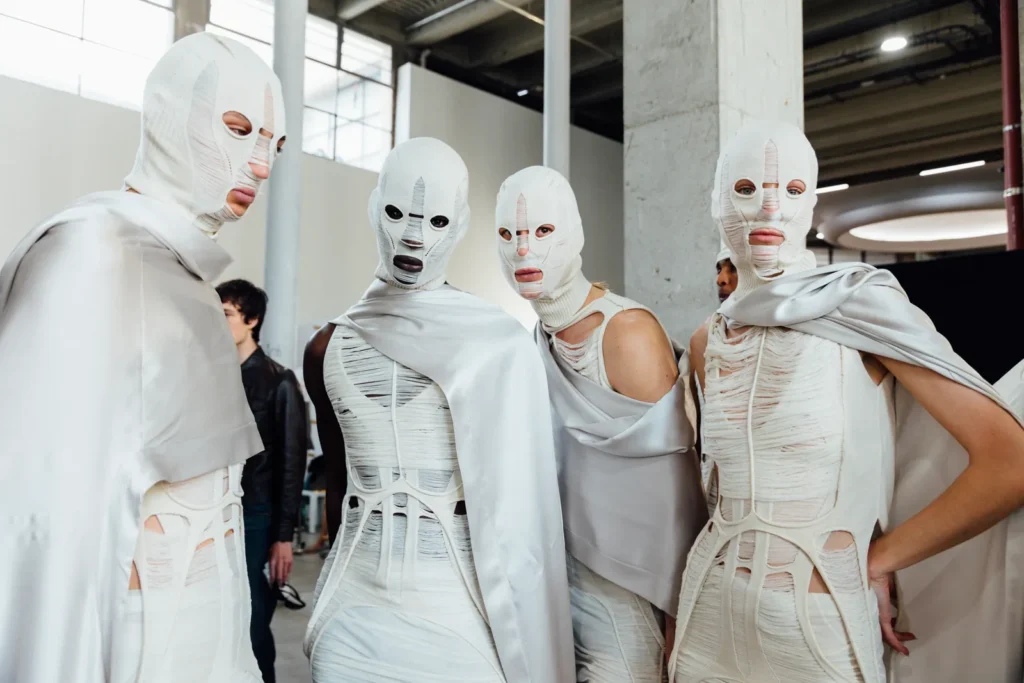
Brutalism, the architectural movement born from Le Corbusier raw concrete post war buildings, emphasizes material honesty: exposed structure, visible construction methods, no cosmetic finishing. Owens translates this to fabric: raw selvedge denim, waxed cotton, lamb leather left with visible grain. The parallels are specific enough that architecture students use Owens runway images in presentations about material honesty. Fashion students reference his stores in spatial design courses. Neither discipline fully claims him.The Numbers
Rick Owens annual revenue is estimated at $150 to $200 million, modest by luxury standards. LVMH and Kering have both reportedly approached Owens about acquisition; he has declined. The brand remains independent, which means the design decisions, from the $65,000 concrete desk in the LA store to the absence of window displays, are not diluted by corporate return on investment calculations. Independence is the product as much as the clothes are.The Result
Rick Owens is the only fashion designer whose aesthetic maps perfectly onto an architectural movement. Helmut Lang approached minimalism. Rei Kawakubo approaches deconstruction. Owens IS brutalism in fabric form. The architects understand this intuitively because they recognize the material logic. The fashion editors understand it commercially because the shows generate content. The customers who buy a $1,800 leather jacket and a $12,000 alabaster side table are furnishing a lifestyle, not a wardrobe. That lifestyle happens to look like a very expensive bunker.The Concrete Connection
Architects love Rick Owens more than fashion editors because his work in both furniture and fashion follows the same principles that govern brutalist architecture: raw materials, geometric volume, and a deliberate refusal to soften the edges for comfort. The alabaster, marble, and moose antler furniture pieces that Owens designs for his Concordia studio in Paris function as inhabitable sculptures, and the architecture community has adopted them as evidence that fashion can produce genuine design culture rather than just branded product.
Owens himself studied architecture before switching to fashion, and the training is visible in every collection: the proportions are architectural, the silhouettes reference load-bearing structures, and the leather is so thick it functions as armored cladding rather than conventional textile.
Rick Owens is the only fashion designer whose work is collected by architecture museums because his aesthetic vocabulary transcends garment construction. The furniture costs $40,000 per piece, the clothes cost $2,000, and the design philosophy costs nothing to study but everything to execute. Architects love Owens because he makes things the way architects wish they could: without compromise, without committee, and without any interest in mass appeal.
Related Reading
- Why Virgil Abloh Actually Matters Right Now
- ASAP ROCKY RAY BAN METALS COLLECTION DROPS AT UNDEFEATED
- FEAR OF GOD TENTH COLLECTION: PROPORTION IS THE PRODUCT
Frequently Asked Questions
Does Rick Owens design furniture?
Rick Owens designs furniture sold through Carpenters Workshop Gallery at prices ranging from $8,000 for alabaster stools to $180,000 for bronze daybeds, exhibited alongside works by the Campana brothers.
Where does Rick Owens live?
Rick Owens lives and works in a former Sovrintendenza building on the Giudecca canal in Venice, a brutalist concrete structure he has occupied since 2014.
Topics: luxury, virgil abloh, furniture, culture, focus-50-7, fashion, brutalism, helmut-lang, rick-owens, architecture, helmut lang, undefeated, venice, design, virgil-abloh, dezeen, concrete, vogue, rick owens