ADIDAS HYPERBOOST EDGE IS THE RUNNING SHOE THAT ADMITS BOOST NEEDED AN UPGRADE

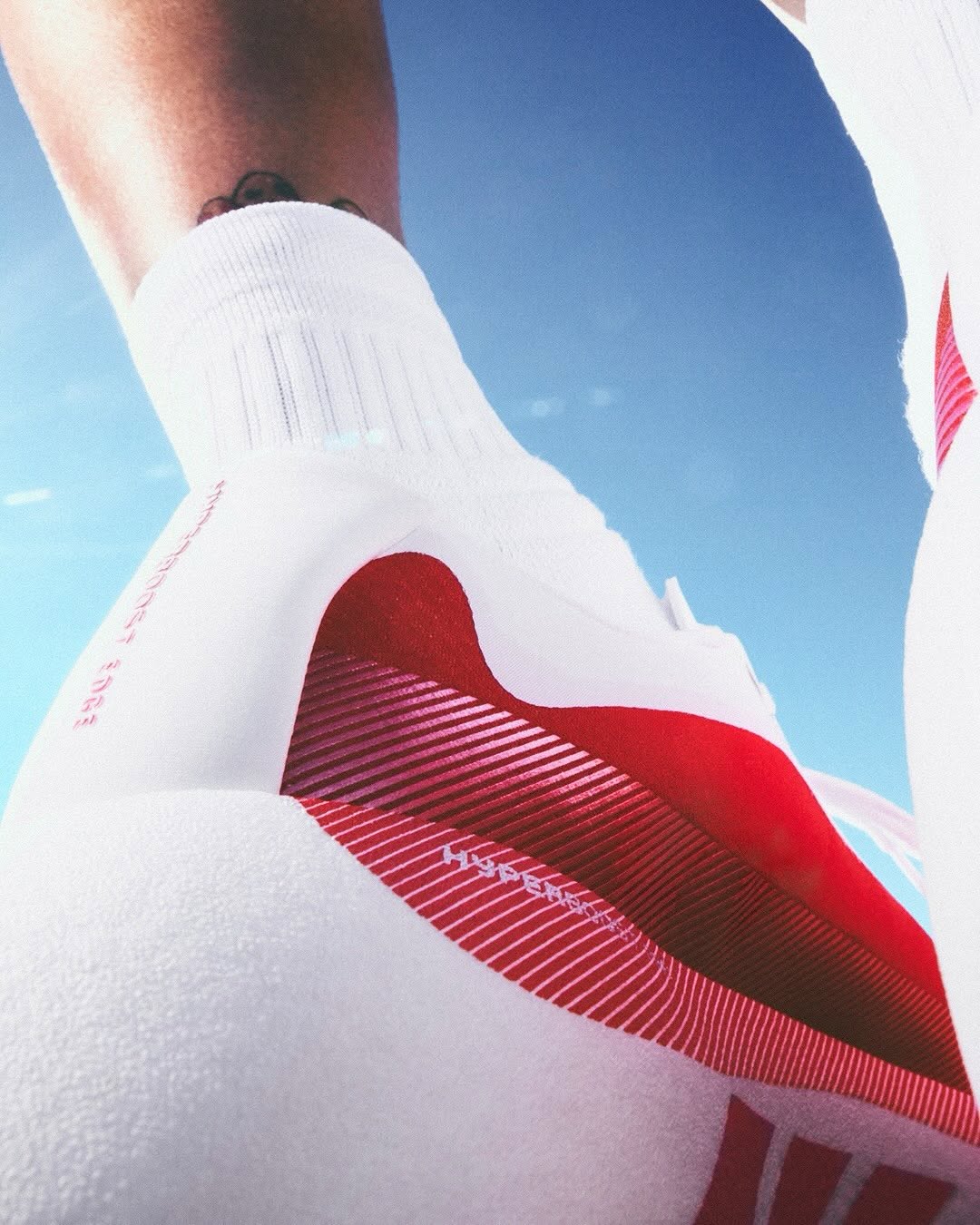
Adidas launches the Hyperboost Edge as its first full platform reset since introducing Boost in 2013. The shoe features a Hyperboost Pro midsole, Primeweave upper, and Lighttraxion outsole.




Key Points
- The Hyperboost Edge introduces the Hyperboost Pro midsole, Primeweave upper, and Lighttraxion outsole as a full platform reset
- Primeweave replaces Primeknit with a woven construction offering more structure and less stretch than knitted textiles
- The launch signals Adidas's return to performance running after relying on retro lifestyle models for revenue growth
The Boost Problem
Adidas introduced Boost cushioning in 2013 through a partnership with BASF, the German chemical company that developed the thermoplastic polyurethane (TPU) pellets. Boost transformed the running shoe market. The Ultraboost, launched in 2015, became the best selling performance running shoe in the world after Kanye West was photographed wearing a pair at Paris Fashion Week, generating a crossover moment that turned a running shoe into a streetwear staple. But by 2024, Boost was 11 years old, and competitors had caught up. Nike's ZoomX foam, New Balance's FuelCell, and Hoka's EVA blends all delivered comparable or superior energy return. Adidas needed a new material story.
Hyperboost Pro: The New Midsole
The Hyperboost Edge introduces the Hyperboost Pro midsole, a PEBA based foam that Adidas describes as a pelletized version of Lightstrike Pro, their existing elite racing compound. The material is supercritically blown expanded PEBA, the same foam chemistry that powers Nike's ZoomX and New Balance's FuelCell Elite. The difference is delivery: Adidas beads the foam into pellets rather than pouring it as a single slab, which allows for tuned density zones across the midsole. The stack height sits at 45mm in the heel with a 6mm drop, making it one of the tallest daily trainers on the market. At 255 grams in a men's size 8.5, it undercuts most super trainers in its stack height class by 20 to 30 grams.
Adidas has not disclosed the exact energy return percentage for Hyperboost Pro, but early reviewer testing from Doctors of Running measured bounce characteristics comparable to Lightstrike Pro, the compound that powered the Adios Pro racing platform. The critical difference from original Boost: Hyperboost Pro is lighter, more responsive at speed, and does not bottom out under load the way TPU Boost does after 300 miles. Runners who tested the shoe describe the foam as noticeably springy without the instability that plagues other high stack trainers, crediting the wide platform base for keeping the ride stable through heel transitions.
The Upper and Outsole
The Primeweave upper replaces Primeknit, the knitted textile that Adidas has used across its performance range since 2012. Primeweave uses a woven rather than knitted construction, which provides a more structured fit with less stretch. Reviewers have noted the upper runs breathable but secure, with a low profile tongue that sits close to the foot without creating pressure points. The Lighttraxion outsole is engineered for road running, using a ribbed rubber pattern that trades the weight of Continental rubber for a thinner, lighter compound. Grip is confident on dry and wet roads but limited on dirt or mud, positioning this firmly as an asphalt shoe.
The Market Context
The Hyperboost Edge retails at $200, positioning it above the Supernova Rise at $140 but below the Adios Pro 3 at $250. That price point puts it in direct competition with the Nike Pegasus Premium at $180 and the New Balance SC Trainer v2 at $190. Adidas generated €21.4 billion in revenue in 2024 but relied heavily on retro lifestyle models like the Samba and Gazelle rather than performance innovation. The running division reported a 16% revenue increase in 2025, but most of that came from heritage reissues rather than new technology platforms.
The Hyperboost Edge launched globally on March 17, 2026, with additional colorways arriving from May 1. It signals a return to the performance running category where Adidas built its technical credibility through the original Boost revolution. The initial launch colorways include core black, cloud white, and a solar red that Adidas is positioning as the signature shade of the new platform.
Temperature Read
The Hyperboost Edge matters because Adidas is admitting that Boost ran its course. Thirteen years is an extraordinary lifespan for a shoe technology, but the market moved past it. Primeweave, Hyperboost Pro, and Lighttraxion together represent the largest single platform change Adidas has made since 2013. The foam is real. The stack height is competitive. The weight is impressive. Whether it catches the running market the way Boost did depends entirely on race results and whether runners trust a pelletized foam from a brand that spent the last two years selling Sambas.
Related Reading
- ADIDAS UNEXPECTED BREAKS SPORT-FASHION BOUNDARIES
- ARSHAM'S ORGANIC WAVES RESHAPE Equinox HOLLYWOOD
- AUDEMARS PIGUET DROPS RARE 150TH ANNIVERSARY MERCH
Frequently Asked Questions
What is Adidas Hyperboost?
Hyperboost is Adidas's next generation midsole foam technology, introduced in the Hyperboost Edge. It replaces the original Boost platform that has been in use since 2013.
What replaced Adidas Primeknit?
Primeweave replaces Primeknit in the Hyperboost Edge. It uses a woven rather than knitted construction that provides more structure and less stretch.
Is the Adidas Hyperboost Edge available?
Yes. The Adidas Hyperboost Edge is available now through Adidas channels.
Topics: sneakers, primeweave, adidas, new-balance, performance, boost, new balance, hyperboost, running-shoes, nike, focus-73-99, sportswear