TATE MODERN TURNED A POWER STATION INTO ART LIVING ROOM

Tate Modern is a contemporary art museum in London housed in a converted 1947 power station. Designed by Herzog and de Meuron, it attracted 5.8 million visitors in 2023 with free entry. The Turbine Hall commissions are among the world most significant public art installations.


Key Points
- Tate Modern attracted 5.8 million visitors in 2023, most visited modern art museum globally
- Turbine Hall is 35m high by 152m long, hosting commissions seen by millions
- Switch House extension in 2016 cost 260 million pounds and added 60% more gallery space
The Building
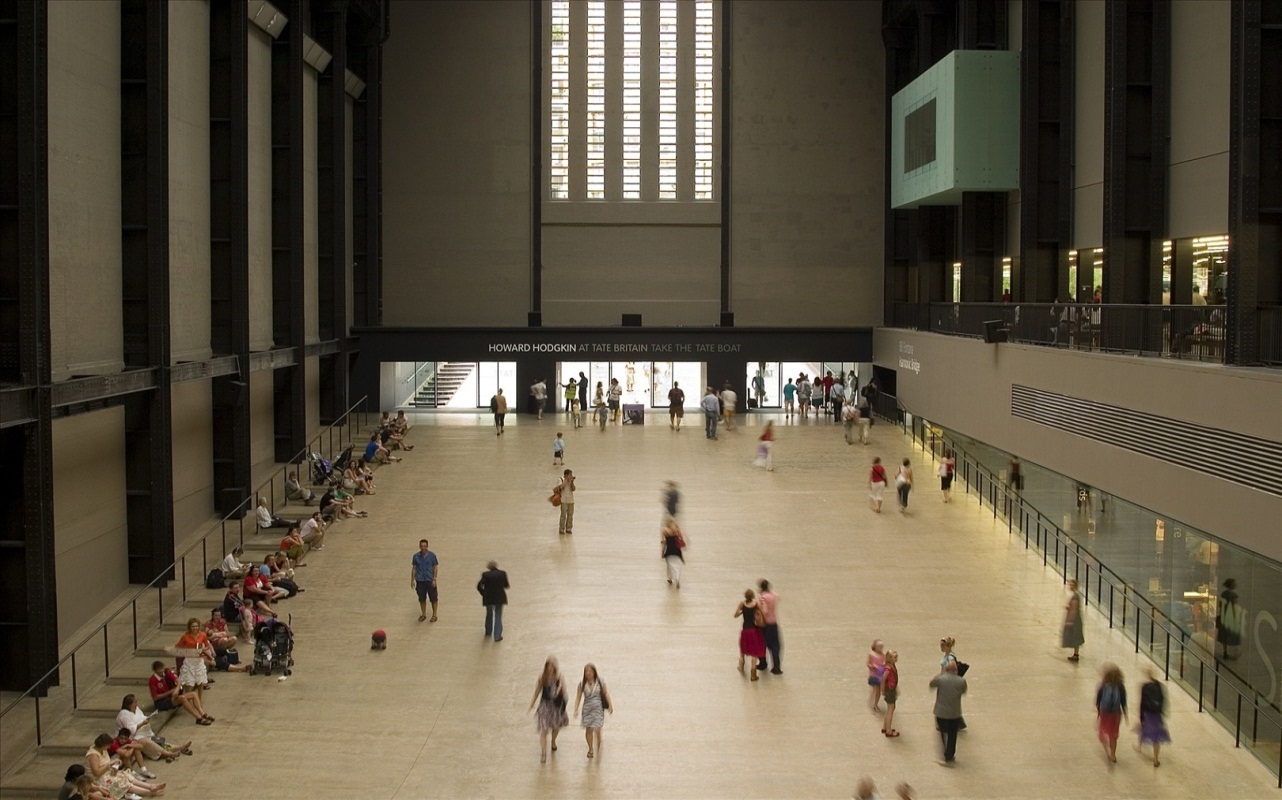
The Bankside Power Station operated from 1947 to 1981, designed by Sir Giles Gilbert Scott, who also designed the red telephone box and Battersea Power Station. The structure is 200 meters long, 35 meters tall, and dominated by a single central chimney rising 99 meters. When the Tate Gallery commission selected the building for conversion in 1994, architecture critics questioned placing contemporary art in an industrial shell. Herzog and de Meuron, the Swiss architects who won the conversion competition, answered by changing almost nothing. They kept the Turbine Hall, a 35 meter high by 152 meter long void that originally held power generators, as a single uninterupted exhibition space.The Turbine Hall
The Turbine Hall commissions became the museum most significant curatorial program. Louise Bourgeois installed Maman, a 30 foot bronze spider, for the opening in 2000. Olafur Eliasson mounted The Weather Project in 2003, suspending a massive artificial sun that 2 million people visited in five months. Ai Weiwei filled the floor with 100 million hand painted porcelain sunflower seeds in 2010. Each commission generates international media coverage and drives attendance spikes. The Turbine Hall is not a gallery. It is an event space that happens to be inside a museum, and the events happen to be art.The Numbers
Tate Modern attracted 5.8 million visitors in 2023, making it the most visited modern art museum in the world. The museum is free to enter for permanent collection exhibitions. Special exhibitions charge between 15 and 25 pounds. The Tate organization (which includes Tate Britain, Tate Liverpool, and Tate St Ives) reported total income of 179 million pounds in 2022 23. Government funding accounts for approximately 30% of income. The remaining 70% comes from admissions, memberships, commercial activities, and donations.The Collection
The permanent collection holds over 70,000 works spanning 1900 to present. Key holdings include works by Picasso, Warhol, Rothko (the Seagram Murals, donated after Rothko refused to let them hang in a corporate restaurant), Hockney, Richter, and extensive collections of British modern art. The Switch House extension, completed by Herzog and de Meuron in 2016 at a cost of 260 million pounds, added 60% more gallery space and a 10th floor observation deck overlooking the Thames and St Paul Cathedral.The Position
Tate Modern proved that a contemporary art museum could function as democratic public space rather than exclusive cultural institution. The free entry model, the industrial architecture, and the Turbine Hall spectacles all work toward the same thesis: modern art is not precious. It is public infrastructure. The building itself makes the argument. A power station that once served London electricity now serves its cultural energy. The metaphor is obvious. That does not make it wrong.The Power Station
Tate Modern turned a decommissioned power station on the Thames into the most visited modern art museum in the world by trusting Herzog and de Meuron to preserve the industrial architecture rather than replace it. The Turbine Hall, a 3,400 square meter space originally designed to house electrical generators, now hosts Hyundai Commission installations that attract two million visitors per year to a single room.
Tate Modern proves that the best museum architecture does not showcase the architect; it showcases the art. The power station conversion worked because the building's industrial bones provided scale that no purpose built museum could replicate. Ai Weiwei's 100 million sunflower seeds, Olafur Eliasson's Weather Project, and Doris Salcedo's Shibboleth crack in the floor all required a space built for machines, not paintings. Nicholas Serota and his team understood that art needs room to breathe, and the Turbine Hall gives it enough room to exhale across an entire city block.
Related Reading
- Frank Gehry Gets a Posthumous Show at Gagosian Beverly Hills
- Rose Wylie Opens in Paris While London Gives Her the Full Survey
- Artschwager's Approximate Objects Extended Through May 23
Frequently Asked Questions
Is Tate Modern free?
Yes, Tate Modern is free to enter for all permanent collection exhibitions. Special temporary exhibitions charge between 15 and 25 pounds.
How many people visit Tate Modern?
Tate Modern attracted 5.8 million visitors in 2023, making it the most visited modern art museum in the world.
What was Tate Modern before?
Tate Modern occupies the former Bankside Power Station, designed by Sir Giles Gilbert Scott and operational from 1947 to 1981 before being converted by architects Herzog and de Meuron.
Topics: tate-modern, herzog-de-meuron, contemporary-art, london, architecture, turbine-hall, free-museum, gagosian, tate, art, bankside, art-museum