NEW BALANCE SPENT 40 YEARS BEING UNCOOL AND THEN BECAME THE COOLEST SNEAKER ON EARTH
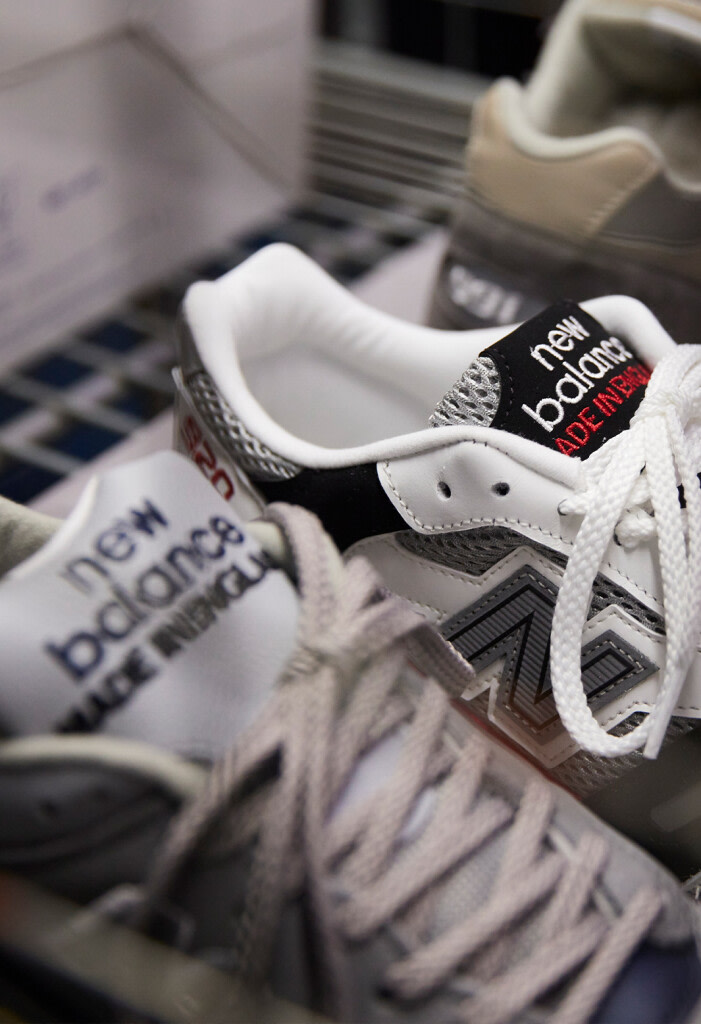
New Balance launched the 990 in 1982 at $100 with a no-endorsement strategy. After 40 years of being uncool Aime Leon Dore and JJJJound collaborations made it the most sought-after sneaker in fashion.
Key Points
- New Balance 990 launched in 1982 at $100 as the first triple-digit sneaker endorsed by no one
- Aime Leon Dore 990v2 and JJJJound 990v4 collaborations made the dad shoe a fashion essential
- New Balance revenue grew from $4.4 billion to $6.5 billion between 2020 and 2023 surpassing Nike growth rates
1982. "Endorsed by No One."
New Balance launched the 990 in 1982 at $100, the first sneaker to reach triple digits at retail. The tagline was "Endorsed by No One." While Nike signed Michael Jordan and Adidas signed Run-DMC, New Balance refused to pay athletes for endorsements. They made running shoes in factories in Maine and Massachusetts. No celebrity face. No cultural strategy. No interest in being cool. The 990 was designed for people who actually ran, not people who wanted to look like they did.
For four decades, this strategy worked commercially but provided zero cultural credibility. New Balance was the shoe of suburban dads, postal workers, and orthopedic patients. The 990 line evolved through versions — 990v2, 990v3, 990v4, 990v5 — each iteration maintaining the same construction philosophy: premium materials, USA manufacturing, and complete disinterest in fashion relevance. The shoes cost between $175 and $200 at retail because they were actually expensive to make, not because of branding markup.
Aimé Leon Dore Changed Everything
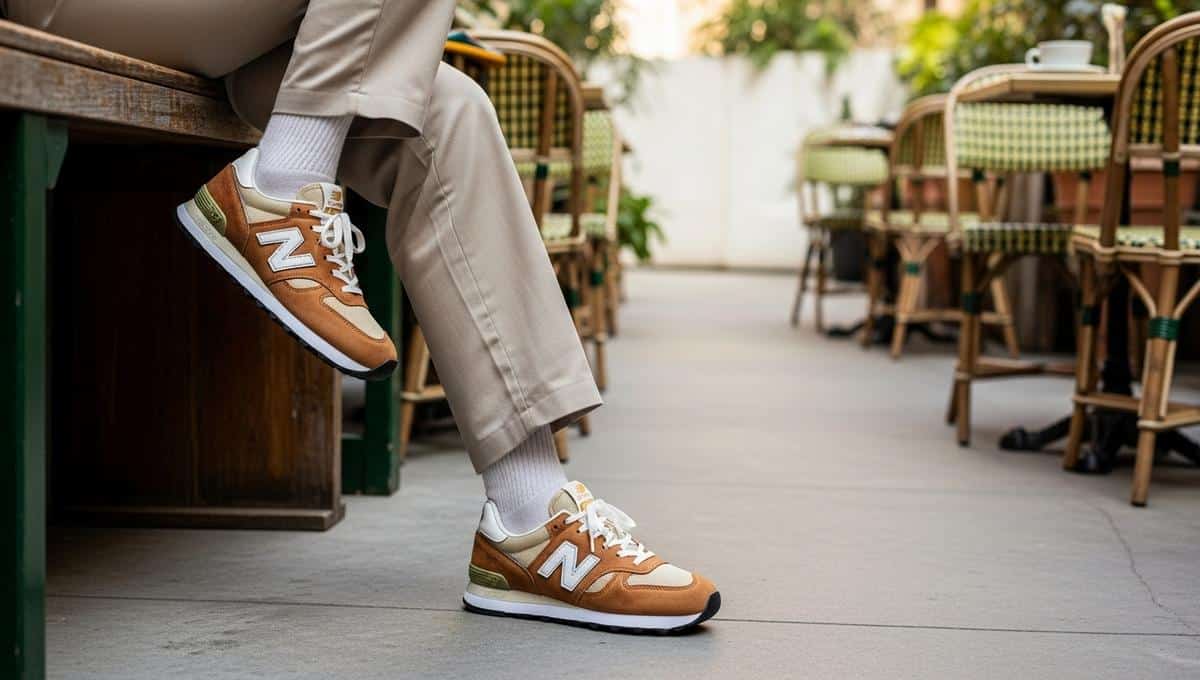
In 2019, Teddy Santis of Aimé Leon Dore released a collaboration on the New Balance 990v2 in a sage green colorway. The shoe sold out instantly. Resale doubled within a week. The collaboration worked because Santis didn't redesign the shoe. He simply chose a tasteful color and presented it through ALD's editorial lens — clean photography, minimal branding, the kind of visual restraint that made a dad shoe look like intentional fashion.
The following year, JJJJound released a New Balance 990v4 in a muted navy that became one of the most sought-after sneakers of 2020. Resale exceeded $500 for a shoe that retailed at $200. JJJJound, a Canadian design studio run by Justin Saunders, applied the same formula as ALD: minimal intervention, tonal colors, and the understanding that the 990's existing design was already perfect. You didn't need to deconstruct it like Off-White or recolor it like Nike. You just needed to present it correctly.
New Balance Appointed Teddy Santis
In February 2021, New Balance appointed Teddy Santis as creative director of the Made in USA division. This was unprecedented. A streetwear designer was now overseeing a heritage product line that had operated independently for decades. Santis's first collections elevated the 990v1 and 993 with premium suede treatments, earth tones, and the same editorial restraint that made his ALD collaborations successful.
The appointment signaled that New Balance understood what was happening. The brand that spent 40 years avoiding cultural positioning was now intentionally hiring the person who had accidentally positioned them into the center of fashion. Revenue reflected the strategy. New Balance reported $6.5 billion in global revenue in 2023, up from $4.4 billion in 2020. The growth trajectory surpassed Nike's percentage gains during the same period.
Why the Dad Shoe Became Fashion
The 990's ascent is about authenticity in an era of synthetic cool. Nike and Adidas collaborations require elaborate deconstruction, limited colorways, and artificial narrative to create desire. The 990 was already desirable to a specific audience — it just needed a broader audience to notice. When Aimé Leon Dore and JJJJound pointed a camera at it, the broader audience arrived.
The "dad shoe" trend that fashion media discussed from 2017 to 2019 was actually a New Balance trend. Balenciaga's Triple S was the designer interpretation. The Yeezy 700 was the Kanye interpretation. But the original artifact that triggered the movement was the New Balance 990, a shoe that had existed for 35 years before anyone in fashion acknowledged it. The trend wasn't manufactured. It was discovered.
New Balance is now the third most culturally relevant sneaker brand on Earth behind Nike and Adidas. They achieved this position by doing the opposite of everything the industry prescribed. No celebrity endorsements for 40 years. No trend-chasing. No artificial scarcity until partnerships demanded it. They made shoes in American factories, priced them honestly, and waited until the culture came to them. It took four decades. The 990 that cost $100 in 1982 now sits at $200 retail and $400 resale. New Balance was never uncool. Fashion was just late. The dad shoe is dead. The New Balance is alive. The distinction matters more than the sneaker industry will ever admit publicly.
Related Reading
- What the ALD x New Balance Made in USA 1300 Actually Costs to Make
- AIMÉ LEON DORE GOLF DROPS WITH FOOTJOY PREMIERE SERIES TOMORROW
- AIMÉ LEON DORE SS26 DELIVERY 5 IS COMING
Related: JJJJOUND'S 740N MUSHROOM GOES LIVE AT ONE WEB ADDRESS.
Frequently Asked Questions
When did New Balance become popular in fashion?
Around 2019 when Aime Leon Dore released a 990v2 collaboration. JJJJound followed in 2020. By 2021 New Balance appointed Teddy Santis as creative director of Made in USA.
How much was the first New Balance 990?
$100 at launch in 1982 making it the first sneaker to retail at triple digits.
Why is New Balance made in USA?
New Balance maintains manufacturing in Maine and Massachusetts. The Made in USA line costs more because of domestic labor and premium materials not branding markup.
Topics: sneakers, balenciaga, made-in-usa, dad-shoe, new balance, jjjjound, aimé leon dore, fashion, aime-leon-dore, aim-leon-dore, adidas, new-balance, 990, sneaker-history, focus-40-48, off-white, yeezy, nike