Jessica Helgerson Moved the Living Room to the Second Floor. The View Explains Everything.
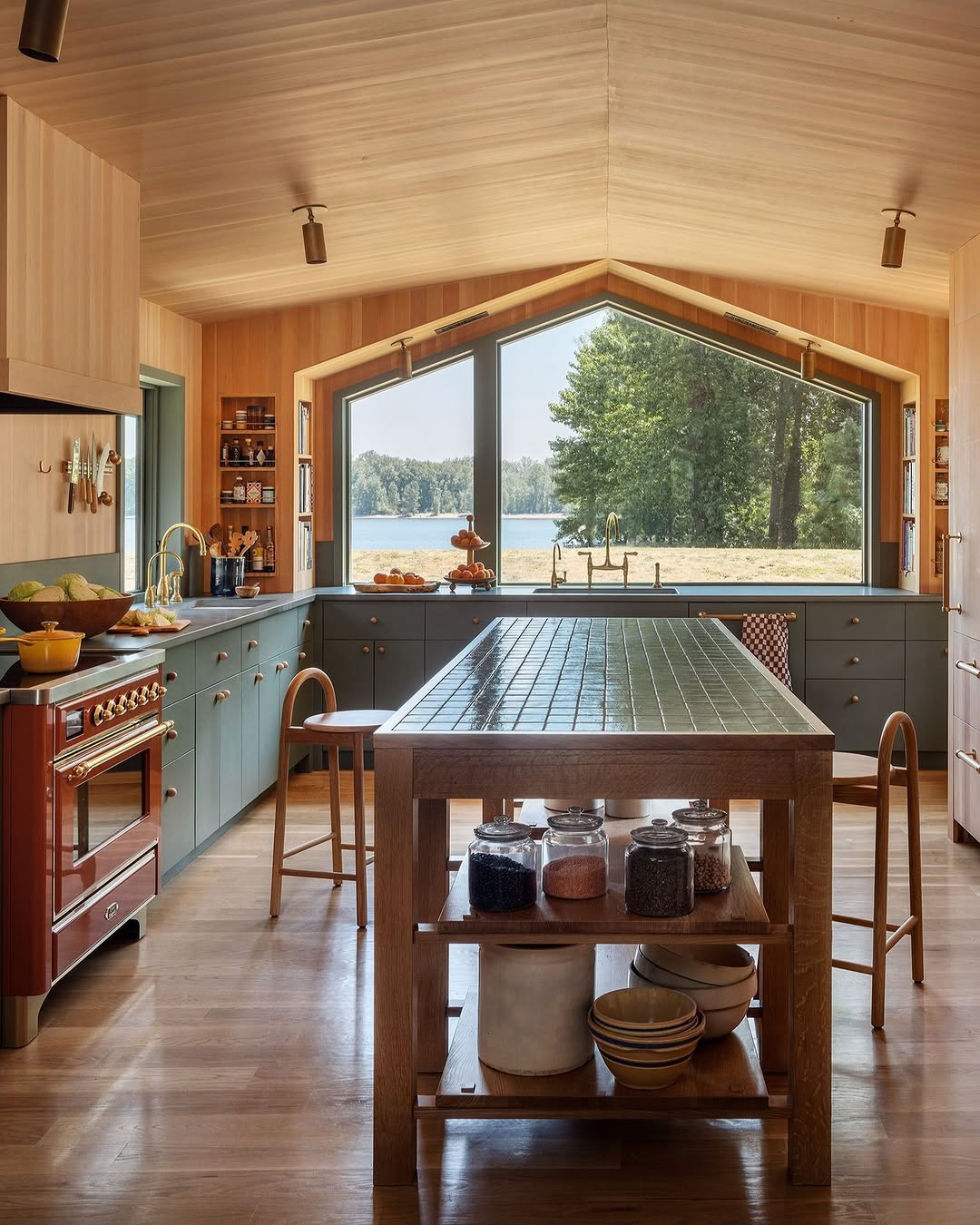
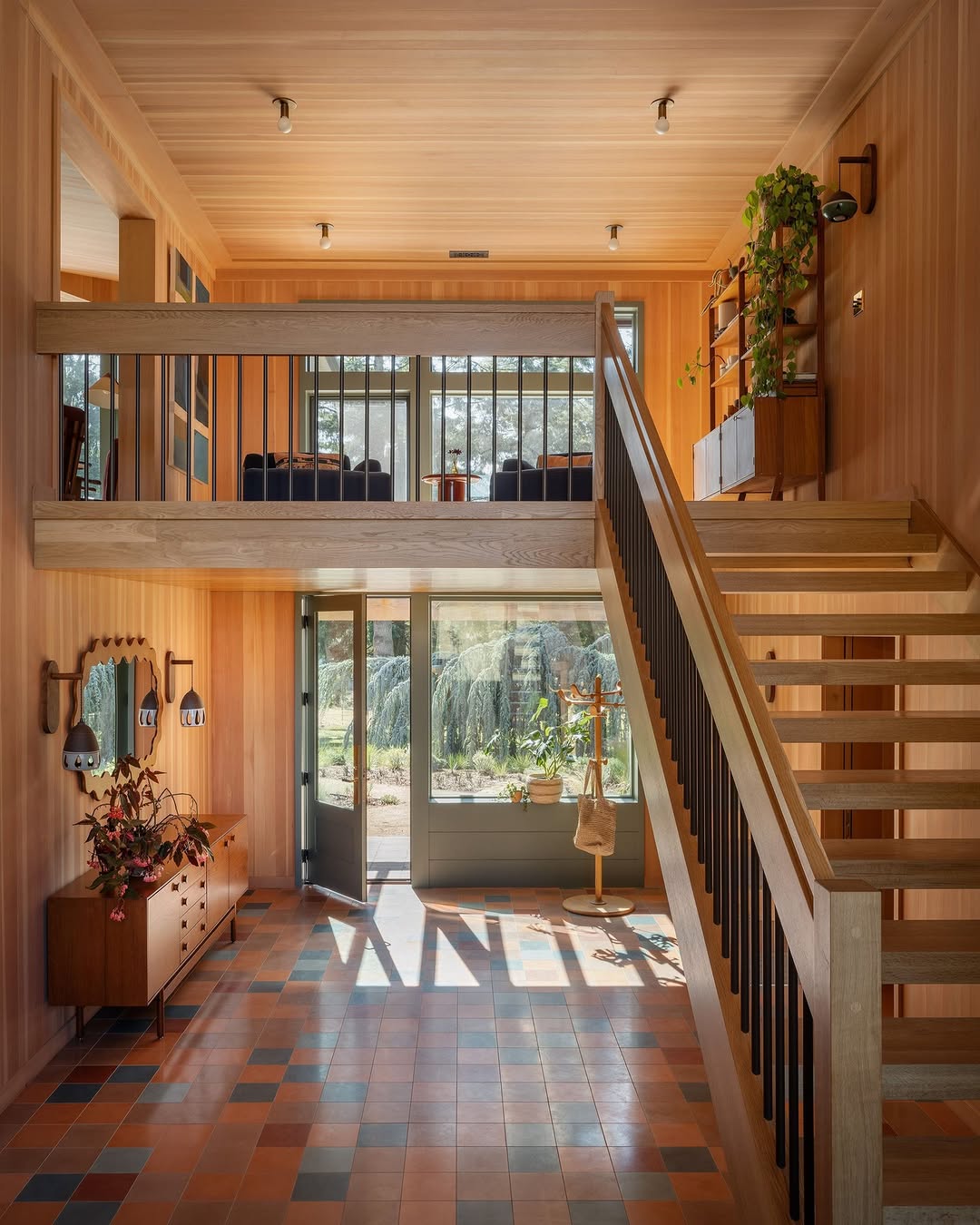
Jessica Helgerson of JH Interior Design reconfigured a 1970s-style home outside Portland, Oregon to place the main living areas on the second floor, capturing sightlines to a major waterway. Photographer Aaron Leitz documented the project for Architectural Digest. Taylorsmith Sustainable Construction executed the wood paneling, using regionally sourced species, while Helgerson used warm muted tones calibrated to Portland's predominantly overcast light conditions.

Key Points
- JH Interior Design reconfigured a 1970s Portland home's floor plan to place main living areas on the second floor for waterway sightlines.
- Taylorsmith Sustainable Construction executed the interior wood paneling using regional Oregon species in a acoustically and thermally deliberate design choice.
- Photographer Aaron Leitz, based in the Pacific Northwest, documented the project with a climate-calibrated eye for Oregon's 221 overcast days per year.
The living room is on the second floor. This is the kind of decision that makes contractors uncomfortable and real estate agents nervous, because moving the primary living space upward in a split-level is a structural argument, not a renovation. Jessica Helgerson of JH Interior Design made that argument in a 1970s-style home outside Portland, Oregon, and Architectural Digest published the result.
The homeowner's brief was specific: upstairs should feel like living in a tree house with a view of a major waterway. That is not an aesthetic preference. That is a site analysis brief. The second floor sightlines captured what the first floor could not. Helgerson's response was to reconfigure the entire floor plan around that constraint, placing main living areas above the standard elevation and building the circulation logic of the house around the view rather than around the entry sequence.
Architecture that serves the site is not as common as it should be.
Taylorsmith and the Wood Paneling Decision
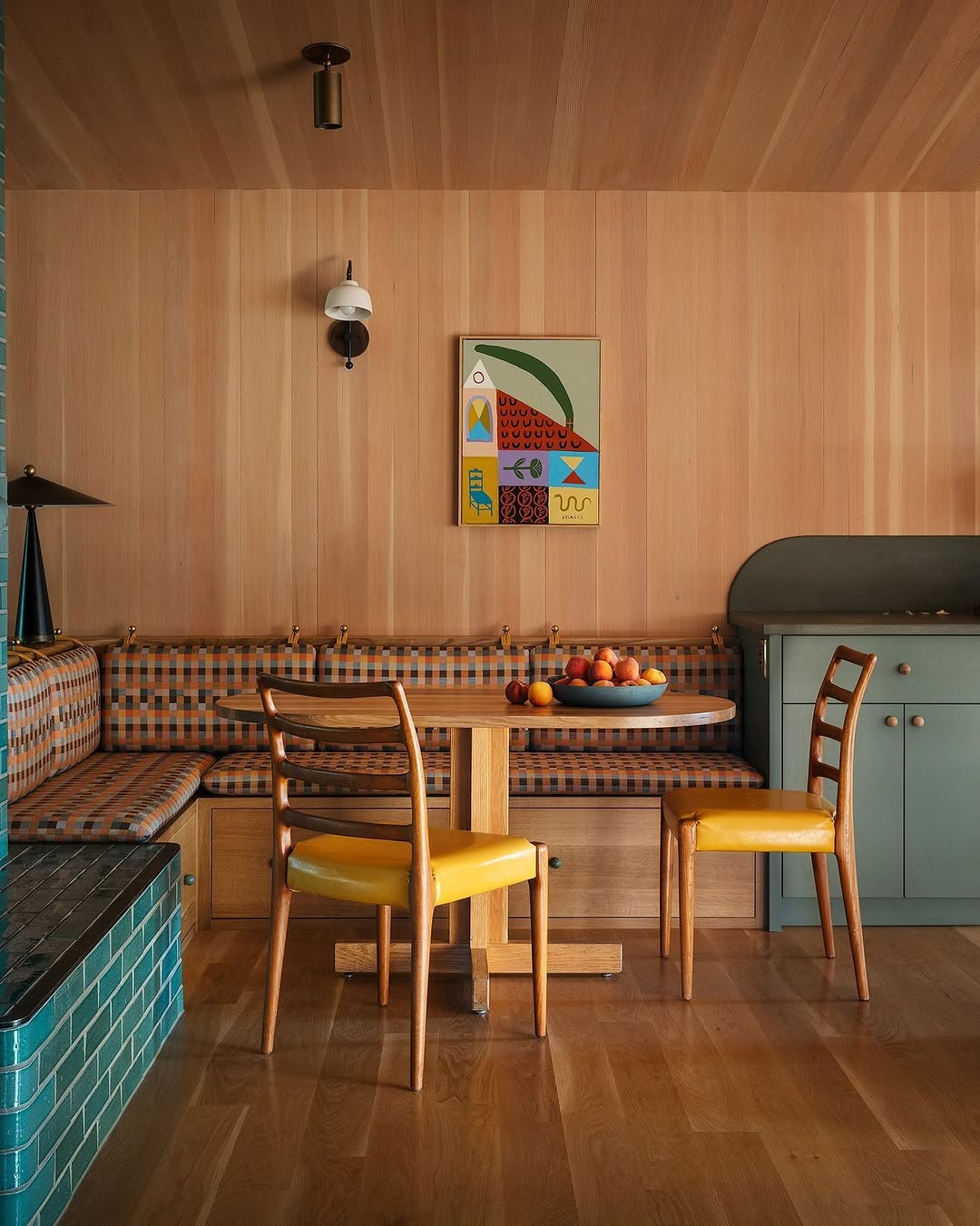
Helgerson engaged Taylorsmith Sustainable Construction to execute the wood paneling, which runs through significant portions of the interior. This was not a trim decision. Wood paneling at the scale visible in the Architectural Digest coverage is an acoustic and thermal investment as much as a visual one. Western red cedar and Douglas fir are regional to Oregon. Paneling from either species carries embedded carbon that is locally sourced, which for a 1970s house being substantially renovated, represents a material choice with lifecycle implications beyond aesthetics.
The 1970s house type is often described as "challenging" to renovate because its structural logic was driven by a specific construction era: post-oil-crisis efficiency thinking, low ceilings as energy conservation, small window openings as thermal control. Helgerson's decision to invert the floor plan hierarchy fights the original structural intent of the house type. That requires Taylorsmith's kind of construction expertise, not standard remodeling contractor work.
Warm Muted Tones Are Not a Palette. They Are a Position.
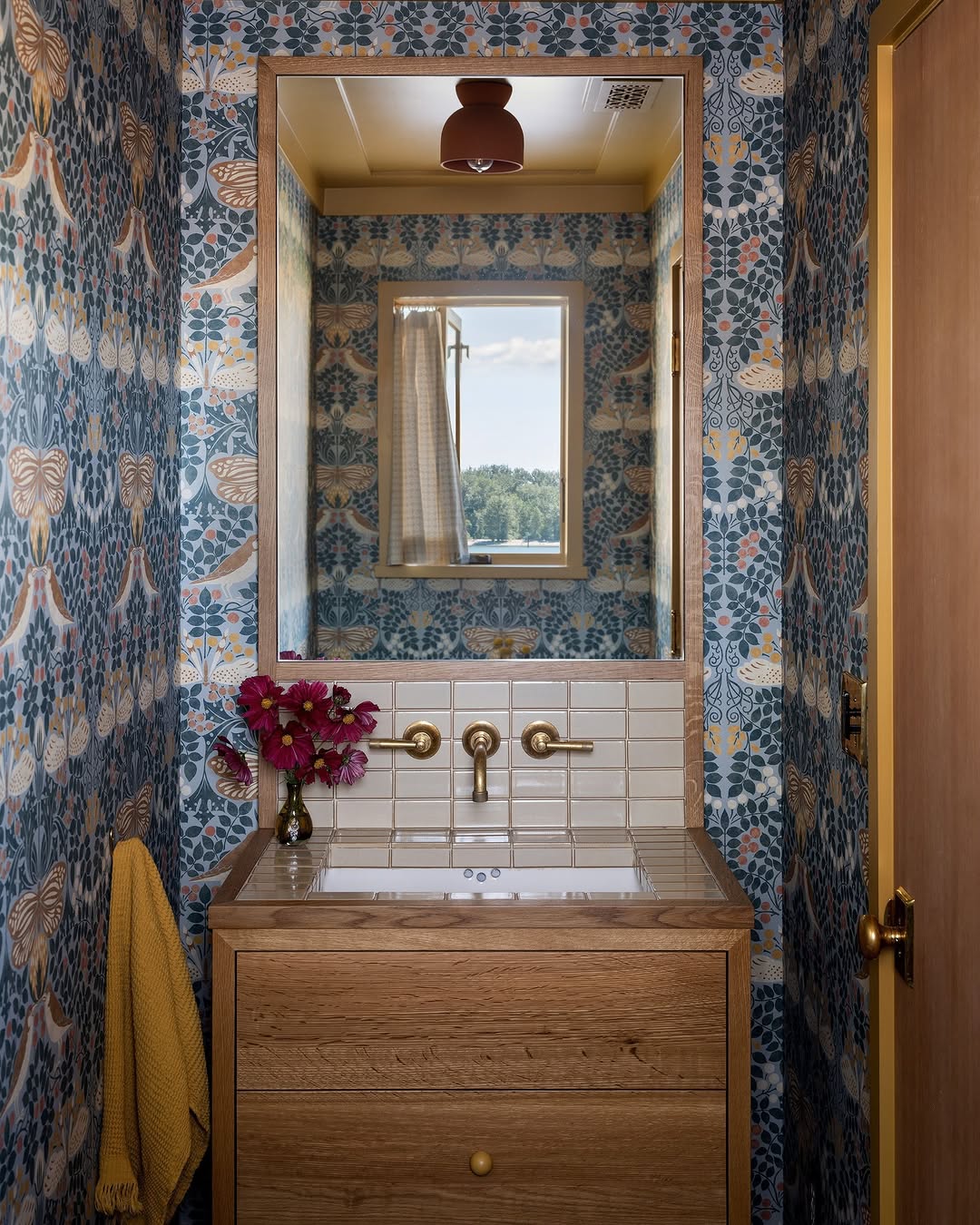
The client wanted color. Helgerson satisfied that by blending warm, muted tones throughout. This is not a neutral palette. It is a specific chromatic argument about how color behaves in Pacific Northwest light conditions.
Oregon receives approximately 144 sunny days per year in the Portland metro area. The remaining 221 days run overcast to rainy. A warm muted palette in that climate reads differently than it does in California or the American Southwest, where warm tones fight with sunlight intensity. In Portland, warm muted colors absorb the grey diffuse light and convert it into perceived warmth. The palette is doing structural emotional work in a climate context that most interior design coverage ignores entirely.
Photographer Aaron Leitz, who shot the Architectural Digest feature, specializes in architecture and interiors from a Pacific Northwest base. His eye is calibrated for the light conditions of the region. The photographs of this house are not generic "light and airy" interiors work. They are documentation of a specific light argument in a specific climate.
JH Interior Design's Material Philosophy Over 25 Years
Jessica Helgerson founded JH Interior Design in Portland in 2000. Her portfolio spans the Sauvie Island Tiny House, the Albee House Georgian Revival restoration, and the 11,000-square-foot Forest House. The common thread across projects at radically different scales is a material logic that begins with site and climate rather than style catalog.
Helgerson's sustainable construction partnerships, her use of regional materials, and her willingness to reconfigure floor plans rather than decorate over existing logic put her outside the mainstream of interior design media coverage, which tends to reward aesthetic novelty over structural argument. The Portland waterway house is significant precisely because it looks like comfort while being the result of significant structural intervention.
The view of the major waterway from the second-floor living room is not a selling point. It is the thesis. Helgerson built the entire house around it, and the tree house feeling the homeowner wanted is the proof that the argument worked.
Frequently Asked Questions
Who is Jessica Helgerson?
Jessica Helgerson is the founder of JH Interior Design, a Portland-based firm established in 2000 known for projects like the Sauvie Island Tiny House and the Albee House Georgian Revival restoration.
What did Jessica Helgerson do to the Portland waterway home?
Helgerson reconfigured the floor plan to place main living areas on the second floor, maximizing sightlines to a major waterway, and incorporated warm muted tones and wood paneling via Taylorsmith Sustainable Construction.
What is Taylorsmith Sustainable Construction?
Taylorsmith Sustainable Construction is a Portland-based firm that executed the wood paneling work in Jessica Helgerson's 2026 Architectural Digest waterway home feature.
Topics: jessica-helgerson, jh-interior-design, architectural-digest, portland-oregon, interior-design, sustainable-construction, 1970s-architecture, taylorsmith, wood-paneling, pacific-northwest