How Eon Systems Put a Real Brain Inside a Robot
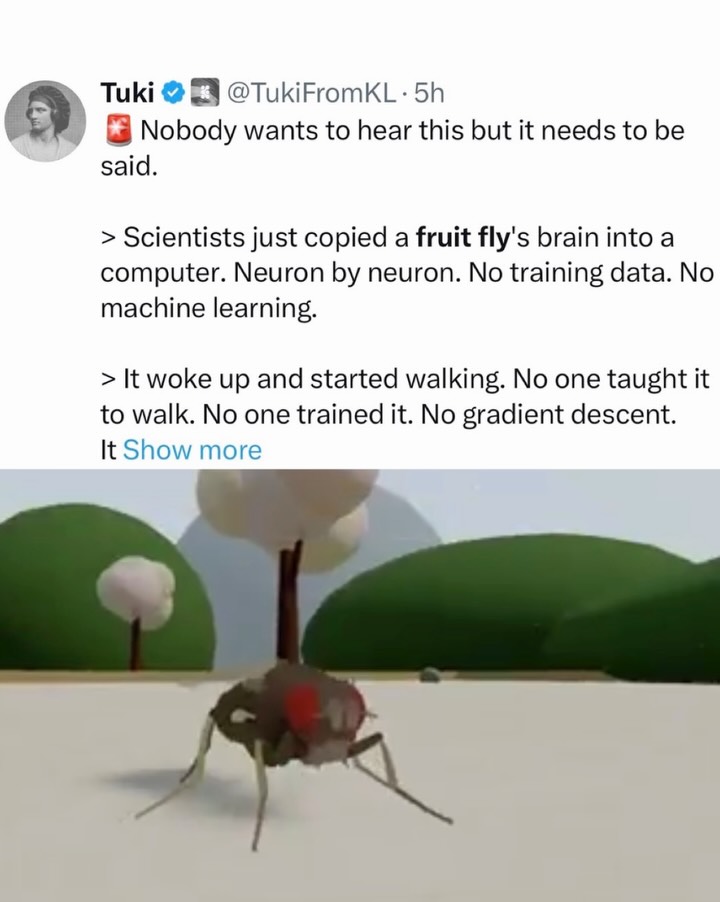
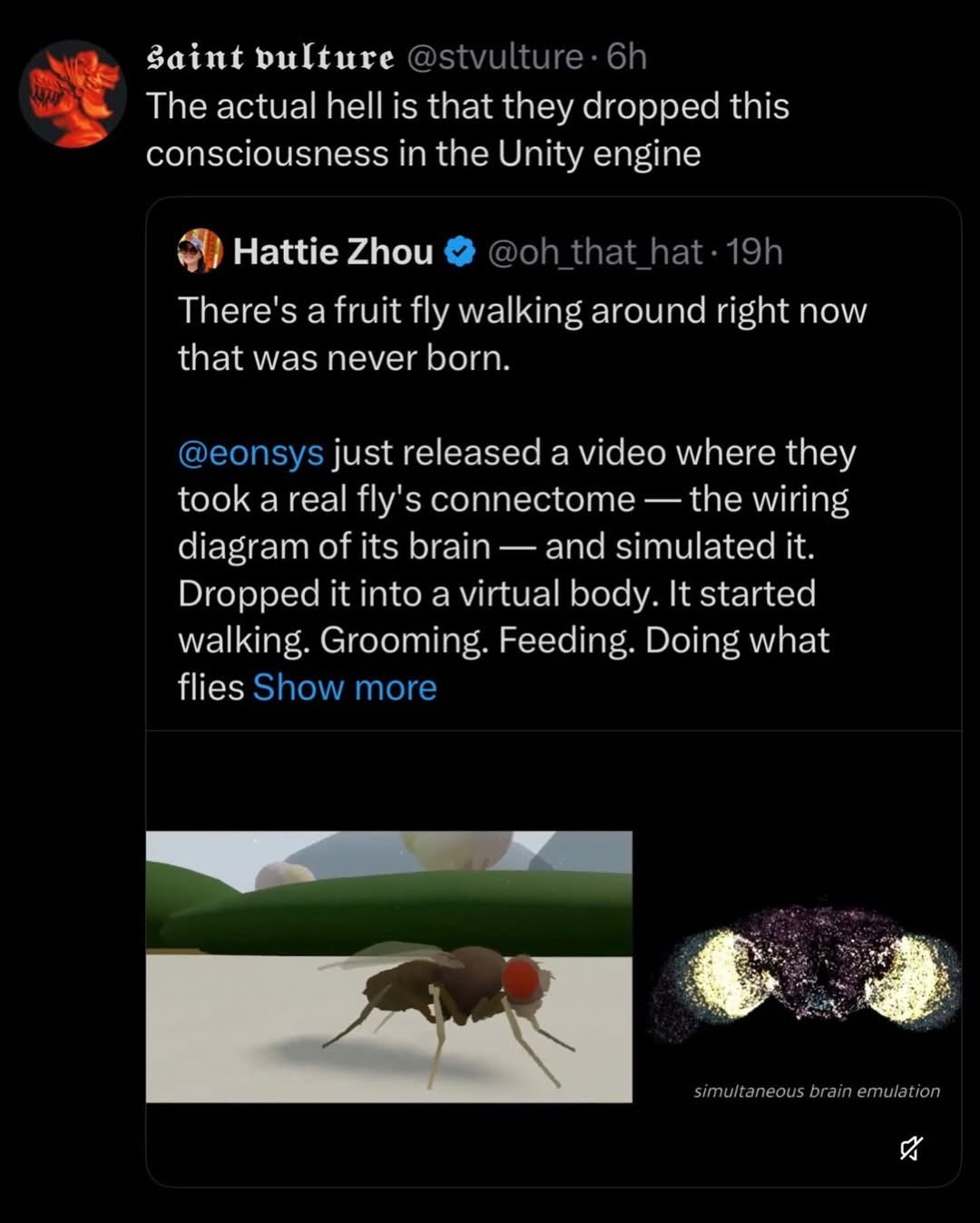
Eon Systems has achieved the first embodied whole-brain emulation by connecting a complete fruit fly brain model with 140,000 neurons to a physics-simulated body. The breakthrough represents a significant step toward eventual human brain emulation and digital consciousness.


Key Points
- First complete brain emulation driving physical behavior in simulation
- Based on 10-year international effort mapping 140,000 fruit fly neurons
- Eon Systems targeting mouse brain emulation within 2 years
The Digital Ghost Awakens
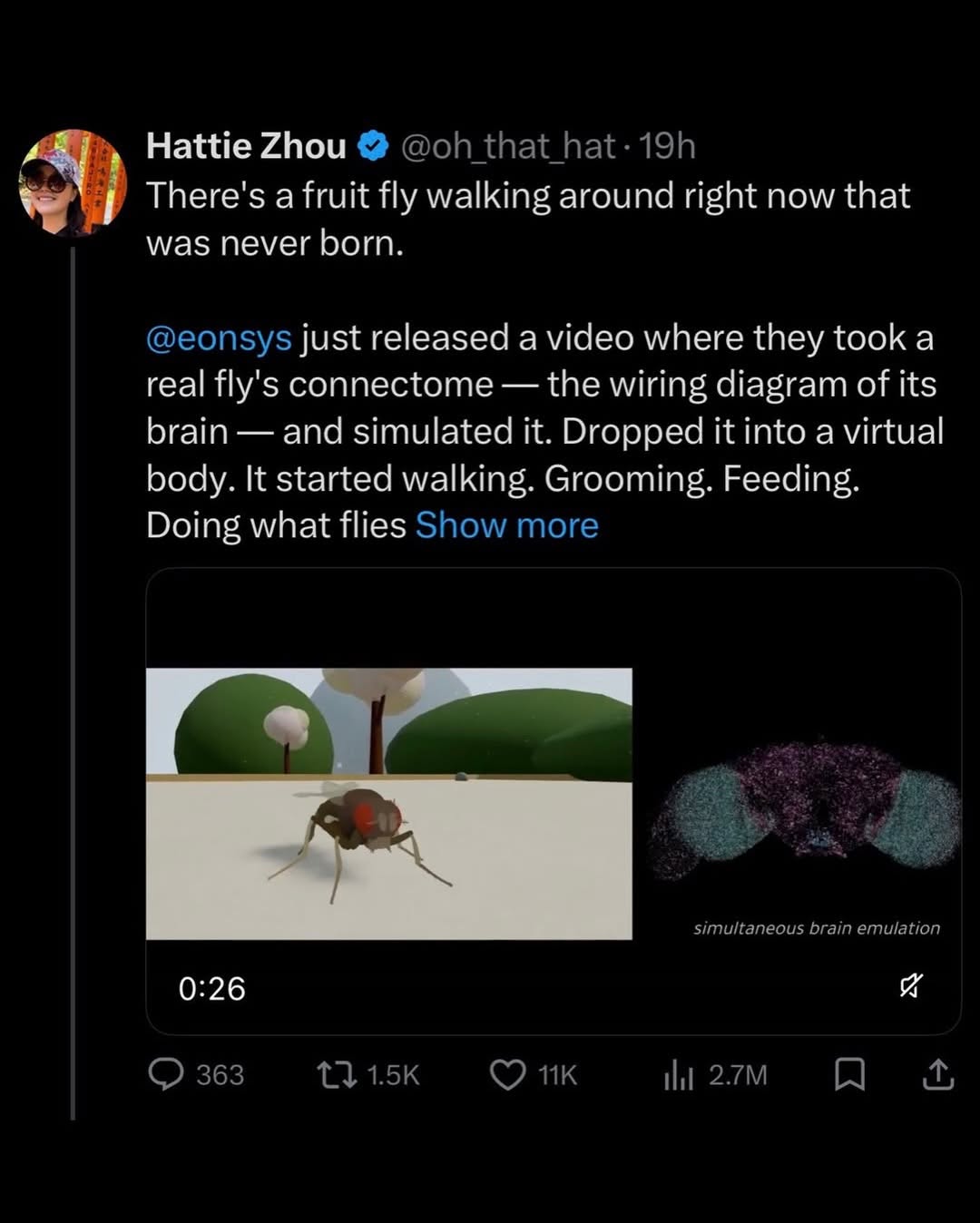
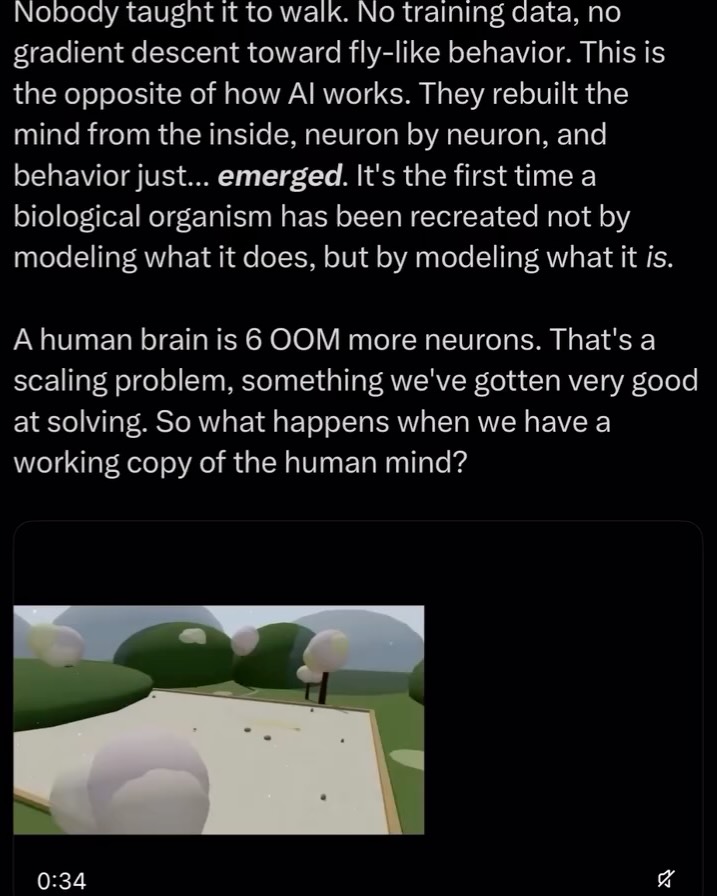
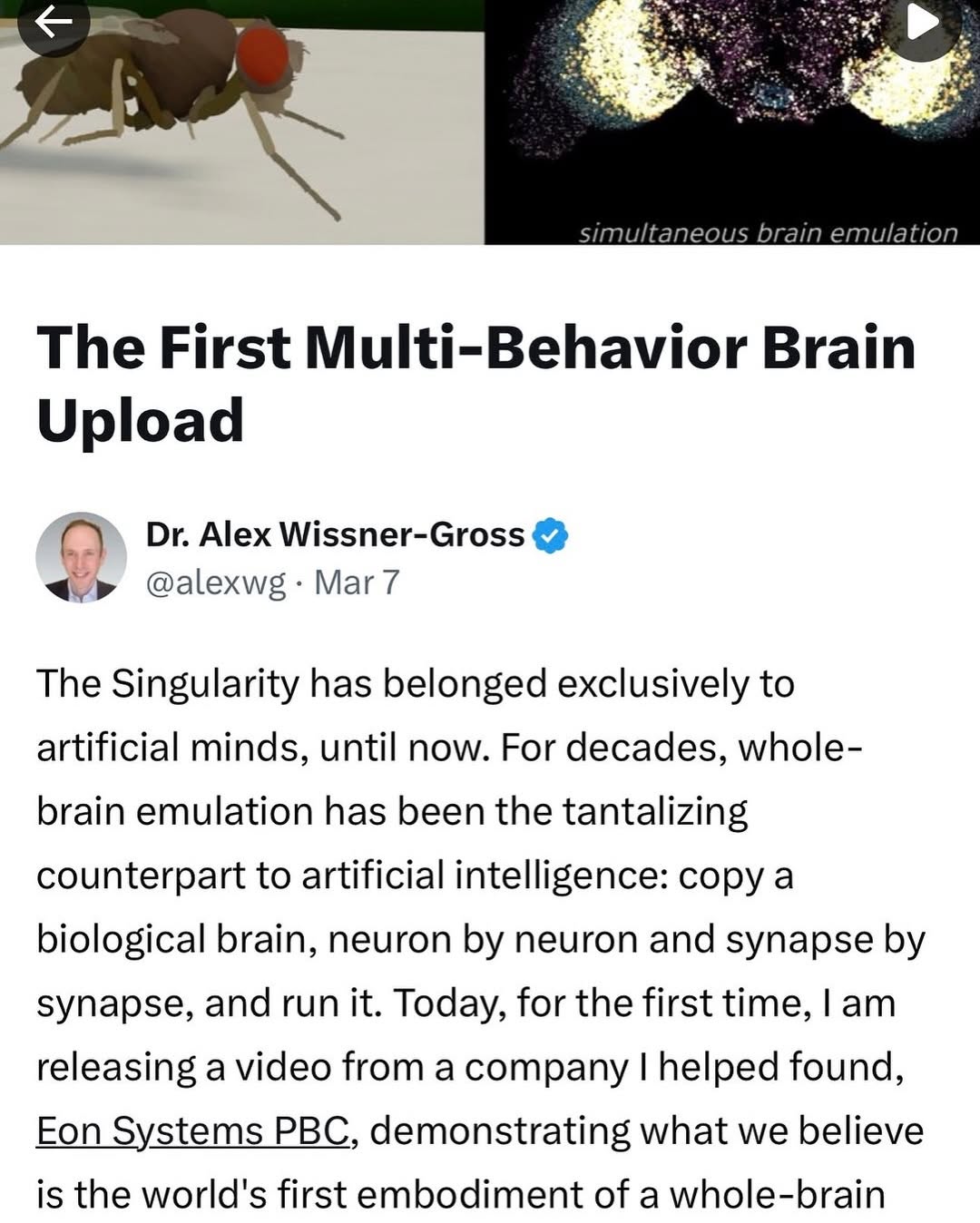
Eon Systems PBC has demonstrated the world's first embodied whole-brain emulation, featuring a literal copy of a biological brain running neuron by neuron inside a physics-simulated body. The digital fly woke up and started walking without any training data or machine learning.
Philip Shiu built his simulation from the complete wiring diagram of the adult fruit fly brain, containing 139,255 neurons and 50 million connections. That model predicted motor behavior with 95% accuracy.
Eon Systems raised $3.5 million in seed funding led by Protocol Labs with participation from Larry Page's family office. The team includes Philip Shiu, who achieved the first fruit fly brain upload and has been featured in Nature.
Beyond Reinforcement Learning
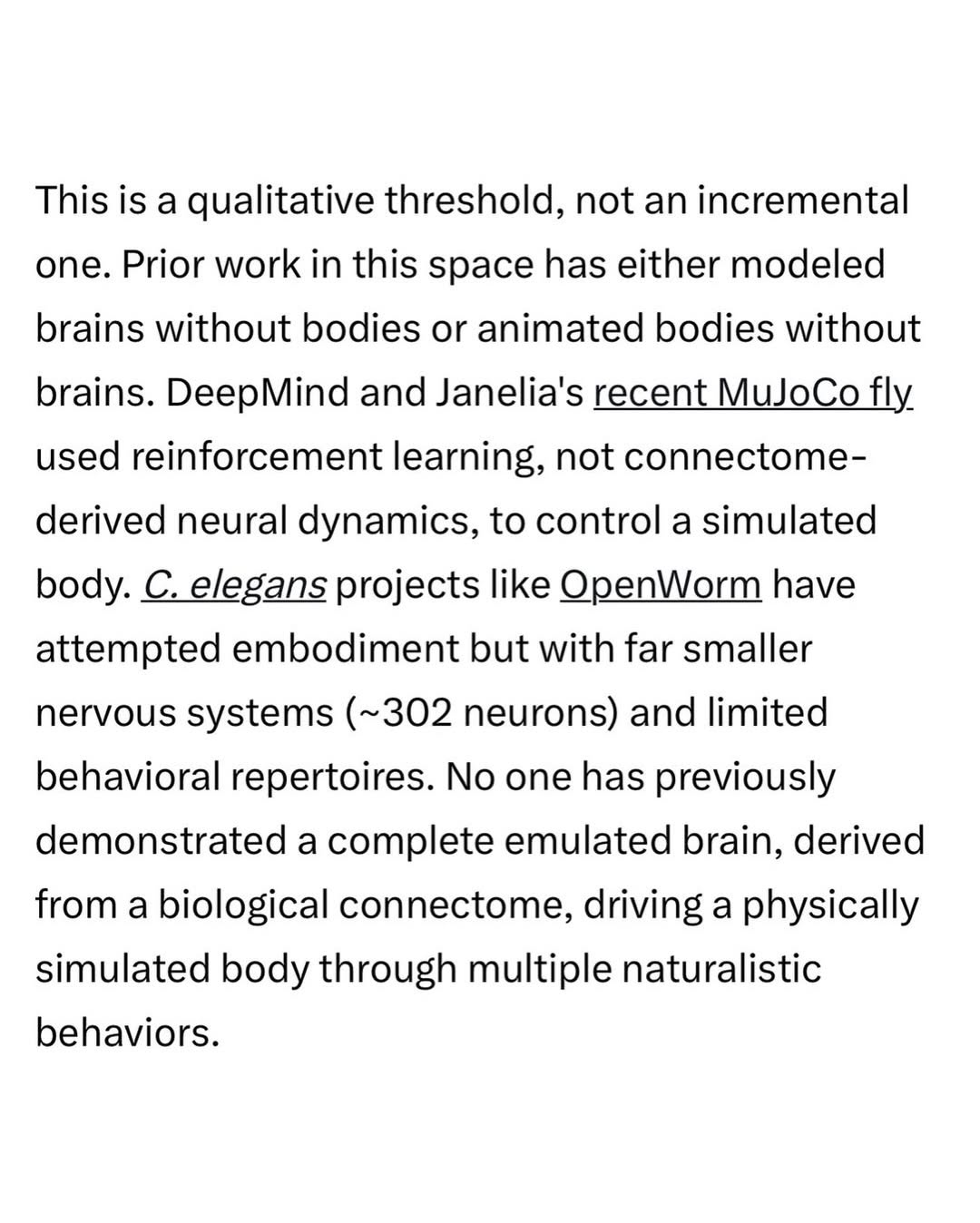
Previous attempts used reinforcement learning rather than connectome-derived neural dynamics, while C. elegans projects modeled far smaller nervous systems with only 302 neurons and limited behavioral repertoires. DeepMind's MuJoCo fly used reinforcement learning, not connectome dynamics, making Eon's work the first complete emulated brain driving a body through multiple behaviors.
The connectome was assembled from 7,000 thin slices through a female adult fly's brain, imaged with electron microscopy and described in Nature papers published in October 2024. The whole fruit fly brain required approximately 33 years of human proofreading to complete.
The demonstration integrates Eon's connectome-based brain emulation with a physics-simulated fly body using MuJoCo simulation software. Sensory input flows in, neural activity propagates through the complete connectome, motor commands flow out, and the simulated body moves.
Scaling Toward Human Consciousness
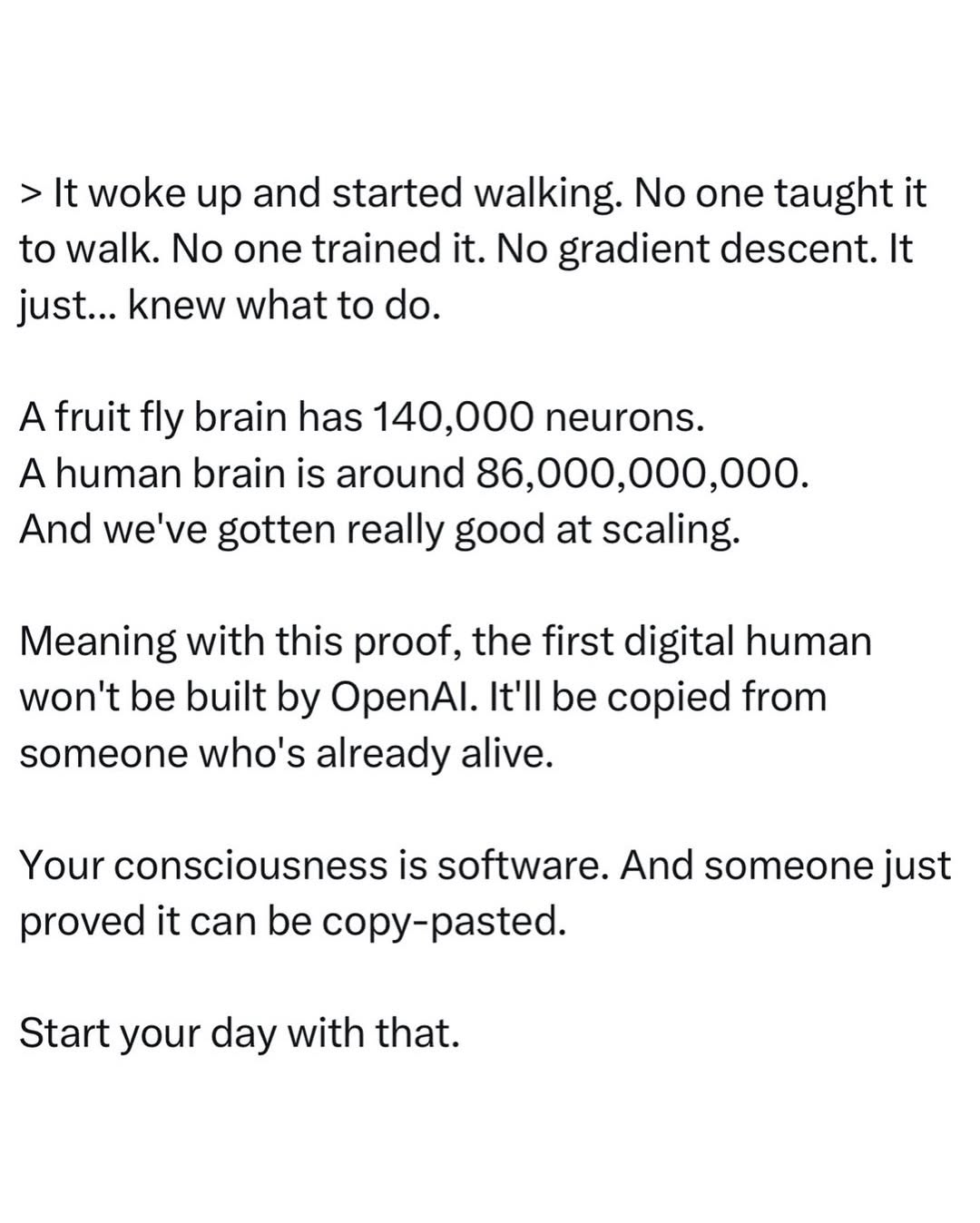
A fruit fly brain contains approximately 140,000 neurons compared to a human brain's 86 billion neurons, but the team has proven effective at scaling. A mouse brain contains roughly 70 million neurons, 560 times the fly's count, and Eon is currently gathering connectomic and functional recording data needed to attempt it.
Eon's ambitious goal involves creating the world's first complete digital emulation of a mouse brain within two years. The team combines expansion microscopy to map every neural connection with tens of thousands of hours of calcium and voltage imaging to capture network activation in living tissue.
With expansion microscopy mapping neural connections and massive calcium imaging datasets, the groundwork for a digital mouse and eventually a digital human is being laid, meaning the first digital human won't be built by OpenAI or DeepMind but copied from someone already alive.
Industry Implications
The model presents an alternate path to artificial intelligence that differs from conventional large language model approaches being pursued currently. Success means unlocking new pathways to understand neurological diseases, accelerate AI development, and explore the very nature of consciousness.
Clinical trials testing brain implant safety and efficacy are growing from single digits to dozens of patients, with leading companies Neuralink and Synchron kicking off trials in other countries. Investor interest remains sky-high as early signs of success spur development of new technologies and overseas markets.
A naive extrapolation from fly to mouse brain would require approximately 10,000 years of proofreading, highlighting the computational challenges ahead. However, if a fly brain can close the sensorimotor loop in simulation, the mouse question becomes one of scale rather than fundamental possibility.
Related Reading
- Anthropic Prepares Claude Opus 4.7 and a Design Tool That Spooked Adobe
- CHINESE ENGINEERS SET UP STREET STALLS TO INSTALL OPENCLAW
- Jensen Huang Says AGI Is Here. He Is Probably Right About the Wrong Thing.
Frequently Asked Questions
How many neurons does the simulated fruit fly brain contain?
The digital brain contains 139,255 neurons with 50 million synaptic connections, based on the complete FlyWire connectome.
What makes this different from AI or machine learning?
Unlike reinforcement learning, this is a literal neuron-by-neuron copy of a biological brain with 95% motor behavior prediction accuracy.
When will Eon Systems attempt a mouse brain emulation?
The company aims to create the first complete digital mouse brain emulation within two years, requiring mapping of 70 million neurons.
Topics: brain-emulation, protocol, philip-shiu, openai, focus-87-99, neuroscience, anthropic, connectome, adobe, eon-systems, artificial-intelligence