DANIEL ARSHAM BUILT A PORSCHE 911 FROM BLUE CALCITE AND HYDROSTONE AND CALLED IT ARCHAEOLOGY
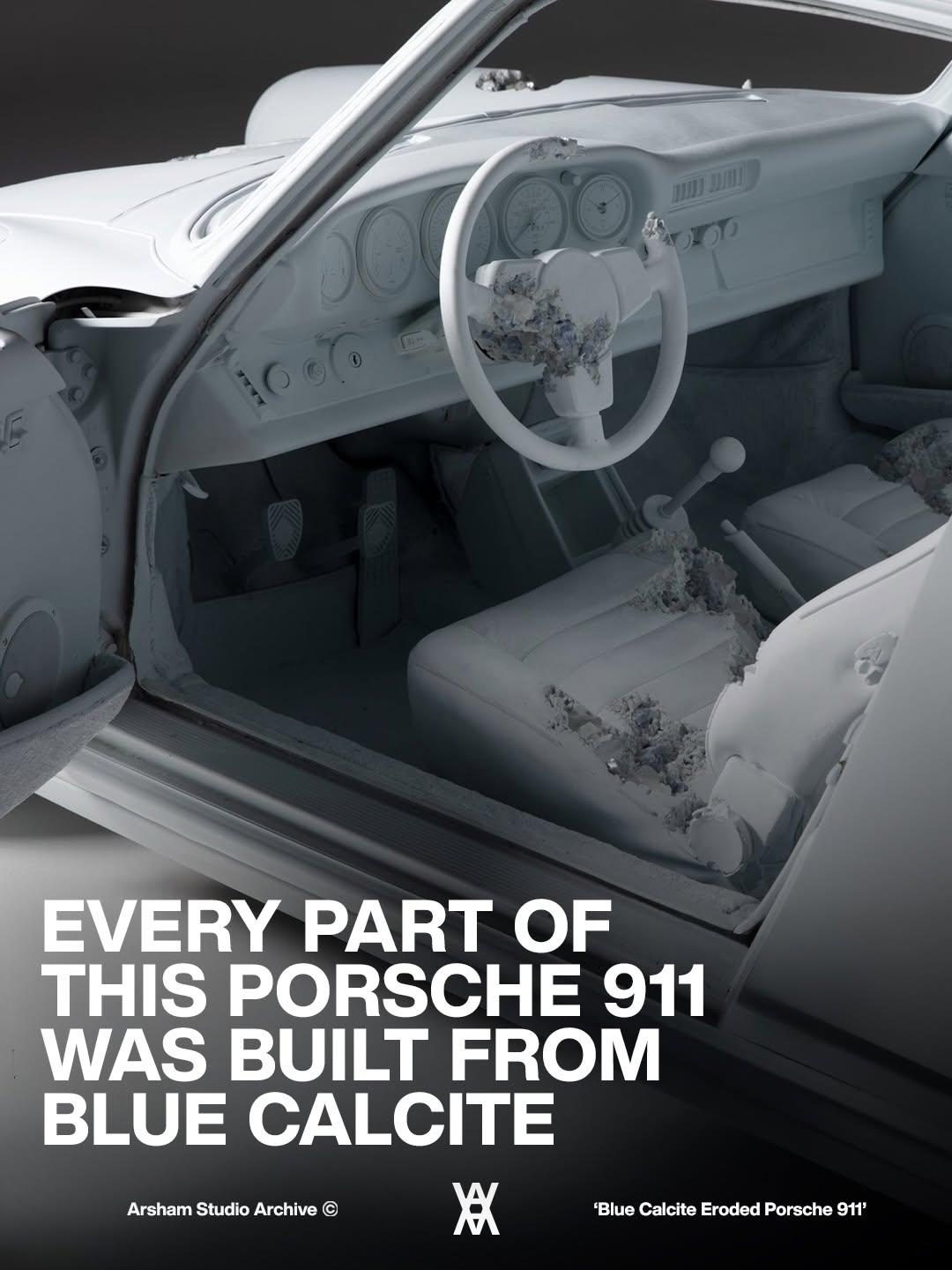
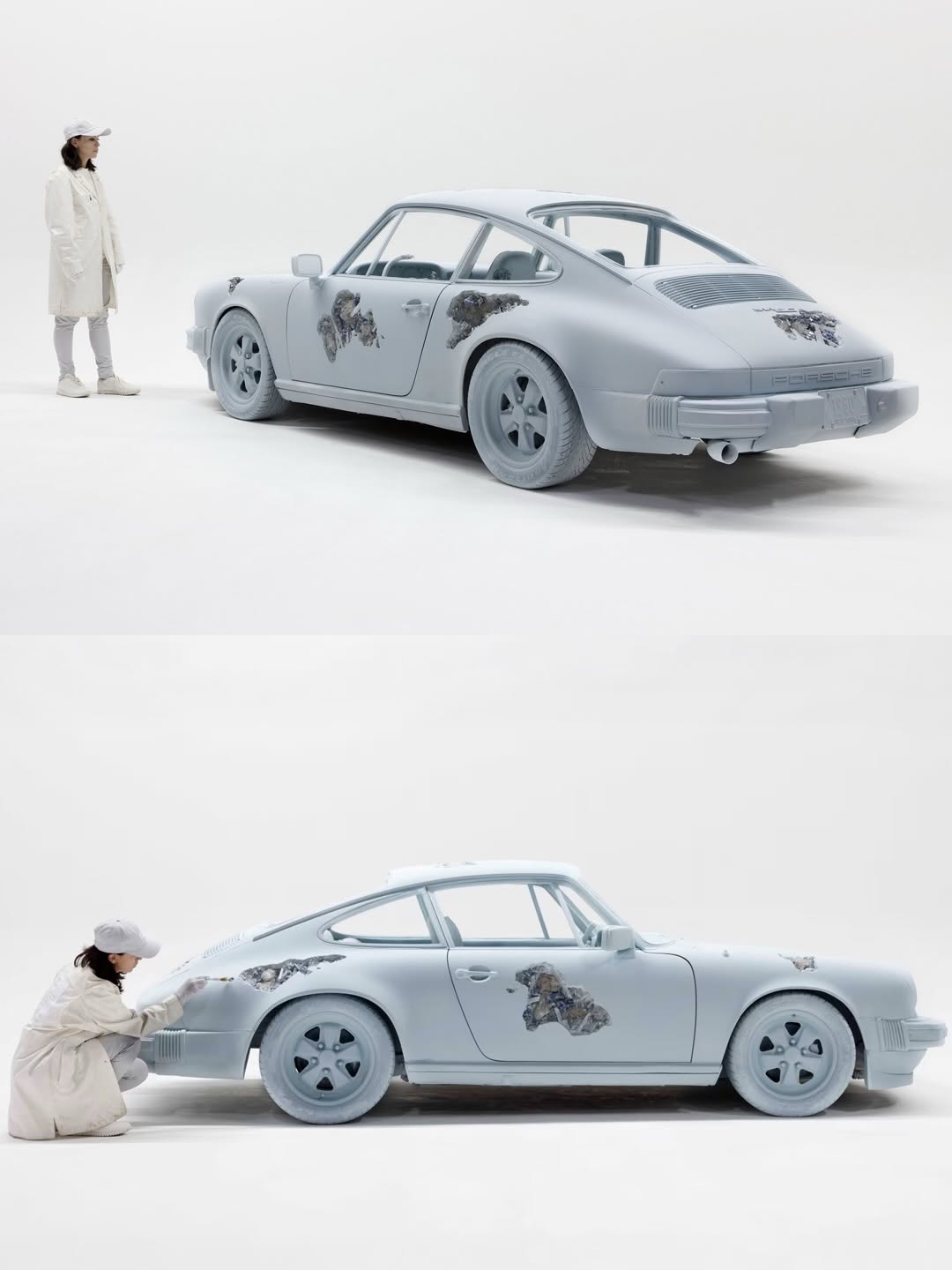
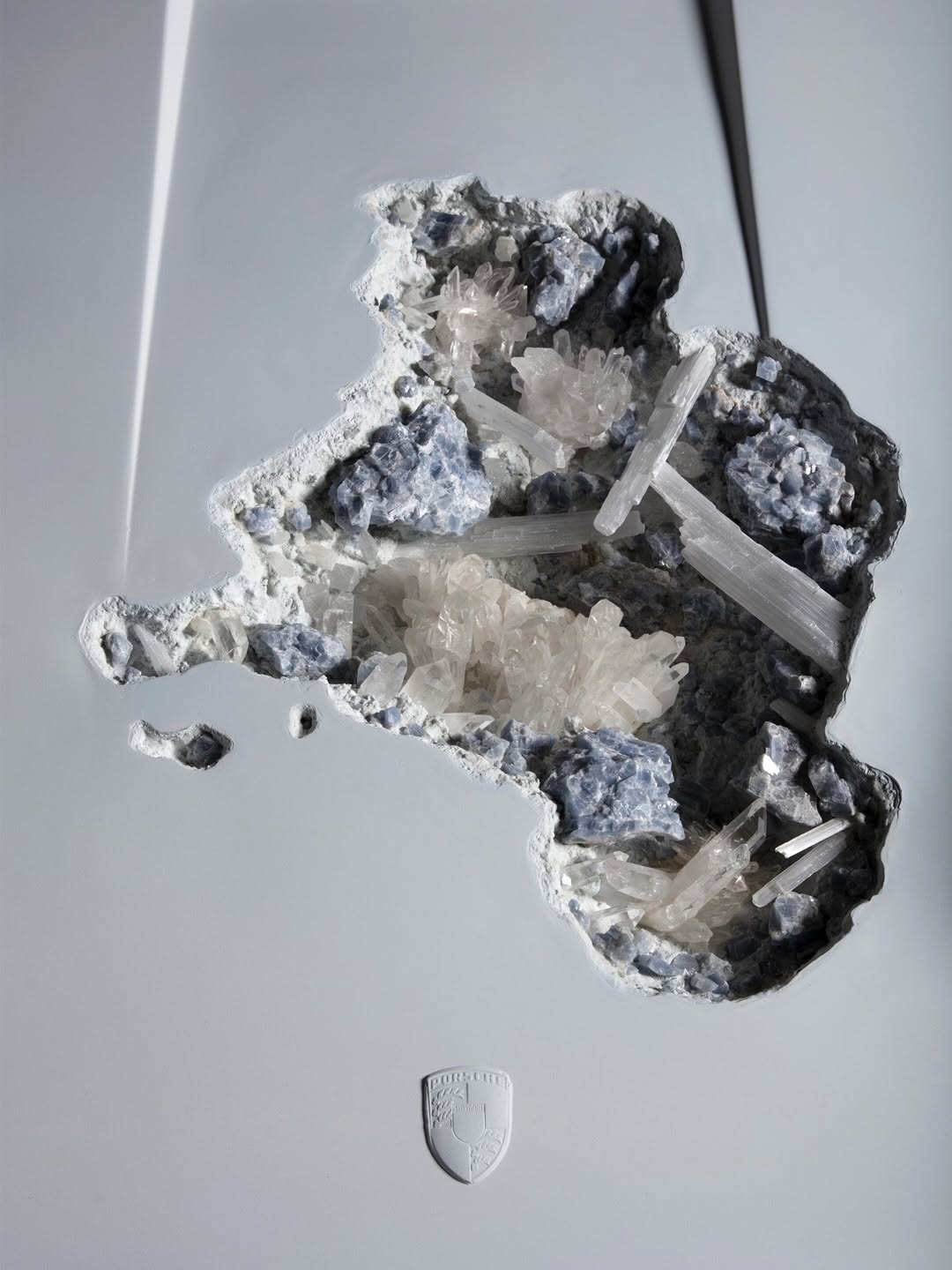
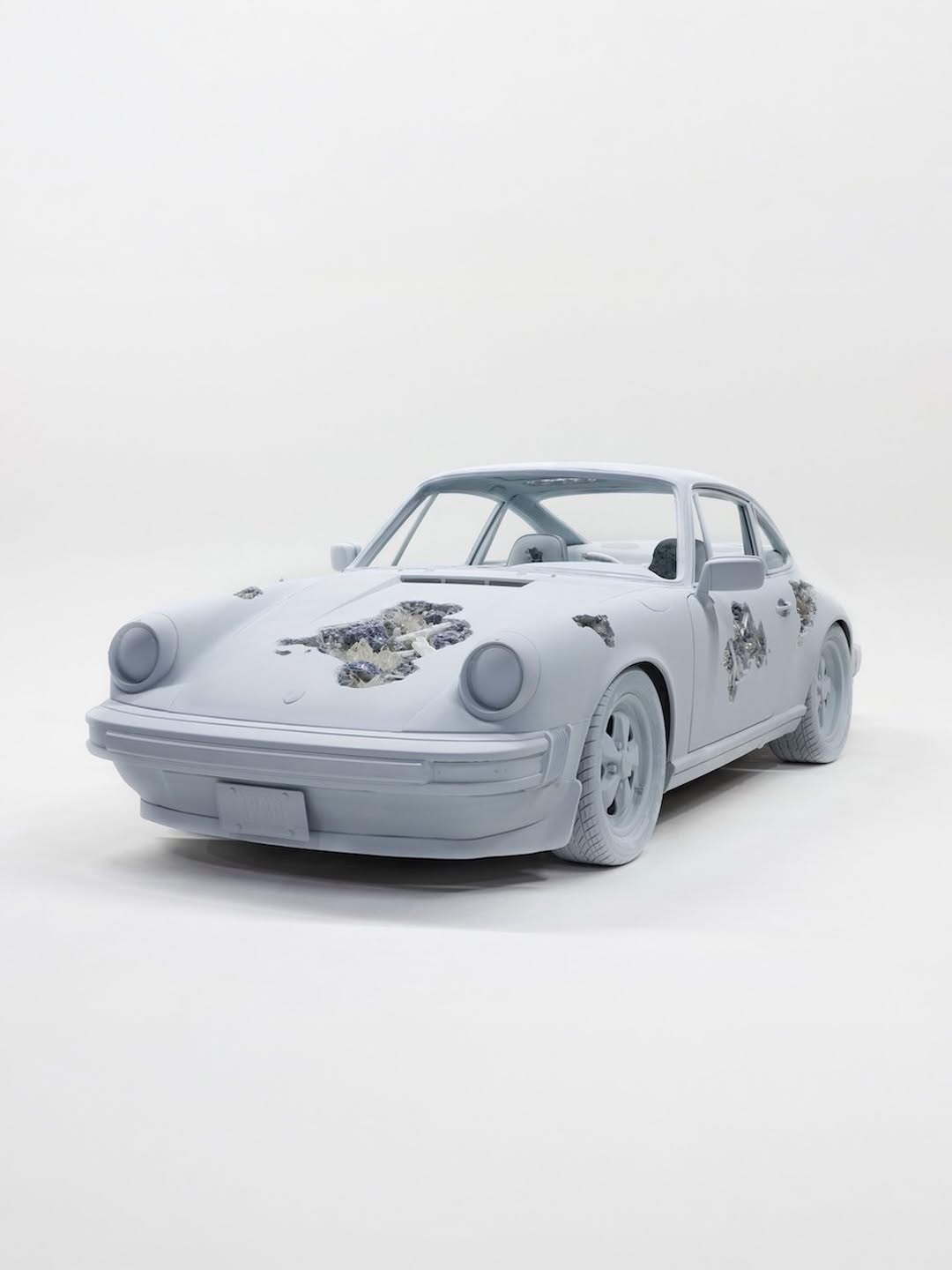
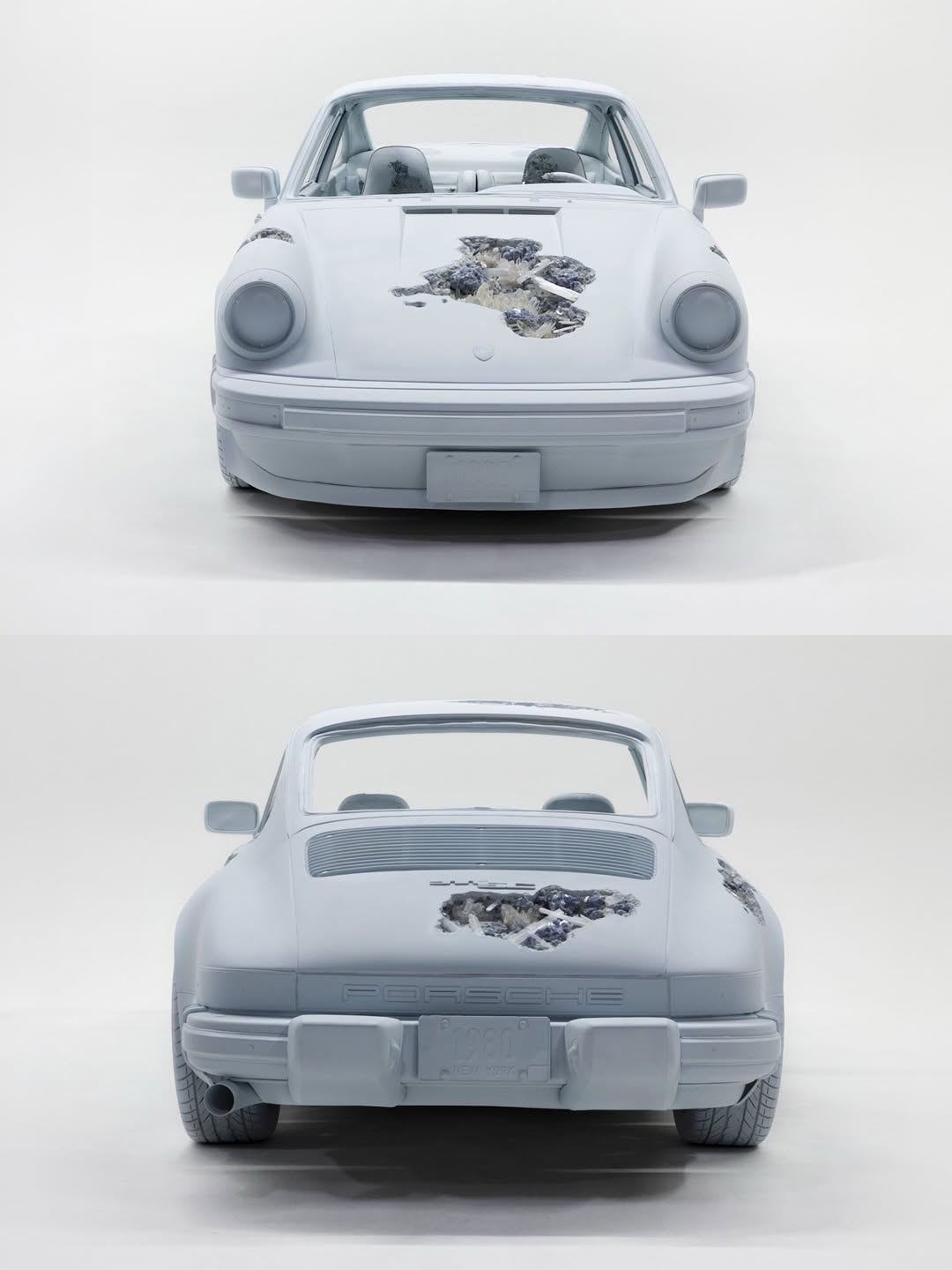
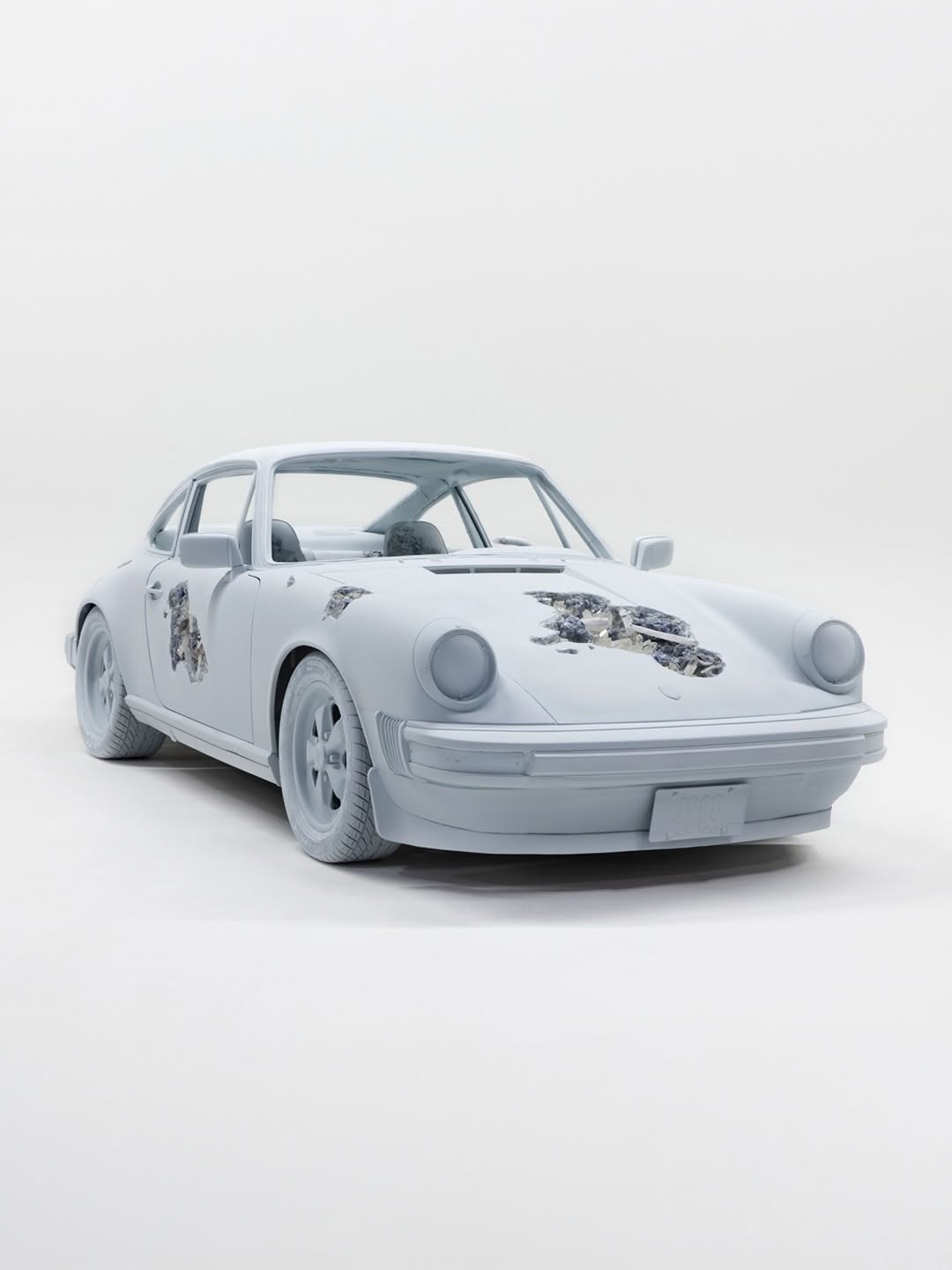
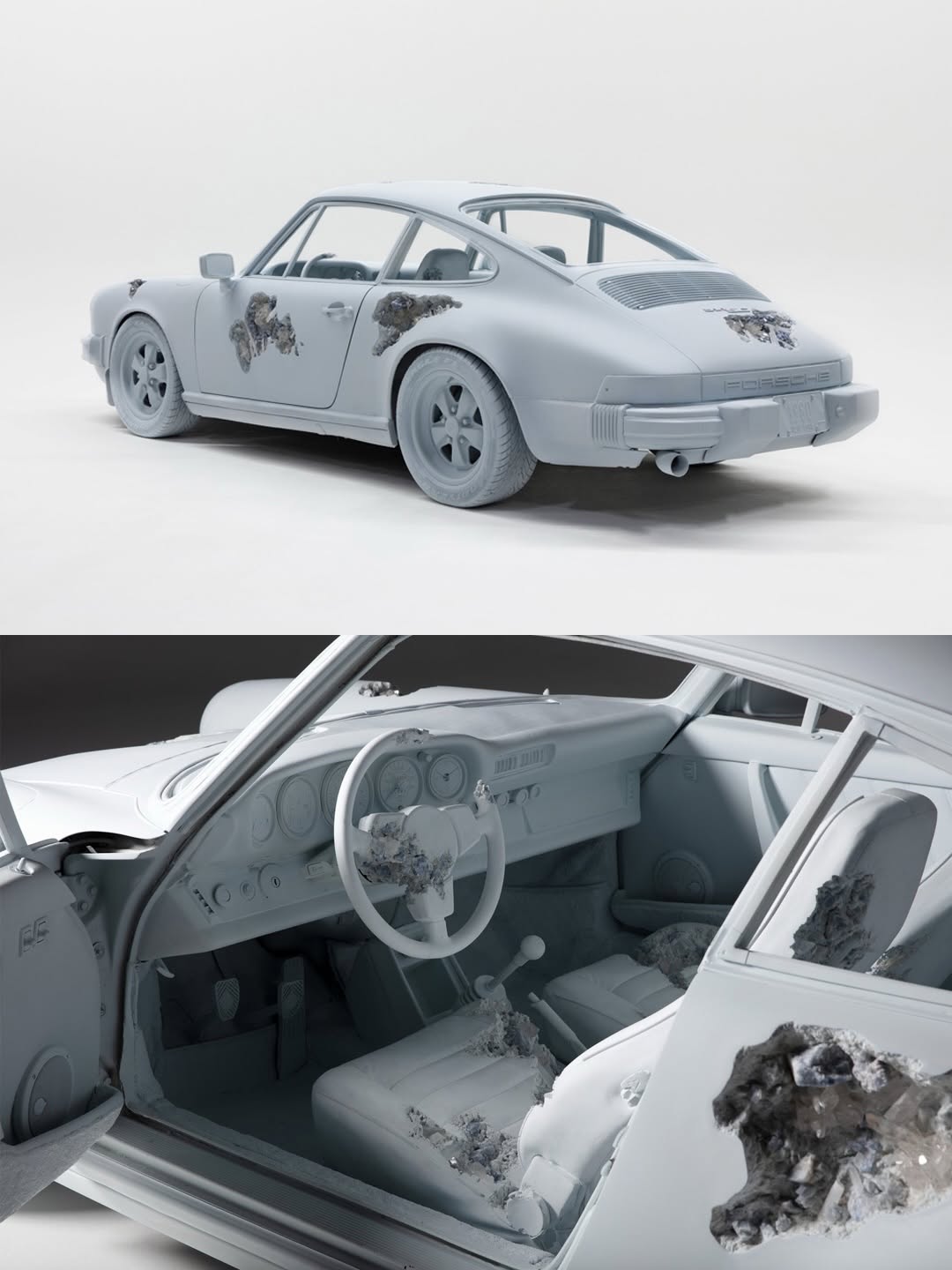
Daniel Arsham's Blue Calcite Eroded Porsche 911, created in 2023, embeds fiberglass, hydrostone, quartz, selenite, and blue calcite directly into the bodywork of an air-cooled Porsche 911. The full-scale sculpture was the centerpiece of Arsham Auto Motive at the Petersen Automotive Museum in Los Angeles. The work extends Arsham's fictional archaeology practice to automotive scale, treating a car already mythologized by the collector market as a geological artifact.
Key Points
- The Blue Calcite Eroded Porsche 911 was built in 2023 using fiberglass, hydrostone, quartz, selenite, and blue calcite embedded directly into an air-cooled Porsche 911 body.
- Exhibited at the Petersen Automotive Museum in Los Angeles in early 2023 as part of the Arsham Auto Motive show.
- Arsham chose blue calcite specifically for its colder, softer surface quality, contrasting with the warm curves of the original 911 silhouette.
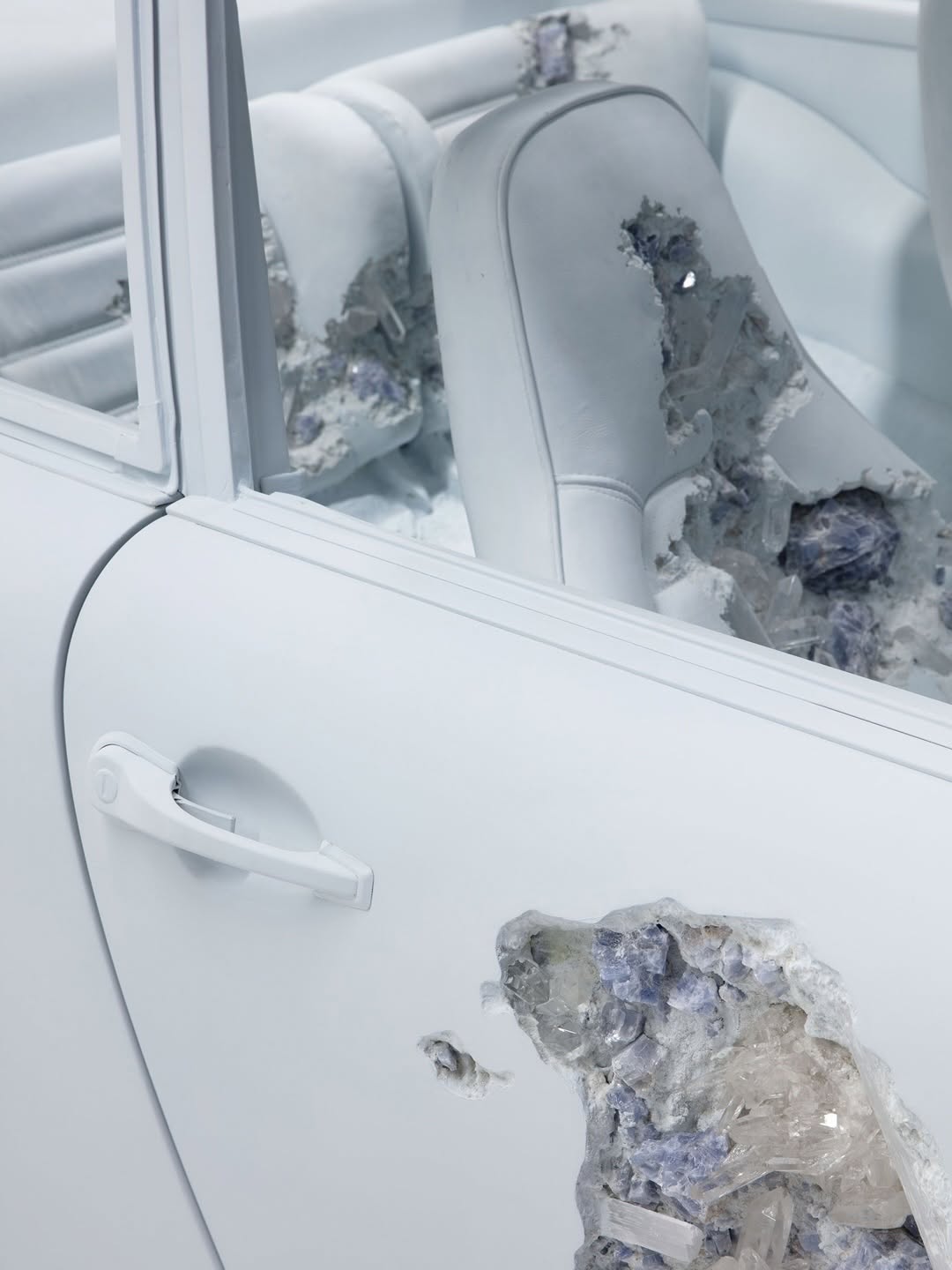
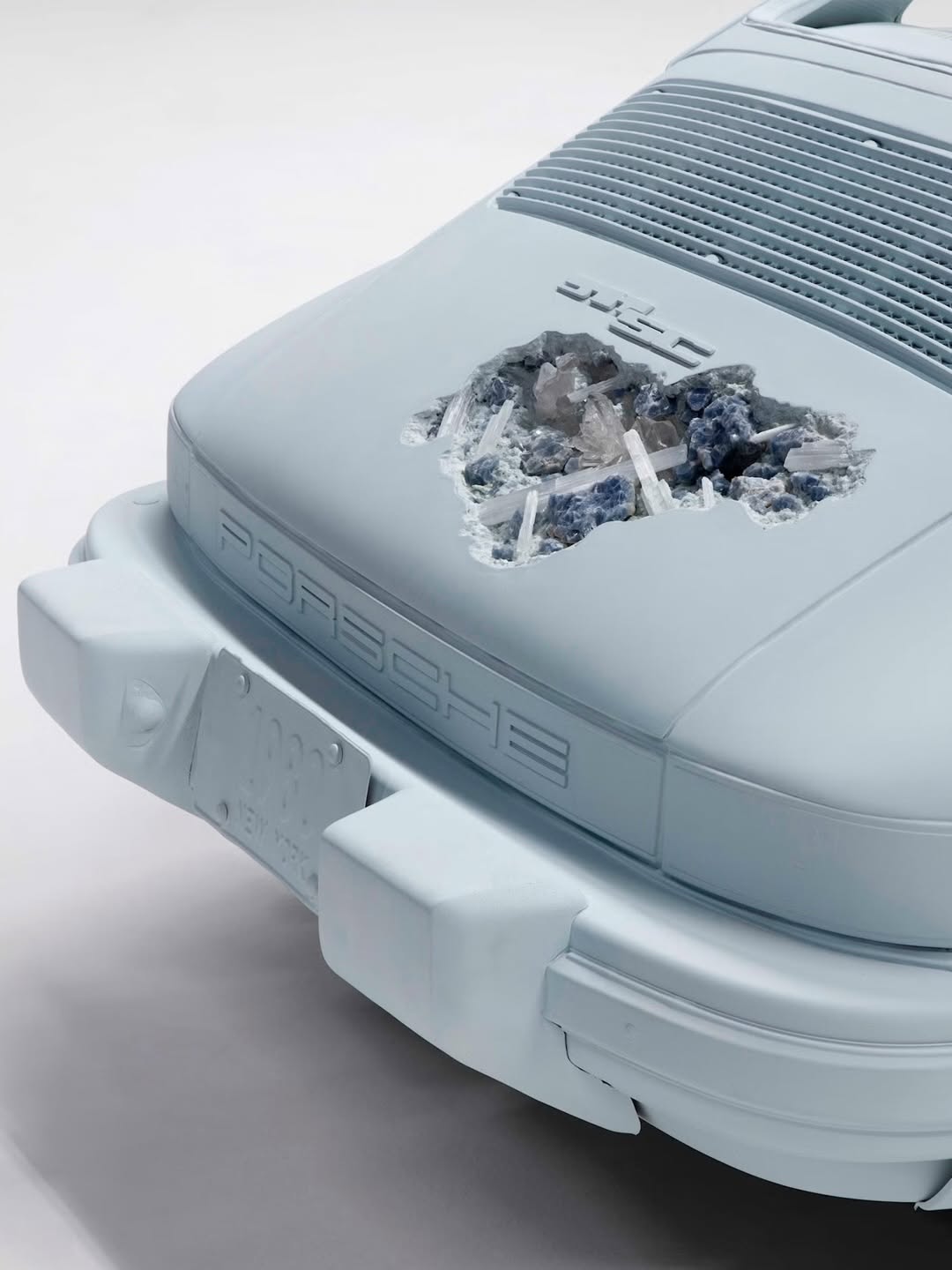
Fiberglass, hydrostone, quartz, selenite, and blue calcite. Those are the materials in the Blue Calcite Eroded Porsche 911. Arsham built this in 2023 using the shell of an air-cooled Porsche 911, removing sections of the exterior bodywork and replacing them with cast mineral formations that appear to have grown from inside the vehicle. This is not distress finishing. This is geological time applied to an object that was already being treated like an artifact before Arsham touched it.
Blue calcite is a naturally occurring mineral known for its pale translucent surface quality. In the sculpture, it appears alongside quartz and selenite in the bodywork itself, not decoratively applied but structurally embedded. The formations emerge from voids where original panels once were. Arsham describes the decision to use blue calcite specifically: it carries a softer, colder appearance than quartz. The surface reads differently under light. That specific choice matters because the air-cooled 911 already has a particular surface warmth to its curves. Blue calcite creates a temperature contrast between the original form and the intervention.
What Fictional Archaeology Actually Means
Arsham coined the phrase fictional archaeology to describe his practice of depicting pop culture objects as if they were ancient relics. The premise: art collectors and cultural observers in the distant future excavating objects from the late 20th and early 21st century. Eroded sneakers, distorted game cartridges, fossilized Mickey Mouse figurines. The Porsche 911 is a different scale of ambition. It requires fiberglass engineering, not just hand-carving or casting. The full-scale sculpture is approximately 4.3 meters long and weighs considerably more than the display logistics of most contemporary art.
The Petersen Automotive Museum in Los Angeles hosted Arsham Auto Motive in early 2023. The exhibition included an eroded 1968 Ford Mustang GT Fastback, a 2018 eroded Ferrari inspired by Ferris Bueller's Day Off, and a 1955 Porsche 356 Speedster that Arsham stripped to bare metal and finished with a boro-denim interior. The Blue Calcite 911 was the centerpiece. Arsham Editions dropped 18 objects in May 2026 showing how the studio's commercial output connects to the exhibition practice, but the Petersen installation was the demonstration of scale that justified everything smaller.
The Porsche 911 as Archaeological Object
The air-cooled 911 production ran from 1963 to 1998. The model Arsham worked with is not identified by exact year in his caption, but the silhouette matches the long-hood early production cars, pre-impact bumper, before Porsche began the systematic homologation of the 911 that produced the 993, 996, and eventually the water-cooled transition in 1999. The choice is deliberate. The early 911 is already the object that Porsche collectors treat as irreplaceable. Arsham is taking an object that the market already mythologizes and accelerating that mythology by geological eons.
The construction required removing sections of the exterior and reconstructing them through cast surfaces. This is technically different from the smaller eroded objects, which are typically produced by casting in plaster or resin and then embedding minerals during the pour. At full car scale, the engineering requires collaboration with automotive fabrication specialists. The finished work documented in Arsham's archive post shows mineral formations in the door panels, hood sections, and rear quarter panels.
Design Adjacent to Fashion Adjacent to Art
Arsham's practice sits at a specific intersection. He has produced work for Dior, Porsche itself as a commissioned piece, Pokémon, New Balance, and the Cleveland Cavaliers. The cross-vertical nature of the studio is deliberate. The same logic applies to how Norm Architects approaches design, taking Scandinavian restraint and finding the exact vocabulary to make it speak to a New York Tribeca building that has been industrial since the 1880s. Different discipline, same precision about material honesty.
Arsham posted the studio archive documentation of the Blue Calcite 911 in 2026 because the object continues to generate cultural conversation three years after its exhibition. The Petersen Automotive Museum sits on Wilshire Boulevard in the Miracle Mile district. The exhibition is over. The photographs from it continue to circulate because the object poses a question that does not resolve: is this art about cars, or is it art about how we already treat cars as art?
A Porsche 911 in 2300
The fictional archaeology framing says: imagine an excavation team discovering this object a thousand years from now. They would date the minerals and find blue calcite from the present era embedded in something that their instruments identified as a machine. The story the object tells is about how quickly manufactured culture becomes archaeological artifact. The air-cooled 911 already trades at auction for $1 million to $3 million for clean examples. Arsham took one and made it worth more as a question than as a machine. That is the work.
Frequently Asked Questions
What materials did Daniel Arsham use for the Blue Calcite Eroded Porsche 911?
Arsham used fiberglass, hydrostone, quartz, selenite, and blue calcite to construct the sculpture, embedding minerals directly into sections of an air-cooled Porsche 911 body.
Where was the Arsham Blue Calcite Porsche 911 exhibited?
The sculpture was the centerpiece of Arsham Auto Motive at the Petersen Automotive Museum in Los Angeles, which opened in early 2023.
What is Daniel Arsham's fictional archaeology concept?
Fictional archaeology is Arsham's practice of depicting present-day cultural objects, including sneakers, cars, and toys, as if they were ancient relics excavated from the distant future.
Topics: petersen-museum, fictional-archaeology, sculpture, automotive, los-angeles, dior, new-balance, blue-calcite, porsche, new balance, art, porsche-911, contemporary-art, ferrari, daniel-arsham