CASONA SFORZA IS 11 SUITES IN OAXACA AND THE MOST SPECIFIC ARCHITECTURE ARGUMENT OF 2026
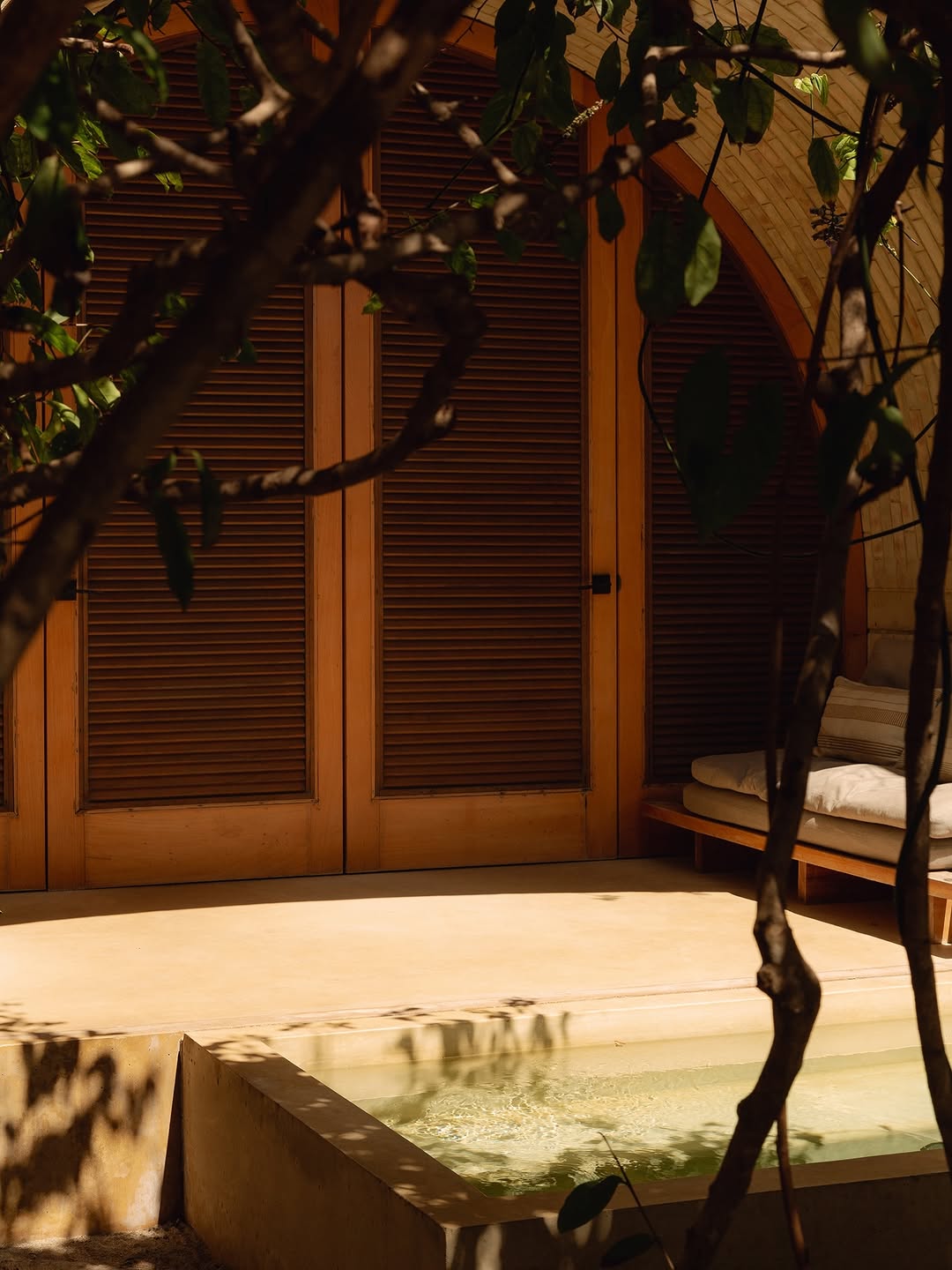
Casona Sforza is an 11-suite boutique hotel in Puerto Escondido, Oaxaca, designed by Alberto Kalach of TAX Architects with interiors by MOB Studio. The hotel's signature asymmetrical vaulted brick arches were designed for seismic stability and passive cooling, using locally sourced light-colored brick to reflect rather than absorb sunlight. Interior furnishings were specified from Pueblo del Sol artisans in the Sierra Norte de Oaxaca.
Key Points
- Alberto Kalach designed asymmetrical brick vaults at Casona Sforza for seismic stability and passive cooling, eliminating the need for mechanical air conditioning.
- The hotel began as a private beach house commission from Ezequiel Ayarza Sforza before evolving into 11 hotel suites.
- MOB Studio specified interior furnishings from Pueblo del Sol artisans in the Sierra Norte de Oaxaca, making the supply chain a design decision.
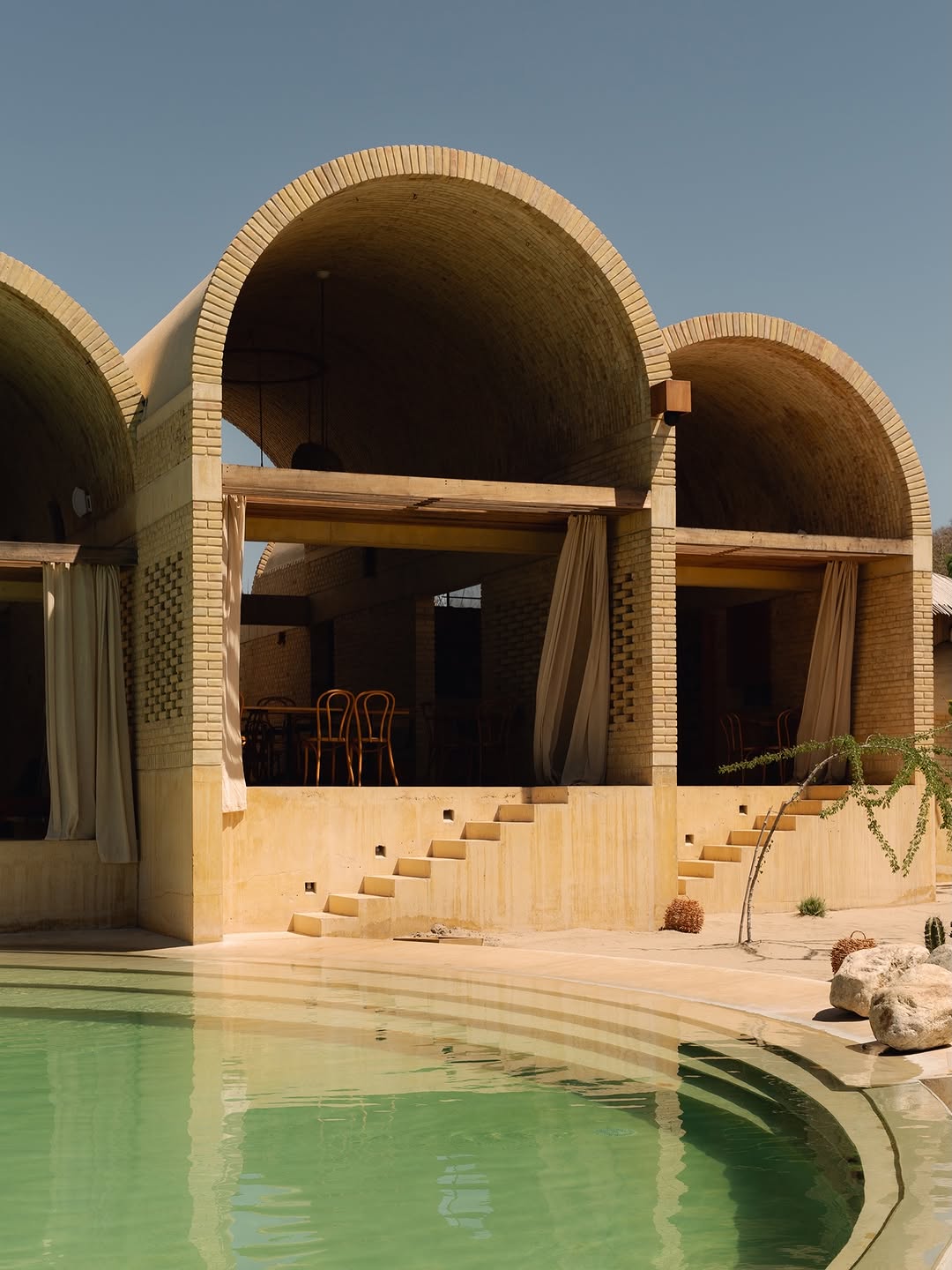
The arches are asymmetrical. That is the first thing you notice in every photograph of Casona Sforza, the boutique hotel on the Pacific coast of Oaxaca in Puerto Escondido. Alberto Kalach, the Mexico City architect who leads TAX Architects, designed them that way for two reasons that have nothing to do with aesthetics: the vaulted shape provides seismic stability, and the geometry promotes natural airflow. In a coastal environment where mechanical air conditioning would be the default specification, designing for passive cooling through brick vault geometry is a structural commitment to material honesty.
Casona Sforza began as a private beach house commission from entrepreneur Ezequiel Ayarza Sforza and evolved into an 11-suite boutique hotel. That trajectory, from private residence to public hospitality, is its own design argument: the proportions and spatial logic of a well-designed private house are often better suited to hospitality than the purpose-built hotel format, which tends to optimize for operational efficiency at the expense of spatial quality.
Light-Colored Local Brick
The brick used in the vault construction is locally sourced and light-colored. That material choice is functional: light-colored masonry reflects sunlight rather than absorbing it, reducing radiant heat gain in a climate where temperature management is a structural problem. The bricks were selected from regional production in Oaxaca, which has a documented tradition of earthen construction in both the Zapotec archaeological record and in contemporary vernacular building practice.
14 mm gauge bricklaying with traditional wet mortar joints was used to produce the vault forms. The vaults span spaces that function as bedroom suites and circulation corridors. The specific asymmetry Kalach introduced into the geometry means each arch is a unique form rather than a repeated module. This is expensive in labor terms and produces no efficiency advantage. It is a decision that says: this building is not optimizing for the construction economy. It is optimizing for the experience of being inside it.
MOB Studio and Pueblo del Sol
The interior design was executed by MOB Studio, a Mexico City practice. The material selections inside the suites are all regional: rugs, hammocks, palm-leaf lamps, and textiles handcrafted by artisans from Pueblo del Sol, a community in the Sierra Norte de Oaxaca. This is not a gesture toward local craft as a decorative addition. It is a full supply chain decision. The furniture and objects in the 11 suites were specified to come from a specific Oaxacan community, not from a Mexico City manufacturer that distributes regional aesthetics.
Norm Architects took a similar approach at Audo House New York, preserving the 1880s industrial building's brick and structural columns and designing around what was already there. Both are examples of a design philosophy that takes material provenance seriously enough to let it shape form.The Swimming Pool Is Round
The central organizing element of the hotel's linear layout is a circular saltwater swimming pool. The geometry is deliberate. A rectangular pool fits into a building footprint more efficiently. A circular pool produces a different relationship between the water and the surrounding architecture: it cannot be treated as a functional edge to the property. It demands to be circled. It creates a center that the surrounding vaulted structure frames. Kalach designed the hotel's linear layout to terminate at and radiate from this central element.
The site is beachfront in Puerto Escondido, on the Pacific coast of Oaxaca state approximately 250 kilometers from Oaxaca City. Puerto Escondido has been transitioning from a surf destination to a design destination over the last decade. Casona Sforza is the most architecturally significant hospitality project in that transition.
What Dezeen Understood
Dezeen published Casona Sforza in 2026 alongside the coverage of Audo House New York and the Norm Architects showroom. The three publications in the same editorial window are not coincidental: they represent a consistent curatorial argument about what design does when it takes existing context seriously. Kalach's brick arches are not importing an aesthetic from another tradition. They are extending the Oaxacan brick tradition into a new program. The result is a building that photographs exceptionally well and, more importantly, functions exactly as designed without mechanical air conditioning in a climate that would otherwise demand it.
Frequently Asked Questions
Who designed Casona Sforza?
Alberto Kalach of TAX Architects designed the hotel architecture, with interiors by MOB Studio using furnishings from Pueblo del Sol artisans in Oaxaca.
Where is Casona Sforza?
Casona Sforza is a boutique hotel in Puerto Escondido on the Pacific coast of Oaxaca state in Mexico, approximately 250 kilometers from Oaxaca City.
Why are the brick arches at Casona Sforza asymmetrical?
Alberto Kalach designed the asymmetrical vaulted brick arches for seismic stability and natural airflow, eliminating the need for mechanical air conditioning in the coastal climate.
Topics: alberto-kalach, architecture, oaxaca, mob-studio, brick-vaults, boutique-hotel, dezeen, passive-cooling, casona-sforza, mexico, puerto-escondido