Akai MPC Sample: $399 for Forty Years of Muscle Memory in Your Bag
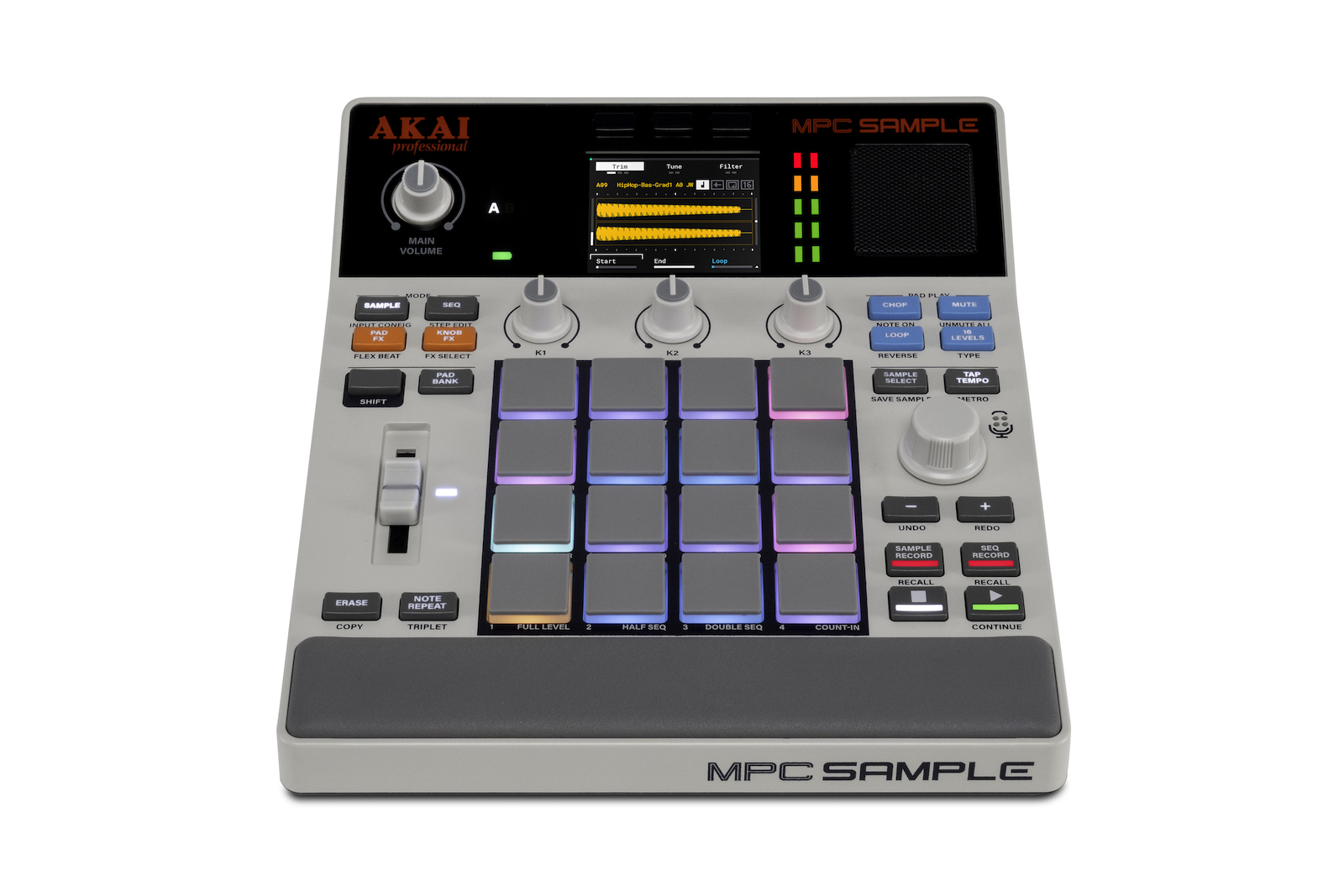
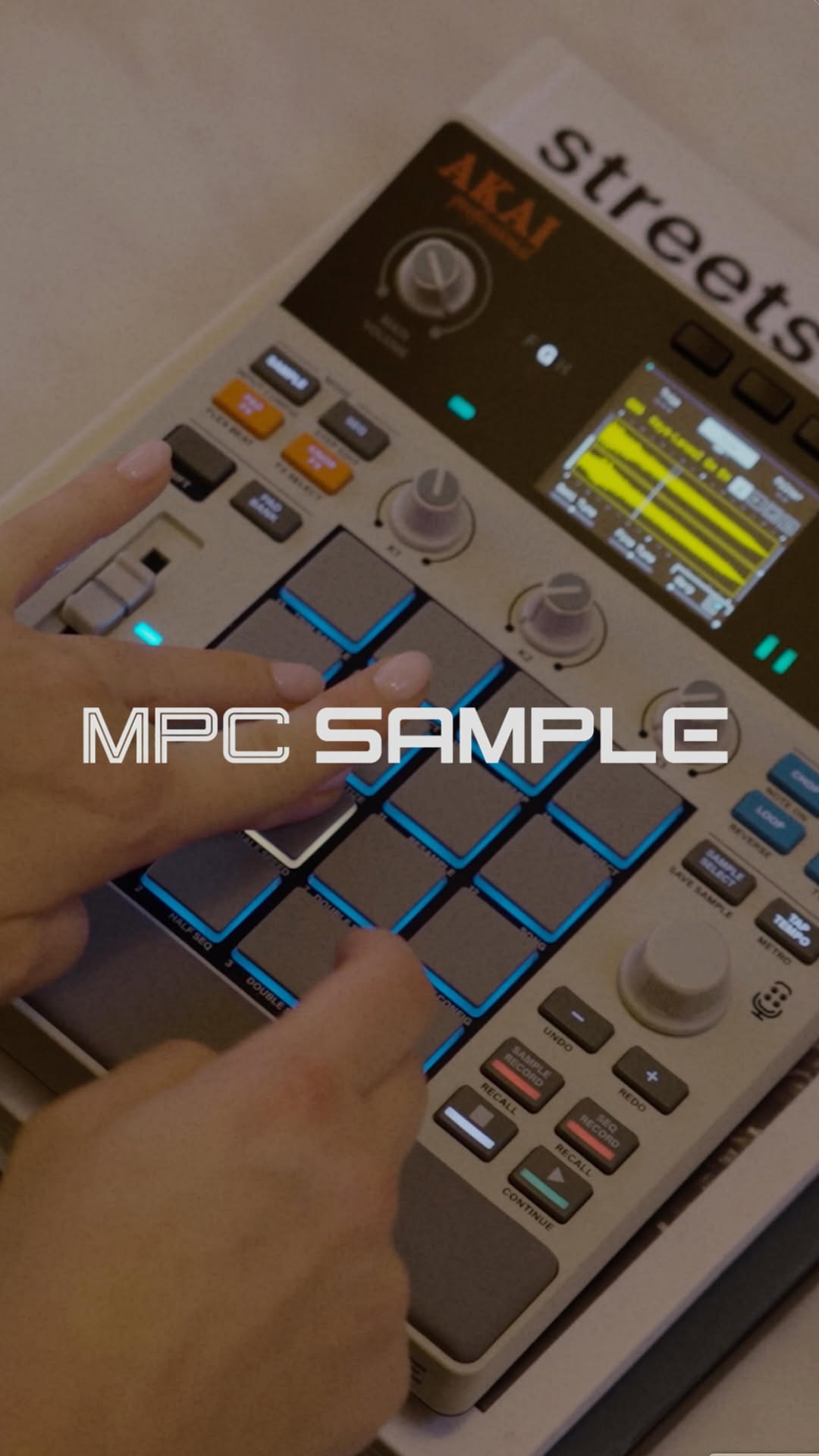
Released March 24, 2026, the Akai MPC Sample is a battery-powered standalone sampler priced at $399. It features 16 velocity-sensitive RGB pads with polyphonic aftertouch, a 5-hour rechargeable battery, built-in speaker and microphone, and 60 onboard effects. It draws heavily on the visual and functional legacy of the MPC60 from 1988, targeting producers who want professional hardware at an accessible entry point.
Key Points
- The MPC Sample runs on battery for up to 5 hours and includes a built-in speaker and internal microphone for portable sampling anywhere
- Specs include 16 velocity-sensitive RGB pads, 2GB RAM, 8GB storage, 24-bit/44.1kHz sampling, and 60 onboard effects at $399 retail
- The MPC60 from 1988 cost $4,895; the MPC Sample brings the same pad-based production format to $399 with full standalone capability
The Akai MPC60 cost $4,895 at retail in 1988. It had 16 pads, a sequencer that changed how hip-hop was made, and a footprint that required its own table. Roger Linn and Ikutaro Kakehashi built it for studios. J Dilla used it on planes, in cars, and in hospital beds. The MPC Sample, released March 24, 2026, costs $399 and fits in a backpack. That distance from $4,895 to $399 is not just inflation math. It is the entire story of democratized production told in one product trajectory.
16 Pads. Battery-Powered. Three Real-Time Knobs.
The MPC Sample ships with 16 velocity-sensitive RGB pads with polyphonic aftertouch in a body that measures 23.6 x 19.4 x 5 centimeters. There is a built-in 3-watt speaker, an internal microphone, a 2.4-inch full-color display, and a rechargeable lithium-ion battery rated for five hours. That last detail matters more than the spec sheet suggests. A standalone sampler that needs a wall outlet is a studio machine. One that runs on battery is a compositional tool that goes wherever your ears go.
2 GB of RAM. 8 GB internal storage. MicroSD slot for expansion. Audio sampling at 24-bit/44.1kHz. Onboard timestretch, re-pitch, and instant sample chop. Four effects engines with 60 effects total: granulator, Lo-Fi, chorus, flanger, delay, reverb. This is not a limited device pretending to be serious. It is a serious device choosing to be small.
The MPC60 Reference Is Not Nostalgia. It Is Heritage Architecture.
Akai's design brief for the MPC Sample explicitly cites the MPC60, and the visual language earns that citation. The pads are arranged in the same 4x4 grid Linn established in 1988. The proportions echo the original without copying it directly. This is what separates legitimate archive referencing from lazy throwback branding: the MPC Sample uses the MPC60 as a structural argument, not a mood board.
For nearly 40 years the MPC format has appeared in the production credits of hip-hop, R&B, electronic music, and film scoring. Pharrell used them. Flying Lotus used them. The format outlasted every prediction of its obsolescence because the pad interface maps to human rhythm intuition in a way that keyboards and mouse clicks never quite replicated. The MPC Sample bets that intuition is still valuable at $399.
Connectivity That Earns the Price
Stereo quarter-inch inputs and outputs. Eighth-inch headphone out. MIDI in and out. Sync out. USB-C for power, audio, and file transfer. Integration with the desktop MPC 3.8 application for beat transfer. At $399, the MPC Sample competes against the Teenage Engineering Pocket Operator series ($90 per unit but severely limited), the Elektron Model:Samples ($460, more complex but harder to learn), and Roland's SP-404MKII ($550, more capable but larger).
The MPC Sample sits at a specific access point: professional format, beginner-accessible interface, sub-$400 barrier. That positioning is deliberate. Akai is not selling this to producers who already own an MPC One. It is selling to the producers who could not justify $700 for their first hardware unit but will justify $399 for something with 40 years of lineage behind the pad layout.
March 24. Subway to Studio. The Claim Is Testable.
Akai's marketing language for the MPC Sample is unusually honest: "from the subway to studio." That is a positioning statement with a falsifiable promise. Either the battery lasts a commute and the pads are responsive enough to build under pressure, or the product fails its own brief.
Five hours of battery suggests two subway rides and a session. The built-in speaker removes headphone dependency for initial sketching. The internal mic means found sounds, a parked car, a kitchen, a conversation, all become source material without an audio interface. The MPC format spent 40 years in studios. The MPC Sample is the first version built explicitly to leave them.
Related Reading
- BABY KEEM'S CA$INO VINYL DROPS FEB 20
- BABY KEEM’s CASINO ALBUM DROPS featuring KENDRICK LAMAR
- FUBU WENT FROM $350 MILLION IN SALES TO A NAME ON A LICENSE TAG
Frequently Asked Questions
When did the Akai MPC Sample release?
The Akai MPC Sample was officially released on March 24, 2026, at $399 USD.
What can the Akai MPC Sample do standalone?
The MPC Sample works fully standalone with a battery-powered 5-hour runtime, built-in speaker, internal microphone, 16 RGB pads, onboard sequencer, 60 effects, and real-time sample chopping with timestretch and re-pitch.
How does the MPC Sample compare to other samplers at this price?
At $399, the MPC Sample competes with the Roland SP-404MKII ($550) and Elektron Model:Samples ($460) by offering the legendary MPC pad format at a lower price with strong portability. It targets producers entering hardware production for the first time.
Topics: beatmaking, elektron, teenage-engineering, roland, hardware, mpc, mpc-sample, hip-hop, music-gear, producer-tools, music-production, teenage engineering, akai, standalone-sampler